Robert B. Brandom – författare
Visar alla böcker från författaren Robert B. Brandom. Handla med fri frakt och snabb leverans.
23 produkter
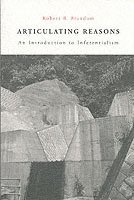
Articulating Reasons
An Introduction to Inferentialism
Häftad, 2001
338 kr
Lägg i varukorg
Robert B. Brandom is one of the most original philosophers of our day, whose book Making It Explicit covered and extended a vast range of topics in metaphysics, epistemology, and philosophy of language--the very core of analytic philosophy. This new work provides an approachable introduction to the …
Spirit of Trust
A Reading of Hegel’s Phenomenology
Inbunden, 2019
432 kr
Lägg i varukorg
Forty years in the making, this long-awaited reinterpretation of Hegel’s The Phenomenology of Spirit is a landmark contribution to philosophy by one of the world’s best-known and most influential philosophers.In this much-anticipated work, Robert Brandom presents a completely new retelling of the …
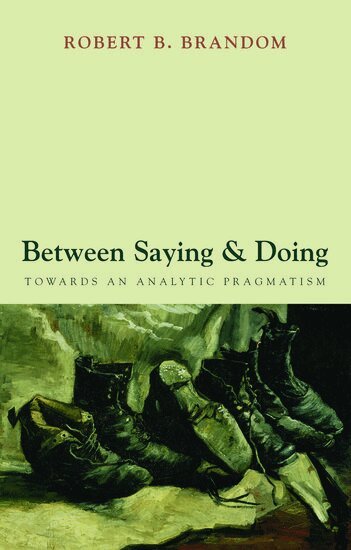
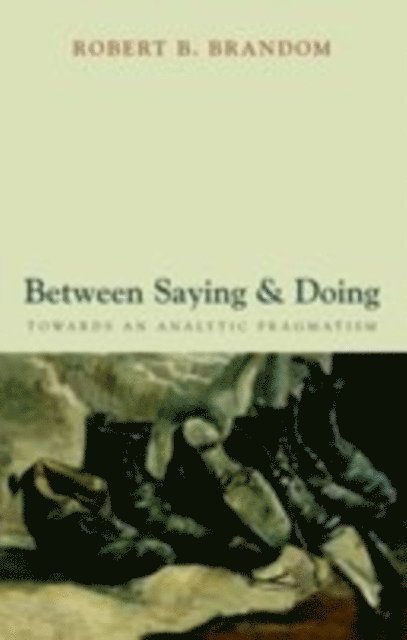
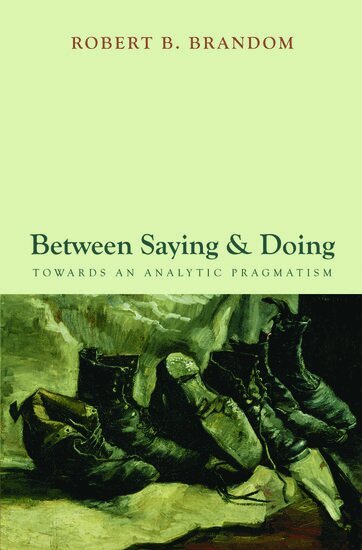
Between Saying and Doing
Towards an Analytic Pragmatism
Häftad, 2010
542 kr
Lägg i varukorg
Between Saying and Doing aims to reconcile pragmatism (in both its classical American and its Wittgensteinian forms) with analytic philosophy. It investigates the relations between the meaning of linguistic expressions and their use. Giving due weight both to what one has to do in order to count as …
Between Saying and Doing
Towards an Analytic Pragmatism
E-bok, 2008
391 kr
Lägg i varukorg
Between Saying and Doing aims to reconcile pragmatism (in both its classical American and its Wittgensteinian forms) with analytic philosophy. It investigates the relations between the meaning of linguistic expressions and their use. Giving due weight both to what one has to do in order to count as …
Between Saying and Doing
Towards an Analytic Pragmatism
E-bok, 2010
391 kr
Lägg i varukorg
Between Saying and Doing aims to reconcile pragmatism (in both its classical American and its Wittgensteinian forms) with analytic philosophy. It investigates the relations between the meaning of linguistic expressions and their use. Giving due weight both to what one has to do in order to count as …
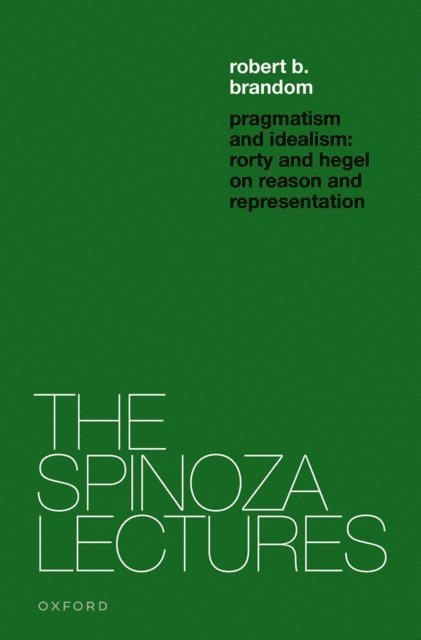
Pragmatism and Idealism
Rorty and Hegel on Representation and Reality
E-bok, 2022
184 kr
Lägg i varukorg
In this short book, based upon his Spinoza Lectures at the University of Amsterdam, Robert B. Brandom offers a pragmatist approach to representation and reality, drawing on Richard Rorty and Hegel. During the last decade of his life, Rorty emphasized the anti-authoritarian credentials of his …
Pragmatism and Idealism
Rorty and Hegel on Representation and Reality
E-bok, 2022
184 kr
Lägg i varukorg
In this short book, based upon his Spinoza Lectures at the University of Amsterdam, Robert B. Brandom offers a pragmatist approach to representation and reality, drawing on Richard Rorty and Hegel. During the last decade of his life, Rorty emphasized the anti-authoritarian credentials of his …
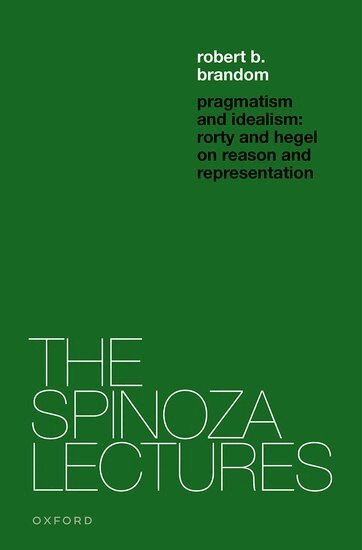
Pragmatism and Idealism
Rorty and Hegel on Representation and Reality
Häftad, 2022
261 kr
Lägg i varukorg
In this short book, based upon his Spinoza Lectures at the University of Amsterdam, Robert B. Brandom offers a pragmatist approach to representation and reality, drawing on Richard Rorty and Hegel. During the last decade of his life, Rorty emphasized the anti-authoritarian credentials of his …
Between Saying and Doing
Towards an Analytic Pragmatism
Inbunden, 2008
1610 kr
Lägg i varukorg
Between Saying and Doing aims to reconcile pragmatism (in both its classical American and its Wittgensteinian forms) with analytic philosophy. It investigates the relations between the meaning of linguistic expressions and their use. Giving due weight both to what one has to do in order to count as …
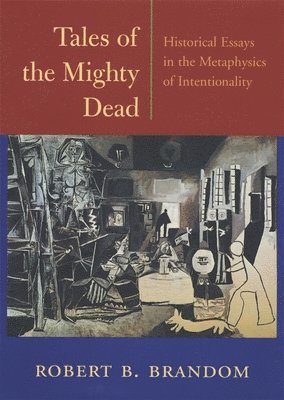
Tales of the Mighty Dead
Historical Essays in the Metaphysics of Intentionality
Inbunden, 2002
907 kr
Lägg i varukorg
A work in the history of systematic philosophy that is itself animated by a systematic philosophic aspiration, this book by one of the most prominent American philosophers working today provides an entirely new way of looking at the development of Western philosophy from Descartes to the …
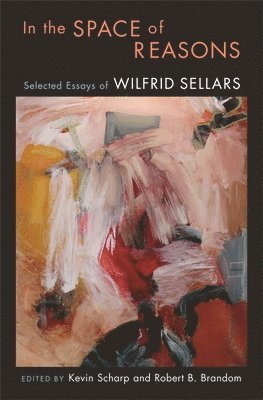
In the Space of Reasons
Selected Essays of Wilfrid Sellars
Av Wilfrid Sellars, Kevin Scharp m. fl.
Inbunden, 2007
702 kr
Lägg i varukorg
Wilfrid Sellars (1912-1989) was, in the opinion of many, the most important American philosopher of the second half of the twentieth century. He was, Richard Rorty writes, "as original a mind as C. S. Peirce, and it has taken almost as long for the importance of his ideas to be appreciated." This …
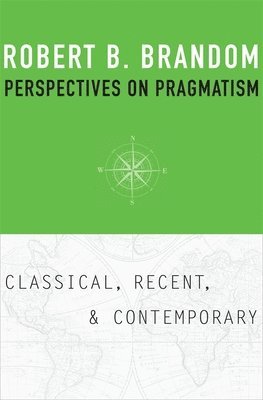
Perspectives on Pragmatism
Classical, Recent, and Contemporary
Inbunden, 2011
451 kr
Lägg i varukorg
Pragmatism has been reinvented in every generation since its beginnings in the late nineteenth century. This book, by one of today’s most distinguished contemporary heirs of pragmatist philosophy, rereads cardinal figures in that tradition, distilling from their insights a way forward from where we …
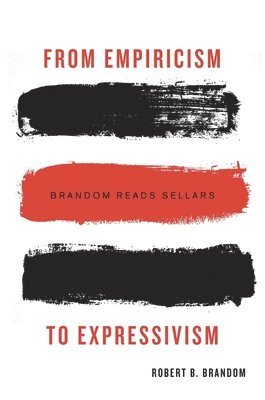
From Empiricism to Expressivism
Brandom Reads Sellars
Inbunden, 2015
417 kr
Lägg i varukorg
The American philosopher Wilfrid Sellars ranks as one of the leading twentieth-century critics of empiricism—a philosophical approach to knowledge that seeks to ground it in human sense experience. Sellars stood in the forefront of a recoil within analytic philosophy from the foundationalist …
Making It Explicit
Reasoning, Representing, and Discursive Commitment
Häftad, 1998
412 kr
Lägg i varukorg
What would something unlike us--a chimpanzee, say, or a computer--have to be able to do to qualify as a possible knower, like us? To answer this question at the very heart of our sense of ourselves, philosophers have long focused on intentionality and have looked to language as a key to this …
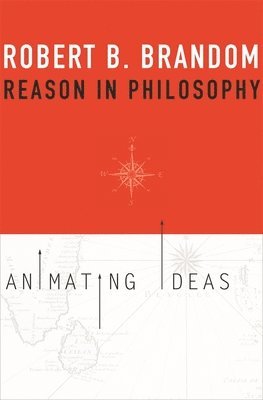
Reason in Philosophy
Animating Ideas
Häftad, 2013
279 kr
Lägg i varukorg
Transcendentalism never came to an end in America. It just went underground for a stretch, but is back in full force in Robert Brandom’s new book. Brandom takes up Kant and Hegel and explores their contemporary significance as if little time had expired since intellectuals gathered around Emerson …
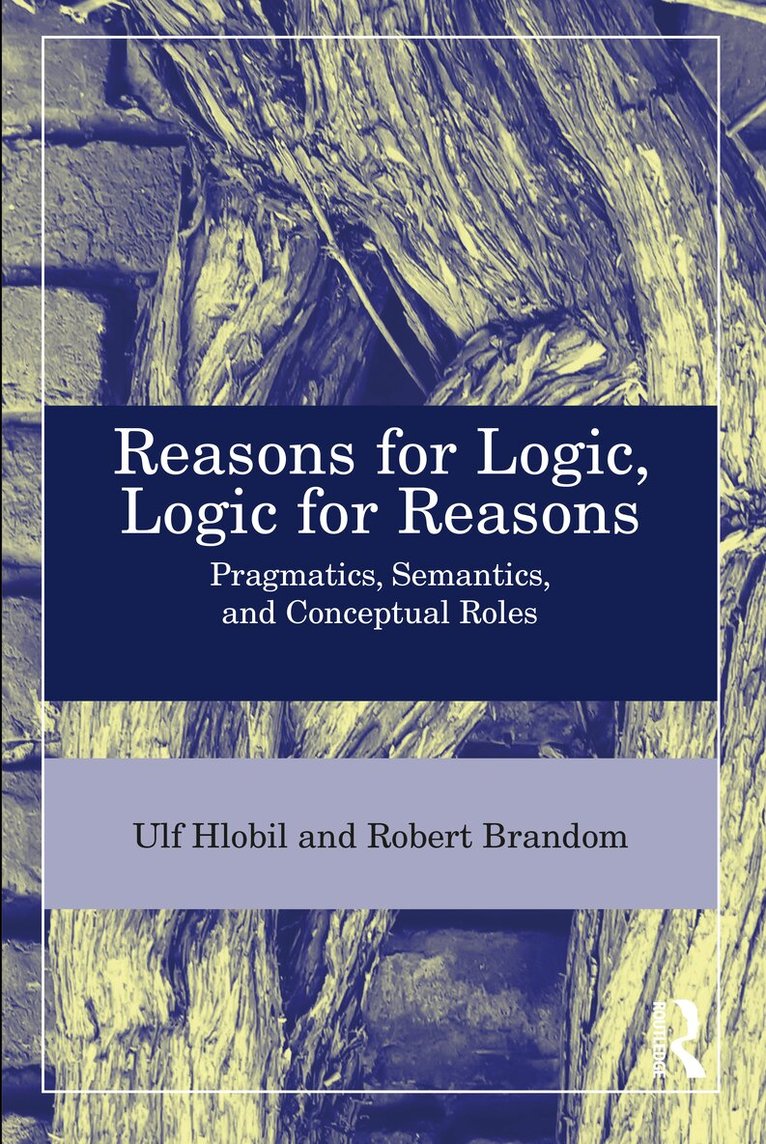
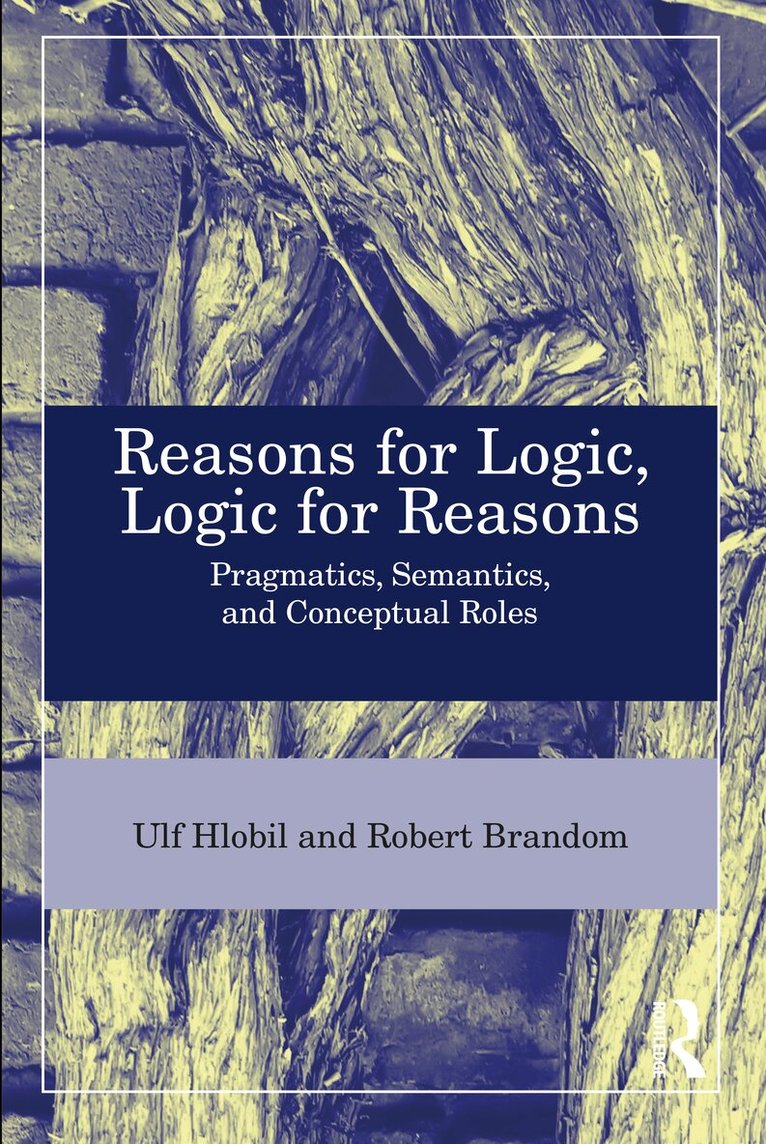
Reasons for Logic, Logic for Reasons
Pragmatics, Semantics, and Conceptual Roles
Av Ulf Hlobil, Robert B. Brandom
Inbunden, 2024
1520 kr
Lägg i varukorg
Reasons for Logic, Logic for Reasons presents a philosophical conception of logic—“logical expressivism”—according to which the role of logic is to make explicit reason relations, which are often neither monotonic nor transitive. This conception of logic reveals new and enlightening perspectives on …
Reasons for Logic, Logic for Reasons
Pragmatics, Semantics, and Conceptual Roles
Av Ulf Hlobil, Robert B. Brandom
Häftad, 2026
662 kr
Lägg i varukorg
Reasons for Logic, Logic for Reasons presents a philosophical conception of logic—“logical expressivism”—according to which the role of logic is to make explicit reason relations, which are often neither monotonic nor transitive. This conception of logic reveals new and enlightening perspectives on …
Reasons for Logic, Logic for Reasons
Pragmatics, Semantics, and Conceptual Roles
Av Robert B. Brandom, Ulf Hlobil
E-bok, 2024
831 kr
Lägg i varukorg
Reasons for Logic, Logic for Reasons presents a philosophical conception of logic—“logical expressivism”—according to which the role of logic is to make explicit reason relations, which are often neither monotonic nor transitive. This conception of logic reveals new and enlightening perspectives on …
Reasons for Logic, Logic for Reasons
Pragmatics, Semantics, and Conceptual Roles
Av Robert B. Brandom, Ulf Hlobil
E-bok, 2024
831 kr
Lägg i varukorg
Reasons for Logic, Logic for Reasons presents a philosophical conception of logic—“logical expressivism”—according to which the role of logic is to make explicit reason relations, which are often neither monotonic nor transitive. This conception of logic reveals new and enlightening perspectives on …