Robert Burnham – författare
Visar alla böcker från författaren Robert Burnham. Handla med fri frakt och snabb leverans.
14 produkter
14 produkter
Inbunden, Engelska, 2025
313 kr
Skickas
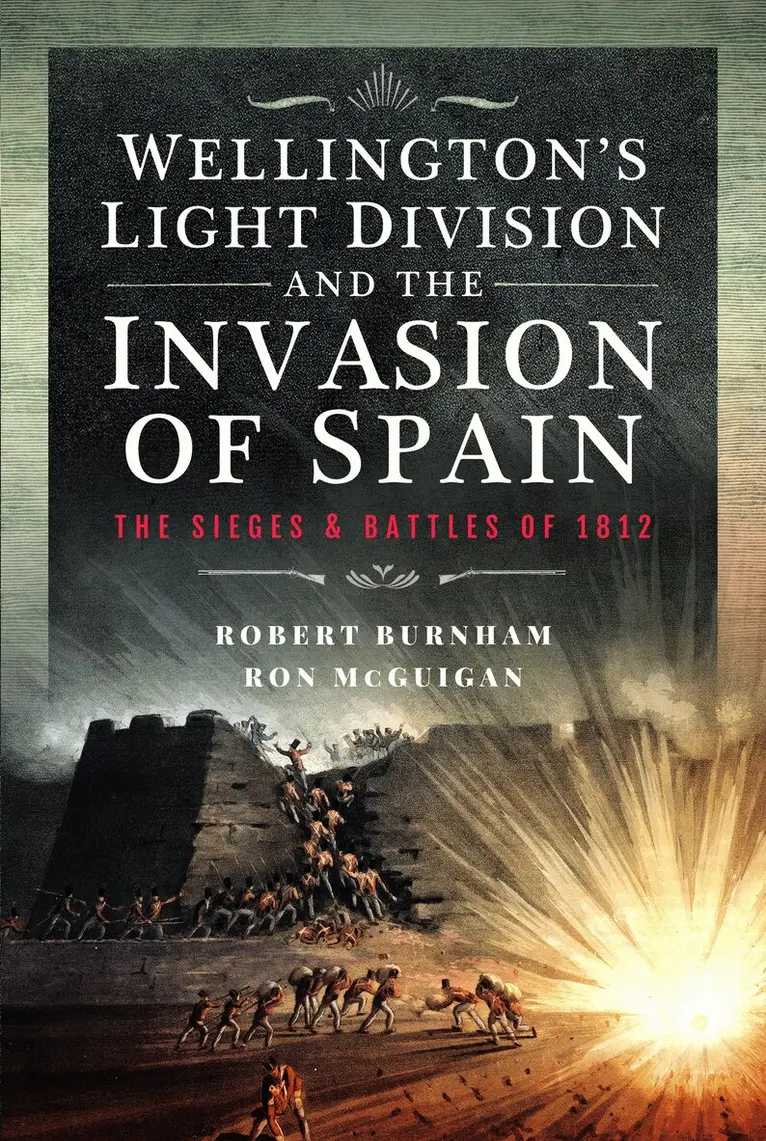
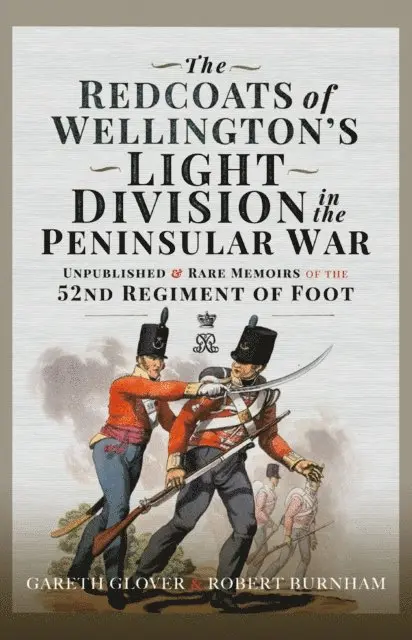
After evicting the French from Portugal in 1811, the Duke of Wellington went on the offensive, having decided to attack into Spain and liberate the country. To do this, however, he first had to capture the key border fortresses of Ciudad Rodrigo and Badajoz. By doing this he would secure the main routes into Portugal and protect his supply lines.By mid-April in 1812, Wellington’s forces had captured both fortresses and he began planning to move into central Spain to liberate Madrid. Then, by late July, he fought and effectively destroyed the French Army of Portugal at the Battle of Salamanca and a month later was welcomed by the population of Madrid as its liberator. However, September saw the offensive stall and a gathering of French forces. By October, the order came to abandon Madrid and withdraw back to Portugal.Wellington’s army had to move quickly to avoid being cut off and its line of communication with Lisbon severed. The retreat soon turned into a grueling slog in miserable weather with little food, all the while the British troops were pursued by a relentless enemy hard on their heels. It would be late November before the army reached the safety of the Portuguese border.As in previous years the Light Division was in the thick of the fighting. It was part of the assault force at both the storming of Ciudad Rodrigo and of Badajoz. It led the army into Spain and was on the left flank at Salamanca. It was one of the first units to march into Madrid and during the retreat it was part of the rear guard.By the end of November 1812, the division was back in its cantonments around Ciudad Rodrigo. It had, however, taken horrendous casualties at all levels over the past eleven months, and it was only a shadow of itself. Packed with first-hand accounts and previously unpublished material, these new sources, especially the diaries, permit us to check the movements and locations of the regiments, the impact of over-extended supply lines, and the arrival of reinforcements and new commanders as never before revealed.
Inbunden, Engelska, 2024
323 kr
Skickas
The Napier family are famous for their military exploits in the Peninsular War. Charles served in the 50th and 102nd Foot, George in the 52nd and 71st Foot and William (the famous historian of the Peninsular War) who served with the 43rd Foot. Two or three of them were always serving in the Peninsula at any given time and all suffered a number of severe wounds.William has a basic biography written of him and his famous _History of the Peninsular War_ is littered with his personal and professional prejudices; Charles wrote a form of autobiography, mostly dealing with his later India campaigns; and virtually nothing has been written on poor George, despite the fact that he commanded the storming party at Ciudad Rodrigo, where he was severely wounded. However, much of this writing emanates from decades after they fought, when memories and changing political attitudes had clearly affected their writing._At War With Wellington_ focuses on their private letters penned immediately from the front, without that dreaded hindsight. They are packed with detail of the horrors of battle and siege warfare, but also show life in the Army, the close bond between the three brothers while serving close to each other in action and also with their mother at home, who clearly had constant fears that her three boys would never come home again. All three did survive but were all badly maimed during this war.Their individual exploits are legion, but no one has ever brought all of this material together in one book, until now. Between them, they participated in almost every action in the six-year war and two of them participated in the Army of Occupation in France from 1815-18, although none were at the Battle of Waterloo.Their close relationships with many senior officers of the period, gives a rare glimpse into the thinking of the generals and helps us understand how the decisions were made and with what information they were formed. Being also politically active, it is fascinating to hear their views on both political matters at home and the Allied cause against France.This material is both absorbing and revealing. It adds much to our understanding, primarily of the Napier’s themselves, but also the effects of a world war on the family dynamics, the political upheavals surrounding it, the failures of the Allied campaigns and even the perceived failings of the senior officers in their promotion of the war effort, which are expressed vehemently._At War With Wellington_ opens a window onto a different view of the war, from very experienced soldiers, but with very different political leanings, and will cause readers to question some of their long-held views.
Inbunden, Engelska, 2024
293 kr
Skickas
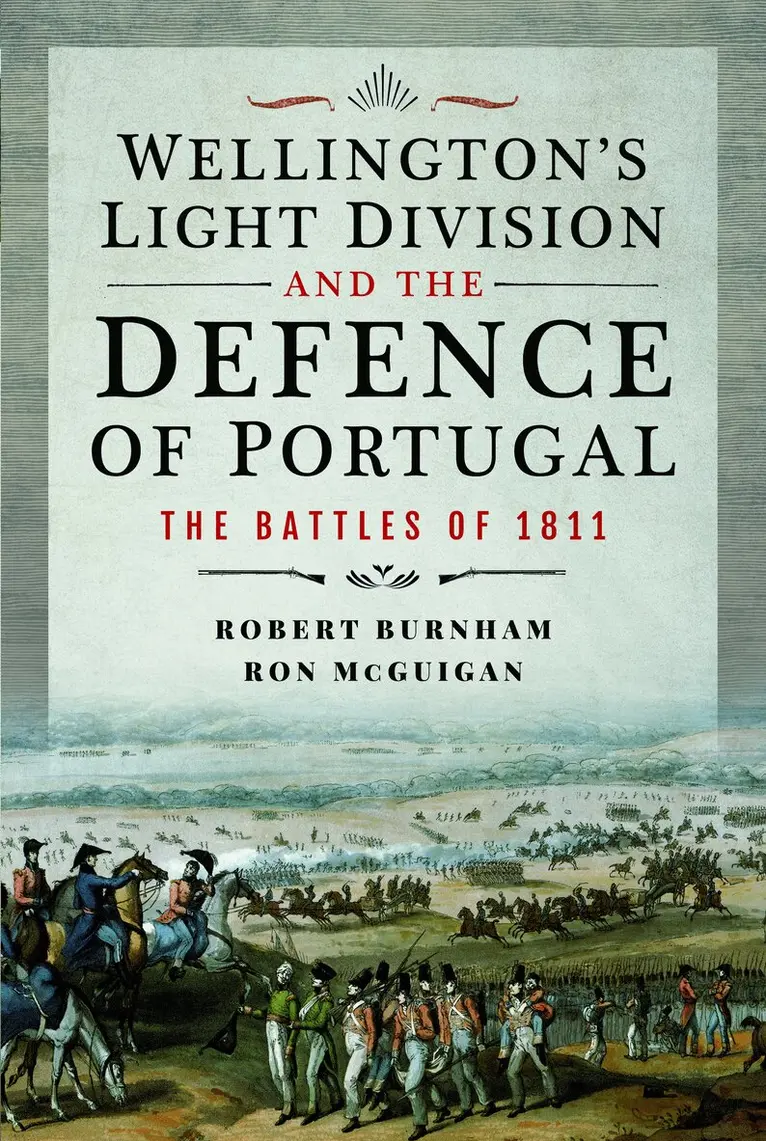
There are many books on Wellington’s campaigns during the Peninsular War. Yet very few examine the pivotal year of 1811, when he went on the offensive and forced Napoleon’s armies back over 300 kilometres, from the doors of Lisbon to the Spanish border. For two months he pursued the retreating French, fighting skirmishes and rearguards virtually the whole way.The French finally halted at the Spanish border and turned on Wellington in early May, where an epic three-day battle was fought at Fuentes de Oñoro. The rest of the year, Wellington defended the border while making plans to liberate Spain in 1811. Wellington’s Light Division and the Defence of Portugal looks at the famed Light Division as it led the pursuit of the French and was involved in almost every combat and battle fought that year.The book also explores the stalemate of January and February 1811, where the division maintained outposts overlooking French positions in the vicinity of Santarem, as well as the pursuit of the French Army back to Spain in March and April, when the division fought many skirmishes, combats, and small battles, often on its own. These include the actions at Pombal, Condeixa, Redinha, Casal Novo, Foz d’Arouce, Freixada, and Sabugal. May saw the Light Division in a desperate fight at Fuentes de Oñoro, where for much of the battle it held the army’s right flank.For the rest of the year the Light Division was in the vicinity of Ciudad Rodrigo where it occupied ground that it held for much of 1810, where it served as Wellington’s advance outposts. The assumed similar positions and were engaged at Fuente Guinaldo and El Bodon. In addition to these fights, the book will examine the changes in the organization of the division, with the addition of new battalions and release of other units. It will also go into great detail on the problems it had with command and control – with its leading officers exhausted, requesting permission to return home to recuperate.Drawing on diaries, letters, and memoirs, the authors tell the story of the officers and men who fought in the division. Many of these sources have never been published before.
Inbunden, Engelska, 2022
265 kr
Skickas
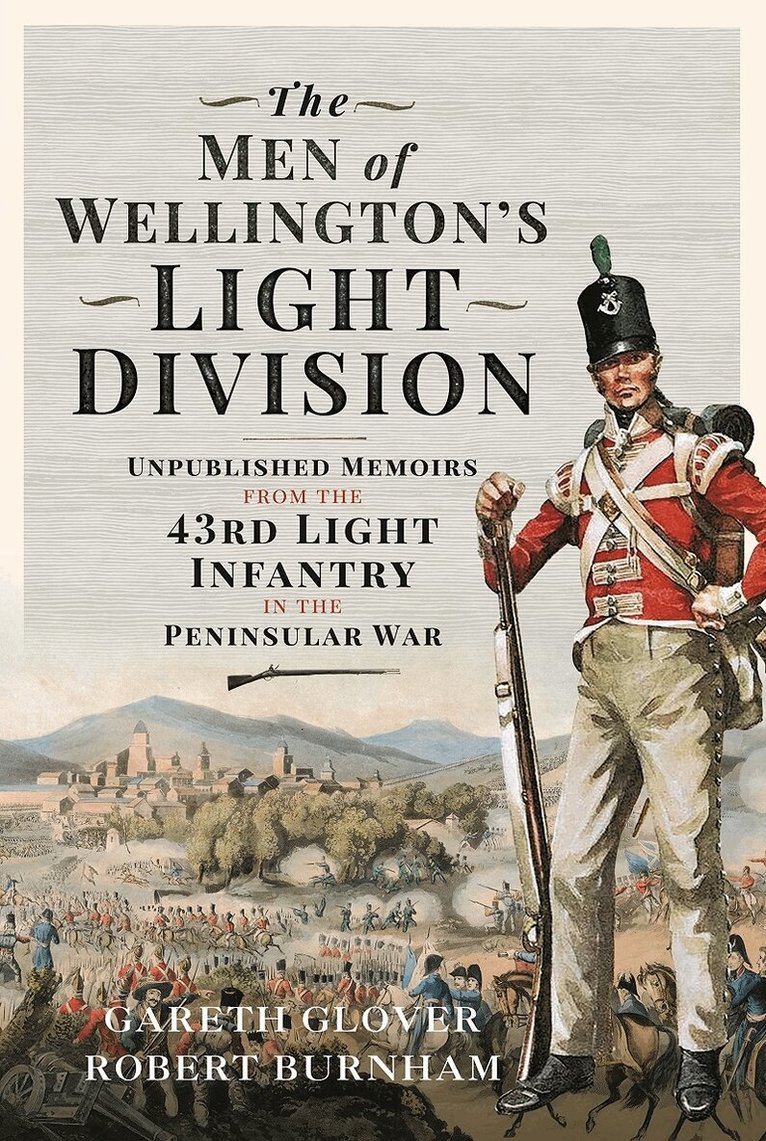
Some of the most famous memoirs of Britain's long war against Napoleon have come from the pens of members of Wellington's Light Division, but many wonderful accounts were never published and have sat in archives, libraries, museums, and private collections, forgotten for 200 years.The regiments of the Light Division, and its predecessor, the Light Brigade, were involved in almost every major battle and skirmish fought by Wellington and Sir John Moore in the Peninsular War. Unlike the line infantry, these men were encouraged to think and fight independently and were, often, of a higher educational standard, resulting in vivid descriptions of warfare and campaign life.However, these memoirs do not simply cover old ground. Many of these accounts were produced within hours, or at most days, after the incidents they describe, and they often portray a very different view of many famous events and cause us to question numerous claims made in those later published memoirs.Never intended to be published, the memoirs in this book were written only for the men themselves and their families, being penned without the dreaded influence of hindsight' to alter and temper their views. Consequently, they provide brutally honest assessments of their senior officers, how operations were handled and who made mistakes that have subsequently been quietly covered over.The Men of Wellington's Light Division is certain to be welcomed by historians and enthusiasts alike, providing a glimpse into the past that has not been seen before.
E-bok
Engelska, 2021124 kr
Läs direkt efter köp
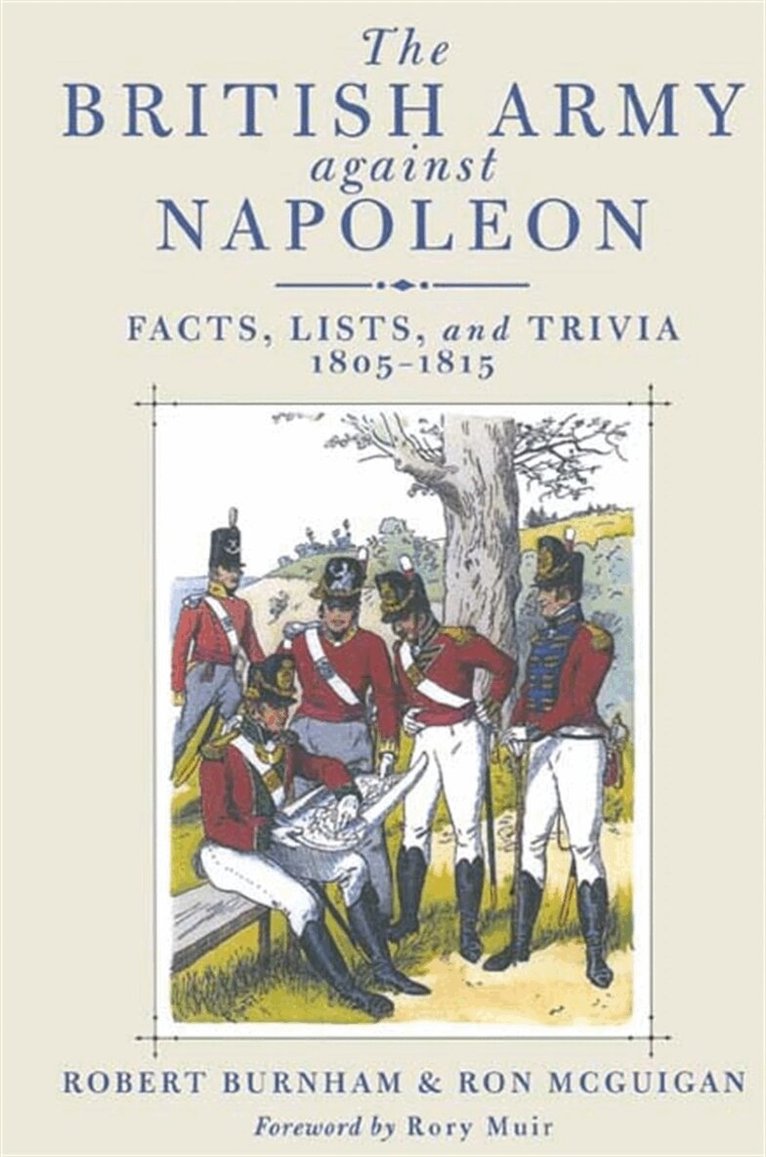
Despite the bewildering number of tomes devoted to the Napoleonic wars, much basic data as been hitherto unavailable to anyone other than the most ardent scholars. McGuigan and Burnham have collected a tremendous treasure trove of information in a readily accessible form. Other books may tell you how many regiments were sent on the expedition to Hanover in 1805, but The British Army against Napoleon will tell you where every single regiment in the British army was stationed, who were their honorary colonels, and give you a list of all the barracks in Britain with the number of men they were designed to hold.Where else will you find not just the pay of different ranked officers but the amount of income tax they paid, as well as all the other deductions and stoppages that reduced their actual receipts to a fraction of their nominal (and generally quite low) pay? Or pension charts for widows? There are tables that list all the recipients of the honours and awards issued, casualties in action and disease, seniority of officers of the numerous expeditions and campaigns (a matter not just of curiosity but of major significance, for the date of rank of an officer determined who commanded the force and all of its sub-units.) The material in these tables has been collected from countless primary sources and official publications such as the Army List, London Gazette, Wellington s Dispatches, regimental histories, artillery manuals, and handbooks.
E-bok
Engelska, 2021123 kr
Läs direkt efter köp
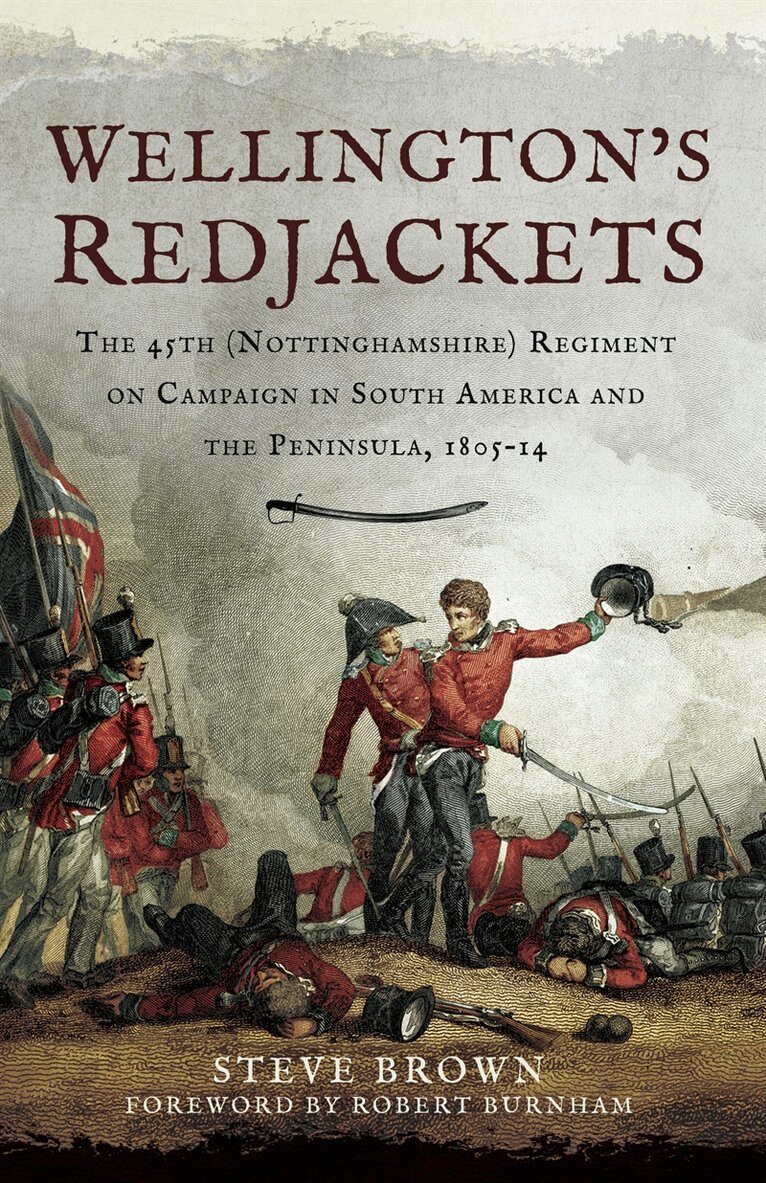
The assault was failing. Wellington's men had stormed the walls of the great frontier fortress of Badajoz only to be beaten back with terrible losses. Then on the keep of the old castle the French flag was torn down and a British officer's red jacket was hauled up the flagpole. It was the signal – the British were inside Badajoz!This was one of the most famous incidents during the Peninsular War and marked not only the turning point in the capture of Badajoz but of the entire conflict. The jacket belonged to Lieutenant James MacPherson of the 45th (Nottinghamshire) Regiment. The 45th had landed with Wellington at Mondego Bay in 1808 and fought with him throughout the entire Peninsular War gaining more battle honours than any other line regiment.Wellington's Redjackets, The 45th (Nottinghamshire) Regiment on Campaign in South America and the Peninsular War is one of the most detailed unit histories ever published of a regiment during the Napoleonic era. As the first, and only, study of this regiment, Wellington's Redjackets will undoubtedly be an essential purchase for those interested in Napoleonic warfare.
E-bok
Engelska, 2020140 kr
Läs direkt efter köp
“A detailed and riveting account of the Light Division and its three regiments, 43rd and 52nd Light Infantry and the 95th Rifles . . . An important book.” —FiretrenchIn February 1810, Wellington formed what became the most famous unit in the Peninsular War: the Light Division. Formed around the 43rd and 52nd Light Infantry and the 95th Rifles, the exploits of these three regiments is legendary. Over the next 50 months, the division would fight and win glory in almost every battle and siege of the Peninsular War.How the division achieved its fame began on the border of Spain and Portugal where it served as a screen between Wellington’s Army and the French. When it came time pull back from the border, the division endured a harrowing retreat with a relentless enemy at their heels. It was during this eventful year it developed an esprit-de-corps and a belief in its leaders and itself that was unrivaled in Wellington’s Army.Wellington’s Light Division in the Peninsular War uses over 100 primary sources—many never published before—to recount the numerous skirmishes, combats, and battles, as well as the hardships of a year of duty on the front lines. Others are from long-forgotten books published over 150 years ago. It is through the words of the officers and men who served with it that this major, and long-anticipated study of the first critical year of the Light Division is told.“Given the limited scope of the book, covering only one year of the Peninsular campaign, the depth of the study is truly remarkable . . . An excellent history of the Light Division ‘Warts and All.’”—The Napoleon Series
E-bok
PDF, Engelska, 2020140 kr
Läs direkt efter köp
"e;A detailed and riveting account of the Light Division and its three regiments, 43rd and 52nd Light Infantry and the 95th Rifles . . . An important book."e; -FiretrenchIn February 1810, Wellington formed what became the most famous unit in the Peninsular War: the Light Division. Formed around the 43rd and 52nd Light Infantry and the 95th Rifles, the exploits of these three regiments is legendary. Over the next 50 months, the division would fight and win glory in almost every battle and siege of the Peninsular War. How the division achieved its fame began on the border of Spain and Portugal where it served as a screen between Wellington's Army and the French. When it came time pull back from the border, the division endured a harrowing retreat with a relentless enemy at their heels. It was during this eventful year it developed an esprit-de-corps and a belief in its leaders and itself that was unrivaled in Wellington's Army. Wellington's Light Division in the Peninsular War uses over 100 primary sources many never published before to recount the numerous skirmishes, combats, and battles, as well as the hardships of a year of duty on the front lines. Others are from long-forgotten books published over 150 years ago. It is through the words of the officers and men who served with it that this major, and long-anticipated study of the first critical year of the Light Division is told. "e;Given the limited scope of the book, covering only one year of the Peninsular campaign, the depth of the study is truly remarkable . . . An excellent history of the Light Division 'Warts and All.'"e; The Napoleon Series
Häftad, Engelska, 2023
393 kr
Skickas inom 5-8 vardagar
Häftad, Engelska, 2021
231 kr
Skickas inom 5-8 vardagar
Inbunden, Engelska, 2021
339 kr
Skickas inom 5-8 vardagar
E-bok
PDF, Engelska, 201127 kr
Läs direkt efter köp
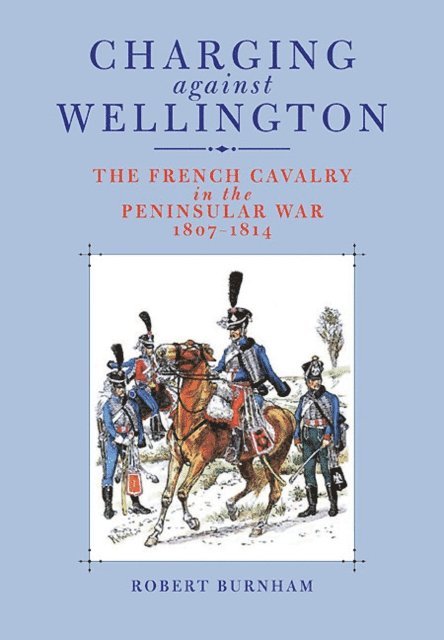
This comprehensive military history details the generals, organization and movements of Napoleon's cavalry through the Peninsular War. In Charging Against Wellington, historian Robert Burnham draws on primary sources, manuals, memoirs, and regimental histories to reveal the experiences and activities of the French officers and soldiers who fought the British Army in Spain and Portugal. Burnham presents biographies of eighty French generals, focusing on their service in the Peninsula and its impact on their careers. Two become Marshals of France and many were promoted, while others saw their careers damaged in the conflict including nine who were relieved from their commands. The author then examines the ever-changing organization of the cavalry, including the location and command of the various regiments and brigades. By April 1814, the Peninsula cavalry was down to 4,000 men, a shadow of the force that invaded six years before. Charging Against Wellington chronicles these changes, showing which units left and how their departure impacted the army. Finally, Burnham looks at the service record of the 70+ French cavalry regiments. There is a table for each that tracks the regiment's colonels, composition, organization, strength, and casualties while in the Peninsula.
123 kr
Läs direkt efter köp
Like the author’s previous book, The British Army Against Napoleon, Charging Against Wellington draws heavily on primary sources, manuals, memoirs, and regimental histories to bring to life the officers and men of the regiments that fought.The book is divided into three sections. The first contains biographies of 80 generals who led the French cavalry, focusing on the time they served in the Peninsula and its impact on their careers. Two went on to become Marshals of France and many were promoted and given greater responsibilities. For others, their careers were damaged while serving in Spain or Portugal – nine were relieved from their commands. Nearly half of the generals were killed, wounded, captured, or died from their wounds in Spain: a high price for glory.The second section looks at the ever-changing organization of the cavalry, where the various regiments and brigades were located and who commanded them. This is not as easy a task as it may appear, because a considerable amount of the cavalry was provisional regiments, consisting of squadrons drawn from other regiments. By April 1814, the Peninsula cavalry was down to 4,000 men – a shadow of the force that invaded six years before. Charging Against Wellington chronicles all the changes, showing which units left, when they left, and how their departure impacted the army.The third section looks at the service record of the 70+ French cavalry regiments that fought in Spain and Portugal. There is a table for each regiment that tracks the regiment’s colonels, composition, organization, strength, and casualties while in the Peninsula, and when its various squadrons arrived and departed.
Häftad, Engelska, 2025
370 kr
Skickas inom 5-8 vardagar