Robert C. Leitz - Böcker
Visar alla böcker från författaren Robert C. Leitz. Handla med fri frakt och snabb leverans.
5 produkter
5 produkter
124 kr
Skickas inom 5-8 vardagar
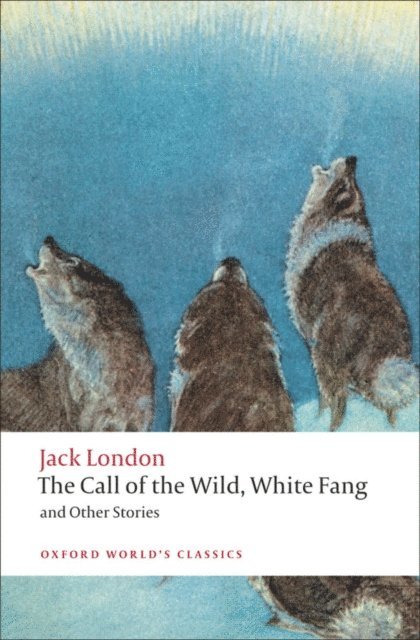
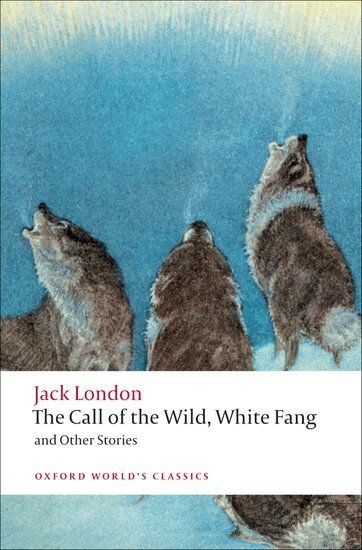
Of all Jack London's fictions none have been so popular as his dog stories. In addition to The Call of the Wild, the epic tale of a Californian dog's adventures during the Klondike gold rush, this edition includes White Fang, and five famous short stories - 'Bâtard', 'Moon-Face', 'Brown Wolf', 'That Spot', and 'To Build a Fire'.ABOUT THE SERIES: For over 100 years Oxford World's Classics has made available the widest range of literature from around the globe. Each affordable volume reflects Oxford's commitment to scholarship, providing the most accurate text plus a wealth of other valuable features, including expert introductions by leading authorities, helpful notes to clarify the text, up-to-date bibliographies for further study, and much more.
Letters of Jack London
Vol. 1: 1896-1905; Vol. 2: 1906-1912; Vol. 3: 1913-1916, Deluxe Set, in Slip Case
Inbunden, Engelska, 1988
2 219 kr
Skickas inom 7-10 vardagar
Jack London has long been recognized as one of the most colorful figures in American literature. From his birth in San Francisco in 1876 until his death in 1916, he lived a life rich with experiences and emotional intensity. Factory worker at 14; able-bodied seaman at 17; hobo and convict at 18; "Boy Socialist" of Oakland at 19; Klondike argonaut at 21; the "American Kipling" at 24; renowned author, social crusader, journalist, and war correspondent at 28; world traveler and adventurer at 31; prize-winning stockbreeder and scienfitic farmer at 35; self-made millionaire by the time of his death at 40: the facts became a legend in London's own lifetime.London dominated the literary marketplace during the first decade of the twentieth century; scarcely a month passed without his writing appearing in the nation's leading magazines. In less than 20 years, he produced some 500 nonfiction pieces, 200 short stories, and 19 novels (over 50 books in all), on such varied subjects as agronomy, alcoholism, astral projection, big business, ecology, economics, gold-hunting, penal reform, political corruption, prizefighting, seafaring, socialism, war, and wildlife.Of those books, at least three (The Call of the Wild, White Fang, and The Sea-Wolf) have become world classics. London is America's most widely translated author (into more than 80 langauges), and although his works have been neglected until recently by academic critics, he is finally winning recognition as a major figure in American literary history. Comprising 1,557 carefully annotated letters, this three-volume works is the first full-scale, comprehensive collection of London's correspondence, more than doubling the number of his letters previously in print. It illuminates nearly every facet of london's complex genius and meteoric career, from the early years of his literary apprenticeship, through his rise to success and fame, and, finally to the legal entanglements and failing health of his last years.The image that emerges from London's letters is of an unpretentious, often sensitive human being, extraordinarily open and sometimes brutally candid. He was capable of writing deeply moving, poetic love letters, but he was also capable, when writing to or about those he considered enemies, of a dark bitterness and vicious invective. Like much ofhis published work, many of his letters are simply good reading, written with his characteristic verve and blunt wit. This edition is lavishly illustrated, including 112 photoraphs, most of them from the London family albums and many published for the first time, facsimiles of letters and autograph inscriptions in books, cartoons and drawings, and three maps.

2 165 kr
Skickas inom 7-10 vardagar
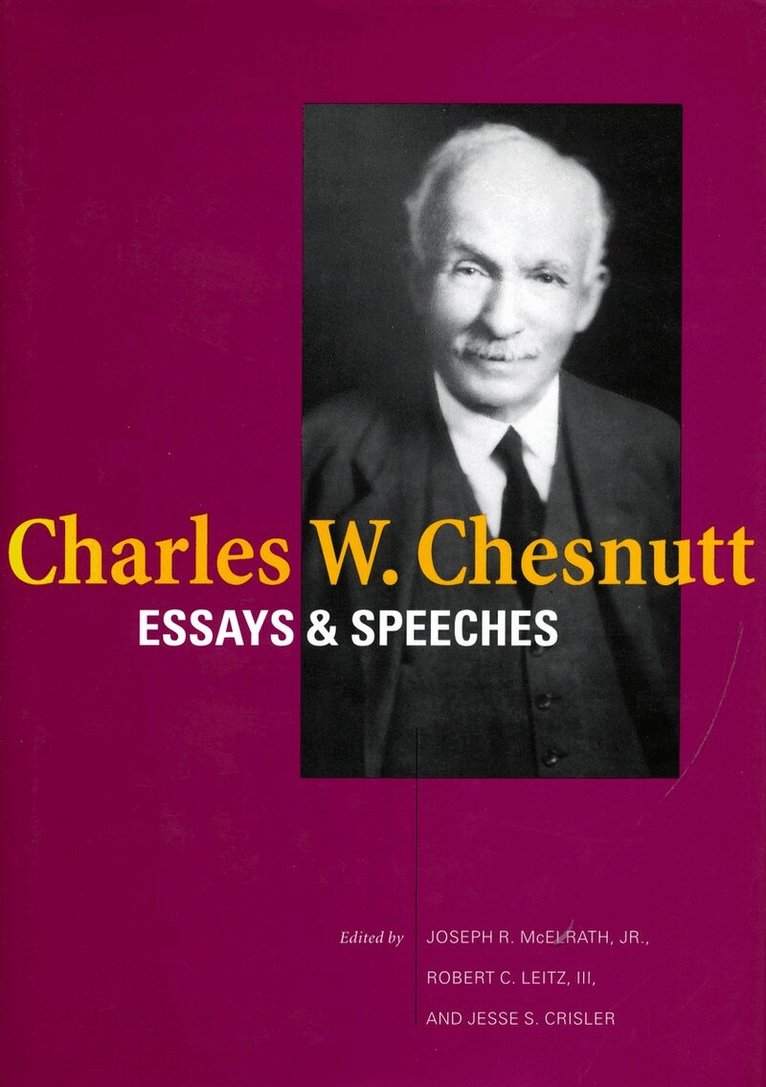
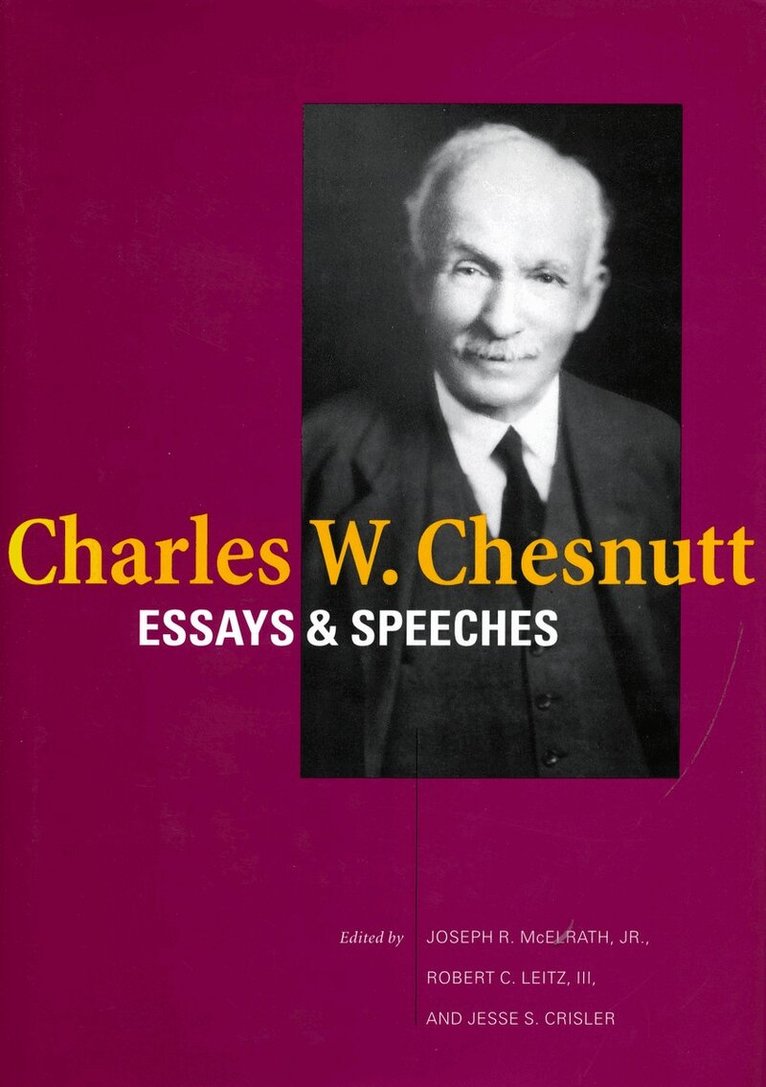
Over the past decade, increasing attention has been paid to the life and work of Charles W. Chesnutt (1858-1932), considered by many the major African-American fiction writer before the Harlem Renaissance by virtue of the three novels and two collections of short stories he published between 1899 and 1905.Less familiar are the essays he wrote for American periodicals from 1899 through 1931, the majority of which are analyses of and protests against white racism. Collected as well in this volume are the addresses he made to both white and black audiences from 1881 through 1931, on topics ranging from race prejudice to the life and literary career of Alexandre Dumas.The 77 works included in this volume comprise all of Chesnutt's known works of nonfiction, 38 of which are reprinted here for the first time. They reveal an ardent and often outraged spokesman for the African American whose militancy increased to such a degree that, by 1903, he had more in common with W. E. B. Du Bois than Booker T. Washington. He was, however, a lifelong integrationist and even an advocate of "race amalgamation," seeing interracial marriage as the ultimate means of solving "the Negro Problem," as it was termed at the end of the century. That he championed the African American during the Jim Crow era while opposing Black Nationalism and other "race pride" movements attests to the way Chesnutt defined himself as a controversial figure, in his time and ours.The essays and speeches in this volume are not, however, limited to polemical writings. An educator, attorney, and man of letters with wide-ranging interests, Chesnutt stands as a humanist addressing subjects of universal interest, including the novels of George Meredith, the accomplishments of Samuel Johnson, and the relationship between literature and life.
537 kr
Skickas inom 7-10 vardagar
Over the past decade, increasing attention has been paid to the life and work of Charles W. Chesnutt (1858-1932), considered by many the major African-American fiction writer before the Harlem Renaissance by virtue of the three novels and two collections of short stories he published between 1899 and 1905.Less familiar are the essays he wrote for American periodicals from 1899 through 1931, the majority of which are analyses of and protests against white racism. Collected as well in this volume are the addresses he made to both white and black audiences from 1881 through 1931, on topics ranging from race prejudice to the life and literary career of Alexandre Dumas.The 77 works included in this volume comprise all of Chesnutt's known works of nonfiction, 38 of which are reprinted here for the first time. They reveal an ardent and often outraged spokesman for the African American whose militancy increased to such a degree that, by 1903, he had more in common with W. E. B. Du Bois than Booker T. Washington. He was, however, a lifelong integrationist and even an advocate of "race amalgamation," seeing interracial marriage as the ultimate means of solving "the Negro Problem," as it was termed at the end of the century. That he championed the African American during the Jim Crow era while opposing Black Nationalism and other "race pride" movements attests to the way Chesnutt defined himself as a controversial figure, in his time and ours.The essays and speeches in this volume are not, however, limited to polemical writings. An educator, attorney, and man of letters with wide-ranging interests, Chesnutt stands as a humanist addressing subjects of universal interest, including the novels of George Meredith, the accomplishments of Samuel Johnson, and the relationship between literature and life.
970 kr
Skickas inom 10-15 vardagar
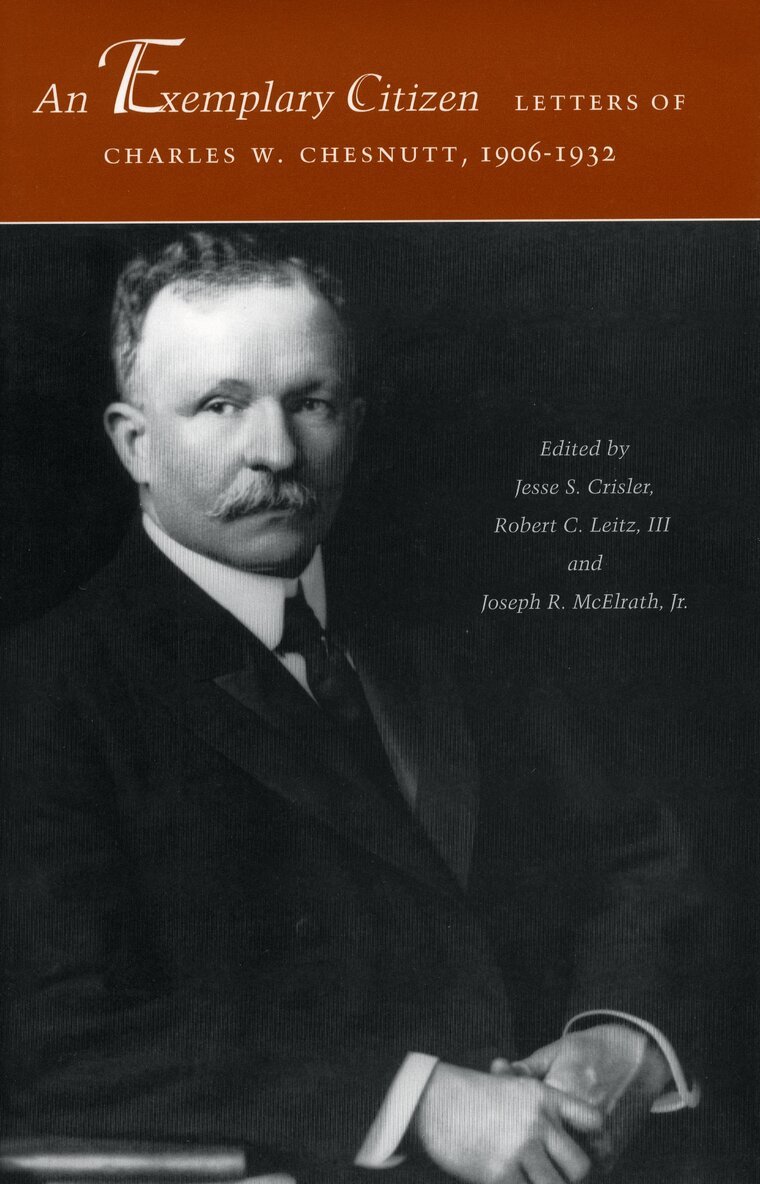
This book collects the letters written between 1906 and 1932 by novelist and civil rights activist Charles W. Chesnutt (1858-1932). Between 1885 and 1905, this pioneer in the African-American literary tradition published three novels, two books of short stories, a biography of Frederick Douglass, and many short stories and essays in prestigious periodicals—at the same time managing a stenography and court reporting firm in Cleveland, Ohio. His works, which featured the experiences of African-Americans in the ante- and post-bellum period, received favorable reviews. But they did not find a large and appreciative audience until many decades later when both the civil rights movement and increased interest in the African-American contribution to American cultural life resulted in the "rediscovering" of Chesnutt's large body of writings. Though he never saw the publication of another of his book-length manuscripts after 1905, Chesnutt continued to write fiction and essays, and to deliver speeches ranging from disenfranchisement to the life and works of Alexandre Dumas, and to act in behalf of the African-American cause through such organizations as the Committee of Twelve and the N.A.A.C.P. A dedicated integrationist opposed to "race-pride" movements of all kinds, Chesnutt in his post-1905 letters includes many references to the unfortunate consequences of racial segregation, addressed to both African-American and white correspondents. These letters also reveal a multi-faceted personality with interests that transcended the issue of race and urged everyone to live life to the fullest. His correspondents included prominent members of the Harlem Renaissance as well as major American political figures Chesnutt sought to influence on behalf of his fellow African-Americans. As a successful businessman enjoying the amenities of upper middle class American life, a family man, and an Episcopalian who worshipped at a "white church," Chesnutt in many respects embodied the realization of the American Dream. He was, as William Dean Howells termed Booker T. Washington, an "exemplary citizen" and a role model for all Americans.