Robert C. Stern - Böcker
Visar alla böcker från författaren Robert C. Stern. Handla med fri frakt och snabb leverans.
6 produkter
6 produkter
Scratch One Flattop
The First Carrier Air Campaign and the Battle of the Coral Sea
Inbunden, Engelska, 2019
495 kr
Skickas inom 7-10 vardagar
By the beginning of May 1942, five months after the Pearl Harbor attack, the US Navy was ready to challenge the Japanese moves in the South Pacific. When the Japanese sent troops to New Guinea and the Solomon Islands, the Americans sent the carriers Lexington and Yorktown to counter the move, setting the stage for the Battle of the Coral Sea.In Scratch One Flattop: The First Carrier Air Campaign and the Battle of the Coral Sea, historian Robert C. Stern analyzes the Battle of the Coral Sea, the first major fleet engagement where the warships were never in sight of each other. Unlike the Battle of Midway, the Battle of the Coral Sea has received remarkably little study. Stern covers not only the action of the ships and their air groups but also describes the impact of this pivotal engagement. His analysis looks at the short-term impact as well as the long-term implications, including the installation of inert gas fuel-system purging on all American aircraft carriers and the push to integrate sensor systems with fighter direction to better protect against enemy aircraft. The essential text on the first carrier air campaign, Scratch One Flattop is a landmark study on an overlooked battle in the first months of the United States' engagement in World War II.
1 007 kr
Skickas inom 10-15 vardagar
"Debating Rationality is a terrific collection of essays written by an obviously first rate set of scholars. Several recent books have attempted to make similar points, but this volume pushes the ideas in new directions, rather than simply restating what are now established themes."—Roderick M. Kramer, co-author of Trust in OrganizationsDecision makers strive to be rational. Traditionally, rational decisions maximize an appropriate return. The contributors to this book challenge the common assumption that good decisions must be rational in this economic sense. They emphasize that the decision-making process is influenced by social, organizational, and psychological considerations as well as by economic concerns. Relationships, time pressure, external demands for specific types of performance, contractual expectations, human biases, and reactions to unfair treatment alter the decision-making context and the resulting decision outcomes.
357 kr
Skickas
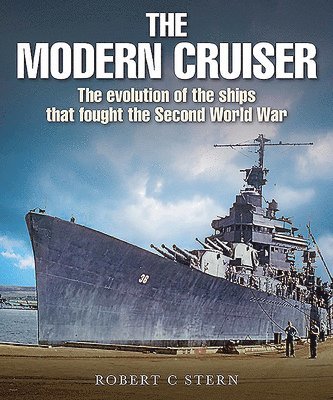
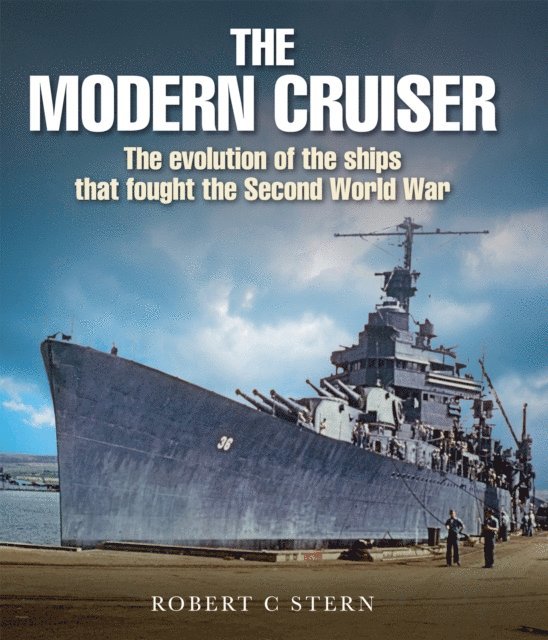
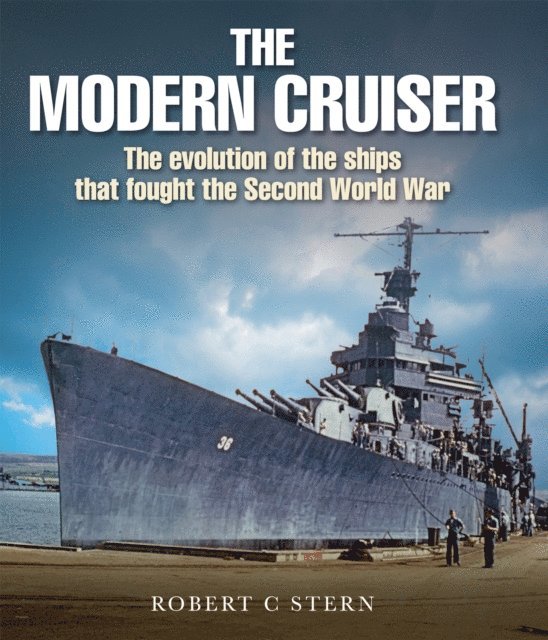
Cruisers probably vary more in their characteristics than any other warship type and have certainly been subject to the most convoluted development. There was always a basic tension between quantity and quality, between numbers and unit size, but at a more detailed level every one of the naval powers made different demands of their cruiser designers. This makes the story of cruiser evolution in the world's major navies fascinating but complex.This book sets out to provide a coherent history of the fortunes of this ship-type in the twentieth century, beginning with a brief summary of development before the First World War and an account of a few notable cruiser actions during that conflict that helped define what cruisers would look like in the post-war world. The core of the book is devoted to the impact of the naval disarmament treaty process, which concentrated to a great extent on attempting to define limits to the numbers and size of cruisers that could be built, in the process creating the treaty cruiser' as a type that had never existed before and that existed solely because of the treaty process.How the cruisers of the treaty era performed in the Second world War forms the final focus of the book, which concludes with a look at the fate of the cruiser-type since 1945. The result is probably the best single-volume account of the subject to date.
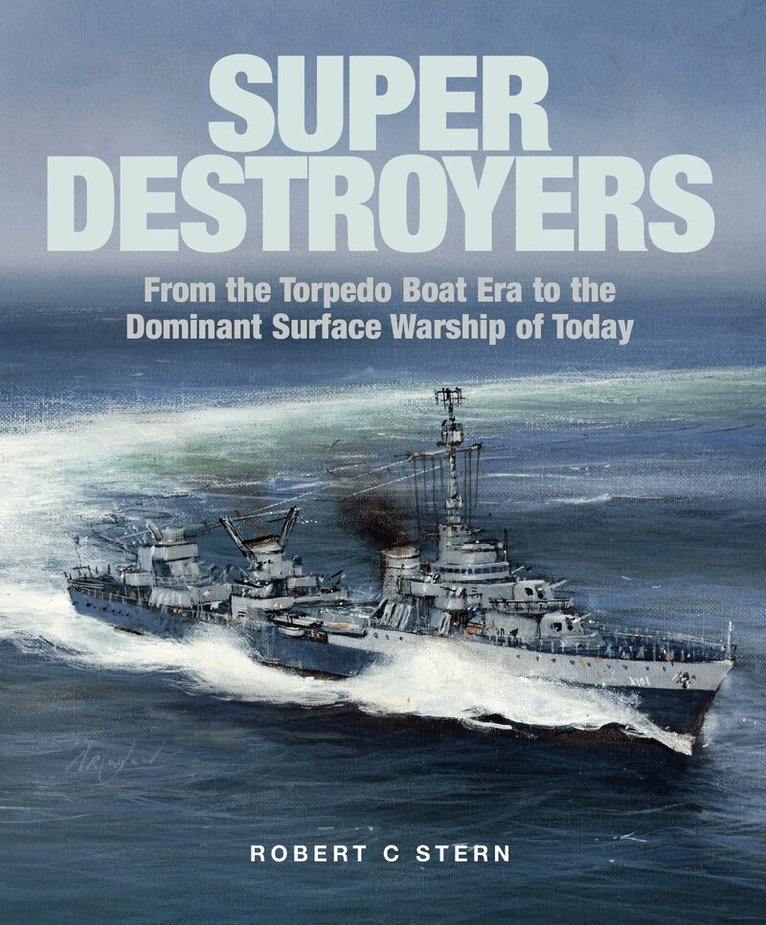
Super Destroyers
From the Torpedo Boat Era to the Dominant Surface Warship of Today
Inbunden, Engelska, 2024
421 kr
Skickas
From the very beginnings of torpedo craft, all naval powers have seen the occasional need for larger, more powerful or in other respects special designs that stand outside the contemporary norms for flotilla craft. The driving forces were often different from country to country and varied over time, but all the resulting ships may be conveniently defined as ‘super destroyers’.This book is a history of these out-of-the-ordinary vessels, the specific conditions that produced them, and their impact on naval warfare, especially during the two world wars. Notable highlights of this story include the introduction of ‘destroyer leaders’ during the Great War, the Japanese ‘Special type’ of the late 1920s, the British ‘Tribal’ class, German ‘Narviks’, and the interwar Franco-Italian rivalry that produced some of the fastest of all super destroyers. By the end of the Second World War only the largest designs seemed adequate, so although built in quantity the US _Gearing_ class were effectively super destroyers by the standards of the day and pointed the way to the future..A final chapter explores the way that after 1945 the big destroyer slowly evolved into the contemporary all-purpose warship – whether described as cruiser, destroyer or frigate – that has become the dominant surface combatant in the world’s navies.Although it concentrates on exceptional designs, in broader terms the book provides a valuable overview of destroyer development as a whole so will be of interest to any warship enthusiast and historian.
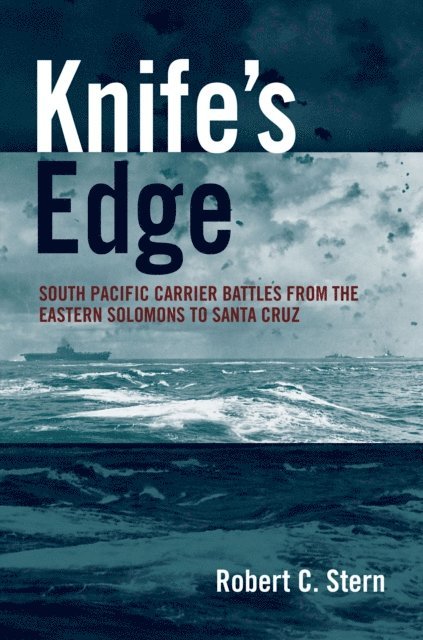
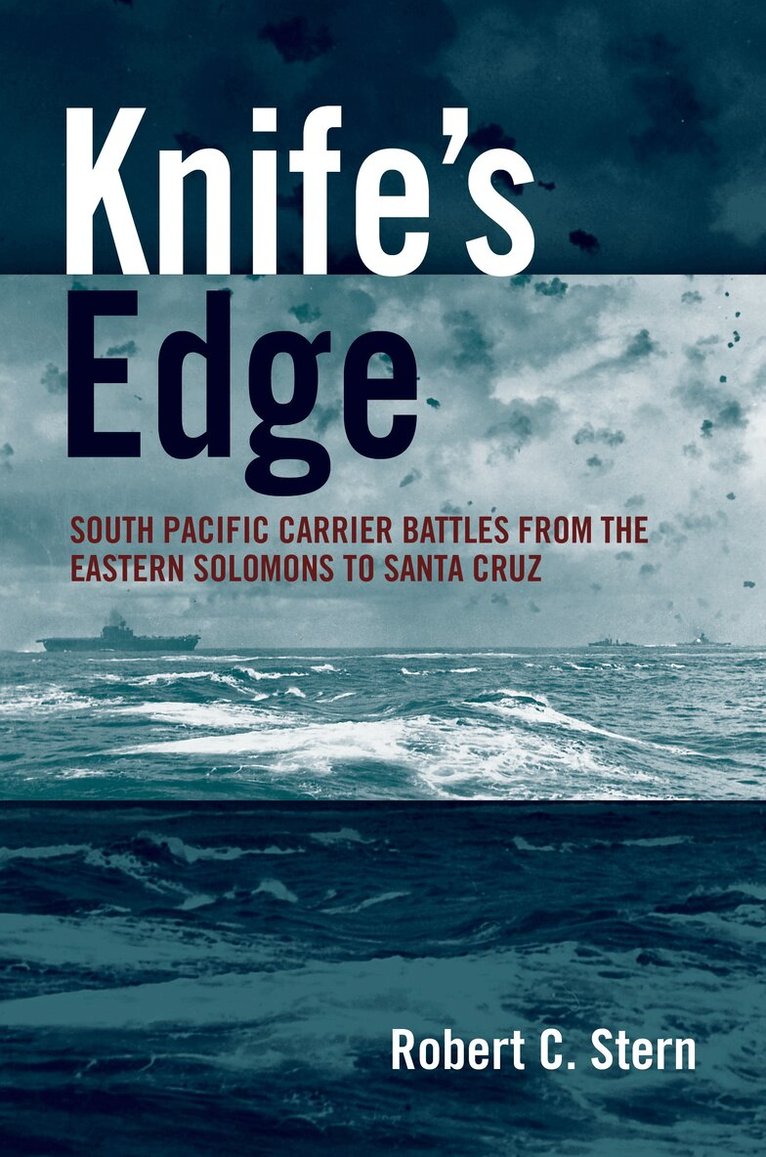
Knife's Edge
South Pacific Carrier Battles from the Eastern Solomons to Santa Cruz
Inbunden, Engelska, 2023
344 kr
Tillfälligt slut
While the resounding American victory at Midway in June 1942 blunted Japanese momentum to a great extent, it left the opposing forces precariously balanced, particularly in the South Pacific. In Knife’s Edge Robert C. Stern provides an account of the Battles of the Eastern Solomons and the Santa Cruz Islands, the two pivotal carrier air battles that followed the initial engagements at the Coral Sea and Midway between the U.S. Navy and the Imperial Japanese Navy. Three U.S. aircraft carriers were sunk or badly damaged over the two months following Midway, including USS Enterprise at the Battle of the Eastern Solomons. Had it not been for the fortuitous arrival of USS Hornet at the end of August, the Americans would have been without an aircraft carrier in the South Pacific until Enterprise returned from repairs on 24 October. At that moment, another major Japanese offensive was afoot, again led by two large carriers, this time supported by another light carrier and a mid-sized merchant-hull conversion. The resulting Battle of the Santa Cruz Islands on 26 October 1942 was a solid tactical victory for the Japanese, who managed to sink Hornet and once again damage Enterprise. Stern has written a history of the two final early carrier battles fought between the U.S. Navy and Imperial Japan. These pivotal battles, coming after the triumph of the U.S. at Midway, illustrate lessons learned from these earlier battles of the Pacific War. Readers already familiar with the history of World War II at sea should find this account a riveting new look at a chapter of the Pacific War rarely covered until now.
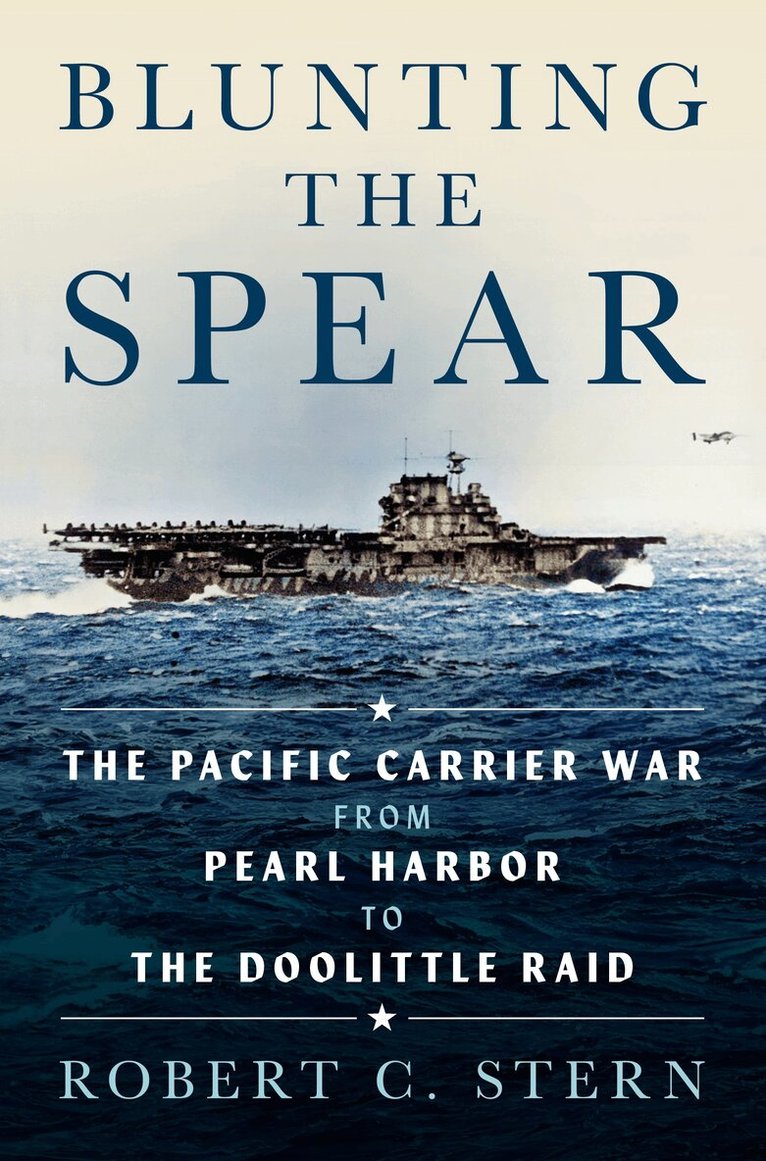
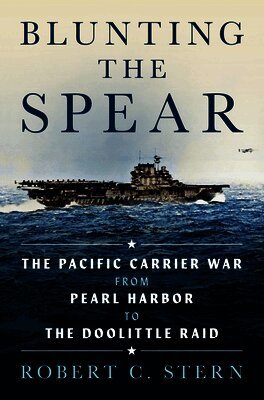
Blunting the Spear
The Pacific Carrier War from Pearl Harbor to the Doolittle Raid
Inbunden, Engelska, 2026
475 kr
Kommande
This compelling book explores the first four months of fighting in the Pacific between the United States and its Allies against Japan, focusing mainly on the aircraft carrier action of the respective navies in the Pacific Theater. In the chaotic months after Pearl Harbor, the Pacific War was anything but inevitable. The U.S. Navy, reeling from sudden loss, scrambled to slow Japanese momentum, while the Imperial Japanese Navy pressed outward, convinced that seizing Southeast Asia’s resources was essential to survival. This book captures that dangerous, uncertain moment—from December 1941 through April 1942—when the outcome of the Pacific War remained very much in doubt. Moving across a vast maritime battlefield, Blunting the Spear centers on early carrier operations and surface actions that tested new doctrines, unproven leaders, and their fleets. From American raids on the Marshalls and Gilberts to clashes near Rabaul, Port Darwin, and Lae and Salamaua, the book shows how both sides adapted to fast-moving air-sea combat while operating at the edge of logistical reach. These encounters were improvised, risky, and often misunderstood at the time. The story is driven by the people who shaped these early campaigns. Commanders such as Wilson Brown and William “Bull” Halsey navigated uncertainty, scarce intelligence, and unfamiliar demands of carrier warfare. U.S. Navy aviator Edward “Butch” O’Hare’s lone stand against incoming Japanese bombers demonstrated how individual action could alter events in minutes. Japanese fighter pilot Nagahama Yoshikazu’s combat over Port Darwin reveals the skill and confidence of an adversary still near the height of its power. Author Robert C. Stern also examines the planning and execution of the Doolittle Raid, a strike whose material damage was limited but whose psychological impact reverberated through Tokyo and Washington alike. By connecting early raids, defensive actions, and leadership choices to the larger arc leading toward Coral Sea and Midway, this book reveals how the Pacific carrier war was forged during these early months of uncertainty. Stern offers a tightly drawn account of how momentum shifted in the Pacific and how the earliest battles helped determine the war that followed. Perfect for history enthusiasts, military buffs, and anyone fascinated by the Pacific Theater, Blunting the Spear offers a fresh perspective on the early days of the carrier conflict.