Robert E Babe – författare
Visar alla böcker från författaren Robert E Babe. Handla med fri frakt och snabb leverans.
21 produkter
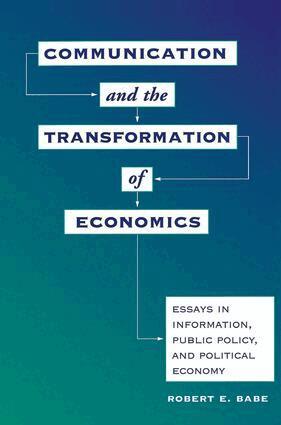
Communication And The Transformation Of Economics
Essays In Information, Public Policy, And Political Economy
Inbunden, 2019
2516 kr
Lägg i varukorg
Many governments are pursuing with relentless vigor a neoconservative/transnational corporate program of globalization, privatization, deregulation, cutbacks to social programs, and downsizing of the public sector. Countries are forming into giant ?free trade? blocs. Increasingly they lack the will …
Communication And The Transformation Of Economics
Essays In Information, Public Policy, And Political Economy
E-bok, 2018
785 kr
Lägg i varukorg
This book proposes that infusing mainline economics with more expansive and realistic conceptions of information/communication transforms static neoclassicism into evolutionary political economy. It results in modes of analysis that, when applied through policy, can lead to a sustainable future.
Communication And The Transformation Of Economics
Essays In Information, Public Policy, And Political Economy
E-bok, 2018
785 kr
Lägg i varukorg
This book proposes that infusing mainline economics with more expansive and realistic conceptions of information/communication transforms static neoclassicism into evolutionary political economy. It results in modes of analysis that, when applied through policy, can lead to a sustainable future.
Cultural Studies and Political Economy
Toward a New Integration
Inbunden, 2008
1422 kr
Lägg i varukorg
This book addresses the notorious split between the two fields of cultural studies and political economy. Drawing on the works of Harold Innis, Theodor Adorno, Raymond Williams, Richard Hoggart, E.P. Thompson, and other major theorists in the two fields, Robert E. Babe shows that political economy …
Cultural Studies and Political Economy
Toward a New Integration
Häftad, 2010
644 kr
Lägg i varukorg
This book addresses the notorious split between the two fields of cultural studies and political economy. Drawing on the works of Harold Innis, Theodor Adorno, Raymond Williams, Richard Hoggart, E.P. Thompson, and other major theorists in the two fields, Robert E. Babe shows that political economy …
Wilbur Schramm and Noam Chomsky Meet Harold Innis
Media, Power, and Democracy
Häftad, 2016
809 kr
Lägg i varukorg
Wilbur Schramm and Noam Chomsky Meet Harold Innis is an original, critical, in-depth analysis of the media and communication thought of Canada’s most highly acclaimed scholar, Harold Adams Innis. Even in Canada, however, Innis’s writings until now have been only partially cited and interpreted: …
Information and Communication in Economics
Inbunden, 1993
1686 kr
Lägg i varukorg
Although there is a burgeoning interest among economists in "information economics", much of the literature adopts a reductionist conceptualization of information, defining it exclusively as reduction in uncertainty, exploring the implications of imperfect information on markets. This neoclassical …
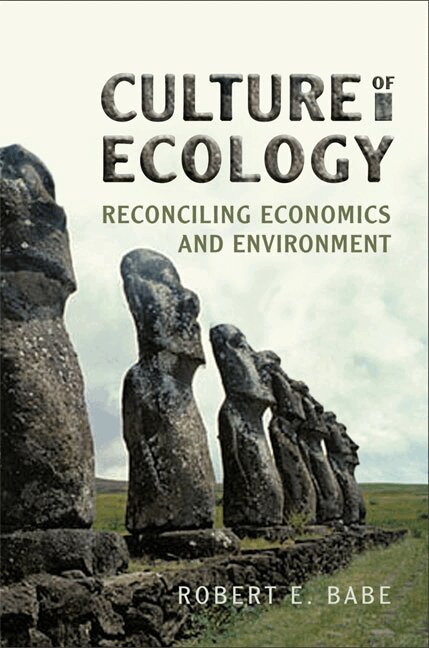
Culture of Ecology
Reconciling Economics and Environment
Inbunden, 2006
931 kr
Lägg i varukorg
There is a fundamental contradiction between economics and ecology. Activities that increase well-being by economic criteria often erode ecosystem vitality, and what preserves and enhances environmental well-being is often deemed 'inefficient' to economic demands. Regrettably, in our culture, we …
Canadian Communication Thought
Ten Foundational Writers
Inbunden, 2000
1249 kr
Lägg i varukorg
Canada has a rich heritage of English-language communication thought. For the first time "Canadian Communication Thought" assembles much of this erudition by introducing and examining the writings of ten foundational scholars: Graham Spry, Harold Innis, John Grierson, Dallas Smythe, C.B. …
Canadian Communication Thought
Ten Foundational Writers
Häftad, 2000
588 kr
Lägg i varukorg
Canada has a rich heritage of English-language communication thought. For the first time "Canadian Communication Thought" assembles much of this erudition by introducing and examining the writings of ten foundational scholars: Graham Spry, Harold Innis, John Grierson, Dallas Smythe, C.B. …
Communication And The Transformation Of Economics
Essays In Information, Public Policy, And Political Economy
Häftad, 1995
668 kr
Lägg i varukorg
This book proposes that infusing mainline economics with more expansive and realistic conceptions of information/communication transforms static neoclassicism into evolutionary political economy. It results in modes of analysis that, when applied through policy, can lead to a sustainable future.
Canadian Communication Thought
Ten Foundational Writers
E-bok, 2000
637 kr
Lägg i varukorg
Canada has a rich heritage of English-language communication thought. For the first time "Canadian Communication Thought" assembles much of this erudition by introducing and examining the writings of ten foundational scholars: Graham Spry, Harold Innis, John Grierson, Dallas Smythe, C.B. …
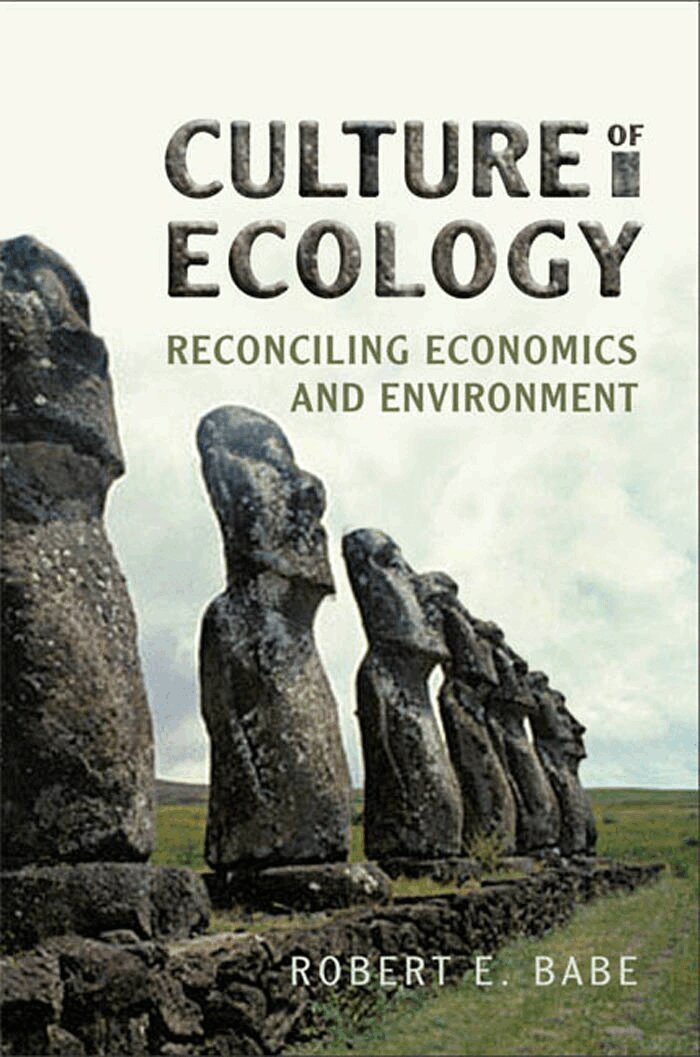
Culture of Ecology
Reconciling Economics and Environment
E-bok, 2006
1209 kr
Lägg i varukorg
There is a fundamental contradiction between economics and ecology. Activities that increase well-being by economic criteria often erode ecosystem vitality, and what preserves and enhances environmental well-being is often deemed 'inefficient' to economic demands. Regrettably, in our culture, we …
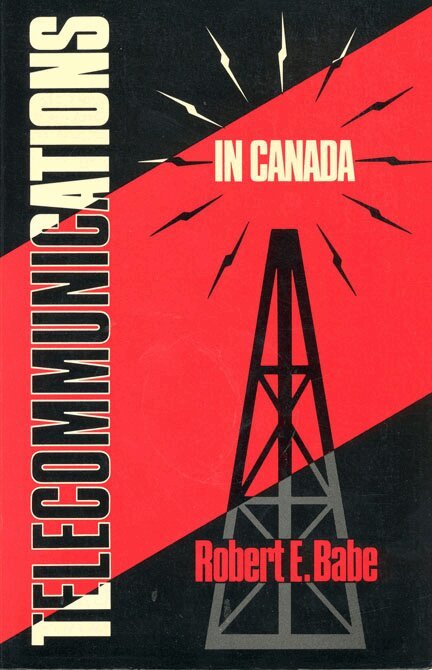
Telecommunications in Canada
E-bok, 1994
638 kr
Lägg i varukorg
This study provides Canada's first comprehensive, integrated treatment of the emergence and development of key communication sectors: telegraph telephones, cable TV, broadcasting, communication satellites, and electronic publishing. By focusing on real institutions, actual (and frequently …
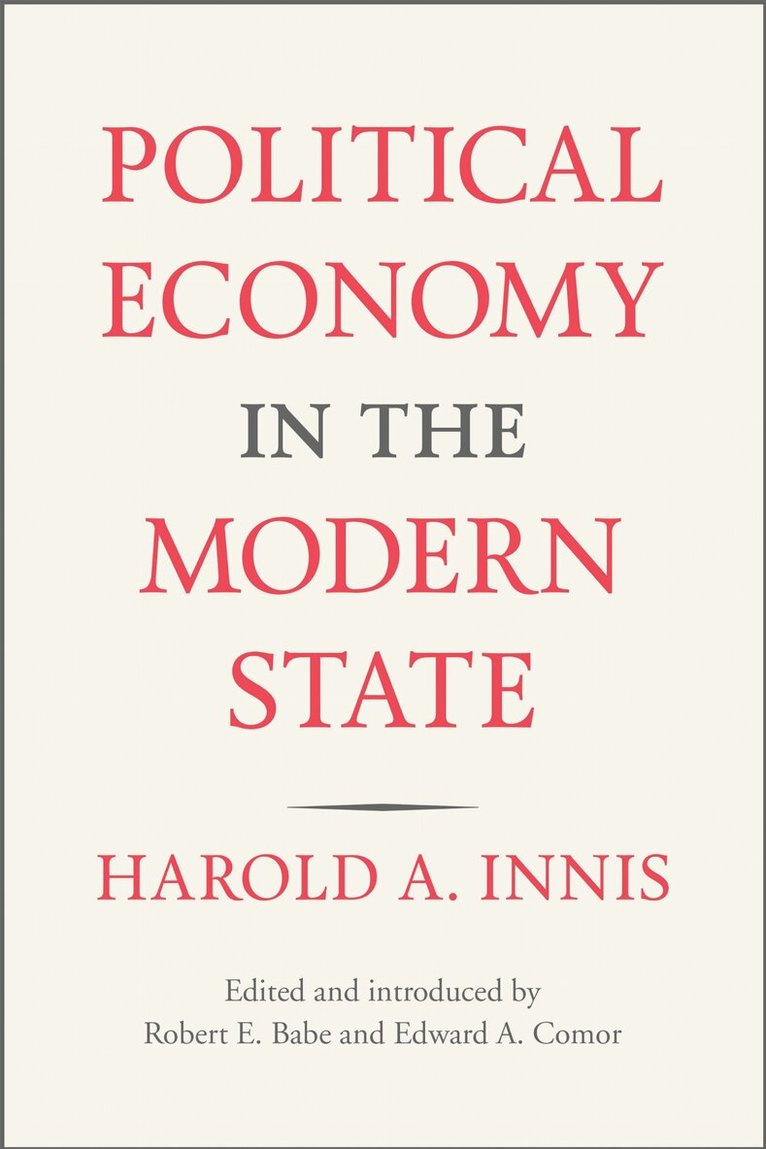
Political Economy in the Modern State
Av Harold A. Innis, Robert E. Babe m. fl.
Inbunden, 2018
974 kr
Lägg i varukorg
Political Economy in the Modern State is Harold Innis’s transitional and, in some respects, his most transformative book. Completed in 1946, it is a collection of fifteen chapters plus a remarkable Preface selected and crafted to address four main themes: the problem of power and peace in the …
Political Economy in the Modern State
Av Harold A. Innis, Robert E. Babe m. fl.
E-bok, 2018
571 kr
Lägg i varukorg
Political Economy in the Modern State is Harold Innis’s transitional and, in some respects, his most transformative book. Completed in 1946, it is a collection of fifteen chapters plus a remarkable Preface selected and crafted to address four main themes: the problem of power and peace in the …
Political Economy in the Modern State
Av Harold A. Innis, Robert E. Babe m. fl.
E-bok, 2018
558 kr
Lägg i varukorg
Political Economy in the Modern State is Harold Innis’s transitional and, in some respects, his most transformative book. Completed in 1946, it is a collection of fifteen chapters plus a remarkable Preface selected and crafted to address four main themes: the problem of power and peace in the …
Political Economy in the Modern State
Av Harold A. Innis, Robert E. Babe m. fl.
Häftad, 2018
440 kr
Lägg i varukorg
Political Economy in the Modern State is Harold Innis’s transitional and, in some respects, his most transformative book. Completed in 1946, it is a collection of fifteen chapters plus a remarkable Preface selected and crafted to address four main themes: the problem of power and peace in the …
Information and Communication in Economics
Häftad, 2012
1637 kr
Lägg i varukorg
Although there is a burgeoning interest among economists in `information economics', much of the literature adopts a reductionist conceptualization of information, defining it exclusively as reduction in uncertainty, exploring the implications of imperfect information on markets. This neoclassical …
Information and Communication in Economics
E-bok, 2012
2065 kr
Lägg i varukorg
Although there is a burgeoning interest among economists in `information economics'', much of the literature adopts a reductionist conceptualization of information, defining it exclusively as reduction in uncertainty, exploring the implications of imperfect information on markets. This neoclassical …
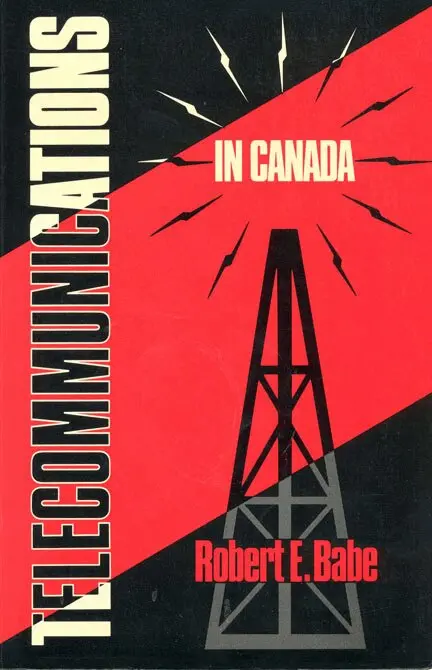
Telecommunications in Canada
Häftad, 1990
469 kr
Tillfälligt slut
This study provides Canada's first comprehensive, integrated treatment of the emergence and development of key communication sectors: telegraph telephones, cable TV, broadcasting, communication satellites, and electronic publishing. By focusing on real institutions, actual (and frequently …