Robert Fink – författare
Visar alla böcker från författaren Robert Fink. Handla med fri frakt och snabb leverans.
11 produkter
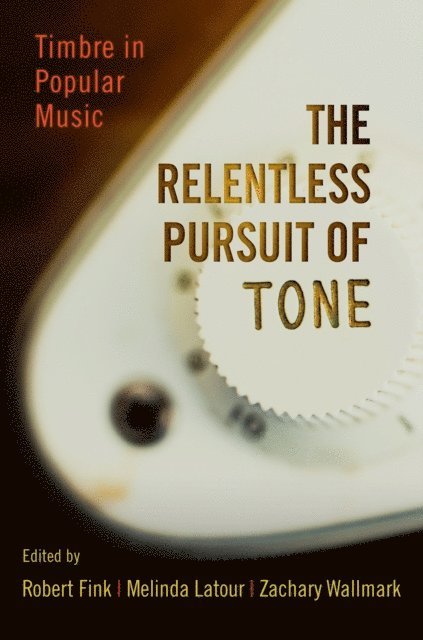
Relentless Pursuit of Tone
Timbre in Popular Music
Av Zachary Wallmark, Melinda Latour m. fl.
E-bok, 2018
470 kr
Lägg i varukorg
The Relentless Pursuit of Tone: Timbre in Popular Music assembles a broad spectrum of contemporary perspectives on how "sound" functions in an equally wide array of popular music. Ranging from the twang of country banjoes and the sheen of hip-hop strings to the crunch of amplified guitars and the …
The Relentless Pursuit of Tone
Timbre in Popular Music
Inbunden, 2018
2328 kr
Lägg i varukorg
The Relentless Pursuit of Tone: Timbre in Popular Music assembles a broad spectrum of contemporary perspectives on how "sound" functions in an equally wide array of popular music. Ranging from the twang of country banjoes and the sheen of hip-hop strings to the crunch of amplified guitars and the …
The Relentless Pursuit of Tone
Timbre in Popular Music
Av Robert Fink, Melinda Latour m. fl.
Häftad, 2018
672 kr
Lägg i varukorg
The Relentless Pursuit of Tone: Timbre in Popular Music assembles a broad spectrum of contemporary perspectives on how "sound" functions in an equally wide array of popular music. Ranging from the twang of country banjoes and the sheen of hip-hop strings to the crunch of amplified guitars and the …
Relentless Pursuit of Tone
Timbre in Popular Music
Av Zachary Wallmark, Melinda Latour m. fl.
E-bok, 2018
470 kr
Lägg i varukorg
The Relentless Pursuit of Tone: Timbre in Popular Music assembles a broad spectrum of contemporary perspectives on how "sound" functions in an equally wide array of popular music. Ranging from the twang of country banjoes and the sheen of hip-hop strings to the crunch of amplified guitars and the …
Repeating Ourselves
American Minimal Music as Cultural Practice
Av Robert Fink
Häftad, 2005
313 kr
Lägg i varukorg
Where did musical minimalism come from--and what does it mean? In this significant revisionist account of minimalist music, Robert Fink connects repetitive music to the postwar evolution of an American mass consumer society. Abandoning the ingrained formalism of minimalist aesthetics, Repeating …
Repeating Ourselves
American Minimal Music as Cultural Practice
Av Robert Fink
E-bok, 2005
535 kr
Lägg i varukorg
Where did musical minimalism come from—and what does it mean? In this significant revisionist account of minimalist music, Robert Fink connects repetitive music to the postwar evolution of an American mass consumer society. Abandoning the ingrained formalism of minimalist aesthetics, Repeating …