Robert Geraci - Böcker
Visar alla böcker från författaren Robert Geraci. Handla med fri frakt och snabb leverans.
5 produkter
5 produkter
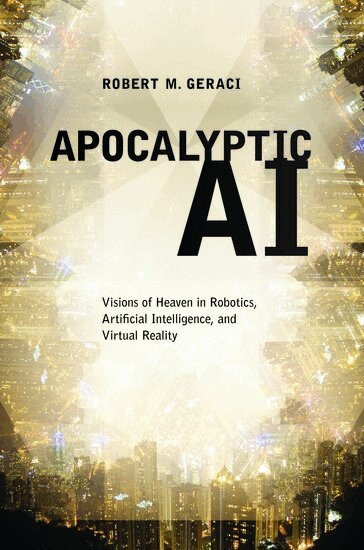
Apocalyptic AI
Visions of Heaven in Robotics, Artificial Intelligence, and Virtual Reality
Inbunden, Engelska, 2010
503 kr
Skickas inom 5-8 vardagar
Apocalyptic AI, the hope that we might one day upload our minds into machines and live forever in cyberspace, is a surprisingly wide-spread and influential idea, affecting everything from the world view of online gamers to government research funding and philosophical thought. In Apocalyptic AI, Robert Geraci offers the first serious account of this ¨cyber-theology¨ and the people who promote it, drawing on interviews with roboticists and AI researchers and even devotees of the online game Second Life. He points out that the rhetoric of Apocalyptic AI is strikingly similar to that of the apocalyptic traditions of Judaism and Christianity--in both systems the believer is trapped in a dualistic universe and expects a resolution in which he or she will be translated to a transcendent new world and live forever in a glorified new body. Geraci also shows how this worldview exerts significant influence by promoting certain types of research in robotics and artificial intelligence, and has also had an impact on philosophers of mind, theologians, and even legal scholars.
1 558 kr
Skickas inom 10-15 vardagar
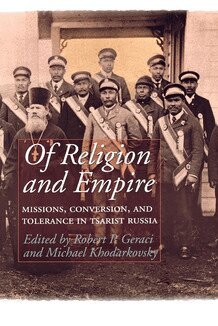
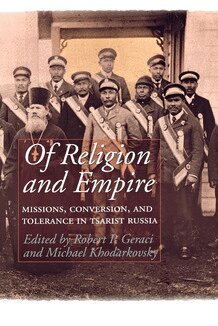
Russia's ever-expanding imperial boundaries encompassed diverse peoples and religions. Yet Russian Orthodoxy remained inseparable from the identity of the Russian empire-state, which at different times launched conversion campaigns not only to "save the souls" of animists and bring deviant Orthodox groups into the mainstream, but also to convert the empire's numerous Muslims, Buddhists, Jews, Catholics, and Uniates. This book is the first to investigate the role of religious conversion in the long history of Russian state building.How successful were the Church and the state in proselytizing among religious minorities? How were the concepts of Orthodoxy and Russian nationality shaped by the religious diversity of the empire? What was the impact of Orthodox missionary efforts on the non-Russian peoples, and how did these peoples react to religious pressure? In chapters that explore these and other questions, this book provides geographical coverage from Poland and European Russia to the Caucasus, Central Asia, Siberia, and Alaska.The editors' introduction and conclusion place the twelve original essays in broad historical context and suggest patterns in Russian attitudes toward religion that range from attempts to forge a homogeneous identity to tolerance of complexity and diversity.
696 kr
Skickas inom 10-15 vardagar
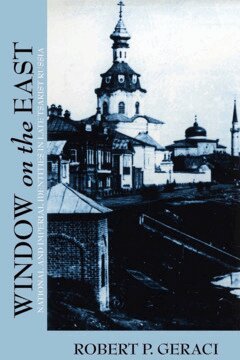
Robert Geraci presents an exceptionally original account of both the politics and the lived experience of diversity in a society whose ethnic complexity has long been downplayed. For centuries, Russians have defined their country as both a multinational empire and a homogeneous nation-state in the making, and have alternately embraced and repudiated the East or Asia as fundamental to Russia's identity. The author argues that the city of Kazan, in the middle Volga region, was the chief nineteenth-century site for mediating this troubled and paradoxical relationship with the East, much as St. Petersburg had served as Russia's window on Europe a century earlier. He shows how Russians sought through science, religion, pedagogy, and politics to understand and promote the Russification of ethnic minorities in the East, as well as to define themselves. Vivid in narrative detail, meticulously argued, and peopled by a colorful cast including missionaries, bishops, peasants, mullahs, professors, teachers, students, linguists, orientalists, archeologists, and state officials, Window on the East uses previously untapped archival and published materials to describe the creation (sometimes intentional, sometimes unintentional) of intermediate and new forms of Russianness.
489 kr
Skickas inom 10-15 vardagar
Robert Geraci presents an exceptionally original account of both the politics and the lived experience of diversity in a society whose ethnic complexity has long been downplayed. For centuries, Russians have defined their country as both a multinational empire and a homogeneous nation-state in the making, and have alternately embraced and repudiated the East or Asia as fundamental to Russia's identity. The author argues that the city of Kazan, in the middle Volga region, was the chief nineteenth-century site for mediating this troubled and paradoxical relationship with the East, much as St. Petersburg had served as Russia's window on Europe a century earlier. He shows how Russians sought through science, religion, pedagogy, and politics to understand and promote the Russification of ethnic minorities in the East, as well as to define themselves. Vivid in narrative detail, meticulously argued, and peopled by a colorful cast including missionaries, bishops, peasants, mullahs, professors, teachers, students, linguists, orientalists, archeologists, and state officials, Window on the East uses previously untapped archival and published materials to describe the creation (sometimes intentional, sometimes unintentional) of intermediate and new forms of Russianness.
368 kr
Skickas inom 10-15 vardagar
Russia's ever-expanding imperial boundaries encompassed diverse peoples and religions. Yet Russian Orthodoxy remained inseparable from the identity of the Russian empire-state, which at different times launched conversion campaigns not only to "save the souls" of animists and bring deviant Orthodox groups into the mainstream, but also to convert the empire's numerous Muslims, Buddhists, Jews, Catholics, and Uniates. This book is the first to investigate the role of religious conversion in the long history of Russian state building.How successful were the Church and the state in proselytizing among religious minorities? How were the concepts of Orthodoxy and Russian nationality shaped by the religious diversity of the empire? What was the impact of Orthodox missionary efforts on the non-Russian peoples, and how did these peoples react to religious pressure? In chapters that explore these and other questions, this book provides geographical coverage from Poland and European Russia to the Caucasus, Central Asia, Siberia, and Alaska.The editors' introduction and conclusion place the twelve original essays in broad historical context and suggest patterns in Russian attitudes toward religion that range from attempts to forge a homogeneous identity to tolerance of complexity and diversity.