Robert H. Brinkmeyer Jr - Böcker
Visar alla böcker från författaren Robert H. Brinkmeyer Jr. Handla med fri frakt och snabb leverans.
3 produkter
3 produkter
361 kr
Skickas inom 10-15 vardagar
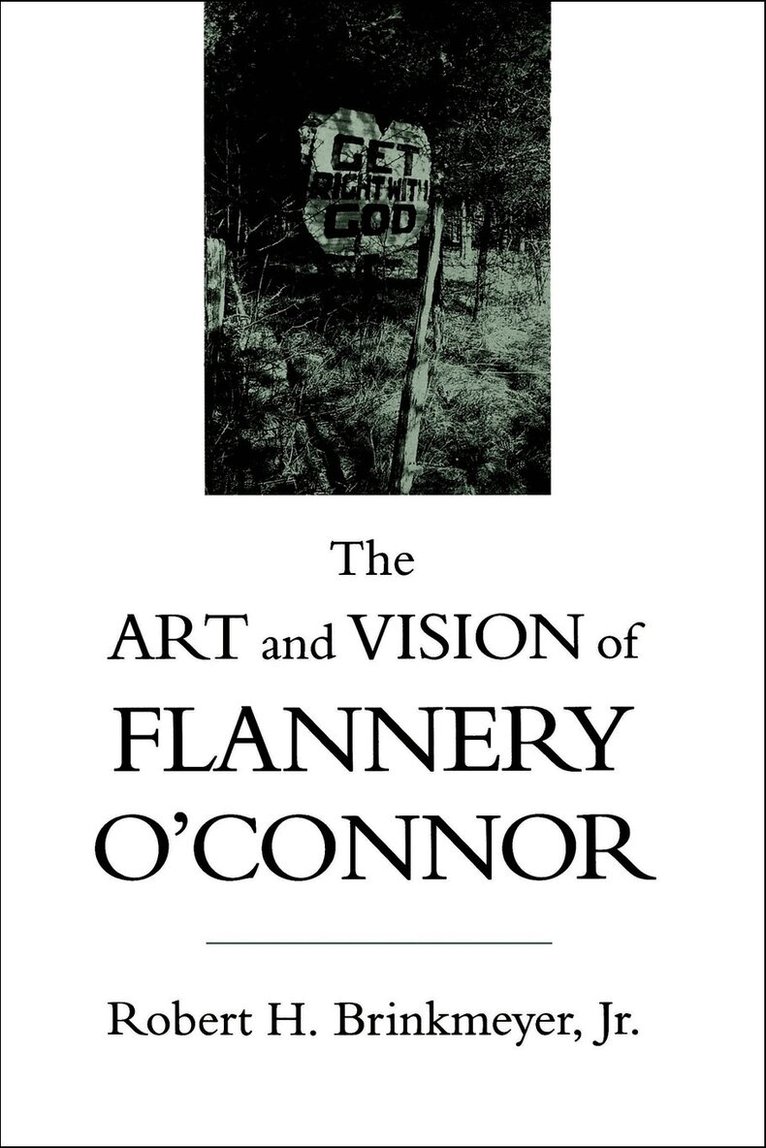
Flannery O'Connor believed that fiction must try to achieve something on the order of what St. Gregory wrote about Scripture: every time it presents a fact, it must also disclose a mystery. O'Connor's artistic vision was located squarely in her Catholic faith, yet she realised that to view life only through the eyes of the Church was to ignore a large part of existence. In her fiction, therefore, she explored a wider world, employing voices that challenged conceptions of both self and faith, ultimately enlarging and deepening both. In The Art and Vision of Flannery O'Connor, Robert Brinkmeyer presents an innovative study of O'Connor's fiction by exploring the dialogic forces at work in her writing.Drawing on the insights of literary theorist Mikhail Bakhtin, Brinkmeyer offers an explanation for the great depth and power of O'Connor's work, paying particular attention to the ways her art and audience bear upon her regnant Catholic vision. This pressure and resistance, Brinkmeyer writes, free O'Connor's vision from the limits of its perspective, opening it to growth and understanding. After a thorough discussion of the ways in which O'Connor's Catholic and southern heritage helped to form her artistic vision, Brinkmeyer shows how dialogic encounters are at work in O'Connor's interaction with her largely fundamentalist narrators, the stories they tell, and her readers. He focuses on several of her stories as well as her two novels, Wise Blood and The Violent Bear It Away. As the first analysis of the dialogical dynamics of O'Connor's art and vision, this study offers an original approach to understanding O'Connor. But the significance of the book extends far beyond O'Connor scholarship, for Brinkmeyer presents a critical method that has value for exploring other writers, particularly other modern Catholic writers.
483 kr
Skickas inom 10-15 vardagar
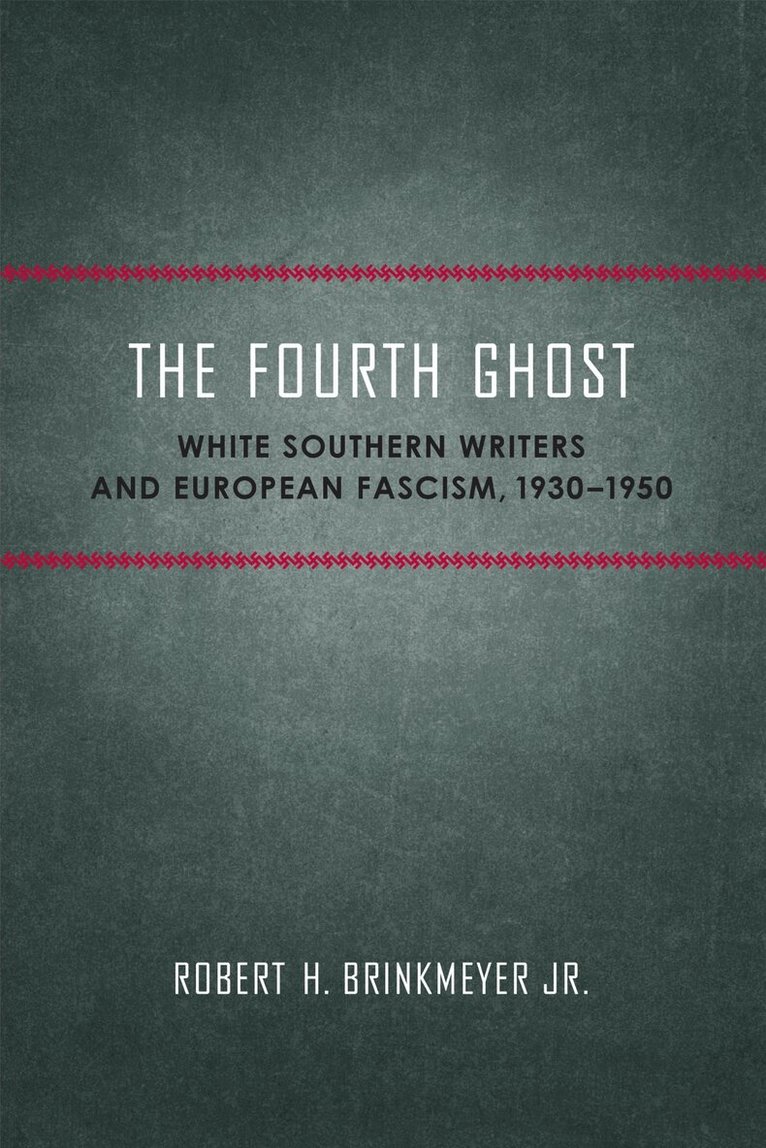
In the 1949 classic Killers of the Dream, Lillian Smith described three racial "ghosts" haunting the mind of the white South: the black woman with whom the white man often had sexual relations, the rejected child from a mixed-race coupling, and the black mammy whom the white southern child first loves but then must reject. In this groundbreaking work, Robert H. Brinkmeyer, Jr., extends Smith's work by adding a fourth "ghost" lurking in the psyche of the white South -- the specter of European Fascism. He explores how southern writers of the 1930s and 1940s responded to Fascism, and most tellingly to the suggestion that the racial politics of Nazi Germany had a special, problematic relevance to the South and its segregated social system.As Brinkmeyer shows, nearly all white southern writers in these decades felt impelled to deal with this specter and with the implications for southern identity of the issues raised by Nazism and Fascism. Their responses varied widely, ranging from repression and denial to the repulsion of self-recognition. With penetrating insight, Brinkmeyer examines the work of writers who contemplated the connection between the authoritarianism and racial politics of Nazi Germany and southern culture. He shows how white southern writers -- both those writing cultural criticism and those writing imaginative literature -- turned to Fascist Europe for images, analogies, and metaphors for representing and understanding the conflict between traditional and modern cultures that they were witnessing in Dixie.Brinkmeyer considers the works of a wide range of authors of varying political stripes: the Nashville Agrarians, W. J. Cash, Lillian Smith, William Alexander Percy, Thomas Wolfe, William Faulkner, Katherine Anne Porter, Carson McCullers, Robert Penn Warren, and Lillian Hellman. He argues persuasively that by engaging in their works the vital contemporary debates about totalitarianism and democracy, these writers reconfigured their understanding not only of the South but also of themselves as southerners, and of the nature and significance of their art.The magnum opus of a distinguished scholar, The Fourth Ghost offers a stunning reassessment of the cultural and political orientation of southern literature by examining a major and heretofore unexplored influence on its development.
453 kr
Skickas inom 5-8 vardagar
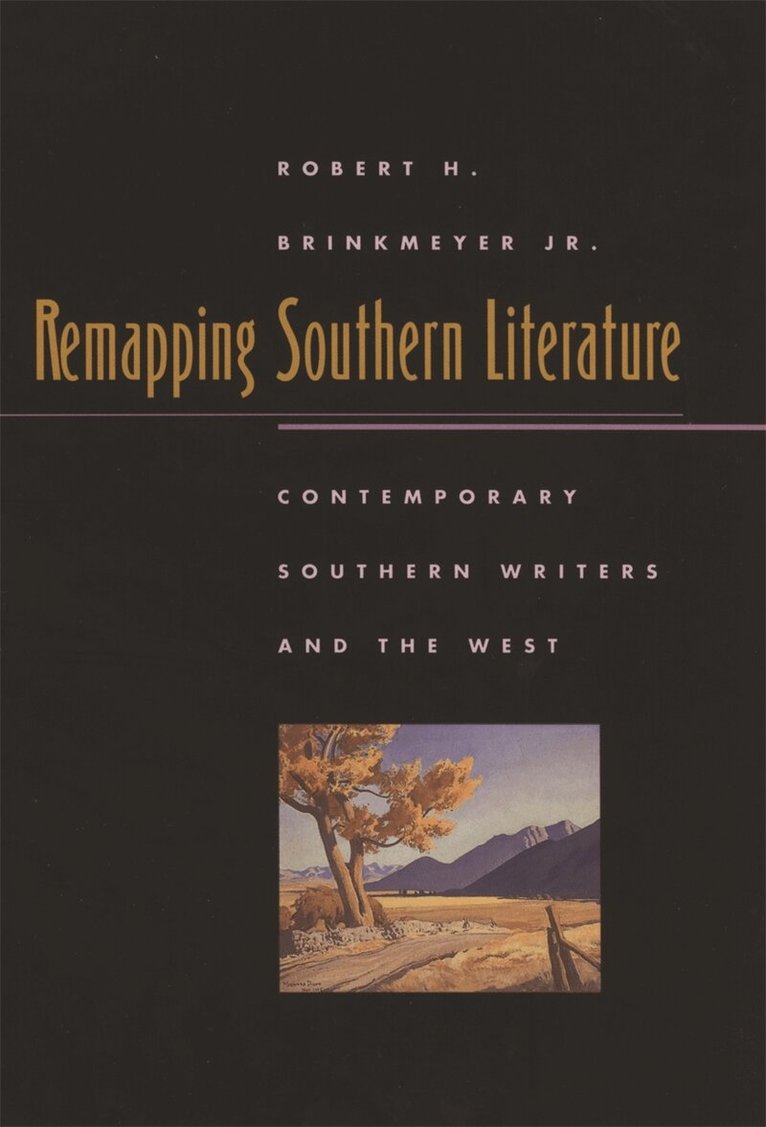
One of the most significant and surprising developments in contemporary southern fiction is that an increasing number of southern writers are writing about the American West. In Remapping Southern Literature: Contemporary Southern Writers and the West, Robert H. Brinkmeyer Jr. studies current southern authors of western novels, historical fiction, and contemporary fiction who have been breaking the mold of southern literature by looking westward. Cut loose, in the postmodern age, from the traditional roots in a sense of place, contemporary southern writers have explored an American West shaped by the myths of lawless freedom and disruptive expansion. The rich and diverse fiction of Doris Betts, Barry Hannah, Cormac McCarthy, Madison Smartt Bell, Richard Ford, Rick Bass, Barbara Kingsolver, Chris Offutt, Frederick Barthelme, Dorothy Allison, and Clyde Edgerton, among others, challenges long-standing definitions of southern fiction and regional identity and reconfigures the myths of the West that have long shaped American life.In Remapping Southern Literature, Brinkmeyer proposes that today’s southern writers are not by this shift abandoning southern culture but are instead expanding its reach by seeking to balance the ideals of the South and West. This effort points toward a new literary tradition and a new regional and national mythology that blends place and space, settlement and movement, community and individualism, security and freedom.