Robert J. Beck – författare
Visar alla böcker från författaren Robert J. Beck. Handla med fri frakt och snabb leverans.
10 produkter
International Rules
Approaches from International Law and International Relations
Av Robert J. Beck, Anthony Clark Arend m. fl.
Häftad, 1996
1078 kr
Lägg i varukorg
An interdisciplinary collection of readings on international law, bringing together representative pieces from the most prominent approaches to international legal theory. The volume provides a survey of the major positions and proponents of the major schools.
Grenada Invasion
Politics, Law, And Foreign Policy Decisionmaking
Inbunden, 2019
2504 kr
Lägg i varukorg
Robert Beck's study focuses principally on two related questions. First, how did the Reagan administration decide to launch the invasion of Grenada? And second, what role did international law play in that decision? The Grenada Invasion draws on extensive interviews and correspondence with key …
Grenada Invasion
Politics, Law, And Foreign Policy Decisionmaking
Häftad, 2021
689 kr
Lägg i varukorg
Robert Beck's study focuses principally on two related questions. First, how did the Reagan administration decide to launch the invasion of Grenada? And second, what role did international law play in that decision? The Grenada Invasion draws on extensive interviews and correspondence with key …
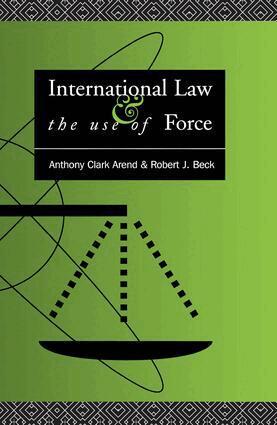
International Law and the Use of Force
Beyond the U.N. Charter Paradigm
Av Anthony Clark Arend, Robert J. Beck
Häftad, 1993
848 kr
Lägg i varukorg
When the United Nations Charter was adopted in 1945, states established a legal `paradigm' for regulating the recourse to armed force. In the years since then, however, significant developments have challenged the paradigm's validity, causing a `pardigmatic shift'. International Law and the Use of …
Grenada Invasion
Politics, Law, And Foreign Policy Decisionmaking
E-bok, 2019
838 kr
Lägg i varukorg
Robert Beck''s study focuses principally on two related questions. First, how did the Reagan administration decide to launch the invasion of Grenada? And second, what role did international law play in that decision? The Grenada Invasion draws on extensive interviews and correspondence with key …
Grenada Invasion
Politics, Law, And Foreign Policy Decisionmaking
E-bok, 2019
838 kr
Lägg i varukorg
Robert Beck''s study focuses principally on two related questions. First, how did the Reagan administration decide to launch the invasion of Grenada? And second, what role did international law play in that decision? The Grenada Invasion draws on extensive interviews and correspondence with key …
International Law and the Use of Force
Beyond the U.N. Charter Paradigm
Av Robert J. Beck, Anthony Clark Arend
E-bok, 2014
1004 kr
Lägg i varukorg
When the United Nations Charter was adopted in 1945, states established a legal `paradigm'' for regulating the recourse to armed force. In the years since then, however, significant developments have challenged the paradigm''s validity, causing a `pardigmatic shift''. International Law and the Use …
International Law and the Use of Force
Beyond the U.N. Charter Paradigm
Av Robert J. Beck, Anthony Clark Arend
E-bok, 2014
982 kr
Lägg i varukorg
When the United Nations Charter was adopted in 1945, states established a legal `paradigm'' for regulating the recourse to armed force. In the years since then, however, significant developments have challenged the paradigm''s validity, causing a `pardigmatic shift''. International Law and the Use …
International Law and the Use of Force
Beyond the U.N. Charter Paradigm
Av Anthony Clark Arend, Robert J. Beck
Inbunden, 2015
2303 kr
Lägg i varukorg
When the United Nations Charter was adopted in 1945, states established a legal `paradigm' for regulating the recourse to armed force. In the years since then, however, significant developments have challenged the paradigm's validity, causing a `pardigmatic shift'. International Law and the Use of …
International Law and the Rise of Nations
The State System and the Challenge of Ethnic Groups
Av Robert J. Beck, Thomas Ambrosio
Häftad, 2001
1690 kr
Lägg i varukorg
Among the significant consequences of the Cold War’s end has been the rise of nations and the challenges that these nations pose for global order and international law. Taking a unique approach to explore this phenomenon, Beck and Ambrosio consider three principal themes: the emergence of nations, …