Robert M Sauer – författare
Visar alla böcker från författaren Robert M Sauer. Handla med fri frakt och snabb leverans.
2 produkter
2 produkter
12 161 kr
Tillfälligt slut
As globalization and the flow of labor across the world accelerated during the latter part of the 20th century, the presence of foreign-born workers in a country's labor market became one of the most prominent and controversial features of modern economies. Countries that facilitated the arrival of foreign-born individuals often benefited from the increase in labor supply. An important channel for the benefits is through lower prices for consumer goods and services in the host country. This is not surprising because immigration is just another form of international trade, which often leads to cost savings and more diversity in the market. The immigrants themselves have also gained from international migration as it provides an opportunity to improve one's standard of living, pass remittances to family in the country of origin, and find new opportunities for general human flourishing in newly adopted surroundings.Despite the myriad benefits that can result from the free movement of labor around the world, there is still deep concern and political debate about immigration's aftermath. The main economic concern, apart from social concerns such as social cohesion, centers on whether international migrants adversely impact labor market opportunities of natives.The labor market prospects for foreign-born individuals, both in an absolute sense and in comparison to natives, are also very different across continents, as well as between countries that are in close proximity to one another. This variation could be driven by differences in the flexibility and structure of the host country's labor market or differences in the characteristics of the immigrants themselves. Examining the relative importance of these and other possible factors is another main theme in the study of immigration and the labor market. It is also addressed in the research presented in this Handbook.
1 778 kr
Skickas inom 3-6 vardagar
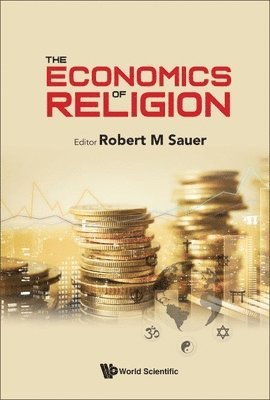
Adam Smith, one of the founding fathers of contemporary economics, observed that religiosity is influenced by the extent of regulation in the "market" for religion. In countries where there is a state-sponsored religion, one can expect less overall religiosity than if the market were competitive and religions had to compete to increase their membership. Religion, he claims, is like other goods and services supplied in a market economy.Max Weber, one of the founding fathers of contemporary sociology, similarly proposed that religiosity and economic principles are strongly interconnected phenomena. Weber famously thought that Protestant religious beliefs about the importance of work, savings and trustworthiness played an important role in sparking the Industrial Revolution and accelerating economic growth in the Western World.This edited volume contains original contributions by eminent scholars in the new and emerging field of the economics of religion. The contributions expand upon the ground-breaking ideas of Adam Smith and Max Weber. The chapters also illuminate new directions for research in this relatively young, intellectually exciting, and rapidly growing multidisciplinary field of scientific inquiry.