Robert McKenna - Böcker
Visar alla böcker från författaren Robert McKenna. Handla med fri frakt och snabb leverans.
7 produkter
7 produkter
2 402 kr
Skickas inom 5-8 vardagar
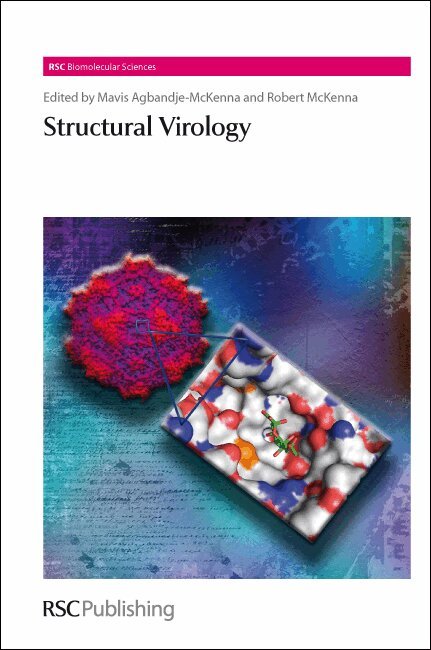
Over the last ten years, much effort has been devoted to improving the biophysical techniques used in the study of viruses. This has resulted in the visualization of these large macromolecular assemblages at atomic level, thus providing the platform for functional interpretation and therapeutic design. Structural Virology covers a wide range of topics and is split into three sections. The first discusses the vast biophysical methodologies used in structural virology, including sample production and purification, confocal microscopy, mass spectrometry, negative-stain and cryo-electron microscopy, X-ray crystallography and nuclear magnetic resonance spectroscopy. The second discusses the role of virus capsid protein structures in determining the functional roles required for receptor recognition, cellular entry, capsid assembly, genome packaging and mechanisms of host immune system evasion. The last section discusses therapeutic strategies based on virus protein structures, including the design of antiviral drugs and the development of viral capsids as vehicles for foreign gene delivery. Each topic covered will begin with a review of the current literature followed by a more detailed discussion of experimental procedures, a step in the viral life cycle, or strategies for therapeutic development. With contributions from experts in the field of structural biology and virology this exceptional monograph will appeal to biomedical scientists involved in basic and /or applied research on viruses. It also provides up-to-date reference material for students entering the field of structural virology as well as scientists already familiar with the area.
248 kr
Skickas inom 3-6 vardagar
259 kr
Skickas inom 5-8 vardagar
408 kr
Skickas inom 5-8 vardagar
248 kr
Skickas inom 5-8 vardagar
Carbonic Anhydrase: Mechanism, Regulation, Links to Disease, and Industrial Applications
Inbunden, Engelska, 2013
1 624 kr
Skickas inom 10-15 vardagar
The study of carbonic anhydrase has spanned multiple generations of scientists. Carbonic anhydrase was first discovered in 1932 by Meldrum and Roughton. Inhibition by sulfanilamide was shown in 1940 by Mann and Keilin. Even Hans Krebs contributed to early studies with a paper in 1948 showing the relationship of 25 different sulfonamides to CA inhibition. It was he who pointed out the importance of both the charged and uncharged character of these compounds for physiological experiments. The field of study that focuses on carbonic anhydrase (CA) has exploded in recent years with the identification of new families and isoforms. The CAs are metalloenzymes which are comprised of 5 structurally different families: the alpha, beta, gamma, and delta, and epsilon classes. The alpha class is found primarily in animals with several isoforms associated with human disease. The beta CAs are expressed primarily in plants and are the most divergent. The gamma CAs are the most ancient. These are structurally related to the beta CAs, but have a mechanism more similar to the alpha CAs. The delta CAs are found in marine algae and diflagellates. The epsilon class is found in prokaryotes in which it is part of the carboxysome shell perhaps supplying RuBisCO with CO2 for carbon fixation. With the excitement surrounding the discovery of disease-related CAs, scientists have redoubled their efforts to better understand structure-function relationships, to design high affinity, isotype-specific inhibitors, and to delineate signaling systems that play regulatory roles over expression and activity. We have designed the book to cover basic information of mechanism, structure, and function of the CA families. The authors included in this book bring to light the newest data with regard to the role of CA in physiology and pathology, across phylums, and in unique environmental niches.
Carbonic Anhydrase: Mechanism, Regulation, Links to Disease, and Industrial Applications
Häftad, Engelska, 2016
2 089 kr
Skickas inom 5-8 vardagar
The study of carbonic anhydrase has spanned multiple generations of scientists. Carbonic anhydrase was first discovered in 1932 by Meldrum and Roughton. Inhibition by sulfanilamide was shown in 1940 by Mann and Keilin. Even Hans Krebs contributed to early studies with a paper in 1948 showing the relationship of 25 different sulfonamides to CA inhibition. It was he who pointed out the importance of both the charged and uncharged character of these compounds for physiological experiments. The field of study that focuses on carbonic anhydrase (CA) has exploded in recent years with the identification of new families and isoforms. The CAs are metalloenzymes which are comprised of 5 structurally different families: the alpha, beta, gamma, and delta, and epsilon classes. The alpha class is found primarily in animals with several isoforms associated with human disease. The beta CAs are expressed primarily in plants and are the most divergent. The gamma CAs are the most ancient. These are structurally related to the beta CAs, but have a mechanism more similar to the alpha CAs. The delta CAs are found in marine algae and diflagellates. The epsilon class is found in prokaryotes in which it is part of the carboxysome shell perhaps supplying RuBisCO with CO2 for carbon fixation. With the excitement surrounding the discovery of disease-related CAs, scientists have redoubled their efforts to better understand structure-function relationships, to design high affinity, isotype-specific inhibitors, and to delineate signaling systems that play regulatory roles over expression and activity. We have designed the book to cover basic information of mechanism, structure, and function of the CA families. The authors included in this book bring to light the newest data with regard to the role of CA in physiology and pathology, across phylums, and in unique environmental niches.