Robert Mills – författare
Visar alla böcker från författaren Robert Mills. Handla med fri frakt och snabb leverans.
20 produkter
20 produkter
Inbunden, Engelska, 2015
741 kr
Skickas inom 11-20 vardagar
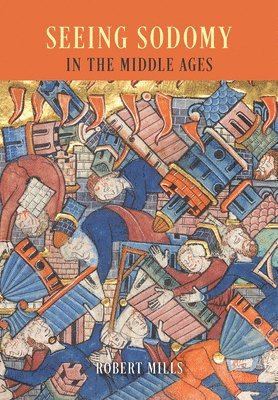
During the Middle Ages in Europe, some sexual and gendered behaviors were labeled "sodomitical" or evoked the use of ambiguous phrases such as the "unmentionable vice" or the "sin against nature." How, though, did these categories enter the field of vision? How do you know a sodomite when you see one? In Seeing Sodomy in the Middle Ages, Robert Mills explores the relationship between sodomy and motifs of vision and visibility in medieval culture, on the one hand, and those categories we today call gender and sexuality, on the other. Challenging the view that ideas about sexual and gender dissidence were too confused to congeal into a coherent form in the Middle Ages, Mills demonstrates that sodomy had a rich, multimedia presence in the period - and that a flexible approach to questions of terminology sheds new light on the many forms this presence took.Among the topics that Mills covers are depictions of the practices of sodomites in illuminated Bibles; motifs of gender transformation and sex change as envisioned by medieval artists and commentators on Ovid; sexual relations in religious houses and other enclosed spaces; and the applicability of modern categories such as "transgender," "butch" and "femme," or "sexual orientation" to medieval culture. Taking in a multitude of images, texts, and methodologies, this book will be of interest to all scholars, regardless of discipline, who engage with gender and sexuality in their work.
E-bok
Engelska, 20151 079 kr
Läs direkt efter köp
During the Middle Ages in Europe, some sexual and gendered behaviors were labeled “sodomitical” or evoked the use of ambiguous phrases such as the “unmentionable vice” or the “sin against nature.” How, though, did these categories enter the field of vision? How do you know a sodomite when you see one? In Seeing Sodomy in the Middle Ages, Robert Mills explores the relationship between sodomy and motifs of vision and visibility in medieval culture, on the one hand, and those categories we today call gender and sexuality, on the other. Challenging the view that ideas about sexual and gender dissidence were too confused to congeal into a coherent form in the Middle Ages, Mills demonstrates that sodomy had a rich, multimedia presence in the period—and that a flexible approach to questions of terminology sheds new light on the many forms this presence took. Among the topics that Mills covers are depictions of the practices of sodomites in illuminated Bibles; motifs of gender transformation and sex change as envisioned by medieval artists and commentators on Ovid; sexual relations in religious houses and other enclosed spaces; and the applicability of modern categories such as “transgender,” “butch” and “femme,” or “sexual orientation” to medieval culture. Taking in a multitude of images, texts, and methodologies, this book will be of interest to all scholars, regardless of discipline, who engage with gender and sexuality in their work.
Häftad, Engelska
198 kr
Skickas inom 3-6 vardagar
385 kr
Skickas inom 5-8 vardagar
235 kr
Skickas inom 5-8 vardagar
Häftad, Engelska, 2011
441 kr
Skickas inom 5-8 vardagar
Häftad, Engelska, 2015
235 kr
Skickas inom 5-8 vardagar
Häftad, Engelska, 2008
356 kr
Skickas inom 3-6 vardagar
Häftad, Kymriska, 2023
232 kr
Skickas inom 5-8 vardagar
E-bok
PDF, Engelska, 2017153 kr
Läs direkt efter köp
The figure of the monster in medieval culture functions as a vehicle for a range of intellectual and spiritual inquiries, from questions of language and representation to issues of moral, theological and cultural value. Monsters embody cultural tensions that go far beyond the idea of the monster as simply an unintelligible and abject other. This text looks at both the representation of literal monsters and the consumption and exploitation of monstrous metaphors in a wide variety of high and late-medieval cultural productions, from travel writing and mystical texts, to sermons, manuscript illuminations and maps. Individual essays explore the ways in which monstrosity shaped the construction of gendered and racial identities, religious symbolism and social prejudice in the Middle Ages. Reading the Middle Ages through its monsters provides an opportunity to view medieval culture from fresh perspectives. It should be of interest in the concept of monstrosity and its significance for medieval cultural production.
E-bok
Engelska, 2017153 kr
Läs direkt efter köp
The figure of the monster in medieval culture functions as a vehicle for a range of intellectual and spiritual inquiries, from questions of language and representation to issues of moral, theological and cultural value. Monsters embody cultural tensions that go far beyond the idea of the monster as simply an unintelligible and abject other. This text looks at both the representation of literal monsters and the consumption and exploitation of monstrous metaphors in a wide variety of high and late-medieval cultural productions, from travel writing and mystical texts, to sermons, manuscript illuminations and maps. Individual essays explore the ways in which monstrosity shaped the construction of gendered and racial identities, religious symbolism and social prejudice in the Middle Ages. Reading the Middle Ages through its monsters provides an opportunity to view medieval culture from fresh perspectives. It should be of interest in the concept of monstrosity and its significance for medieval cultural production.
Häftad, Engelska, 2024
217 kr
Skickas inom 5-8 vardagar
An old man is shot during a scuffle with an intruder in his own home. Sanjay Patel is part of the team that investigates the suspicious death, which is thought to be manslaughter rather than murder, but progress is slow. Before the investigation ends, he is transferred to another case involving a serial killer who preys on young women. The killer waited several years before committing his latest murder, so why has he started killing again?The skilled killer leaves no trace of himself at the murder scenes but gradually evidence of his begins to link to the crimes. As the net tightens, Sanjay and his team are under pressure to bring the killer to justice. Will they catch him before it’s too late? Inspector Sanjay Patel returns in Robert Mills gripping crime series.
Häftad, Engelska, 2026
180 kr
Skickas inom 5-8 vardagar
Police lieutenant Pornthep Tannarat has been hunting notorious gangster Sulak Pongpaichit ever since the brutal murder of his mentor and friend, Ari Rongton. Years later, Pornthep sees an opportunity to bring Sulak to justice when English author Roland Fraser is shot dead in his Jomtien Beach condo.Before he has time to build a case against the gangster, a senior officer, who may or may not be in league with the killer, halts the investigation. But when a Russian prostitute with ties to Fraser is murdered, the case is reopened, and Pornthep starts to suspect Fraser’s latest book on human trafficking may have triggered a deadly chain of events.A tip from a Russian mafia boss points to Sulak’s involvement in the prostitute’s death, though the evidence is unlikely to stand up in court. As the net tightens, Pornthep’s nemesis vanishes, a key witness is stabbed, and the hired gun who killed the victims refuses to talk. Every lead brings him closer, yet the danger grows, and the clock is ticking. Will Pornthep get his man or will Sulak slip through his fingers?
Inbunden, Engelska, 2012
1 388 kr
Skickas inom 5-8 vardagar
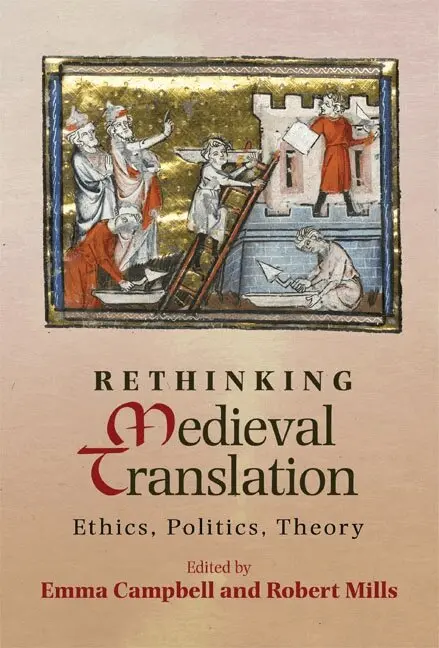
Essays examining both the theory and practice of medieval translation.Engaging and informative to read, challenging in its assertions, and provocative in the best way, inviting the reader to sift, correlate and reflect on the broader applicability of points made in reference to a specific text orexchange. Professor Carolyne P. Collette, Mount Holyoke College.Medieval notions of translatio raise issues that have since been debated in contemporary translation studies concerning the translator's role asinterpreter or author; the ability of translation to reinforce or unsettle linguistic or political dominance; and translation's capacity for establishing cultural contact, or participating in cultural appropriation or effacement.This collection puts these ethical and political issues centre stage, asking whether questions currently being posed by theorists of translation need rethinking or revising when brought into dialogue with medieval examples. Contributors explore translation - as a practice, a necessity, an impossibility and a multi-media form - through multiple perspectives on language, theory, dissemination and cultural transmission. Exploring texts, authors, languages and genres not often brought together in a single volume, individual essays focus on topics such as the politics of multilingualism, the role of translation in conflict situations, the translator's invisibility, hospitality, untranslatability and the limits of translation as a category.EMMA CAMPBELL is Associate Professor in French at the University of Warwick; ROBERT MILLS is Lecturer in History of Art at University College London. Contributors: William Burgwinkle, Ardis Butterfield, Emma Campbell, Marilynn Desmond, Simon Gaunt, Jane Gilbert, Miranda Griffin, Noah D. Guynn, Catherine Léglu, Robert Mills, Zrinka Stahuljak, Luke Sunderland
Del 14 - Medievalism
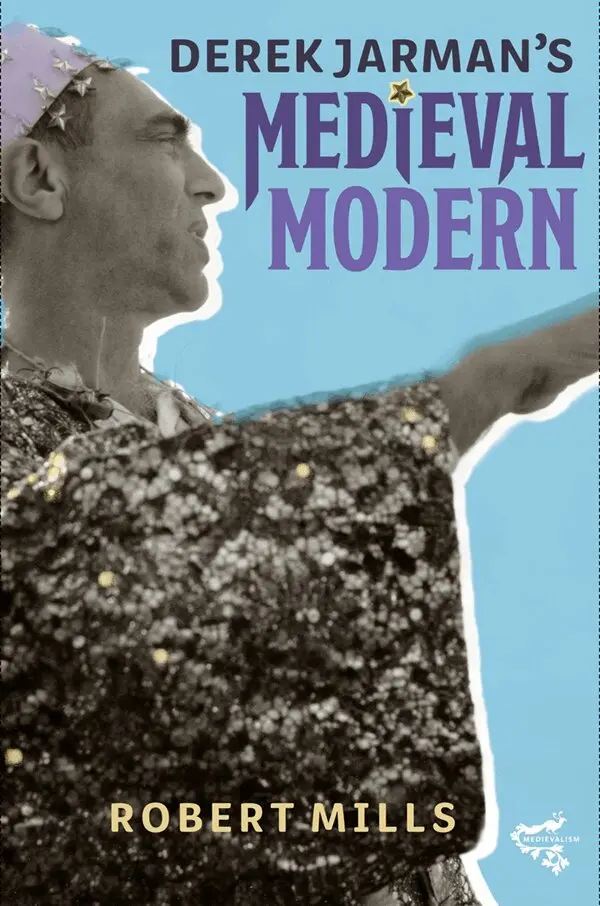
Derek Jarman's Medieval Modern
Inbunden, Engelska, 2018
477 kr
Skickas inom 5-8 vardagar
First exploration of Jarman's engagement with the medieval, revealing its importance to his work.FINALIST IN THE HISTORIANS OF BRITISH ART BOOK AWARDS 2020 The artist and filmmaker Derek Jarman (1942-1994) had a lifelong appreciation of medieval culture. But with the possible exception of Edward II, Jarman's films have not been identified to date as making a major contribution to the depiction of the Middle Ages in cinema.This book is the first to uncover a rich seam of medievalism in Jarman's art. Taking in major features such as Caravaggio, The Garden and The Last of England, as well as some of the unrealised screenplays and short experimental films, the book proposes an expanded definition of medieval film that includes not just worksset in or about the Middle Ages, but also projects inspired more broadly by the period. It considers Jarman's engagement with Anglo-Saxon poetry (notably The Wanderer); with works by fourteenth-century poets such as Chaucer, Dante and Langland; with saints and mystics from Joan of Arc to Julian of Norwich; and with numerous paintings, buildings and objects from this so-called "middle" time.Organised around several key themes - periodisation,anachronism, ruins and wandering - the book also asks what happens when (with Jarman, but also more broadly) we think the categories "medieval" and "modern" together. As such, it will be of interest to film scholars, art historians and medievalists of all stripes who wish to rattle the temporal cages of their fields.ROBERT MILLS is Professor of Medieval Studies at University College London.
Inbunden, Engelska, 2007
722 kr
Skickas inom 10-15 vardagar
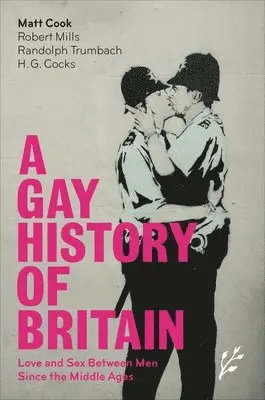
The book explores the changing ways in which male-male sex and love have been perceived and experienced from the late Anglo-Saxon period to the present. Celebrated figures, such as Richard Lionheart, whose love for Philip Augustus of France was so well-documented, Oscar Wilde, gubject of the most explosive scandal of the Victorian period, and Derek Jarman, the great artist and chronicler of the age of AIDS, are examined alongside little-known figures: Eleanor/John Rykener, a cross-dresser in Chaucer's England, the mollies of eighteenth-century London, the habituants of underground gay bars and cafes in 1930s Manchester and Brighton, and the newly-confident gays of contemporary Britain, who marry, adopt children and command the increasingly powerful 'pink pound'. Drawing on a fabulous wealth of research, the authors - each an expert in his field - have worked closely together to deliver a powerful, highly-readable and eye-opening history of love and desire between men in Britain.
Inbunden, Engelska, 2014
363 kr
Skickas inom 5-8 vardagar
Häftad, Engelska, 2020
243 kr
Skickas inom 5-8 vardagar
E-bok
Engelska, 2021194 kr
Läs direkt efter köp
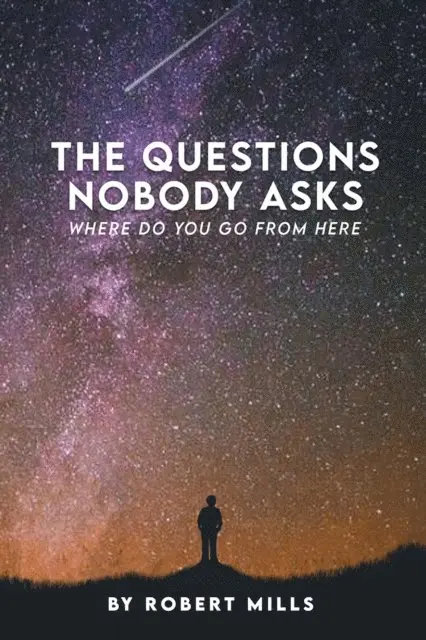
In today's busy world people become so preoccupied with their day-to-day existence that they rarely have time to T_H_I_N_K! I have designed this group of topics as conversation starters and short stories that cause the reader to think. They are meant to be kicked around, argued over, developed, expanded, and speculated upon in an endless game of What if! The modern world is designed so that you don't have to think. There are forces and organizations that want to make your choices for you and make it easy for you not to bother yourself with questioning them. As a result, we are losing the art of thinking things through. Think about yourself, who you really are and where you are going, both in this life and the next one. Don't be afraid of finding answers that make you uncomfortable because having control over your life requires that you look at all the possibilities and make a choice instead of ignoring them and letting a choice be made for you. Each of the following sections are also designed to promote the art of conversation. Examining such issues with others is a way to know them. When, if ever, will human beings learn to get along? When will we put race, color of skin, wealth, fame, politics and religion aside enough to accept each other as equals and live in harmony with each other? When we learn to focus on our similarities instead of our differences? Did you ever wonder where you come from beyond your mother's womb?Where do you go from here? What would you change if you could? What do you think?
Häftad, Engelska, 2003
320 kr
Tillfälligt slut
The figure of the monster in medieval culture functions as a vehicle for a range of intellectual and spiritual inquiries, from questions of language and representation to issues of moral, theological and cultural value. Monsters embody cultural tensions that go far beyond the idea of the monster as simply an unintelligible and abject other. This text looks at both the representation of literal monsters and the consumption and exploitation of monstrous metaphors in a wide variety of high and late-medieval cultural productions, from travel writing and mystical texts, to sermons, manuscript illuminations and maps. Individual essays explore the ways in which monstrosity shaped the construction of gendered and racial identities, religious symbolism and social prejudice in the Middle Ages. Reading the Middle Ages through its monsters provides an opportunity to view medieval culture from fresh perspectives. It should be of interest in the concept of monstrosity and its significance for medieval cultural production.