Robert O’Byrne - Böcker
Visar alla böcker från författaren Robert O’Byrne. Handla med fri frakt och snabb leverans.
13 produkter
13 produkter
506 kr
Skickas inom 7-10 vardagar
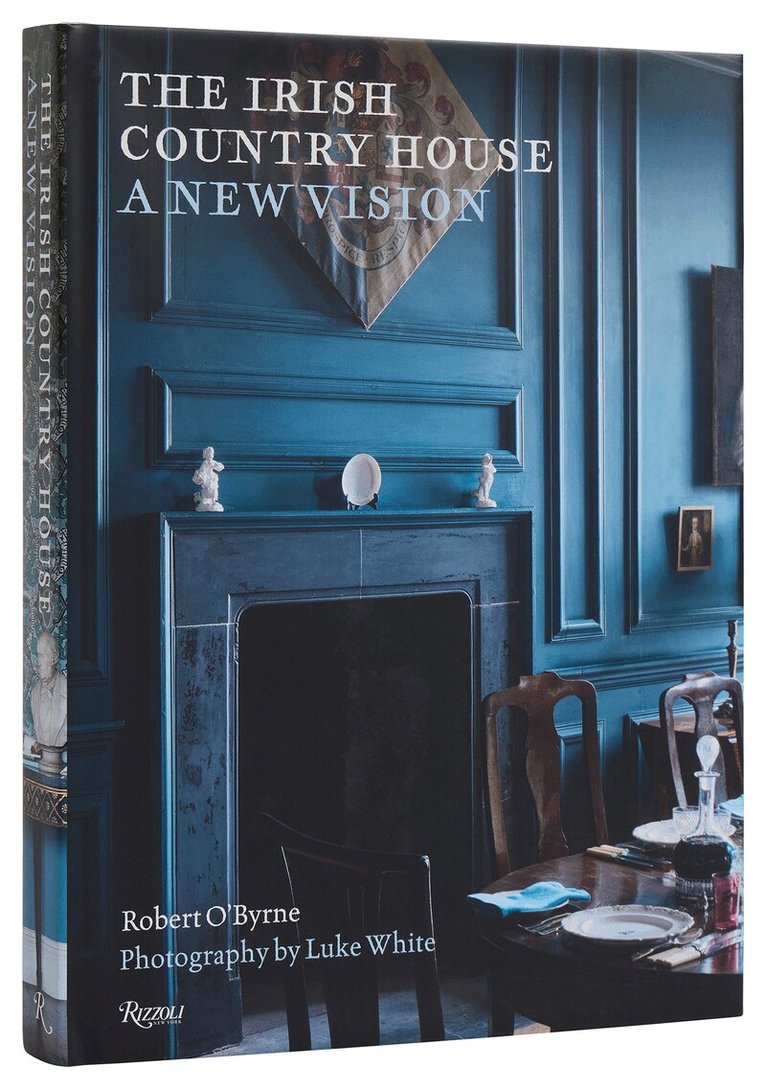
A unique presentation of Irish country house interiors, combining well-preserved historic estates with adventurous contemporary restorations, celebrating some of the most characterful houses in Ireland.Forgoing the criteria of stateliness and opulence, this book is an exploration of the most captivating and unusual interiors in Ireland. Whether in the transformation of a derelict estate, the preservation of an historic hunting lodge, or the re-creation of a Gothic fantasy, each of the homes in this extraordinary book reflects a renewed vitality in the contemporary approach to Irish country houses.Rich in detail and varied in scope, the houses reveal a refreshing dynamism in their decoration by equally diverse owners—from the ornate refurbishment of a castle by a Mexican financier to the bold palette of a contemporary artist’s renovation to an Elizabethan Revival house. The sparse interiors of a mansion in Westmeath reflect its painstaking restoration by descendants of the original owners, and at Coollattin—Ireland’s largest country house, part restored, part still in disrepair—the building’s baroque splendor is amplified by its raw, unfinished state.Accompanying photography of the houses made specially for the book, the author guides readers through fifteen exceptional spaces, elucidating the remarkable aspects of each—and in doing so celebrates the unexpected eclecticism and reinvigorated spirit of Ireland’s historic interiors.
844 kr
Skickas inom 5-8 vardagar
215 kr
Tillfälligt slut
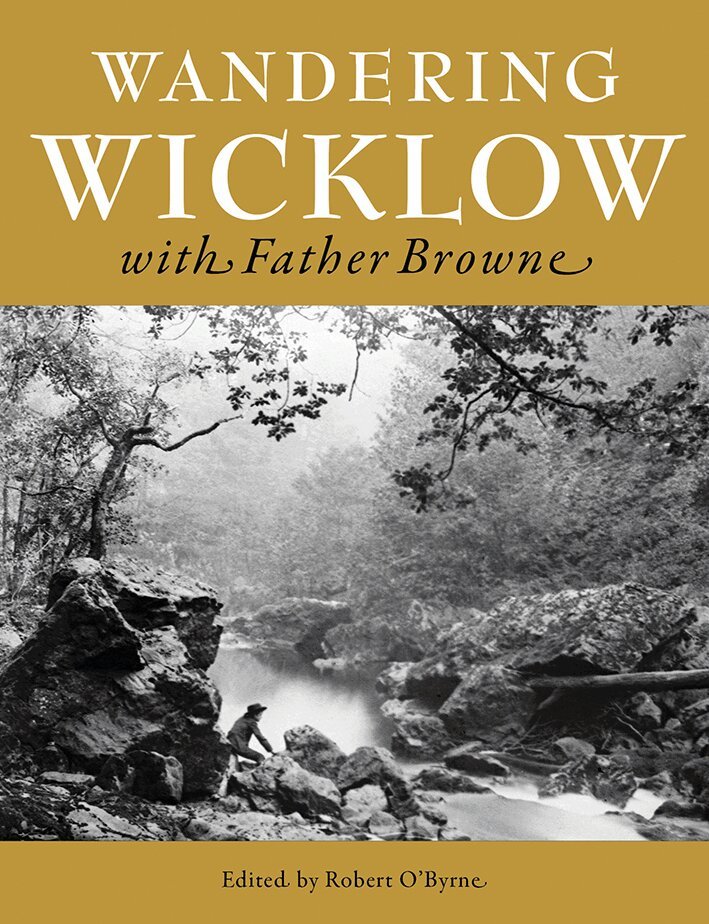
Ireland’s finest photographer in the 20th century, Fr Frank Browne repeatedly visited County Wicklow across almost half a century. Over that time, he had the opportunity to capture images of this part of the country as it underwent change and yet, somehow, retained its essential character. The earliest photograph, for example, is of the Dargle Valley, a spot that looks much the same today as it did when Fr Browne first went there in 1910. This is made obvious by the colour replica photograph of the Dargle Valley, one of twenty colour replica photographs juxtaposed with Fr Browne's originals in this book.An introduction by the editor, Robert O'Byrne, allows the reader gain insight into this renowned photographer's life, and also into the history of the various Wicklow locations included in the book. Other pictures show landmark beauty spots such as the Powerscourt Waterfall and the Sugarloaf Mountain, as well as the rugged landscape of the Sally Gap. The monastic remains of Glendalough are exquisitely caught, along with the still waters of Lough Tay. The book is divided into six areas of Wicklow county, each a manageable day trip, which along with a handy guide map, offers readers the chance to follow in Fr Browne’s footsteps – and maybe take their own replica photographs! While his eye was able to spot the timeless beauty of this rural idyll, Fr Browne also noted the modern and innovative, capturing key moments in the development of a newly-independent Ireland, such as the construction of the Poulaphouca Reservoir in the late 1930s and workers in the newly-opened Solus Teoranta Lightbulb Factory in Bray. Cars are few, but bicycles plentiful in his photographs. The advent of modern technology contrasts with traditional pastimes: a horse fair in Blessington, sheep dipping on a farm, a thatcher repairing the roof of an old cottage. He shows bustling preparations for the International Eucharistic Congress of June 1932, along with commercial activity in towns such as Arklow and Wicklow. New schools are shown being built in the first, older pursuits like fishing continue in the second. Fr Browne’s ability to gain access everywhere means he was able to photograph many of Wicklow’s most famous historic houses, like Powerscourt before its interiors were tragically destroyed by fire, and Shelton Abbey which he visited just a year before the building and its contents were sold. Whether you wish to take to the road, or remain an armchair traveller, this book is a companion to anyone interested in Ireland's pictorial history, and especially the history of the county of Wicklow.
260 kr
Skickas
Jesuit priest and amateur photographer, Fr Francis Browne is renowned for his images of the Titanic. However, much less well-known are the pictures that Fr Browne took of Irish country houses over a decade from 1946 onward. At the time, these buildings were still private properties, mostly in the hands of their original families and not open to the public. Somehow, this gentle-mannered priest gained the confidence of owners and thus unique access to their homes, free to roam with his camera around the buildings and record their interiors, at the time when they were filled with treasures accumulated over generations. Fr Browne photographed more than 50 such houses, providing us with a record of how they looked on the cusp of change. Since then, some of the buildings he visited have been entirely demolished, giving a particular poignancy to his images. Others have been sold, along with their contents, and their family histories forgotten. Only a handful continue to be owned by descendants of the people who once welcomed Fr Browne. For this book, architectural historian Robert O’Byrne has selected 20 houses, some of which may be familiar to readers, some likely to come as a revelation. All of these beautiful photographs display Fr Browne’s customary understanding of composition and offer a sympathetic insight into what was by then a fast-vanishing world. As with so much of his work, they demonstrate that he was a pioneer, investigating a world that had, until then, been largely unknown. This is a priceless record of the Irish country house at a critical moment in its history.
345 kr
Skickas inom 3-6 vardagar
367 kr
Skickas inom 7-10 vardagar
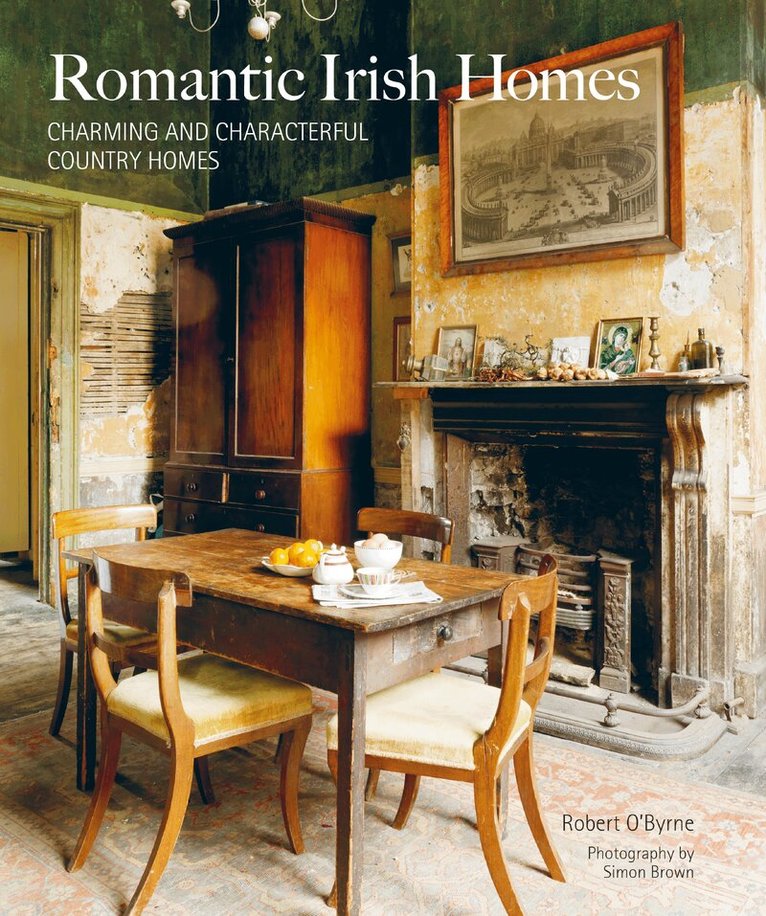
In Romantic Irish Homes, bestselling author Robert O'Byrne celebrates Irish houses with an abundance of character and personality.Quixotic, often whimsical and definitely quirky, they provide a sanctuary from the Irish climate, which can be cold and damp. No wonder, therefore, that over the centuries Ireland's domestic architecture and interior design have developed a distinctive personality in which colour and vivacity are highly prized. Romantic Irish Homes presents 15 of the finest examples of the Irish home, each one of them distinctive yet sharing the same unique spirit. From ancient castles to sturdy Georgian manors and modest farmhouses, the homes featured here offer a unique insight into the Irish temperament and an exploration of a style of decoration that, while adapted to meet 21st-century demands, still retains an historic integrity. Romantic Irish Homes is every bit as charming and memorable as the Irish people themselves.First published in 2013, this is a new edition.
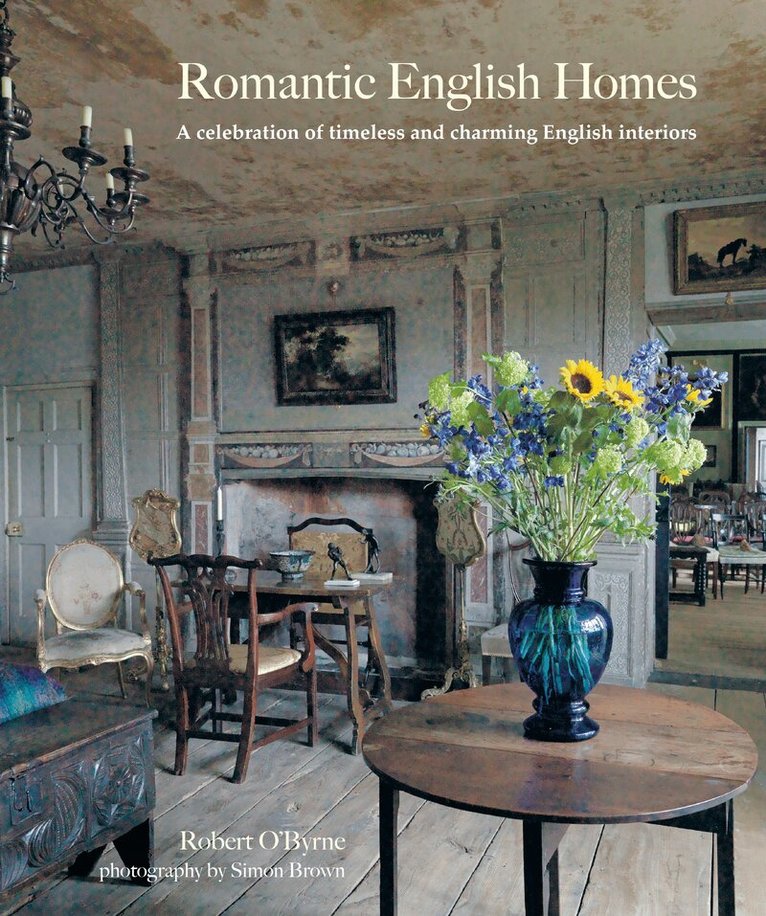
Romantic English Homes
A Celebration of Timeless and Charming English Interiors
Inbunden, Engelska, 2025
367 kr
Skickas inom 7-10 vardagar
In Romantic English Homes, Robert O'Byrne has gathered together a collection of some of England’s most glorious abodes, from venerable country houses to a thatched farmhouse to an enchanting Gothick folly. Ever since the English aristocracy embarked upon the Grand Tour in the 17th century, a passion for collecting has become a national trait. This is reflected not only in England’s aristocratic palaces and ancient manors, but in more modest residences, too. Romantic English Homes features 14 such homes. Large or small, old or new, they all exude typical English style: massed objects intentionally mingling a variety of styles and tastes, with the classical placed next to the gothic, and tartan checks alongside floral prints. Criss-crossing the country, from Dorset, Devon and Cornwall to East Anglia and Suffolk, from London to Staffordshire and Northumberland, it is both the romantic timelessness of these properties and their comfortable, many-layered appearance that makes them so alluring and romantic to modern eyes. First published in 2011, this is a new edition.
285 kr
Skickas inom 11-20 vardagar
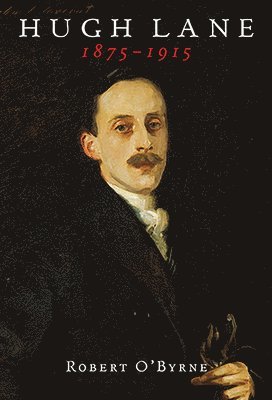
Available for the first time in paperback, Robert O’Byrne’s landmark biography of Hugh Lane remains the essential work on this enigmatic art dealer and patron. From his birth in Cork in 1875, to London, South Africa and Dublin, Hugh Lane is primarily remembered for establishing Dublin’s Municipal Gallery of Modern Art, the first known public gallery of modern art in the world. He never married and, though rumoured to have been homosexual, never had a documented relationship with a man. He was also a person of great social energy who befriended and sometimes crossed swords with the leading cultural figures of his day: Yeats, Gregory, Orpen, Augustus John, Rodin, Beerbohm, and many others. Robert O’Byrne writes with clarity and insight about a man who, since his untimely death on R.M.S. Lusitania in 1915, has been something of a mystery.
265 kr
Skickas inom 5-8 vardagar
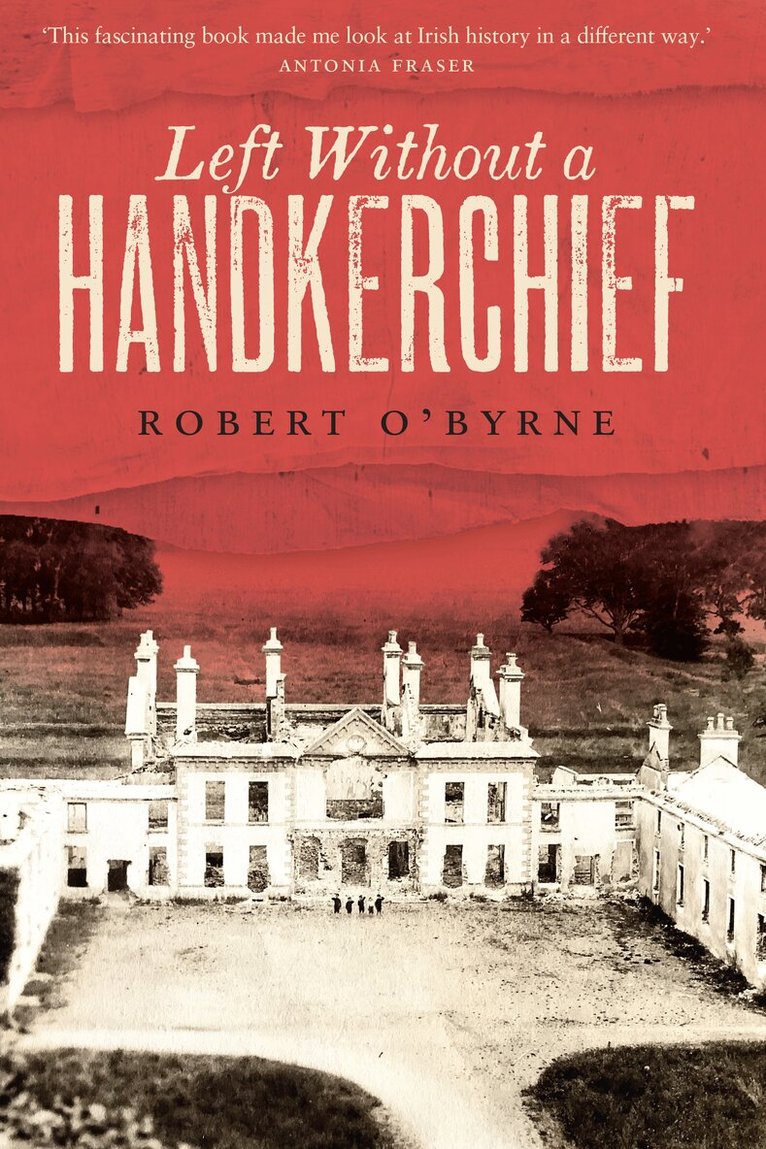
On the afternoon of Wednesday, 10 January 1923, Lulu Bagwell wrote to her mother-in-law Harriet informing her the family house had been destroyed in a blaze earlier that morning. Lulu and the children had been obliged to stand shivering at gunpoint on the lawn watching the conflagration, the raiders responsible for the fire only leaving when it was too late to save Marlfield. Afterwards she discovered her handbag and all the family’s overcoats had been stolen. ‘We hadn’t even a handkerchief,’ she lamented, ‘everything has gone.’The fate of Marlfield was not unique. It is estimated that between 250 and 300 Irish country houses were burnt in the early 1920s during the course of the War of Independence and subsequent Civil War. The reasons behind their destruction were various, but because of their scale and prominence on the Irish landscape, setting fire to them was judged by perpetrators to be good propaganda. Relatively little investigation has been undertaken into this devastation – to both property and lives.But how was it for the owners of these buildings? How did they feel when, in the course of just a few hours, they saw their worlds overturned? Hitherto historians have concentrated on the actions and motivation of those responsible for carrying out the burnings. Left Without a Handkerchief will tell the other side of the story, of history seen from the perspective of the losers, left homeless and struggling to cope, emotionally and financially.A key source for this story will be under-explored material held by the national archives of both Ireland and Britain. Correspondence back and forth, between claimants and the relevant authorities, reveal the extent of suffering experienced by those whose houses had been burnt, often shock that the local community, of which they had thought themselves part, displayed little concern in the aftermath of their devastation. These official documents will be supplemented by other material: letters, diaries, memoirs, some of it coming directly from descendants of the house owners and not previously shared inpublic.Left Without a Handkerchief will fill a gap in the national narrative, featuring the stories of ten houses and their owners. From Galway to Wexford, Mayo to Cork, it will give a voice to the dispossessed, to the people who thought they had a place in Ireland until, usually in the course of a single night, they were disabused of this belief. As the centenary of the onset of house burnings arrives, now is the time to tell their story.
282 kr
Skickas
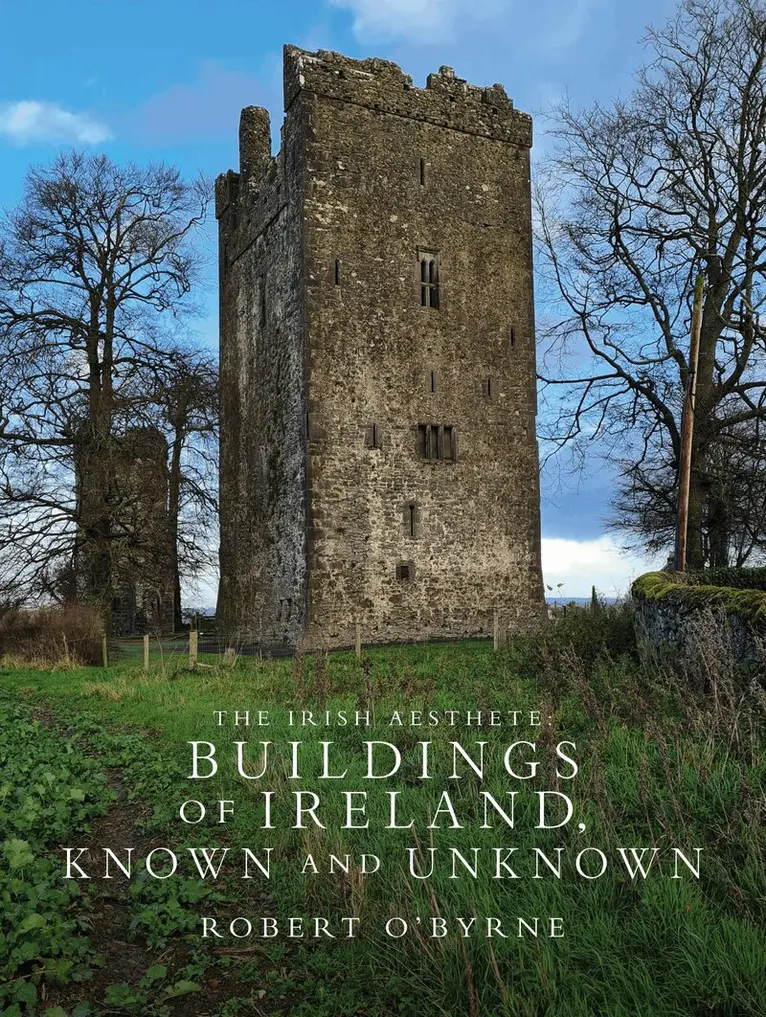
Inspired by his passionate interest in Ireland’s architectural heritage and its preservation, in 2012 writer Robert O’Byrne established The Irish Aesthete, a blog and social media phenomenon dedicated to sharing and showcasing the treasures of Ireland’s built environment. Ever since, architects, designers, decorators, historians and indeed those who are simply interested in the unique history of our Island’s architecture have flocked from around the world to The Irish Aesthete for insight, fascination and delight.The Irish Aesthete: Buildings of Ireland, Lost and Found was born from O’Byrne’s tireless work charting the hidden glories of Ireland’s buildings. In this true everyman’s guide, Robert has set out to highlight these landmarks, and to demonstrate how readers young and old can enjoy them. Each photograph in this book was taken by the author using nothing but a simple phone camera, showing readers that they too can engage with the past in vibrant new ways.Robert’s collection of photographs, covering everything from grand country houses to ancient monasteries, now runs to over 100,000 images and covers all 32 counties in Ireland. This new volume contains some 150 from his own selection of his best work with each photograph accompanied by illuminating descriptions and anecdotes.‘A poignant cri de coeur for the neglected treasures of our architectural heritage. O’Byrne’s admiration, and even love, for these fading glories of our built environment is infectious. He catalyses within the reader an increased appreciation and heightened sense of observation of these fine old buildings. His passion is evident within every word of prose and well-posed photograph.’ Manchán Magan
147 kr
Skickas inom 11-20 vardagar
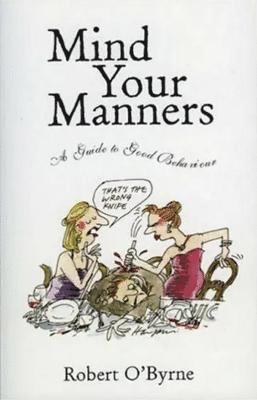
It’s the thought that counts. So, while society has changed, the need for thoughtfulness, courtesy and good manners has not. What is the etiquette for internet use, emails and mobile phone calls? How does one handle the delicate politics of flat-sharing? What are the rules for meeting through a dating agency? Mind Your Manners provides effective answers to these and many more dilemmas of modern decorum. Covering all situations – weddings, work, throwing a party, visits to a restaurant or theatre, driving – Robert O’Byrne gives witty and urbane advice on how best to behave with style in the twenty-first century. Here are practical tips for getting though Christmas with a smile on your face; being a good host ( how do you introduce Susan self-Effacing to Aileen Assured?); and dealing with a funeral (not a good time to network). Combing humorous but indispensable advice with hilarious cartoons from Merrily Harper, knowing correct conduct has never been easier