Robert Verpoorte – författare
Visar alla böcker från författaren Robert Verpoorte. Handla med fri frakt och snabb leverans.
4 produkter
4 produkter
Del 32 - Recent Advances in Phytochemistry
Phytochemical Signals and Plant-Microbe Interactions
Proceedings of a Joint Meeting of the Phytochemical Society of Europe Held in Noordwijkerhout, the Netherlands, April 20-23, 1997
Inbunden, Engelska, 1998
872 kr
Skickas inom 10-15 vardagar
Häftad, Engelska, 1994
544 kr
Skickas inom 10-15 vardagar
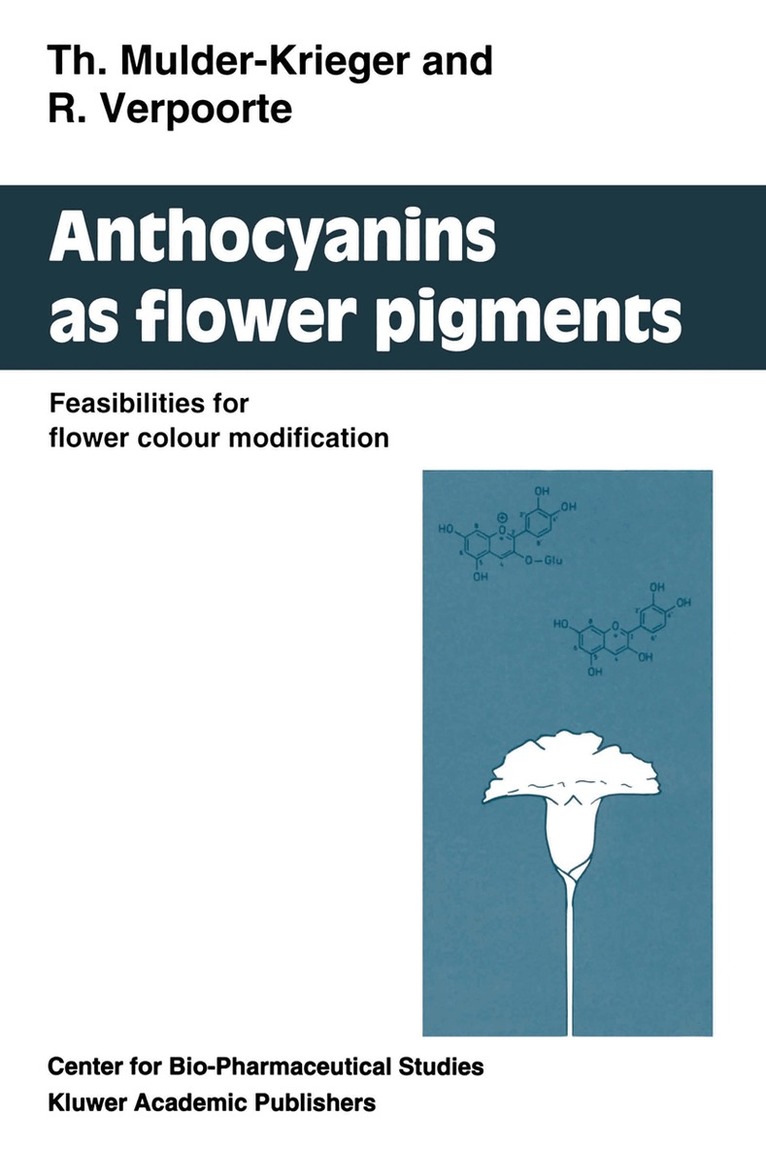
The economic value of cut flowers is considerable. Because novelty is a driving force in this section of horticulture, the development of new flower varieties is of great interest. In this connection new colours are particularly important. Classical plant breeding has been able to produce a broad variety of colours and forms for flowers but with the tools for genetic engineering available, a new era for cut flower plant breeding has dawned. The present study reviews the various aspects connected with the molecular engineering of flower colours. The results achieved so far, bottlenecks and possible approaches in altering flower colours are discussed. The methods available for genetic modification of plants are briefly reviewed. The study concentrates on the anthocyanins. The biosynthetic pathway leading to these compounds is extensively described, as well as knowledge of its regulation at molecular level. The genes involved in the regulation are reviewed. The colours connected with the individual compounds are considered, as is the influence of chemical modifications of anthocyanins, such as acylation of sugar residues.However, flower colour is not only determined by the anthocyanins present: co-pigmentation also plays an important role in stabilizing and altering colours. Compounds involved in co-pigmentation and other conditions involved (such as pH) are discussed, as well the mechanisms behind this phenomenon. The study includes an extensive literature search on the constituents of the pigments of the major cut flowers. Tables are given in which the constituents of the major cut flowers are summarized. More than 600 references are cited. Based on present knowledge, the strategy of engineering a certain colour in a specific species can be developed. Possible approaches for genetic engineering are discussed for the major colours.
Inbunden, Engelska, 1995
1 191 kr
Skickas inom 10-15 vardagar
Since 1984 and 1988, when meetings were held on the topic of primary and secondary metabolism of plant cell cultures, there has been a clear shift of the focus of ongoing research. While the cell culture itself and the production of secondary metabolites and the biosynthetic pathways and the activity of enzymes were major topics, now these aspects are linked with genes, i.e. molecular biology becomes more prominent. This book has contributions on such subjects as fermentation, enzymology of secondary metabolism, catabolism of secondary metabolites, elicitation of pathways and genetic modification of metabolic pathways. It includes contributions on the most recent achievements in the research on among other things tropane and indole alkaloids, phenolics, (iso)flavonoids, terpenes and cardenolides. It should be a useful review of the progress made in the past years and a perspective on the future developments.
E-bok
PDF, Engelska, 2012687 kr
Läs direkt efter köp
To date, several possibilities exist to change the genetics of plants including classical breeding and modern molecular biological approaches such as recombinant DNA techniques and plant trans formation methods. The aim of this publication is to review the feasibilities, offered by the current technologies, to modify flower colours. Due to the great importance of anthocyanins as flower pigments, the main part of this study deals with this class of flavonoids responsible for most red-, purple- and blue colours. Being electron deficient, the flavylium nucleus of the anthocyanins is highly reactive and undergoes - dependent upon pH - readily structural transformations which are coupled with colour changes. A number of mechanisms that stabilizes the coloured - at expense of the colourless structures in plants are described, including acylation, co pigmentation and metal complex formation. Because no plant species possesses the genetic capacity for producing varieties in the full spectrum of colours, man has looked for methods to change the genetic properties of plants. In recent years, conventional flower breeding is more and more being supplemented by genetic engineering techniques. This technology offers the possibility to insert specific genes into the cell genome and to transfer genes most efficiently between different organisms. The common flower pigments, the anthocyanins, have been studied for many years and represent now the best understood group of secondary plant metabolites with respect to (bio)chemistry and genetics.