• Fri frakt över 249 kr
  • •
  • Snabba leveranser
  • •
  • Billiga böcker
Kundservice

Du är på sajten för privatpersoner.

Företag, bibliotek eller offentlig verksamhet?

Du handlar på classic.bokus.com, där alla dina funktioner finns intakta.
Till classic.bokus.com
Bokus logotyp. Gå till startsidan.
  • Erbjudanden
  • Nyheter
  • Student
  • Topplistor
  • Barn & ungdom
  • Bokus Play
  • E-böcker
  • Pocketböcker
  • Spel & pussel

10% rabatt på allt med kod: NYSTART10 →

Sidfot

Mina sidor

    Hjälp

    • Kundservice
    • Vanliga frågor och svar
    • Frakt och leverans
    • Retur vid ångerrätt
    • Reklamera vara
    • Betalning
    • Köpvillkor
    • Allmänna villkor
    • Information om webbplatsens tillgänglighet

    Om Bokus

    • Om oss
    • Pressrum
    • För studenter
    • För företag
    • För bibliotek och offentlig verksamhet
    • För leverantörer
    • Hållbarhet

    Populärt

    • Aktuella erbjudanden
    • Presentkort
    • Studentlitteratur
    • Nya böcker
    • Topplistor
    • Signerade böcker
    • Engelska böcker

    Inspiration

    • Boktips
    • BookTok
    • Populära bokserier
    • Barnbokskaraktärer
    • Populära författare
    Logotyp för Bokus
    Följ oss på Facebook (extern länk)Följ oss på Instagram (extern länk)Följ oss på YouTube (extern länk)Följ oss på TikTok (extern länk)
    bokus @ CookiesAnpassa cookiesIntegritetspolicyKöpvillkor
    Till Citymail hemsida (extern länk)Till Budbee hemsida (extern länk)Till Postnord hemsida (extern länk)Till Schenker hemsida (extern länk)Till Early Bird hemsida (extern länk)Till Walleys hemsida (extern länk)
    1. Djur och Natur
    2. Naturböcker
    3. Växtböcker

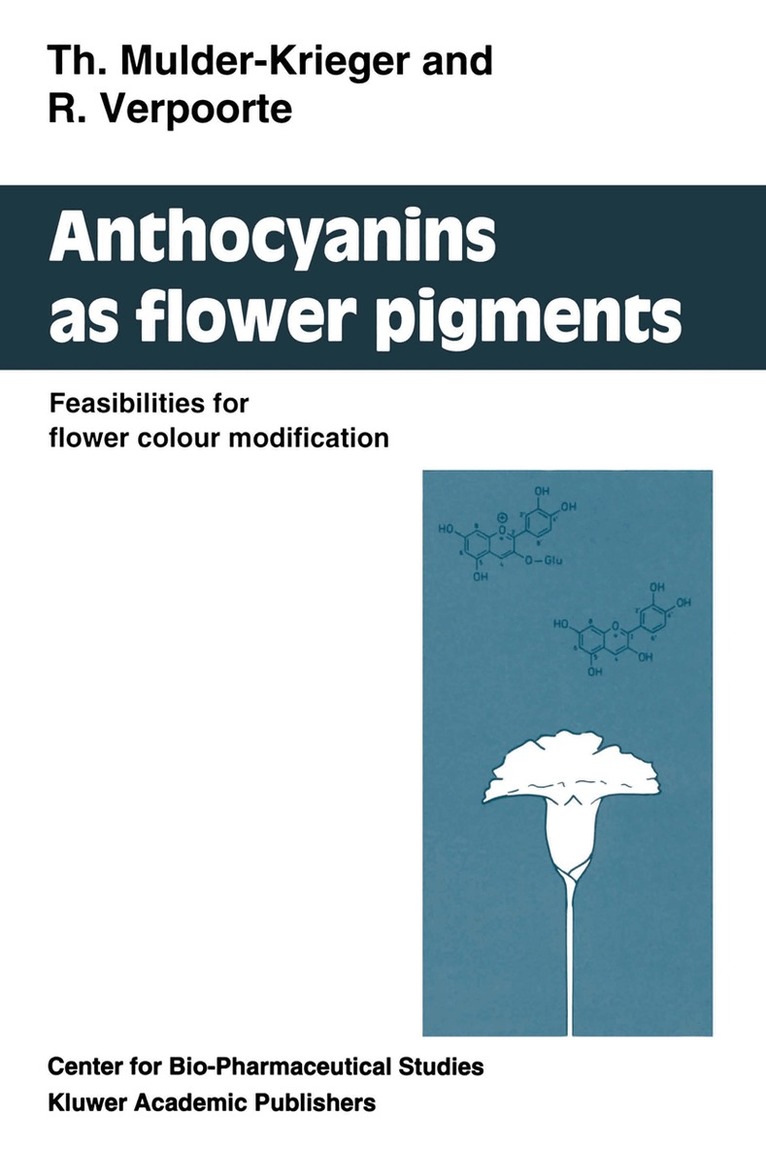
    Anthocyanins as Flower Pigments

    Feasibilities for flower colour modification

    AvT. Mulder-Krieger,Robert Verpoorte

    Häftad, Engelska, 1994

    546 kr

    Beställningsvara. Skickas inom 10-15 vardagar. Fri frakt över 249 kr.

    Beskrivning

    To date, several possibilities exist to change the genetics of plants including classical breeding and modern molecular biological approaches such as recombinant DNA techniques and plant trans­ formation methods. The aim of this publication is to review the feasibilities, offered by the current technologies, to modify flower colours. Due to the great importance of anthocyanins as flower pigments, the main part of this study deals with this class of flavonoids responsible for most red-, purple- and blue colours. Being electron deficient, the flavylium nucleus of the anthocyanins is highly reactive and undergoes - dependent upon pH - readily structural transformations which are coupled with colour changes. A number of mechanisms that stabilizes the coloured - at expense of the colourless structures in plants are described, including acylation, co pigmentation and metal complex formation. Because no plant species possesses the genetic capacity for producing varieties in the full spectrum of colours, man has looked for methods to change the genetic properties of plants. In recent years, conventional flower breeding is more and more being supplemented by genetic engineering techniques. This technology offers the possibility to insert specific genes into the cell genome and to transfer genes most efficiently between different organisms. The common flower pigments, the anthocyanins, have been studied for many years and represent now the best understood group of secondary plant metabolites with respect to (bio)chemistry and genetics.

    Produktinformation

    • Utgivningsdatum:1994-01-31
    • Mått:155 x 235 x 10 mm
    • Vikt:280 g
    • Format:Häftad
    • Språk:Engelska
    • Antal sidor:164
    • Förlag:Kluwer Academic Publishers
    • ISBN:9780792324652

    Utforska kategorier

    • Växtböcker inom Djur och Natur
    • Botanik inom Naturvetenskap och teknik
    • Cellbiologi inom Naturvetenskap och teknik

    Innehållsförteckning

    • I Plant Pigments.- I.1 General introduction.- I.2 Various flavonoid classes.- I.3 Chemistry of anthocyani(di)ns.- II Methods to Change Characteristics of Plants.- II.1 General introduction.- II.2 Classical breeding.- II.3 Mutagenesis.- II.4 Fusion of protoplasts.- II.5 Recombinant DNA technology/genetic engineering.- III Biosynthesis of the Various Flavonoid Classes.- III.1 General introduction.- III.2 Origin of flavonoid precursors.- III.3 Enzymology of the general phenylpropanoid metabolism.- III.4 Formation of the various flavonoid classes.- III.5 Reactions leading to modifications of flavonoids.- III.6 Regulation of the flavonoid biosynthesis.- III.7 Biosynthesis site.- IV Genes Controlling Flavonoid Biosynthesis.- IV.1 General introduction.- IV.2 Genes controlling flavonoid biosynthesis in flowers of various plants.- IV.3 Cloned genes involved in the biosynthesis of flavonoids.- V Flower Colour.- V.l General introduction.- V.2 Contribution of flavonoids (especially anthocyanins) to flower colours.- V.3 Flower industry in the Netherlands.- VI Modification of Flower Colour.- VI.1 General introduction.- VI.2 Modification by classical methods.- VI.3 Modification by recombinant DNA techniques.- VII Summary and Conclusions.- VII.1 Plant pigments.- VII.2 Methods to change characteristics of plants.- VII.3 Biosynthesis of the various flavonoid classes.- VII.4 Genes controlling flavonoid biosynthesis.- VII.5 Flower colour.- VII.6 Modification of flower colour.- VII.7 Conclusions.- VIII References.