Robert W. Wason - Böcker
Visar alla böcker från författaren Robert W. Wason. Handla med fri frakt och snabb leverans.
3 produkter
3 produkter
2 348 kr
Skickas inom 5-8 vardagar
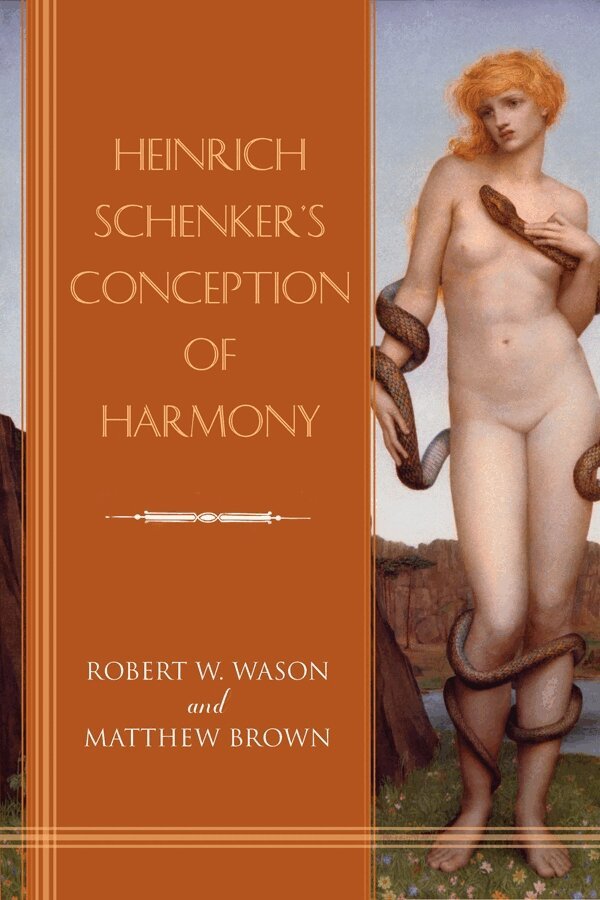
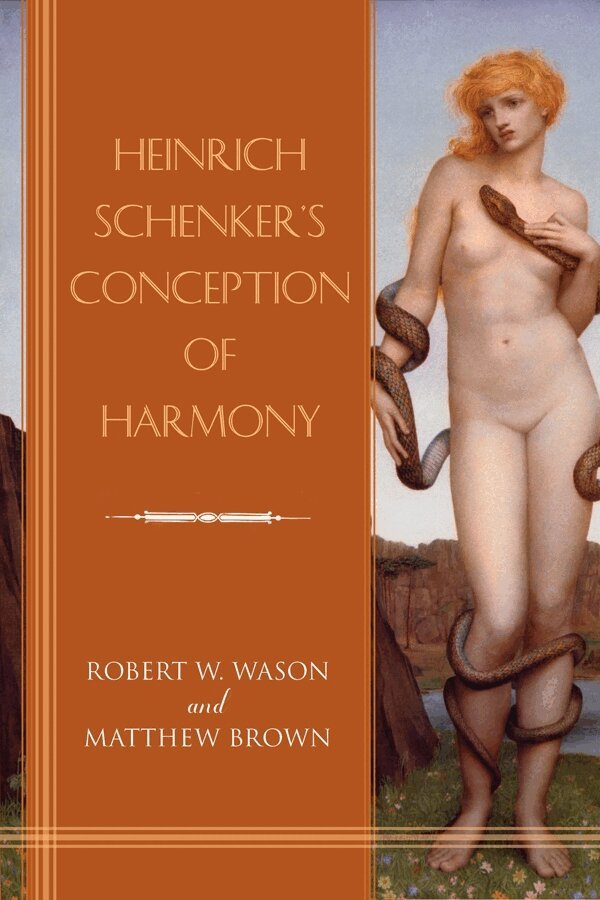
The first detailed study of Schenker's pathbreaking 1906 treatise, showing how it reflected 2500 years of thinking about harmony and presented a vigorous reaction to Austro-Germanic music theory ca. 1900.What makes the compositions of Handel, Bach, Haydn, Mozart, Beethoven, Schubert, Schumann, Chopin, and Brahms stand out as great works of art? Heinrich Schenker (1868-1935) set out to answer this question in a series of treatises, beginning with a strikingly original work with the deceptive title Harmonielehre (roughly: Treatise on Harmony, 1906). Whereas other treatises of the period associated harmony with the abstract principles governing chords and chord progressions, Schenker's treated it as the conceptual glue that allowed the individual elements of a work (melodies, motives, chords, counterpoint, etc.) to work together locally and globally. Yet this book,though renowned and much cited, has never been studied systematically and in close detail. Heinrich Schenker's Conception of Harmony approaches Schenker's 1906 treatise as a synthesis of ancient ideas and very new ones. It translates, for the first time, two preparatory essays for Harmonielehre and describes his later views of harmony and the ways in which they influenced and also were ignored by the 1954 edition and translation, entitled simply Harmony. Though problematic, Harmony was the first published translation of a major work by Schenker, inaugurating the study of his writings in postwar America and Britain, where they continue to be highly influential.
549 kr
Skickas inom 7-10 vardagar
The first detailed study of Schenker's pathbreaking 1906 treatise, showing how it reflected 2500 years of thinking about harmony and presented a vigorous reaction to Austro-Germanic music theory ca. 1900.What makes the compositions of Handel, Bach, Haydn, Mozart, Beethoven, Schubert, Schumann, Chopin, and Brahms stand out as great works of art? Heinrich Schenker (1868-1935) set out to answer this question in a series of treatises, beginning with a strikingly original work with the deceptive title Harmonielehre (roughly: Treatise on Harmony, 1906). Whereas other treatises of the period associated harmony with the abstract principles governing chords and chord progressions, Schenker's treated it as the conceptual glue that allowed the individual elements of a work (melodies, motives, chords, counterpoint, etc.) to work together locally and globally. Yet this book, though renowned and much cited, has never been studied systematically and in close detail. Heinrich Schenker's Conception of Harmony approaches Schenker's 1906 treatise as a synthesis of ancient ideas and very new ones. It translates, for the first time, two preparatory essays for Harmonielehre and describes his later views of harmony and the ways in which they influenced and also were ignored by the 1954 edition and translation, entitled simply Harmony. Though problematic, Harmony was the first published translation of a major work by Schenker, inaugurating the study of his writings in postwar America and Britain, where they continue to be highly influential.
326 kr
Skickas inom 10-15 vardagar
The study of Viennese harmonic theory has developed widely since Schoenberg educated a generation of American musicians during the 1930s and 1940s. This volume is a critical survey of primary materials: Viennese treatises on harmony, together with some unpublished material, from the late eighteenth to the twentieth centuries, concentrating on the dominant line of fundamental bass thinking which extends throughout the nineteenth century to Schenker and Schoenberg. Taking a chronological approach, it traces the roots of Viennese harmonic theory to the figured bass theory of the eighteenth century, discusses the mixture of figured bass and Rameauian harmony that characterizes most Viennese theory between roughly 1800 to 1850, and considers Sechter's mid-century revival of Rameau's basses fondamentale. Of especial importance is an exploration of Bruckner's reinterpretation of Sechter's system, and its later revisions. Finally, the author discusses the early twentieth-century attempts to resolve the crisis in which the theory found itself at the hands of Bruckner. The book also synthesises the results of a large number of recent German and Austrian studies of nineteenth-century harmonic theory, presenting these from the point of view of an American theorist.Reissue; first published in 1985.ROBERT WASON is Professor of Music Theory at the Eastman School of Music, University of Rochester, New York.