Robert Weinstock – författare
Visar alla böcker från författaren . Handla med fri frakt och snabb leverans.
11 produkter
11 produkter
Inbunden, Engelska, 2008
375 kr
Skickas inom 5-8 vardagar
Inbunden, Engelska, 1990
2 184 kr
Skickas inom 10-15 vardagar
We would expect a successful series such as Critical Issues in American Psychiatry and the Law to present timely, relevant issues in a high-quality manner, and such is the hallmark of this outstanding series. But we might not expect the editors to dive into the especially controversial issues, e.g., ethics, and I applaud them for doing so and in such a comprehensive and thorough fashion. Public and professional concern about ethical aspects of psychiatrists' be havior and practice is growing, and exponentially. Concern about the ethical practice of modern forensic psychiatry is paralleled by deep-seated apprehen sion not only about the ethical dilemmas of psychiatry and medicine (e.g., societal versus individual patient values, the corporatization of medicine, access to versus cost of medicine) but also about the widely publicized ethical trans gressions of religious and political leaders. That's why this volume is so timely and important. Ethics-the principles and rules of right conduct. Sounds simple. We know it is not. When I'm asked by colleagues to consider the perceived unethical behavior of a fellow professional, I often find that, like obscenity, they can't always define it but they are definite that they know it when they see it. The perception of ethical conduct often appears to be in the eyes of the beholder. read this volume. It may not always please you, Well, that's why you will want to it may upset you and even offend you, but it will definitely inform you.
Inbunden, Engelska, 2007
1 083 kr
Skickas inom 10-15 vardagar
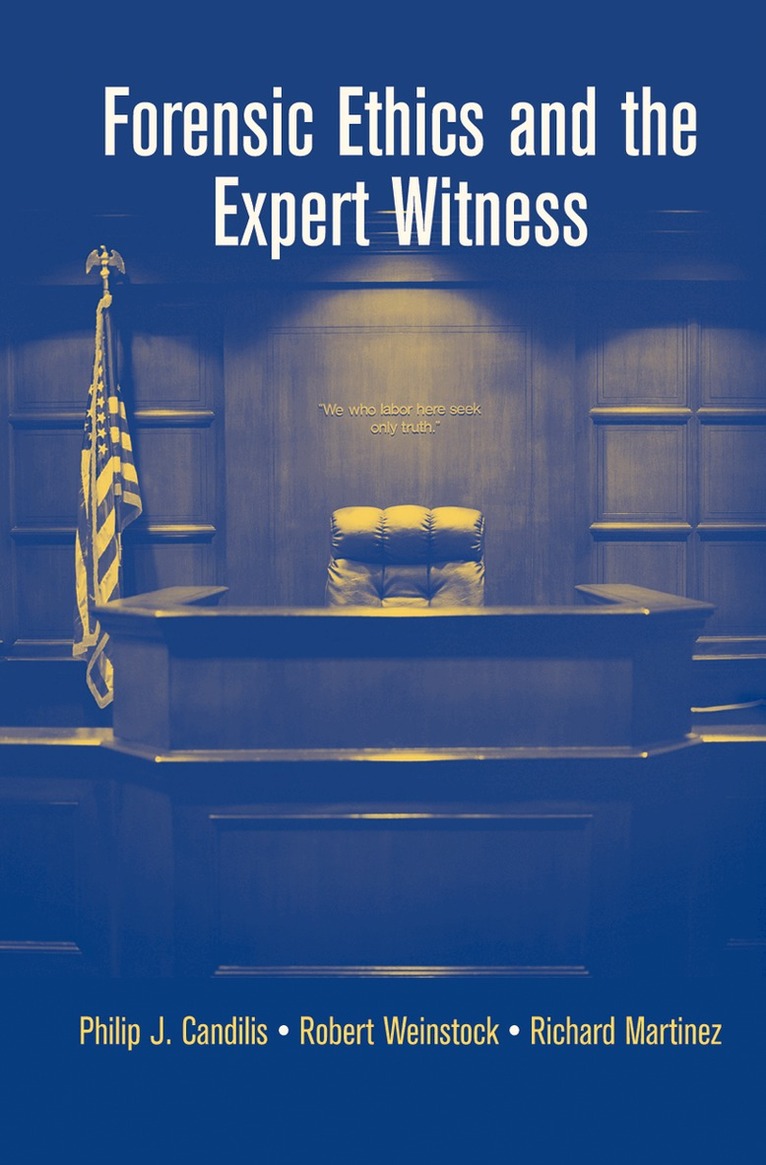
Why a book about the ethics of forensic psychiatry and related disciplines? Most psychiatrists, after all, learn something in their training about the ethics of medical practice in general and of the practice of psychiatry in particular. Do the maxims that steer all physicians through the ethical complexities of clinical medicine not provide equally effective guidance to clinical and scientific expert witnesses? The answer, in short, is “No. ” When psychiatrists, for example, enter the realm of the expert witness, they tread on moral terrain with a significantly different topography than the paths to which they are accustomed in their clinical roles. Clinical psych- trists owe primary allegiance to their patients’interests; for them the prin- ples of beneficence (doing good) and non-maleficence (avoiding harm) will generally take priority over all other considerations. For psychiatrists who serve as experts, however, there are no patients to whom fidelity is due. There are only persons being evaluated for the sake of providing opinions to third parties. Perhaps a defendant in a criminal case, a plaintiff in a tort action, or a claimant in an adjudication of disability benefits or workers’ compensation—but not a patient. And that makes all the difference. Whatever its other virtues, no theory of the ethics of forensic psychiatry will serve its purpose unless it offers the psychiatric expert direction in dealing with this situation.
E-bok
PDF, Engelska, 2007990 kr
Läs direkt efter köp
Why a book about the ethics of forensic psychiatry and related disciplines? Most psychiatrists, after all, learn something in their training about the ethics of medical practice in general and of the practice of psychiatry in particular. Do the maxims that steer all physicians through the ethical complexities of clinical medicine not provide equally effective guidance to clinical and scientific expert witnesses? The answer, in short, is “No. ” When psychiatrists, for example, enter the realm of the expert witness, they tread on moral terrain with a significantly different topography than the paths to which they are accustomed in their clinical roles. Clinical psych- trists owe primary allegiance to their patients’interests; for them the prin- ples of beneficence (doing good) and non-maleficence (avoiding harm) will generally take priority over all other considerations. For psychiatrists who serve as experts, however, there are no patients to whom fidelity is due. There are only persons being evaluated for the sake of providing opinions to third parties. Perhaps a defendant in a criminal case, a plaintiff in a tort action, or a claimant in an adjudication of disability benefits or workers’ compensation—but not a patient. And that makes all the difference. Whatever its other virtues, no theory of the ethics of forensic psychiatry will serve its purpose unless it offers the psychiatric expert direction in dealing with this situation.
Inbunden, Engelska, 2022
400 kr
Skickas inom 5-8 vardagar
Häftad, Engelska, 2022
285 kr
Skickas inom 5-8 vardagar
Häftad, Engelska, 2007
361 kr
Skickas inom 5-8 vardagar
Häftad, Engelska, 2010
768 kr
Skickas inom 10-15 vardagar
Why a book about the ethics of forensic psychiatry and related disciplines? Most psychiatrists, after all, learn something in their training about the ethics of medical practice in general and of the practice of psychiatry in particular. Do the maxims that steer all physicians through the ethical complexities of clinical medicine not provide equally effective guidance to clinical and scientific expert witnesses? The answer, in short, is “No. ” When psychiatrists, for example, enter the realm of the expert witness, they tread on moral terrain with a significantly different topography than the paths to which they are accustomed in their clinical roles. Clinical psych- trists owe primary allegiance to their patients’interests; for them the prin- ples of beneficence (doing good) and non-maleficence (avoiding harm) will generally take priority over all other considerations. For psychiatrists who serve as experts, however, there are no patients to whom fidelity is due. There are only persons being evaluated for the sake of providing opinions to third parties. Perhaps a defendant in a criminal case, a plaintiff in a tort action, or a claimant in an adjudication of disability benefits or workers’ compensation—but not a patient. And that makes all the difference. Whatever its other virtues, no theory of the ethics of forensic psychiatry will serve its purpose unless it offers the psychiatric expert direction in dealing with this situation.
E-bok
PDF, Engelska, 20132 925 kr
Läs direkt efter köp
We would expect a successful series such as Critical Issues in American Psychiatry and the Law to present timely, relevant issues in a high-quality manner, and such is the hallmark of this outstanding series. But we might not expect the editors to dive into the especially controversial issues, e.g., ethics, and I applaud them for doing so and in such a comprehensive and thorough fashion. Public and professional concern about ethical aspects of psychiatrists'' be havior and practice is growing, and exponentially. Concern about the ethical practice of modern forensic psychiatry is paralleled by deep-seated apprehen sion not only about the ethical dilemmas of psychiatry and medicine (e.g., societal versus individual patient values, the corporatization of medicine, access to versus cost of medicine) but also about the widely publicized ethical trans gressions of religious and political leaders. That''s why this volume is so timely and important. Ethics-the principles and rules of right conduct. Sounds simple. We know it is not. When I''m asked by colleagues to consider the perceived unethical behavior of a fellow professional, I often find that, like obscenity, they can''t always define it but they are definite that they know it when they see it. The perception of ethical conduct often appears to be in the eyes of the beholder. read this volume. It may not always please you, Well, that''s why you will want to it may upset you and even offend you, but it will definitely inform you.
Häftad, Engelska, 2013
2 223 kr
Skickas inom 10-15 vardagar
We would expect a successful series such as Critical Issues in American Psychiatry and the Law to present timely, relevant issues in a high-quality manner, and such is the hallmark of this outstanding series. But we might not expect the editors to dive into the especially controversial issues, e.g., ethics, and I applaud them for doing so and in such a comprehensive and thorough fashion. Public and professional concern about ethical aspects of psychiatrists' be havior and practice is growing, and exponentially. Concern about the ethical practice of modern forensic psychiatry is paralleled by deep-seated apprehen sion not only about the ethical dilemmas of psychiatry and medicine (e.g., societal versus individual patient values, the corporatization of medicine, access to versus cost of medicine) but also about the widely publicized ethical trans gressions of religious and political leaders. That's why this volume is so timely and important. Ethics-the principles and rules of right conduct. Sounds simple. We know it is not. When I'm asked by colleagues to consider the perceived unethical behavior of a fellow professional, I often find that, like obscenity, they can't always define it but they are definite that they know it when they see it. The perception of ethical conduct often appears to be in the eyes of the beholder. read this volume. It may not always please you, Well, that's why you will want to it may upset you and even offend you, but it will definitely inform you.
Häftad, Engelska, 2025
849 kr
Skickas
When acting in a forensic role, clinicians face the intersection of the legal and medical systems. Forensic Neuropsychiatric Ethics provides a pragmatic approach to ethical dilemmas, outlining decision-making skills for problems not addressed by American Psychiatric Association or American Medical Association guidelines.