Robert West – författare
458 kr
Läs direkt efter köp
534 kr
Skickas inom 5-8 vardagar
458 kr
Läs direkt efter köp
There's a Spaceship in My Tree!
Episode I
101 kr
Skickas inom 5-8 vardagar
Attack of the Spider Bots
Episode II
91 kr
Skickas inom 5-8 vardagar
Escape from the Drooling Octopod!
Episode III
120 kr
Skickas inom 5-8 vardagar
57 kr
Läs direkt efter köp
57 kr
Läs direkt efter köp
57 kr
Läs direkt efter köp
543 kr
Skickas
691 kr
Läs direkt efter köp
The Smoking Cessation Manual is an essential text for all those involved in the provision of smoking cessation services, including smoking cessation counsellors, nurses, pharmacists, doctors, health promotion officers, dental professionals, and other members of the health care team. The book is an invaluable resource for those learning about smoking cessation, and a succinct aide-memoire to those already practicing in the field.
The authors represent the ''who''s who'' in the field of smoking cessation and are affiliated to University College London and Cancer Research UK (Andy McEwen and Robert West), St Bartholomew''s & Royal London School of Medicine and Dentistry (Peter Hajek), and the University of Auckland (Hayden McRobbie).
469 kr
Skickas inom 5-8 vardagar
359 kr
Skickas inom 5-8 vardagar
182 kr
Skickas inom 5-8 vardagar
629 kr
Läs direkt efter köp
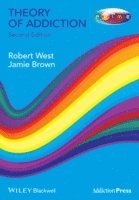
The word ‘addiction’ these days is used to refer to a chronic condition where there is an unhealthily powerful motivation to engage in a particular behaviour. This can be driven by many different factors – physiological, psychological, environmental and social. If we say that it is all about X, we miss V, W, Y and Z. So, some people think addicts are using drugs to escape from unhappy lives, feelings of anxiety and so on; many are. Some people think drugs become addictive because they alter the brain chemistry to create powerful urges; that is often true. Others think that drug taking is about seeking after pleasure; often it is. Some take the view that addiction is a choice – addicts weigh up the pros and cons of doing what they do and decide the former outweigh the latter. Yet others believe that addicts suffer from poor impulse control; that is often true… And so it goes on.
When you look at the evidence, you see that all these positions capture important aspects of the problem – but they are not complete explanations. Neuroscience can help us delve more deeply into some of these explanations, while the behavioural and social sciences are better at exploring others. We need a model that puts all this together in a way that can help us decide what to do in different cases. Should we prescribe a drug, give the person some ‘tender loving care’, put them in prison or what? Theory of Addiction provides this synthesis.
The first edition was well received:
‘Throughout the book the reader is exposed to a vast number of useful observations...The theoretical aims are timely, refreshing, ambitious and above all challenging. It opens up a new way of looking at addiction and has the potential to move the field of addiction a considerable leap forward. Thus we wholeheartedly would like to recommend the book for students as well as scholars. Read and learn!’ Nordic Studies on Alcohol and Drugs
‘The book provides a comprehensive review of existing theories - over 30 in all - and this synthesis of theories constitutes an important contribution in and of itself... West is to be commended for his synthesis of addiction theories that span neurobiology, psychology and social science and for his insights into what remains unexplained.’ Addiction
This new edition of Theory of Addiction builds on the first, including additional theories in the field, a more developed specification of PRIME theory and analysis of the expanding evidence base. With this important new information, Theory of Addiction will continue to be essential reading for all those working in addiction, from student to experienced practitioner – as urged above, Read and learn!634 kr
Läs direkt efter köp
The word ‘addiction’ these days is used to refer to a chronic condition where there is an unhealthily powerful motivation to engage in a particular behaviour. This can be driven by many different factors – physiological, psychological, environmental and social. If we say that it is all about X, we miss V, W, Y and Z. So, some people think addicts are using drugs to escape from unhappy lives, feelings of anxiety and so on; many are. Some people think drugs become addictive because they alter the brain chemistry to create powerful urges; that is often true. Others think that drug taking is about seeking after pleasure; often it is. Some take the view that addiction is a choice – addicts weigh up the pros and cons of doing what they do and decide the former outweigh the latter. Yet others believe that addicts suffer from poor impulse control; that is often true… And so it goes on.
When you look at the evidence, you see that all these positions capture important aspects of the problem – but they are not complete explanations. Neuroscience can help us delve more deeply into some of these explanations, while the behavioural and social sciences are better at exploring others. We need a model that puts all this together in a way that can help us decide what to do in different cases. Should we prescribe a drug, give the person some ‘tender loving care’, put them in prison or what? Theory of Addiction provides this synthesis.
The first edition was well received:
‘Throughout the book the reader is exposed to a vast number of useful observations...The theoretical aims are timely, refreshing, ambitious and above all challenging. It opens up a new way of looking at addiction and has the potential to move the field of addiction a considerable leap forward. Thus we wholeheartedly would like to recommend the book for students as well as scholars. Read and learn!’ Nordic Studies on Alcohol and Drugs
‘The book provides a comprehensive review of existing theories - over 30 in all - and this synthesis of theories constitutes an important contribution in and of itself... West is to be commended for his synthesis of addiction theories that span neurobiology, psychology and social science and for his insights into what remains unexplained.’ Addiction
This new edition of Theory of Addiction builds on the first, including additional theories in the field, a more developed specification of PRIME theory and analysis of the expanding evidence base. With this important new information, Theory of Addiction will continue to be essential reading for all those working in addiction, from student to experienced practitioner – as urged above, Read and learn!852 kr
Läs direkt efter köp
852 kr
Läs direkt efter köp
615 kr
Skickas inom 5-8 vardagar
116 kr
Skickas inom 5-8 vardagar
321 kr
Skickas inom 10-15 vardagar
336 kr
Läs direkt efter köp
336 kr
Läs direkt efter köp
266 kr
Läs direkt efter köp
402 kr
Skickas inom 3-6 vardagar
220 kr
Läs direkt efter köp
220 kr
Läs direkt efter köp
172 kr
Skickas inom 5-8 vardagar
131 kr
Läs direkt efter köp
Lollygag, by Robert West, is an engaging and powerful story. Based on his experiences working on a real-life wagon train with VisionQuest, an innovative program for at-risk teens, Robert witnessed firsthand that adversity and the healing power of the animals, especially the mules provided troubled teens with a path of honor that allowed them to heal and to turn their lives around. VisionQuest founder Bob Burton called the VQ mules aEURoeour best therapistsaEUR. Robert has captured perfectly the spirit of his experience on the wagon train and the joy in seeing traumatized children find positive rites of passage to adulthood.
. . .
VisionQuest is a nationally recognized company that has touched the lives of over 80,000 at risk teens. Started in 1973 by Bob Burton and Steve Rogers, VisionQuest was founded on the premise that at-risk youth need positive rites of passage in order to make the successful transition into adulthood and to break the cycle of failure created by a broken juvenile system. In the 1970''s through the 1990''s VisionQuest''s core programs included, wagon trains, sailing on tall ships and wilderness experiences designed to provide teen with these extraordinary experiences.
Although a changing child welfare and juvenile system no longer supports this type of programming VisionQuest remains committed to providing at-risk teens the safety and stability they lack in their lives using trauma-informed and evidence-based programming. VisionQuest currently operates residential and community-based programs in 5 states.
72 kr
Läs direkt efter köp