Roberto DaMatta - Böcker
Visar alla böcker från författaren Roberto DaMatta. Handla med fri frakt och snabb leverans.
4 produkter
4 produkter
695 kr
Skickas inom 3-6 vardagar
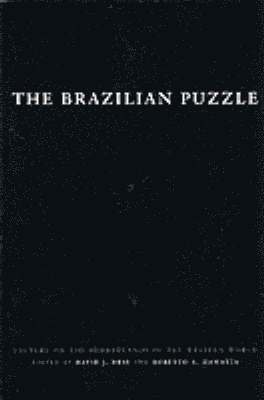
How do Brazilians think about their own culture in comparison with those of North America and Western Europe? The Brazilian Puzzle provides a unique picture of everyday life in Brazil viewed from a comparative perspective. Brazilian scholars and Brazilianists explore a range of topics in everyday life in Brazil, including sports, music, voluntary associations, religion, political practices, race and gender, and poor neighborhoods. The authors show how Brazilian culture involves a complex negotiation in which the traditional values of hierarchy and personalism permeate even the most modern institutions. The Brazilian Puzzle is emblematic of the new era in Brazilian studies in which Brazilian scholars are leading the way. Many of the authors draw on the work of the Brazilian anthropologist Robert DaMatta, who has questioned the perspective of observers from developed Western countries. DaMatta argues that they often project their own categories onto Brazilian society, and instead he suggests that Latin Americans and other peoples develop their own theories rooted in their own unique experiences.In this way The Brazilian Puzzle contributes to the end of an era of Brazilianists and the decolonizing of area studies.
1 082 kr
Skickas inom 10-15 vardagar
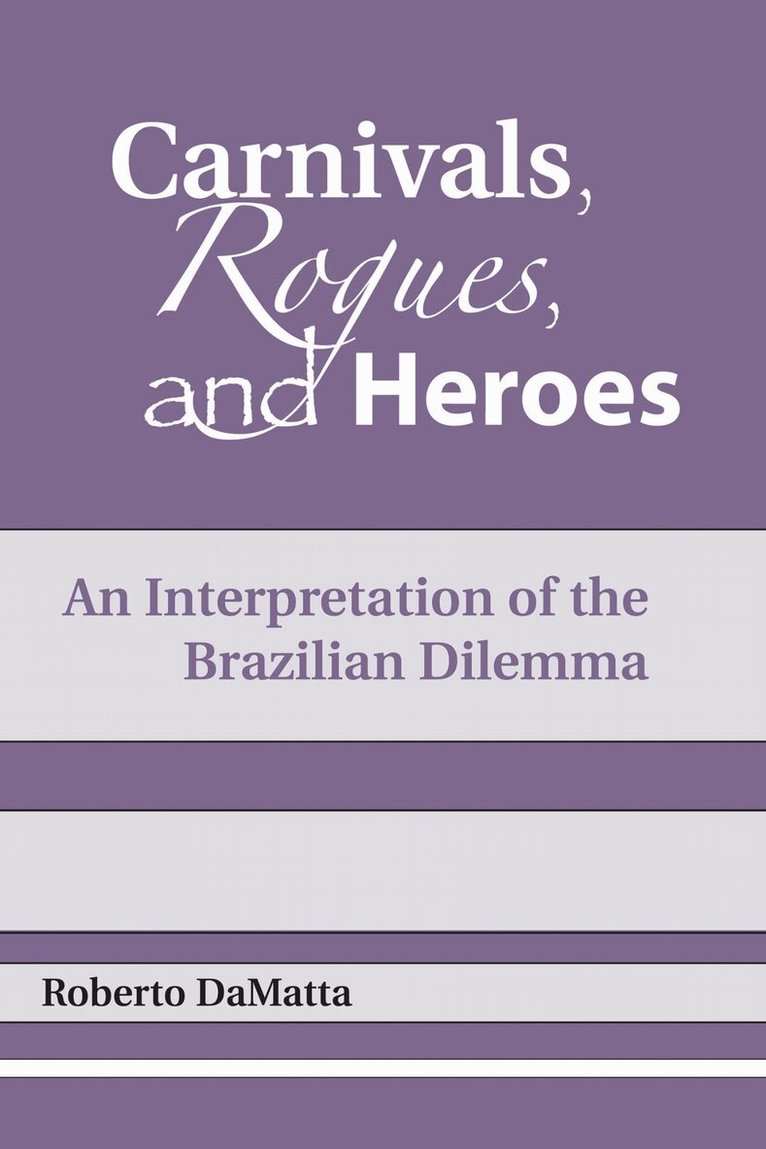
Encompassing half the continent of South America, Brazil is one of the most modern, complex, and misunderstood nations. Renowned Brazilian anthropologist Roberto DaMatta takes the misconceptions and offers a fresh, provocative interpretation of the complexity of social structure in Brazil. Using the tools of comparative social anthropology, DaMatta seeks to understand his native country by examining the values, attitudes, and systems that shape the identity of Brazil and its people. He probes the dilemma between the highly authoritarian, hierarchical aspects of Brazilian society and the concurrent desire for equality, democracy, and harmony in that same society. DaMatta leads us on a fascinating exploration into the the world of Brazilian carnivals, rogues, and heroes, and in so doing uncovers a deeper meaning of the rituals, symbols, and dramatizations unique to Brazil and its multifaceted society.
370 kr
Skickas inom 10-15 vardagar
Encompassing half the continent of South America, Brazil is one of the most modern, complex, and misunderstood nations. Renowned Brazilian anthropologist Roberto DaMatta takes the misconceptions and offers a fresh, provocative interpretation of the complexity of social structure in Brazil. Using the tools of comparative social anthropology, DaMatta seeks to understand his native country by examining the values, attitudes, and systems that shape the identity of Brazil and its people. He probes the dilemma between the highly authoritarian, hierarchical aspects of Brazilian society and the concurrent desire for equality, democracy, and harmony in that same society. DaMatta leads us on a fascinating exploration into the the world of Brazilian carnivals, rogues, and heroes, and in so doing uncovers a deeper meaning of the rituals, symbols, and dramatizations unique to Brazil and its multifaceted society.
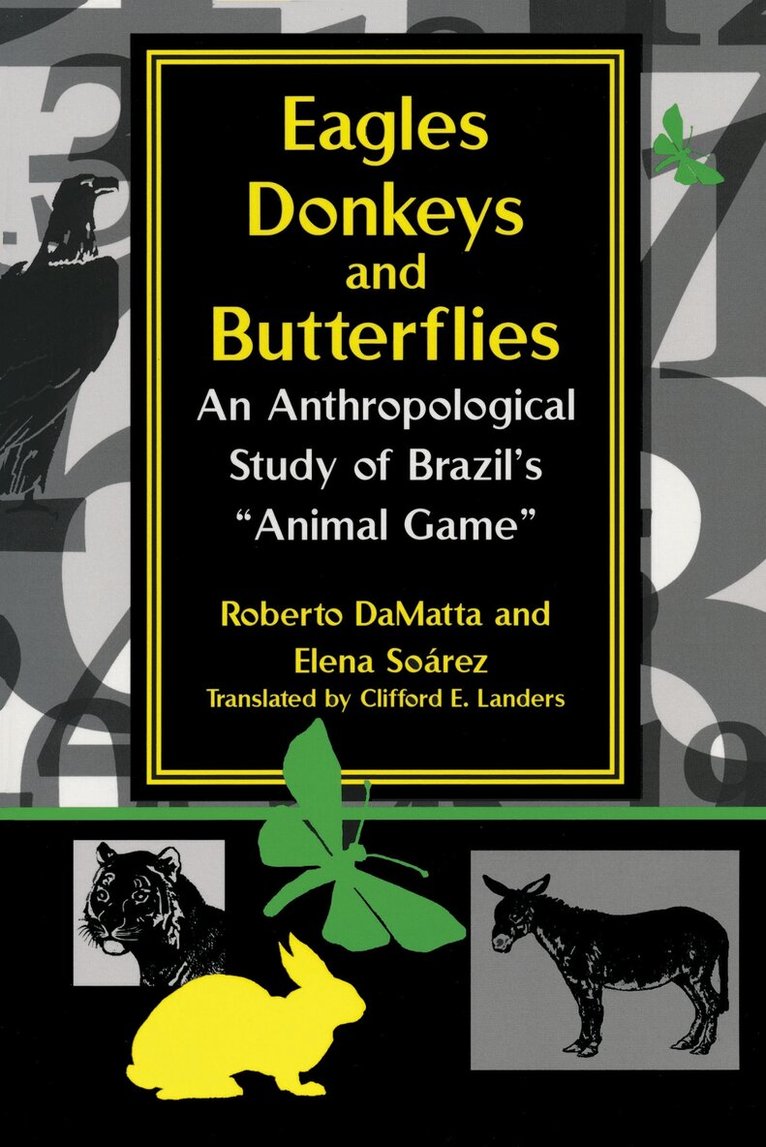
Eagles, Donkeys, and Butterflies
An Anthropological Study of Brazil's "Animal Game"
Häftad, Engelska, 2006
259 kr
Skickas inom 7-10 vardagar
Roberto DaMatta, one of the foremost Brazilian anthropologists, and his colleague Elena Soárez approach the question of gambling in popular culture in general and its treatment in social anthropology in particular. They focus on the "animal game," a kind of popular gambling entertainment or lottery within Brazil in which locals bet on a list of twenty-five animals. They argue that the success of this game, which originated in 1882 with the founding of the first zoo in Rio de Janeiro, and the social release the game provides are significant aspects of Brazilian social history and of the Brazilian "identity." Within the animal game, players "totemize" and identify with various animals. DaMatta and Soárez use this identification as a lens through which to view Brazil's modernity, society, the significance of gambling, and even the role of animal images in Brazilian and Western society.Appearing for the first time in English, this well-written work moves smoothly between comprehensive analysis and field observations of specific behaviors and practices, such as the lucky tricks and devices invested with magical thinking by those who play the game. This book will be of interest to students and scholars in sociology, anthropology, Brazilian studies, and Latin American cultural studies.