Robin Bernstein - Böcker
Visar alla böcker från författaren Robin Bernstein. Handla med fri frakt och snabb leverans.
5 produkter
5 produkter
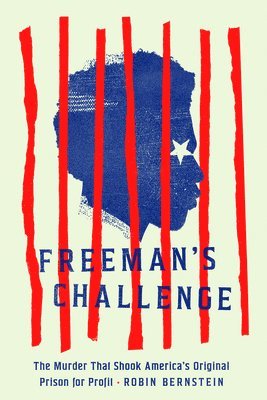
Freeman's Challenge: The Murder That Shook America's Original Prison for Profit
Inbunden, Engelska, 2024
323 kr
Skickas inom 3-6 vardagar
327 kr
Skickas inom 7-10 vardagar
"Robin Bernstein's Cast Out is my latest must have, an important new mapping of the intersection of gender and performance studies."-Holly HughesCast Out is a collection of memoirs and interviews by twenty-two leading performers, playwrights, technicians, producers, critics, educators, and passionate spectators.Cast Out also offers a backstage pass to the personal and creative lives of some of the most important and influential theater artists of the past fifty years: Edward Albee discusses the homophobic critical attacks he endured in the 50s and 60s; Cherry Jones talks about the first time she accepted a Tony Award-and her decision, in that moment, to come out; Peggy Shaw speaks of the drag queen who first inspired her stage career; Craig Lucas issues an impassioned call for theater practitioners and other artists to unite for the sake of art, creativity, and social change. Also included are memoirs by and interviews with Kate Bornstein, Lisa Kron, Tim Miller, and George C. Wolfe, among others. These diverse voices dispel the cliché of theater as a "safe haven" and replace the stereotype with a nuanced group portrait of the ways in which theater and queerness intersect.Featuring writing by:Edward AlbeeKate BornsteinRichard BrachoBree CovenTerry GallowayKarleen Pendleton JiménezCherry JonesLisa KronCraig LucasTim MillerJim ProvenzanoPeggy ShawGeorge C. Wolfeand more
914 kr
Skickas inom 10-15 vardagar
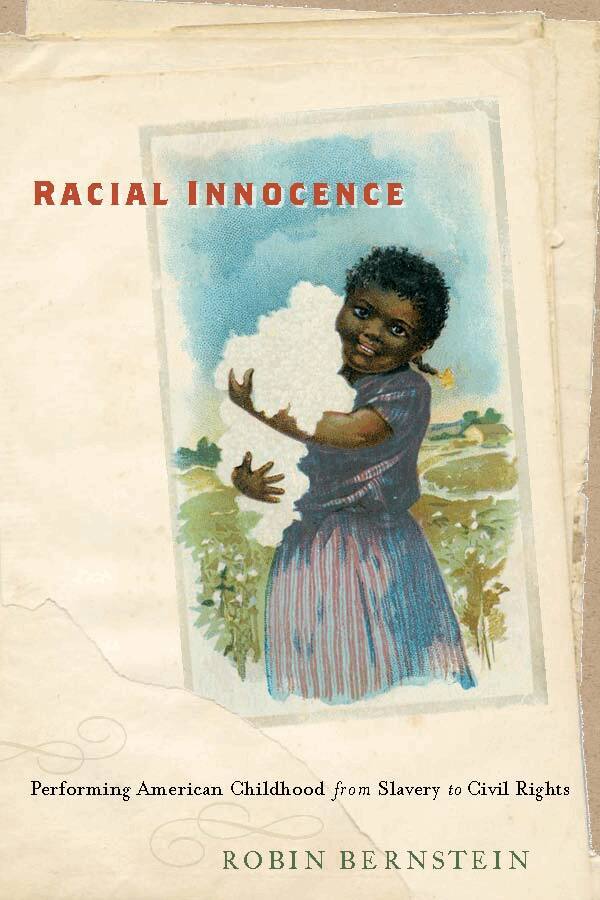
2013 Book Award Winner from the International Research Society in Children's Literature2012 Outstanding Book Award Winner from the Association for Theatre in Higher Education 2012 Winner of the Lois P. Rudnick Book Prize presented by the New England American Studies Association 2012 Runner-Up, John Hope Franklin Publication Prize presented by the American Studies Association2012 Honorable Mention, Distinguished Book Award presented by the Society for the Study of American Women Writers Dissects how "innocence" became the exclusive province of white children, covering slavery to the Civil Rights eraBeginning in the mid nineteenth century in America, childhood became synonymous with innocence—a reversal of the previously-dominant Calvinist belief that children were depraved, sinful creatures. As the idea of childhood innocence took hold, it became racialized: popular culture constructed white children as innocent and vulnerable while excluding black youth from these qualities. Actors, writers, and visual artists then began pairing white children with African American adults and children, thus transferring the quality of innocence to a variety of racial-political projects—a dynamic that Robin Bernstein calls "racial innocence." This phenomenon informed racial formation from the mid nineteenth century through the early twentieth. Racial Innocence takes up a rich archive including books, toys, theatrical props, and domestic knickknacks which Bernstein analyzes as "scriptive things" that invite or prompt historically-located practices while allowing for resistance and social improvisation. Integrating performance studies with literary and visual analysis, Bernstein offers singular readings of theatrical productions from blackface minstrelsy to Uncle Tom's Cabin to The Wonderful Wizard of Oz; literary works by Joel Chandler Harris, Harriet Wilson, and Frances Hodgson Burnett; material culture including Topsy pincushions, Uncle Tom and Little Eva handkerchiefs, and Raggedy Ann dolls; and visual texts ranging from fine portraiture to advertisements for lard substitute. Throughout, Bernstein shows how "innocence" gradually became the exclusive province of white children—until the Civil Rights Movement succeeded not only in legally desegregating public spaces, but in culturally desegregating the concept of childhood itself.
401 kr
Skickas inom 7-10 vardagar
2013 Book Award Winner from the International Research Society in Children's Literature2012 Outstanding Book Award Winner from the Association for Theatre in Higher Education 2012 Winner of the Lois P. Rudnick Book Prize presented by the New England American Studies Association 2012 Runner-Up, John Hope Franklin Publication Prize presented by the American Studies Association2012 Honorable Mention, Distinguished Book Award presented by the Society for the Study of American Women Writers Dissects how "innocence" became the exclusive province of white children, covering slavery to the Civil Rights eraBeginning in the mid nineteenth century in America, childhood became synonymous with innocence—a reversal of the previously-dominant Calvinist belief that children were depraved, sinful creatures. As the idea of childhood innocence took hold, it became racialized: popular culture constructed white children as innocent and vulnerable while excluding black youth from these qualities. Actors, writers, and visual artists then began pairing white children with African American adults and children, thus transferring the quality of innocence to a variety of racial-political projects—a dynamic that Robin Bernstein calls "racial innocence." This phenomenon informed racial formation from the mid nineteenth century through the early twentieth. Racial Innocence takes up a rich archive including books, toys, theatrical props, and domestic knickknacks which Bernstein analyzes as "scriptive things" that invite or prompt historically-located practices while allowing for resistance and social improvisation. Integrating performance studies with literary and visual analysis, Bernstein offers singular readings of theatrical productions from blackface minstrelsy to Uncle Tom's Cabin to The Wonderful Wizard of Oz; literary works by Joel Chandler Harris, Harriet Wilson, and Frances Hodgson Burnett; material culture including Topsy pincushions, Uncle Tom and Little Eva handkerchiefs, and Raggedy Ann dolls; and visual texts ranging from fine portraiture to advertisements for lard substitute. Throughout, Bernstein shows how "innocence" gradually became the exclusive province of white children—until the Civil Rights Movement succeeded not only in legally desegregating public spaces, but in culturally desegregating the concept of childhood itself.
563 kr
Kommande
Mapalakata is an extinct word recorded in oral traditions of the area meaning‘mysterious visitors’— which was used to describe foreign traders who moved throughSouthern Africa long before the time of contemporary European colonisation. Robin Bernstein, first travelled to and photographed along the Mpumalanga Escarpment, a dramatic part of South Africa’s Great Escarpment, in 2019. Mapalakata explores this surrounding landscape and offers a visual reassessment of a key historical and geographical region in Southern Africa.