Robyn Klingler-Vidra - Böcker
Visar alla böcker från författaren Robyn Klingler-Vidra. Handla med fri frakt och snabb leverans.
5 produkter
5 produkter
635 kr
Skickas inom 10-15 vardagar
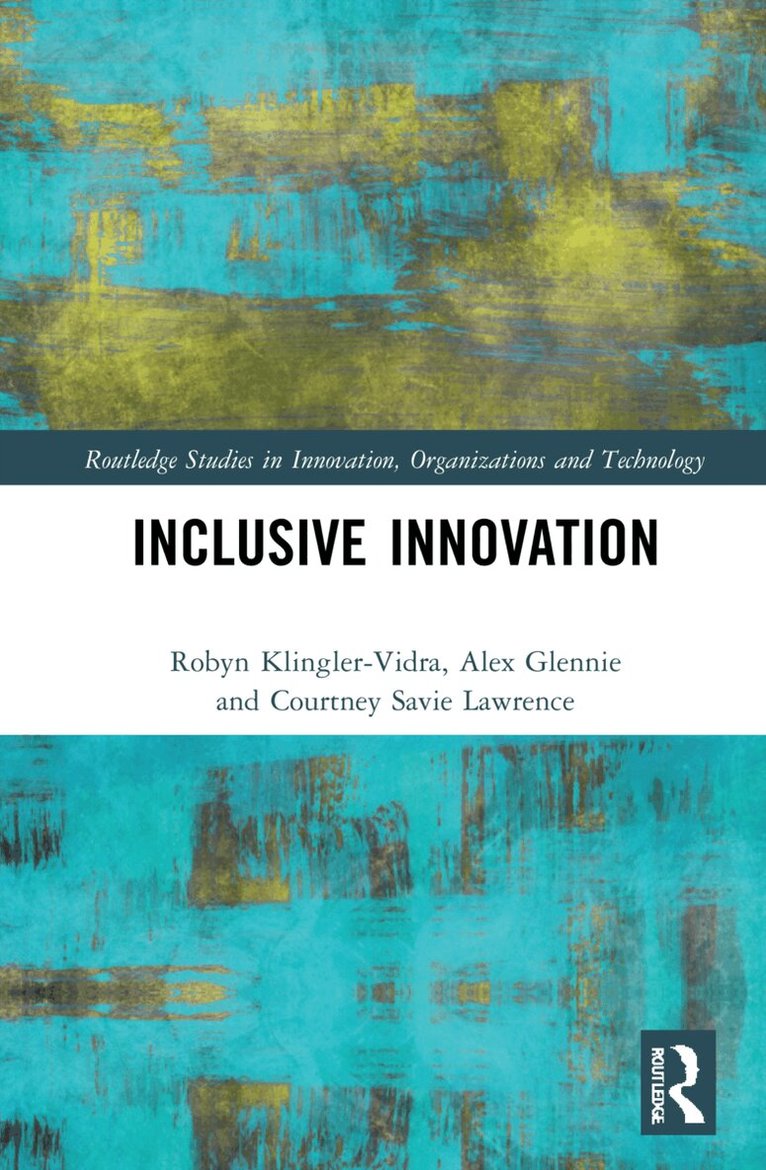
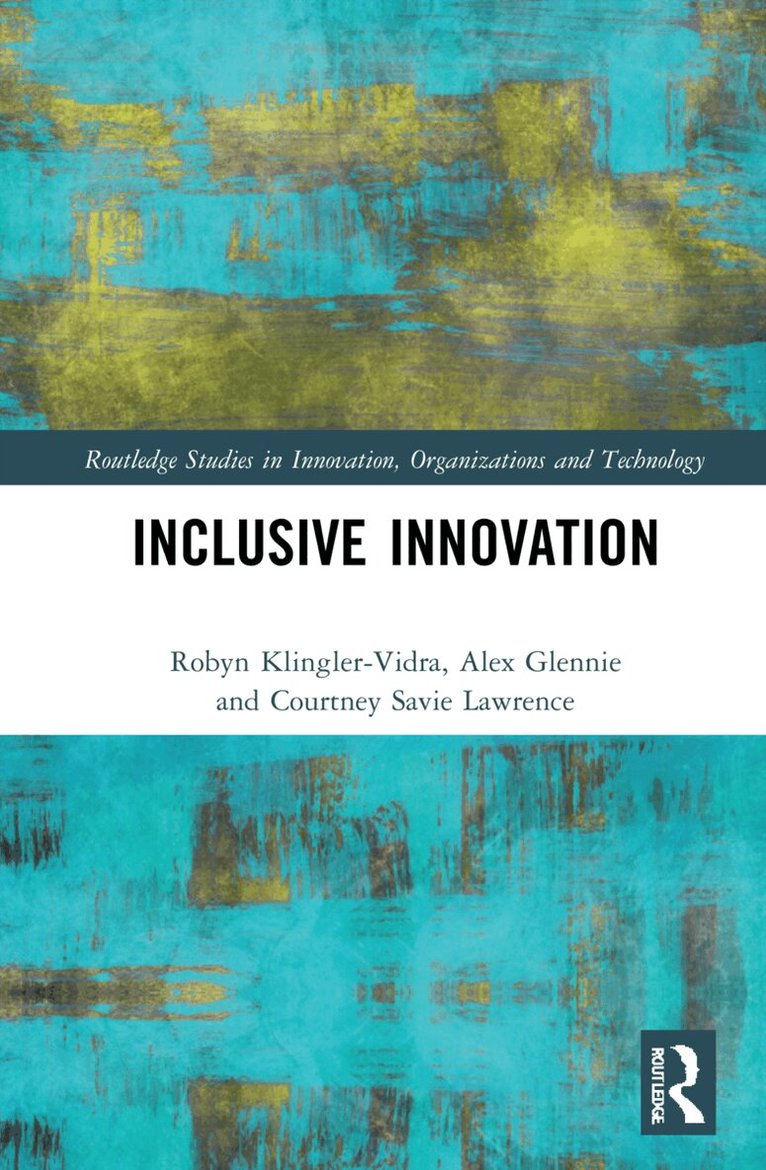
Innovation offers potential: to cure diseases, to better connect people, and to make the way we live and work more efficient and enjoyable. At the same time, innovation can fuel inequality, decimate livelihoods, and harm mental health. This book contends that inclusive innovation – innovation motivated by environmental and social aims – is able to uplift the benefits of innovation while reducing its harms.The book provides accessible engagement with inclusive innovation happening at the grassroots level through to policy arenas, with a focus on the South-East Asian region. Focusing on fundamental questions underpinning innovation, in terms of how, what and where, it argues that inclusive innovation has social processes and low-tech solutions as essential means of driving innovation, and that environmental concerns must be considered alongside societal aims. The book's understanding of inclusive innovation posits that marginalized or underrepresented innovators are empowered to include themselves by solving a problem that they are experiencing.The first in-depth exploration of efforts underway to assuage inequality from policy, private sector, and grassroots perspectives, this book will interest researchers in the areas of innovation studies, political economy, and development studies.Chapters 1 and 5 of this book are available for free in PDF format as Open Access from the individual product page at www.routledge.com. It has been made available under a Creative Commons Attribution-Non Commercial-No Derivatives 4.0 license.
2 150 kr
Skickas inom 10-15 vardagar
Innovation offers potential: to cure diseases, to better connect people, and to make the way we live and work more efficient and enjoyable. At the same time, innovation can fuel inequality, decimate livelihoods, and harm mental health. This book contends that inclusive innovation – innovation motivated by environmental and social aims – is able to uplift the benefits of innovation while reducing its harms.The book provides accessible engagement with inclusive innovation happening at the grassroots level through to policy arenas, with a focus on the South-East Asian region. Focusing on fundamental questions underpinning innovation, in terms of how, what and where, it argues that inclusive innovation has social processes and low-tech solutions as essential means of driving innovation, and that environmental concerns must be considered alongside societal aims. The book's understanding of inclusive innovation posits that marginalized or underrepresented innovators are empowered to include themselves by solving a problem that they are experiencing.The first in-depth exploration of efforts underway to assuage inequality from policy, private sector, and grassroots perspectives, this book will interest researchers in the areas of innovation studies, political economy, and development studies.Chapters 1 and 5 of this book are available for free in PDF format as Open Access from the individual product page at www.routledge.com. It has been made available under a Creative Commons Attribution-Non Commercial-No Derivatives 4.0 license.
694 kr
Skickas inom 10-15 vardagar
Silicon Valley has become shorthand for a globally acclaimed way to unleash the creative potential of venture capital, supporting innovation and creating jobs. In The Venture Capital State Robyn Klingler-Vidra traces how and why different states have adopted distinct versions of the Silicon Valley model.Venture capital seeks high rewards but is enveloped in high risk. The author's deep investigations of venture capital policymaking in East Asian states (Hong Kong, Taiwan, Singapore) show that success does not reflect policymakers' ability to replicate the Silicon Valley model. Instead, she argues, performance reflects their skill in adapting a highly lauded model to their local context. Policymakers are "contextually rational" in their learning; their context-rooted norms shape their preferences. The normative context for learning about policy—how elites see themselves and what they deem as locally appropriate—informs how they design their efforts.The Venture Capital State offers a novel conceptualization of rationality, bridging diametrically opposed versions of bounded and conventional rationality. This new understanding of rationality is simultaneously fully informed and context based, and it provides a framework by which analysts can bring domestic factors to the very heart of international diffusion of policy. Klingler-Vidra concludes that states have a visible hand in constituting even quintessentially neoliberal markets.
1 518 kr
Skickas inom 10-15 vardagar
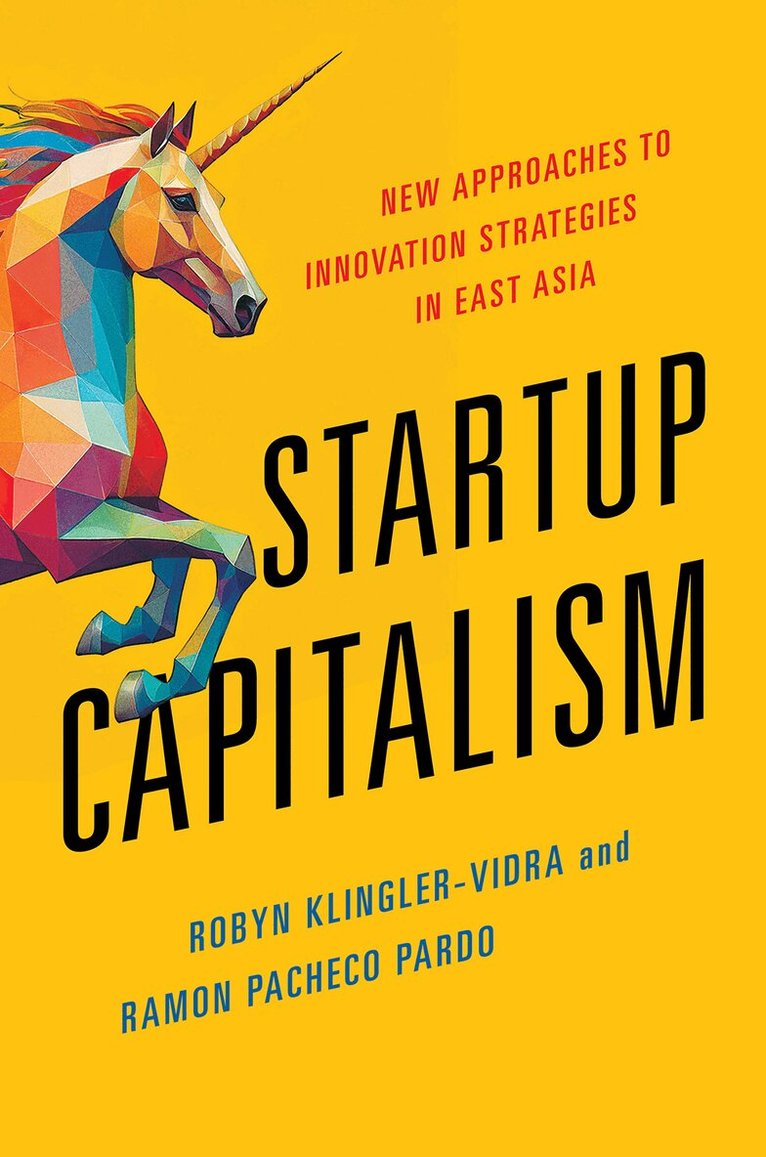
In Startup Capitalism, Robyn Klingler-Vidra and Ramon Pacheco Pardo explore the place of startups in contemporary East Asian economies. The last few decades have seen East Asian governments provide increasing support for startups—new, high-growth, technologically oriented firms. Yet, as the authors observe, such initiatives do not necessarily benefit the growth of startups as challengers to large, established firms. Rather, they often enable startups to function as boosters for the competitiveness of these firms. Startups, in short, are both disruptors to and resources for big businesses. Klingler-Vidra and Pacheco Pardo demonstrate this dual role by examining the evolution of startup-centric policies in Japan, South Korea, Taiwan, and China. They show that in the region, what they call startup capitalism—an economic and political system in which startups contribute to employment, innovation, and growth—can take multiple forms. Rich with empirical detail, Startup Capitalism reveals how and why startups can end up working with—or even for—large firms to drive a country's technological capabilities.
287 kr
Skickas inom 10-15 vardagar
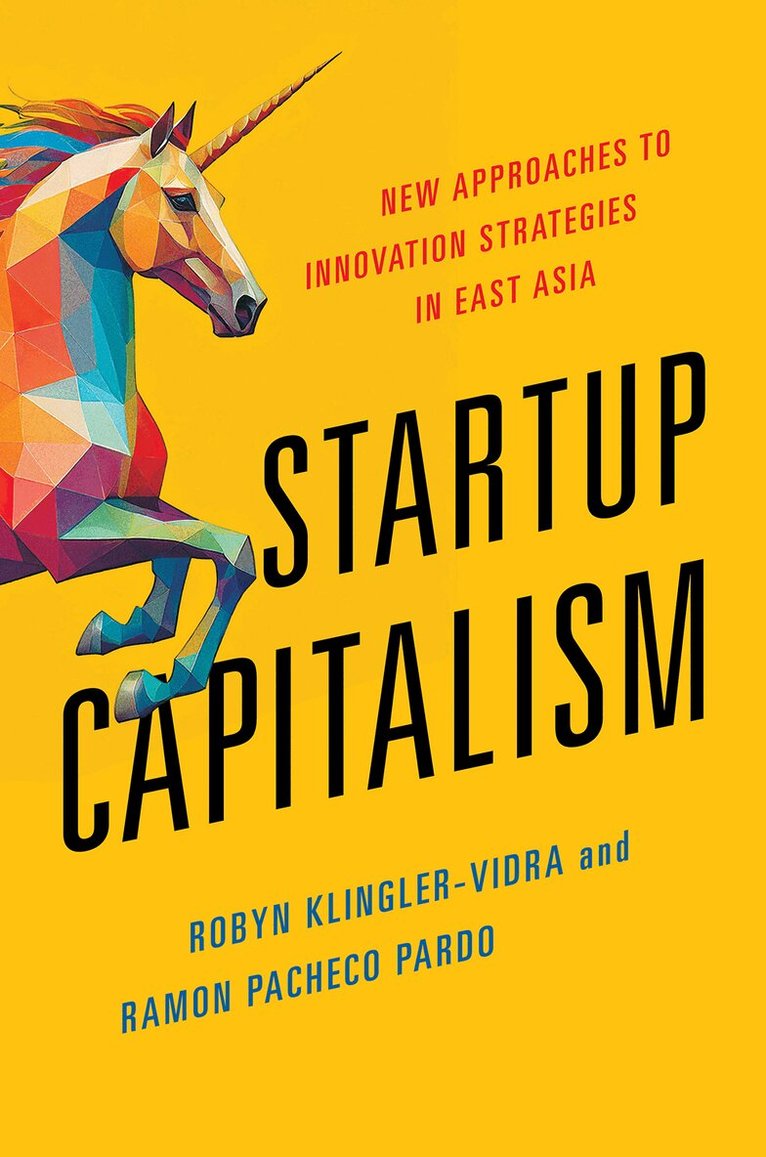
In Startup Capitalism, Robyn Klingler-Vidra and Ramon Pacheco Pardo explore the place of startups in contemporary East Asian economies. The last few decades have seen East Asian governments provide increasing support for startups—new, high-growth, technologically oriented firms. Yet, as the authors observe, such initiatives do not necessarily benefit the growth of startups as challengers to large, established firms. Rather, they often enable startups to function as boosters for the competitiveness of these firms. Startups, in short, are both disruptors to and resources for big businesses. Klingler-Vidra and Pacheco Pardo demonstrate this dual role by examining the evolution of startup-centric policies in Japan, South Korea, Taiwan, and China. They show that in the region, what they call startup capitalism—an economic and political system in which startups contribute to employment, innovation, and growth—can take multiple forms. Rich with empirical detail, Startup Capitalism reveals how and why startups can end up working with—or even for—large firms to drive a country's technological capabilities.