Roger D. Petersen - Böcker
Visar alla böcker från författaren Roger D. Petersen. Handla med fri frakt och snabb leverans.
7 produkter
7 produkter
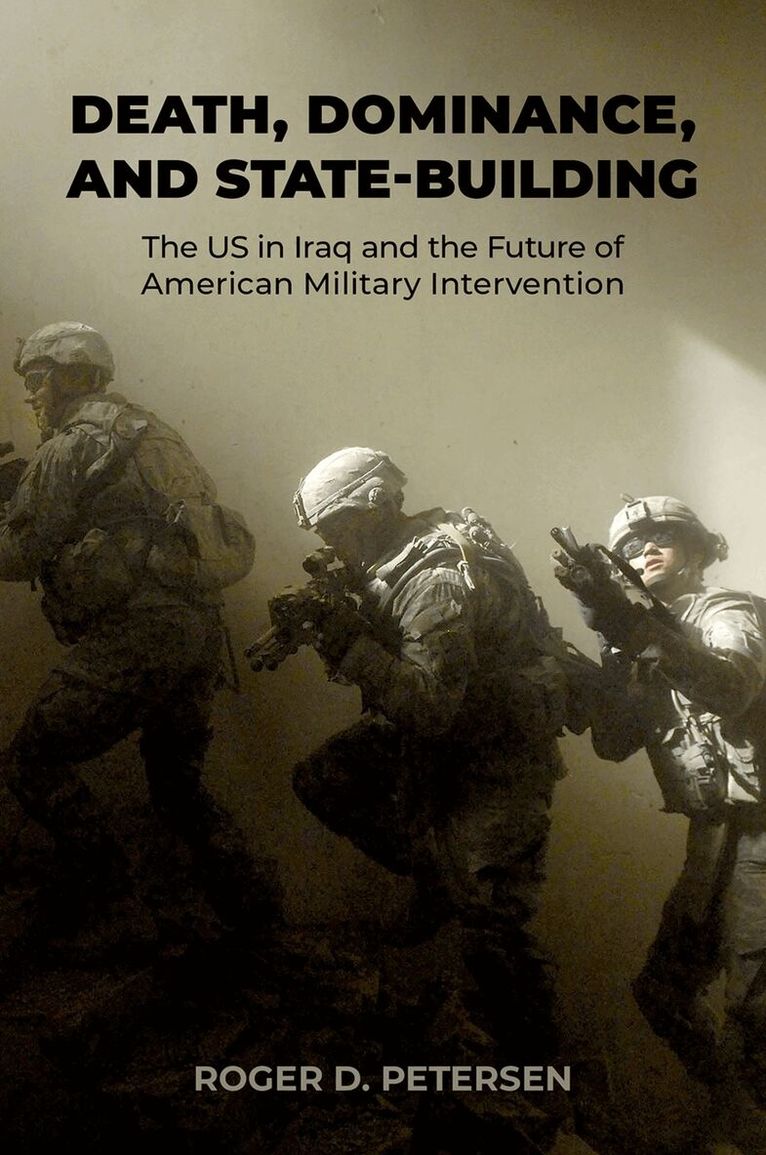
Death, Dominance, and State-Building
The US in Iraq and the Future of American Military Intervention
Inbunden, Engelska, 2024
360 kr
Skickas inom 5-8 vardagar
The definitive work on the course, conduct, and aftermath of the Iraq war.In Death, Dominance, and State-Building, the eminent scholar of conflict Roger D. Petersen provides the first comprehensive analytic history of post-invasion Iraq. Although the war is almost universally derided as one of the biggest foreign policy blunders of the post-Cold War era, Petersen argues that the course and conduct of the conflict is poorly understood. He begins by outlining an accessible framework for analyzing complex, fluid, and violent internal conflicts. He then applies that framework to a variety of diverse case studies to break down the strategic interplay among the US military forces and Shia and Sunni insurgent organizations as it played out in Baghdad, Anbar, and Hawija. Highlighting the struggle for dominance between Shia and Sunni in Baghdad, Petersen offers a reconsideration of the Surge. He also addresses failures of state-building in Iraqi Kurdistan. Critically, he shows how the legacy of the US occupation and presence from 2003-2011 shaped Iraq's political and security contours from 2011-2023. Comprehensive, analytically sophisticated, and subtle, this book draws lessons relevant to future American military interventions from what most regard as the US's most disastrous foreign policy adventure since Vietnam. The US cannot simply wish away insurgencies, which are always going to occur. The question is what the US and other great powers might do about them in the future.
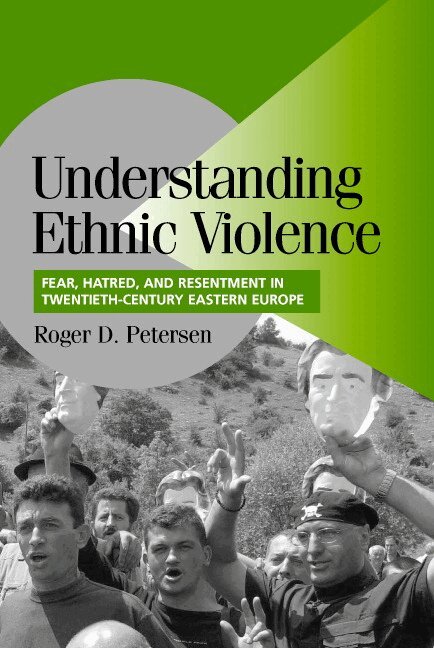
Understanding Ethnic Violence
Fear, Hatred, and Resentment in Twentieth-Century Eastern Europe
Häftad, Engelska, 2002
347 kr
Skickas inom 7-10 vardagar
This 2002 book seeks to identify the motivations of individual perpetrators of ethnic violence. The work develops four models, labeled Fear, Hatred, Resentment, and Rage, gleaned from existing social science literatures. The empirical chapters apply these four models to important events of ethnic conflict in Eastern Europe, from the 1905 Russian Revolution to the collapse of Yugoslavia in the 1990s. Each historical chapter generates questions about the timing and target of ethnic violence. The four models are then applied to the case, to learn which does the best job in explaining the observed patterns of ethnic conflict. The findings challenge conventional wisdom, in that the Resentment narrative, centered on a sense of unjust group status, provides the best fit for a variety of cases. While Fear, Hatred, and Rage do motivate hostile actions, Resentment pervasively appears to inflame ethnic animosity and drive outcomes in the timing and pattern of action.
409 kr
Skickas inom 7-10 vardagar
Resistance and Rebellion: Lessons from Eastern Europe explains how ordinary people become involved in resistance and rebellion against powerful regimes. The book shows how a sequence of casual forces - social norms, focal points, rational calculation - operate to drive individuals into roles of passive resistance and, at a second stage, into participation in community-based rebellion organization. By linking the operation of these mechanisms to observable social structures, the work generates predictions about which types of community and society are most likely to form and sustain resistance and rebellion. The empirical material centres around Lithuanian anti-Soviet resistance in both the 1940s and the 1987-91 period. Using the Lithuanian experience as a baseline, comparisons with several other Eastern European countries demonstrate the breadth and depth of the theory. The book contributes to both the general literature on political violence and protest, as well as the theoretical literature on collective action.
410 kr
Skickas inom 7-10 vardagar
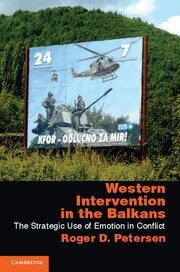
Conflicts involve powerful experiences. The residue of these experiences is captured by the concept and language of emotion. Indiscriminate killing creates fear; targeted violence produces anger and a desire for vengeance; political status reversals spawn resentment; cultural prejudices sustain ethnic contempt. These emotions can become resources for political entrepreneurs. A broad range of Western interventions are based on a view of human nature as narrowly rational. Correspondingly, intervention policy generally aims to alter material incentives ('sticks and carrots') to influence behavior. In response, poorer and weaker actors who wish to block or change this Western implemented 'game' use emotions as resources. This book examines the strategic use of emotion in the conflicts and interventions occurring in the Western Balkans over a twenty-year period. The book concentrates on the conflicts among Albanian and Slavic populations (Kosovo, Montenegro, Macedonia, South Serbia), along with some comparisons to Bosnia.
1 065 kr
Skickas inom 7-10 vardagar
Resistance and Rebellion: Lessons from Eastern Europe explains how ordinary people become involved in resistance and rebellion against powerful regimes. The book shows how a sequence of casual forces - social norms, focal points, rational calculation - operate to drive individuals into roles of passive resistance and, at a second stage, into participation in community-based rebellion organization. By linking the operation of these mechanisms to observable social structures, the work generates predictions about which types of community and society are most likely to form and sustain resistance and rebellion. The empirical material centres around Lithuanian anti-Soviet resistance in both the 1940s and the 1987-91 period. Using the Lithuanian experience as a baseline, comparisons with several other Eastern European countries demonstrate the breadth and depth of the theory. The book contributes to both the general literature on political violence and protest, as well as the theoretical literature on collective action.
Understanding Ethnic Violence
Fear, Hatred, and Resentment in Twentieth-Century Eastern Europe
Inbunden, Engelska, 2002
1 034 kr
Skickas inom 7-10 vardagar
This 2002 book seeks to identify the motivations of individual perpetrators of ethnic violence. The work develops four models, labeled Fear, Hatred, Resentment, and Rage, gleaned from existing social science literatures. The empirical chapters apply these four models to important events of ethnic conflict in Eastern Europe, from the 1905 Russian Revolution to the collapse of Yugoslavia in the 1990s. Each historical chapter generates questions about the timing and target of ethnic violence. The four models are then applied to the case, to learn which does the best job in explaining the observed patterns of ethnic conflict. The findings challenge conventional wisdom, in that the Resentment narrative, centered on a sense of unjust group status, provides the best fit for a variety of cases. While Fear, Hatred, and Rage do motivate hostile actions, Resentment pervasively appears to inflame ethnic animosity and drive outcomes in the timing and pattern of action.
994 kr
Skickas inom 7-10 vardagar
Conflicts involve powerful experiences. The residue of these experiences is captured by the concept and language of emotion. Indiscriminate killing creates fear; targeted violence produces anger and a desire for vengeance; political status reversals spawn resentment; cultural prejudices sustain ethnic contempt. These emotions can become resources for political entrepreneurs. A broad range of Western interventions are based on a view of human nature as narrowly rational. Correspondingly, intervention policy generally aims to alter material incentives ('sticks and carrots') to influence behavior. In response, poorer and weaker actors who wish to block or change this Western implemented 'game' use emotions as resources. This book examines the strategic use of emotion in the conflicts and interventions occurring in the Western Balkans over a twenty-year period. The book concentrates on the conflicts among Albanian and Slavic populations (Kosovo, Montenegro, Macedonia, South Serbia), along with some comparisons to Bosnia.