
Roger V. Gould – författare
Visar alla böcker från författaren Roger V. Gould. Handla med fri frakt och snabb leverans.
4 produkter
4 produkter
1 162 kr
Skickas
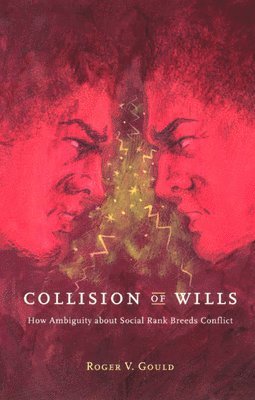
Minor debts, derisive remarks, a fight over a parking space, butting in line—these are the little things that nevertheless account for much of the violence in human society. But why? Roger V. Gould considers this intriguing question in Collision of Wills. He argues that human conflict is more likely to occur in symmetrical relationships—among friends or social equals—than in hierarchical ones, wherein the difference of social rank between the two individuals is already established. This, he maintains, is because violence most often occurs when someone wants to achieve superiority or dominance over someone else, even if there is no substantive reason for doing so. In making the case for this original idea, Gould explores a diverse range of examples, including murders, blood feuds, vendettas, revolutions, and the everyday disagreements that compel people to act violently. The result is an intelligent and provocative work that restores the study of conflict to the center of social inquiry.
264 kr
Skickas inom 5-8 vardagar
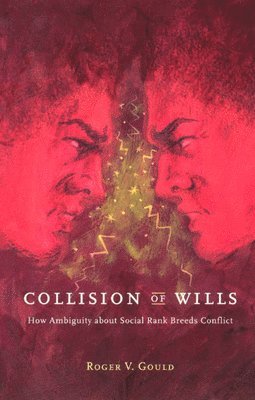
Minor debts, derisive remarks, a fight over a parking space, butting in line—these are the little things that nevertheless account for much of the violence in human society. But why? Roger V. Gould considers this intriguing question in Collision of Wills. He argues that human conflict is more likely to occur in symmetrical relationships—among friends or social equals—than in hierarchical ones, wherein the difference of social rank between the two individuals is already established. This, he maintains, is because violence most often occurs when someone wants to achieve superiority or dominance over someone else, even if there is no substantive reason for doing so. In making the case for this original idea, Gould explores a diverse range of examples, including murders, blood feuds, vendettas, revolutions, and the everyday disagreements that compel people to act violently. The result is an intelligent and provocative work that restores the study of conflict to the center of social inquiry.

Insurgent Identities
Class, Community, and Protest in Paris from 1848 to the Commune
Inbunden, Engelska, 1995
786 kr
Tillfälligt slut
By focusing on the less turbulent years in between the social upheavals of the Paris Commune of 1871 and the 1848 Revolution, Gould reveals that while class played a pivotal role in 1848, it was neighbourhood solidarity that was a decisive organizing force in 1871. Baron Haussmann's massive urban renovation projects between 1852 and 1868 dispersed workers from Paris' centre to newly annexed districts on the outskirts of the city. Residence rather than occupation quickly became the new basis of social solidarity. Drawing on evidence derived from trial documents, marriage certificates, reports of police spies and the popular press, Gould demonstrates that this fundamental rearrangement in the patterns of social life made possible a neighbourhood insurgent movement; whereas the insurgents of 1848 fought and died in defence of their status as workers, those of 1871 did so as members of a besieged urban community.
Insurgent Identities
Class, Community, and Protest in Paris from 1848 to the Commune
Häftad, Engelska, 1995
314 kr
Skickas inom 5-8 vardagar
By focusing on the less turbulent years in between the social upheavals of the Paris Commune of 1871 and the 1848 Revolution, Gould reveals that while class played a pivotal role in 1848, it was neighbourhood solidarity that was a decisive organizing force in 1871. Baron Haussmann's massive urban renovation projects between 1852 and 1868 dispersed workers from Paris' centre to newly annexed districts on the outskirts of the city. Residence rather than occupation quickly became the new basis of social solidarity. Drawing on evidence derived from trial documents, marriage certificates, reports of police spies and the popular press, Gould demonstrates that this fundamental rearrangement in the patterns of social life made possible a neighbourhood insurgent movement; whereas the insurgents of 1848 fought and died in defence of their status as workers, those of 1871 did so as members of a besieged urban community.