Roi Wagner – författare
Visar alla böcker från författaren Roi Wagner. Handla med fri frakt och snabb leverans.
4 produkter
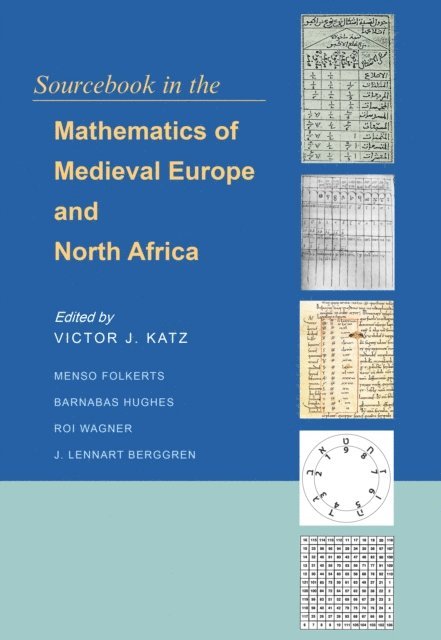
Sourcebook in the Mathematics of Medieval Europe and North Africa
Av Victor J. Katz, Menso Folkerts m. fl.
Inbunden, 2016
1068 kr
Lägg i varukorg
Medieval Europe was a meeting place for the Christian, Jewish, and Islamic civilizations, and the fertile intellectual exchange of these cultures can be seen in the mathematical developments of the time. This sourcebook presents original Latin, Hebrew, and Arabic sources of medieval mathematics, …
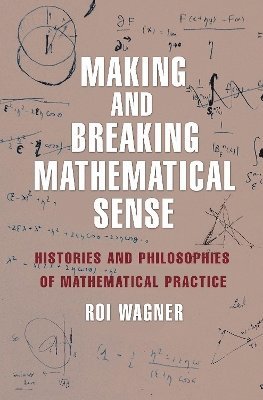
Making and Breaking Mathematical Sense
Histories and Philosophies of Mathematical Practice
Av Roi Wagner
Inbunden, 2017
505 kr
Lägg i varukorg
In line with the emerging field of philosophy of mathematical practice, this book pushes the philosophy of mathematics away from questions about the reality and truth of mathematical entities and statements and toward a focus on what mathematicians actually do--and how that evolves and changes over …
Sourcebook in the Mathematics of Medieval Europe and North Africa
Av J. Lennart Berggren, Roi Wagner m. fl.
E-bok, 2016
1395 kr
Lägg i varukorg
Medieval Europe was a meeting place for the Christian, Jewish, and Islamic civilizations, and the fertile intellectual exchange of these cultures can be seen in the mathematical developments of the time. This sourcebook presents original Latin, Hebrew, and Arabic sources of medieval mathematics, …
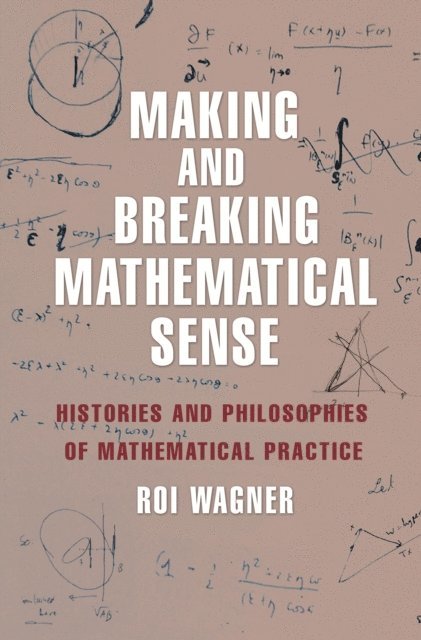
Making and Breaking Mathematical Sense
Histories and Philosophies of Mathematical Practice
Av Roi Wagner
E-bok, 2017
685 kr
Lägg i varukorg
In line with the emerging field of philosophy of mathematical practice, this book pushes the philosophy of mathematics away from questions about the reality and truth of mathematical entities and statements and toward a focus on what mathematicians actually do—and how that evolves and changes over …