Rory McInnes-Gibbons – författare
Visar alla böcker från författaren Rory McInnes-Gibbons. Handla med fri frakt och snabb leverans.
4 produkter
4 produkter
2 646 kr
Kommande
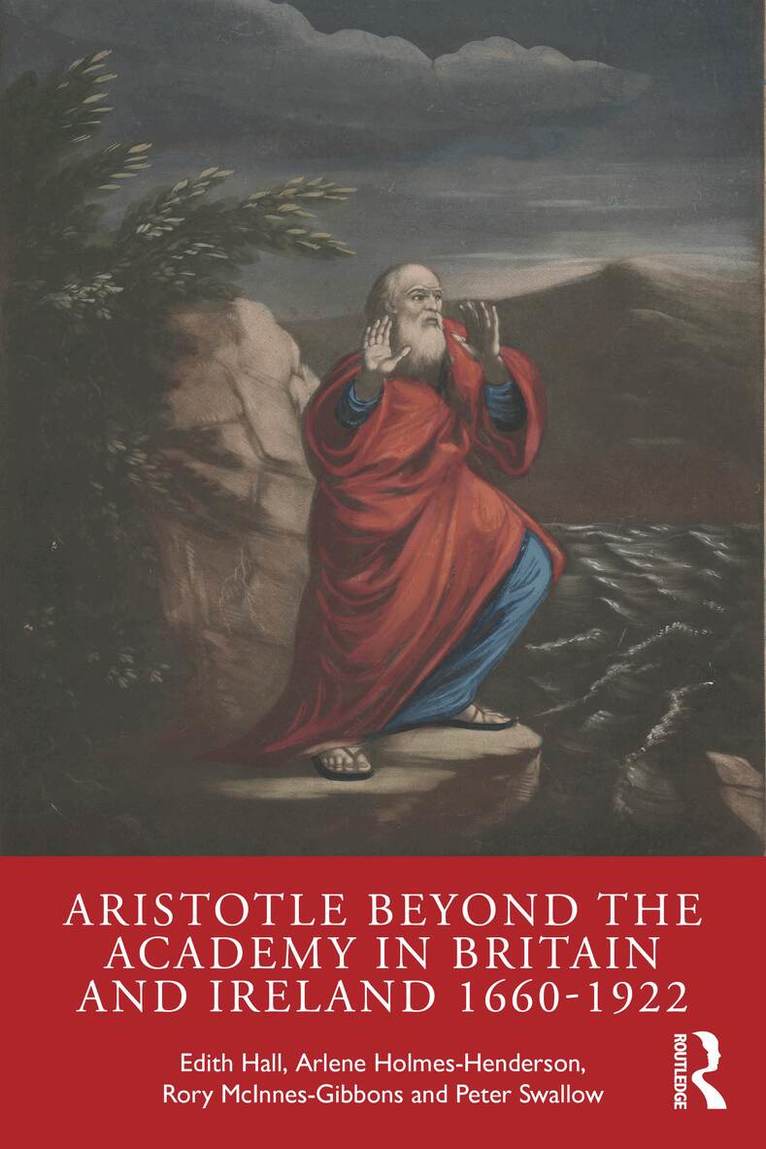
This book explores the questions of when, where, how and why Aristotle has appeared in England, Scotland, Ireland and Wales since the Restoration in 1660, through to Irish Independence in 1922.The primary focus is on ethics and politics, natural science, and rhetoric and the arts. Chapters explore the impact of specific events in the history of Aristotelian reception over this period, taking the reader thematically on a journey through Aristotle’s diverse academic interests. The authors argue that Aristotle's authority has been omnipresent but never monolithic: it has been vigorously contested. This giant of western culture has by no means been used uniformly to reinforce established authority or symbolise Catholic conservatives; he has equally been adopted by radicals and progressives. Aristotle’s authority has been invoked by apologists for absolute monarchy and by Chartist revolutionaries; by patriarchal opponents of women’s rights and by suffrage activists; by apologists for slavery and by advocates of universal suffrage; by critics of stage censorship and by its advocates; by Deists questioning God’s involvement in human affairs and Roman Catholics insisting upon it. This volume explores all these various interpretations, appropriations and adaptations of his work.This fascinating study appeals not only to students and scholars of classics and philosophy, but also to specialists in British and Irish early modern and modern history, popular culture, political and intellectual history, as well as those studying the history of science, sexuality, and rhetoric.
824 kr
Kommande
This book explores the questions of when, where, how and why Aristotle has appeared in England, Scotland, Ireland and Wales since the Restoration in 1660, through to Irish Independence in 1922.The primary focus is on ethics and politics, natural science, and rhetoric and the arts. Chapters explore the impact of specific events in the history of Aristotelian reception over this period, taking the reader thematically on a journey through Aristotle’s diverse academic interests. The authors argue that Aristotle's authority has been omnipresent but never monolithic: it has been vigorously contested. This giant of western culture has by no means been used uniformly to reinforce established authority or symbolise Catholic conservatives; he has equally been adopted by radicals and progressives. Aristotle’s authority has been invoked by apologists for absolute monarchy and by Chartist revolutionaries; by patriarchal opponents of women’s rights and by suffrage activists; by apologists for slavery and by advocates of universal suffrage; by critics of stage censorship and by its advocates; by Deists questioning God’s involvement in human affairs and Roman Catholics insisting upon it. This volume explores all these various interpretations, appropriations and adaptations of his work.This fascinating study appeals not only to students and scholars of classics and philosophy, but also to specialists in British and Irish early modern and modern history, popular culture, political and intellectual history, as well as those studying the history of science, sexuality, and rhetoric.
2 193 kr
Skickas inom 10-15 vardagar
This is the first book to explore the history of ancient Greek and Roman influences and reception in England’s North East, topics which have often transcended social boundaries dictated by working identity, class, religion, gender, and ethnicity.Together, the chapters cover a broad range of themes and topics from architecture, theatre, working-class education, poetry, post-war novels and Hadrian's Wall. Each section, taken as a whole, views the specific topic from complementary social angles encompassing discrete social classes and constituencies but always remaining aware of the experience of non-elites. United in a classical reception studies approach, contributors draw on a variety of materials such as archives, institutional records, oral histories, magazines, antiquarian journals, newspapers, video and audio recordings, television, photographs, engravings, paintings, drawings, school textbooks, guidebooks, the fabric of buildings, poetry, and fiction to show how modern identities are informed by the Greek and Roman past.This pioneering and richly illustrated study of classical reception from a local-historical perspective is of interest to students and scholars working in Classics and the social, cultural, intellectual, and local history of England.
670 kr
Skickas inom 10-15 vardagar
This is the first book to explore the history of ancient Greek and Roman influences and reception in England’s North East, topics which have often transcended social boundaries dictated by working identity, class, religion, gender, and ethnicity.Together, the chapters cover a broad range of themes and topics from architecture, theatre, working-class education, poetry, post-war novels and Hadrian's Wall. Each section, taken as a whole, views the specific topic from complementary social angles encompassing discrete social classes and constituencies but always remaining aware of the experience of non-elites. United in a classical reception studies approach, contributors draw on a variety of materials such as archives, institutional records, oral histories, magazines, antiquarian journals, newspapers, video and audio recordings, television, photographs, engravings, paintings, drawings, school textbooks, guidebooks, the fabric of buildings, poetry, and fiction to show how modern identities are informed by the Greek and Roman past.This pioneering and richly illustrated study of classical reception from a local-historical perspective is of interest to students and scholars working in Classics and the social, cultural, intellectual, and local history of England.