Rory McVeigh - Böcker
Visar alla böcker från författaren Rory McVeigh. Handla med fri frakt och snabb leverans.
7 produkter
7 produkter
1 160 kr
Skickas inom 7-10 vardagar
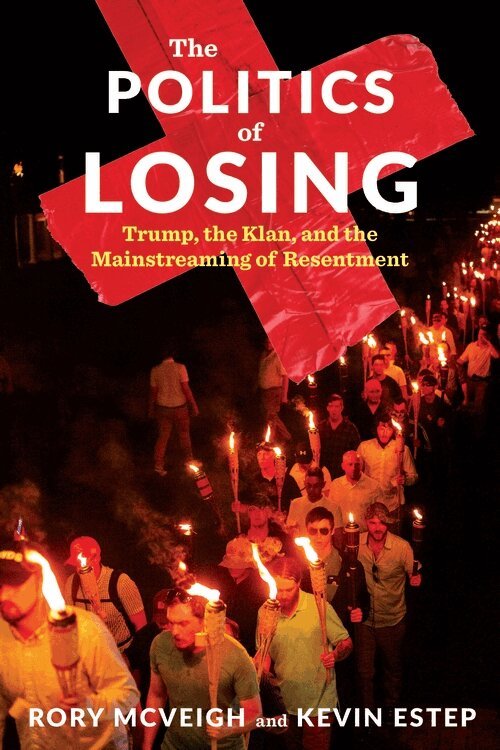
The Ku Klux Klan has peaked three times in American history: after the Civil War, around the 1960s Civil Rights Movement, and in the 1920s, when the Klan spread farthest and fastest. Recruiting millions of members even in non-Southern states, the Klan’s nationalist insurgency burst into mainstream politics. Almost one hundred years later, the pent-up anger of white Americans left behind by a changing economy has once again directed itself at immigrants and cultural outsiders and roiled a presidential election.In The Politics of Losing, Rory McVeigh and Kevin Estep trace the parallels between the 1920s Klan and today’s right-wing backlash, identifying the conditions that allow white nationalism to emerge from the shadows. White middle-class Protestant Americans in the 1920s found themselves stranded by an economy that was increasingly industrialized and fueled by immigrant labor. Mirroring the Klan’s earlier tactics, Donald Trump delivered a message that mingled economic populism with deep cultural resentments. McVeigh and Estep present a sociological analysis of the Klan’s outbreaks that goes beyond Trump the individual to show how his rise to power was made possible by a convergence of circumstances. White Americans’ experience of declining privilege and perceptions of lost power can trigger a political backlash that overtly asserts white-nationalist goals. The Politics of Losing offers a rigorous and lucid explanation for a recurrent phenomenon in American history, with important lessons about the origins of our alarming political climate.
296 kr
Skickas inom 7-10 vardagar
The Ku Klux Klan has peaked three times in American history: after the Civil War, around the 1960s Civil Rights Movement, and in the 1920s, when the Klan spread farthest and fastest. Recruiting millions of members even in non-Southern states, the Klan’s nationalist insurgency burst into mainstream politics. Almost one hundred years later, the pent-up anger of white Americans left behind by a changing economy has once again directed itself at immigrants and cultural outsiders and roiled a presidential election.In The Politics of Losing, Rory McVeigh and Kevin Estep trace the parallels between the 1920s Klan and today’s right-wing backlash, identifying the conditions that allow white nationalism to emerge from the shadows. White middle-class Protestant Americans in the 1920s found themselves stranded by an economy that was increasingly industrialized and fueled by immigrant labor. Mirroring the Klan’s earlier tactics, Donald Trump delivered a message that mingled economic populism with deep cultural resentments. McVeigh and Estep present a sociological analysis of the Klan’s outbreaks that goes beyond Trump the individual to show how his rise to power was made possible by a convergence of circumstances. White Americans’ experience of declining privilege and perceptions of lost power can trigger a political backlash that overtly asserts white-nationalist goals. The Politics of Losing offers a rigorous and lucid explanation for a recurrent phenomenon in American history, with important lessons about the origins of our alarming political climate.
1 047 kr
Skickas inom 7-10 vardagar
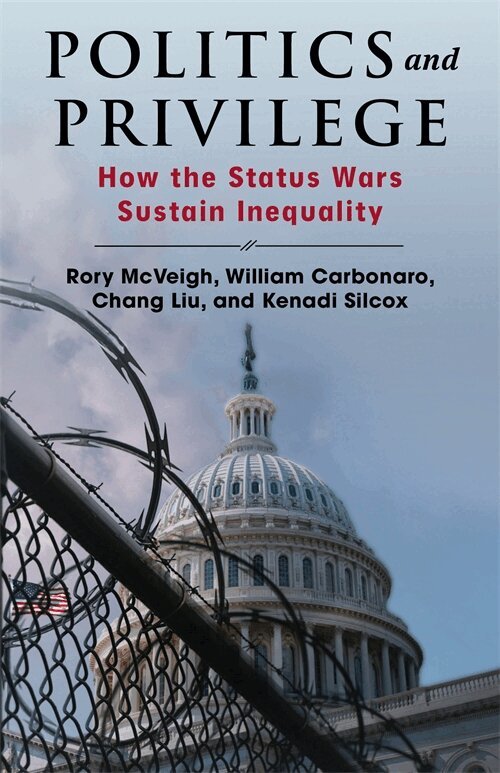
In the United States, the bottom 50 percent of households hold only 1 percent of the nation’s wealth. Scholars and commentators have long viewed democracy as the antidote to economic inequality, but US electoral politics bears little resemblance to a struggle between the haves and the have-nots. What makes extreme disparities of wealth and income so persistent, and why has the political process failed to address the problem?Based on data from an innovative experiment, this book presents a bold new theory that shows why American politics revolves around status differences, not class conflict. Analyzing a sample of nearly 2,600 participants, the authors investigate whether Americans are more likely to support a social-change organization if it explicitly opposes racism, sexism, homophobia, xenophobia, and religious bigotry or if it focuses exclusively on economic equality. Drawing on the results, they argue that privileged groups’ desire to preserve their status is the primary obstacle to forming progressive alliances. Status hierarchies are at the heart of political polarization, which stalls legislative efforts to reduce economic inequality or tackle pressing issues such as climate change, gun violence, and access to health care. Rigorous and timely, Politics and Privilege demonstrates why an agenda that simultaneously addresses economic and status inequalities is essential to progressive politics today.
263 kr
Skickas inom 7-10 vardagar
In the United States, the bottom 50 percent of households hold only 1 percent of the nation’s wealth. Scholars and commentators have long viewed democracy as the antidote to economic inequality, but US electoral politics bears little resemblance to a struggle between the haves and the have-nots. What makes extreme disparities of wealth and income so persistent, and why has the political process failed to address the problem?Based on data from an innovative experiment, this book presents a bold new theory that shows why American politics revolves around status differences, not class conflict. Analyzing a sample of nearly 2,600 participants, the authors investigate whether Americans are more likely to support a social-change organization if it explicitly opposes racism, sexism, homophobia, xenophobia, and religious bigotry or if it focuses exclusively on economic equality. Drawing on the results, they argue that privileged groups’ desire to preserve their status is the primary obstacle to forming progressive alliances. Status hierarchies are at the heart of political polarization, which stalls legislative efforts to reduce economic inequality or tackle pressing issues such as climate change, gun violence, and access to health care. Rigorous and timely, Politics and Privilege demonstrates why an agenda that simultaneously addresses economic and status inequalities is essential to progressive politics today.
262 kr
Skickas inom 10-15 vardagar
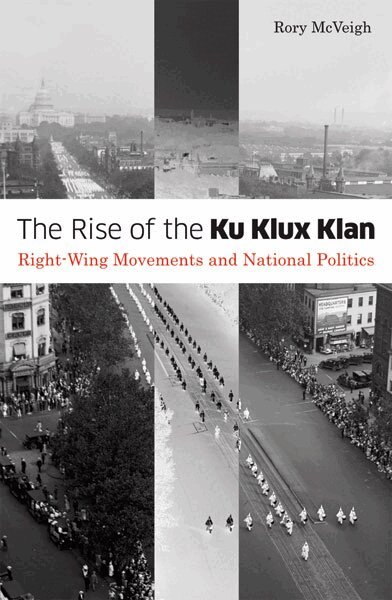
Rediscovering the Ku Klux Klan as a national movement in the 1920sIn 1915, forty years after the original Ku Klux Klan disbanded, a former farmer, circuit preacher, and university lecturer named Colonel William Joseph Simmons revived the secret society. By the early 1920s the KKK had been transformed into a national movement with millions of dues-paying members and chapters in all of the nation’s forty-eight states. And unlike the Reconstruction-era society, the Klan in the 1920s exerted its influence far beyond the South. In The Rise of the Ku Klux Klan, Rory McVeigh provides a revealing analysis of the broad social agenda of 1920s-era KKK, showing that although the organization continued to promote white supremacy, it also addressed a surprisingly wide range of social and economic issues, targeting immigrants and, particularly, Catholics, as well as African Americans, as dangers to American society. In sharp contrast to earlier studies of the KKK, which focus on the local or regional level, McVeigh treats the Klan as it saw itself-as a national organization concerned with national issues. Drawing on extensive research into the Klan’s national publication, the Imperial Night-Hawk, he traces the ways in which Klan leaders interpreted national issues and how they attempted-and finally failed-to influence national politics. More broadly, in detailing the Klan’s expansion in the early 1920s and its collapse by the end of the decade, McVeigh ultimately sheds light on the dynamics that fuel contemporary right-wing social movements that similarly blur the line between race, religion, and values.
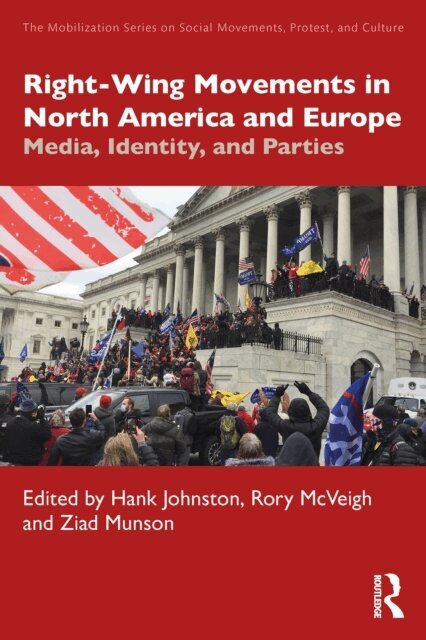
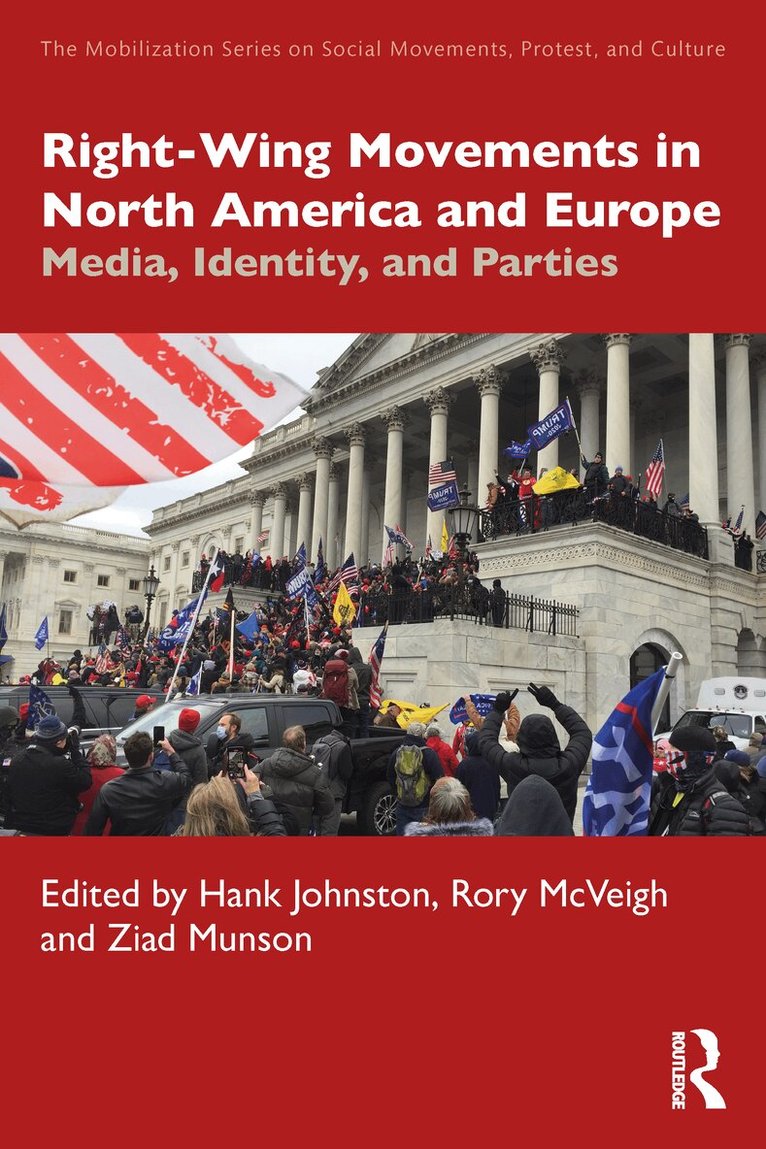
Right-Wing Movements in North America and Europe
Media, Identity, and Parties
Inbunden, Engelska, 2025
2 103 kr
Skickas inom 10-15 vardagar
From Boogaloo Bois and Rassemblement National, to Nordic Resistance Movement and Forza Nuova, majoritarian ethnonational movements and extreme-right politics are growing in different national contexts and continue to challenge democratic norms around the globe.This collection brings together research by prominent senior scholars and up-and-coming junior researchers to present an up-to-date examination of the right’s resurgence in Europe and North America. Its chapters focus on movement-party intersections, social media, identity work, extremism, anti-immigration rhetoric, and theoretical approaches and methodologies to studying the right.Bringing together several studies originally presented as plenary talks at the annual Mobilization-SDSU conferences, the editors combine their expertise and draw upon their scholarly networks to offer a collection of research that will be significant for years to come. Each chapter is an important contribution that deepens our knowledge of right-wing contentious politics. They will be widely used by both sociologists and political scientists who are interested in current global trend of a resurgent and authoritarian right.
580 kr
Skickas inom 10-15 vardagar
From Boogaloo Bois and Rassemblement National, to Nordic Resistance Movement and Forza Nuova, majoritarian ethnonational movements and extreme-right politics are growing in different national contexts and continue to challenge democratic norms around the globe.This collection brings together research by prominent senior scholars and up-and-coming junior researchers to present an up-to-date examination of the right’s resurgence in Europe and North America. Its chapters focus on movement-party intersections, social media, identity work, extremism, anti-immigration rhetoric, and theoretical approaches and methodologies to studying the right.Bringing together several studies originally presented as plenary talks at the annual Mobilization-SDSU conferences, the editors combine their expertise and draw upon their scholarly networks to offer a collection of research that will be significant for years to come. Each chapter is an important contribution that deepens our knowledge of right-wing contentious politics. They will be widely used by both sociologists and political scientists who are interested in current global trend of a resurgent and authoritarian right.