Rosalyn Deutsche - Böcker
Visar alla böcker från författaren Rosalyn Deutsche. Handla med fri frakt och snabb leverans.
5 produkter
5 produkter
291 kr
Skickas inom 7-10 vardagar
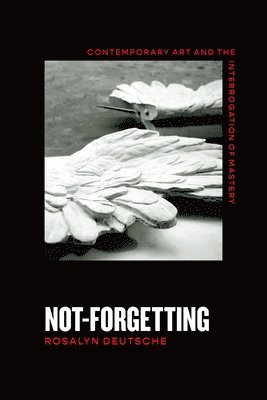
Explores contemporary art that challenges deadly desires for mastery and dominion. Amid times of emboldened cruelty and perpetual war, Rosalyn Deutsche links contemporary art to three practices that counter the prevailing destructiveness: psychoanalytic feminism, radical democracy, and war resistance. Deutsche considers how art joins these radical practices to challenge desires for mastery and dominion, which are encapsulated in the Eurocentric conception of the human that goes under the name “Man” and is driven by deadly inclinations that Deutsche calls masculinist. The masculinist subject—as an individual or a group—universalizes itself, claims to speak on behalf of humanity, and meets differences with conquest. Analyzing artworks by Christopher D’Arcangelo, Robert Filliou, Hans Haacke, Mary Kelly, Silvia Kolbowski, Barbara Kruger, Louise Lawler, Martha Rosler, James Welling, and Krzysztof Wodiczko, Deutsche illuminates the diverse ways in which they expose, question, and trouble the visual fantasies that express masculinist desire. Undermining the mastering subject, these artworks invite viewers to question the positions they assume in relation to others. Together, the essays in Not-Forgetting, written between 1999 and 2020, argue that this art offers a unique contribution to building a less cruel and violent society.

1 020 kr
Skickas inom 7-10 vardagar
Explores contemporary art that challenges deadly desires for mastery and dominion. Amid times of emboldened cruelty and perpetual war, Rosalyn Deutsche links contemporary art to three practices that counter the prevailing destructiveness: psychoanalytic feminism, radical democracy, and war resistance. Deutsche considers how art joins these radical practices to challenge desires for mastery and dominion, which are encapsulated in the Eurocentric conception of the human that goes under the name “Man” and is driven by deadly inclinations that Deutsche calls masculinist. The masculinist subject—as an individual or a group—universalizes itself, claims to speak on behalf of humanity, and meets differences with conquest. Analyzing artworks by Christopher D’Arcangelo, Robert Filliou, Hans Haacke, Mary Kelly, Silvia Kolbowski, Barbara Kruger, Louise Lawler, Martha Rosler, James Welling, and Krzysztof Wodiczko, Deutsche illuminates the diverse ways in which they expose, question, and trouble the visual fantasies that express masculinist desire. Undermining the mastering subject, these artworks invite viewers to question the positions they assume in relation to others. Together, the essays in Not-Forgetting, written between 1999 and 2020, argue that this art offers a unique contribution to building a less cruel and violent society.
676 kr
Skickas inom 7-10 vardagar
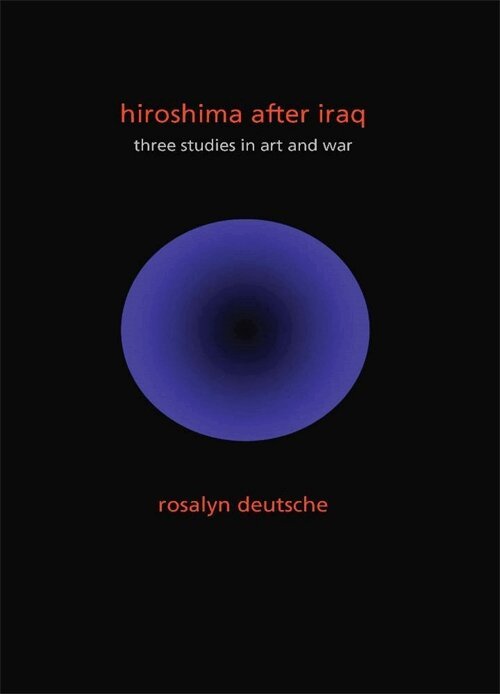
Many on the left lament an apathy or amnesia toward recent acts of war. Particularly during the George W. Bush administration's invasion of Iraq, opposition to war seemed to lack the heat and potency of the 1960s and 1970s, giving the impression that passionate dissent was all but dead. Through an analysis of three politically engaged works of art, Rosalyn Deutsche argues against this melancholic attitude, confirming the power of contemporary art to criticize subjectivity as well as war. Deutsche selects three videos centered on the deployment of the atomic bomb: Krzysztof Wodiczko's Hiroshima Projection (1999), made after the first Gulf War; Silvia Kolbowski's After Hiroshima mon amour (2005-2008); and Leslie Thornton's Let Me Count the Ways (2004-2008), which followed the U.S. invasion of Iraq. Each of these works confronts the ethical task of addressing historical disaster, and each explores the intersection of past and present wars. These artworks profoundly contribute to the discourse of war resistance, illuminating the complex dynamics of viewing and interpretation.Deutsche employs feminist and psychoanalytic approaches in her study, questioning both the role of totalizing images in the production of warlike subjects and the fantasies that perpetuate, especially among the left, traditional notions of political dissent. She ultimately reveals the passive collusion between leftist critique and dominant discourse in which personal dimensions of war are denied.
164 kr
Skickas inom 7-10 vardagar
Many on the left lament an apathy or amnesia toward recent acts of war. Particularly during the George W. Bush administration's invasion of Iraq, opposition to war seemed to lack the heat and potency of the 1960s and 1970s, giving the impression that passionate dissent was all but dead. Through an analysis of three politically engaged works of art, Rosalyn Deutsche argues against this melancholic attitude, confirming the power of contemporary art to criticize subjectivity as well as war. Deutsche selects three videos centered on the deployment of the atomic bomb: Krzysztof Wodiczko's Hiroshima Projection (1999), made after the first Gulf War; Silvia Kolbowski's After Hiroshima mon amour (2005-2008); and Leslie Thornton's Let Me Count the Ways (2004-2008), which followed the U.S. invasion of Iraq. Each of these works confronts the ethical task of addressing historical disaster, and each explores the intersection of past and present wars. These artworks profoundly contribute to the discourse of war resistance, illuminating the complex dynamics of viewing and interpretation.Deutsche employs feminist and psychoanalytic approaches in her study, questioning both the role of totalizing images in the production of warlike subjects and the fantasies that perpetuate, especially among the left, traditional notions of political dissent. She ultimately reveals the passive collusion between leftist critique and dominant discourse in which personal dimensions of war are denied.
863 kr
Skickas inom 5-8 vardagar