Rosita Rindler Schjerve - Böcker
Visar alla böcker från författaren Rosita Rindler Schjerve. Handla med fri frakt och snabb leverans.
4 produkter
4 produkter
Del 147 - Multilingual Matters
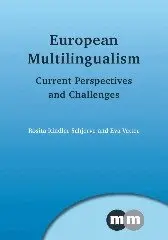
European Multilingualism
Current Perspectives and Challenges
Häftad, Engelska, 2012
489 kr
Skickas inom 5-8 vardagar
This book provides a broad sociolinguistic perspective on major questions of political and cultural Europeanization. It is concerned with European multilingualism as it actually results from the intersecting endeavour of policy making and scientific research. This volume argues that the EU must overcome the major discrepancies of its linguistic diversity politics by developing into a multiple inclusive society beyond the nation-state in order to seriously unfold European multilingualism as a political goal. Expanding on the theoretical and methodological approaches developed within the EU project LINEE (Languages in a Network of European Excellence), this book further focuses on the LINEE key variables of European multilingualism i.e. 'culture', 'discourse', 'identity', 'ideology', 'knowledge', 'LPP', 'multi-competence', and 'power & conflict'. Against this background, this study argues for reconceptualising European multilingualism on the basis of an integrative and multi-focal approach.
2 023 kr
Tillfälligt slut
2 023 kr
Tillfälligt slut
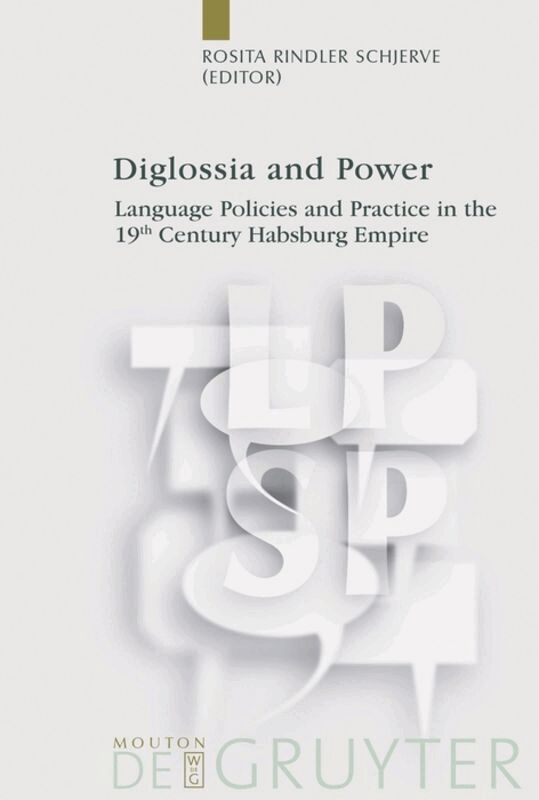
Diglossia and Power
Language Policies and Practice in the 19th Century Habsburg Empire
Inbunden, Engelska, 2003
1 931 kr
Skickas inom 7-10 vardagar
This book is about the struggle for social power in the interethnic context of the Austrian part of the 19th century Austro-Hungarian Empire. It explores how the struggle for power is reflected in attempts to control language use at different levels of discursive interaction, and how, in a context of intricate and multiple language contact, language became a prominent site for interethnic controversies and conflict. The book shows how, in the wake of ongoing democratization, in particular in 1848-1849 and after 1860, the non-German speaking nationalities of the Empire attempted to redefine their status by demanding recognition of their languages and cultures while German-dominated state nationalism tried to reestablish its endangered hegemony by granting linguistic and cultural autonomy to the various ethnic groups.