Ross Taylor - Böcker
Visar alla böcker från författaren Ross Taylor. Handla med fri frakt och snabb leverans.
4 produkter
4 produkter
2 245 kr
Skickas inom 7-10 vardagar
Addresses the use of rigorous multicomponent mass transfer models for the simulation and design of process equipment. Deals with the basic equations of diffusion in multicomponent systems. Describes various models and estimations of rates of mass and energy transfer. Covers applications of multicomponent mass transfer models to process design. Includes appendices providing necessary mathematical background. Contains a large number of numerical examples worked out in detail.
168 kr
Skickas inom 11-20 vardagar
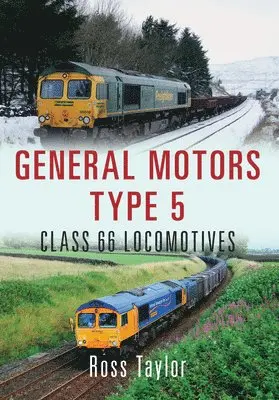
The drama of the Lancashire countryside combined with some of the most powerful diesel and electric locomotives to be found anywhere in Britain.Ross Taylor’s photographs cover every aspect of diesel and electric traction in Lancashire, hauling both passenger and goods trains. The types, classes of locomotives and the operating companies represented are as varied as the landscape which ranges from the drama of the Pennines to the windswept coastline of Morecambe Bay and the commuter belt of Manchester and Liverpool. Locations include the West Coast Main Line and along the coast, from Southport to Lancaster. Stunning photography and an extraordinarily varied landscape are combined and captured in superb detail.
168 kr
Tillfälligt slut
Today, most British Rail diesel locomotive types are represented in preservation, though some classes are much more prolific than others (in particular the more recently withdrawn). Sadly, several early types were lost completely as they were withdrawn around the same time as steam traction finished on British Railways, a time when most enthusiasts had no interest in saving diesels. As a result, no North British locos survive, and of several other types there is just one survivor, for example Classes 15 and 28, both of which are under restoration. A number of types have also now spent longer in preservation than mainline service, such as the hydraulic classes and the famous Class 55 Deltics.There is a large number of heritage railways running diesel locomotives today, some hosting special events bringing together several classes and operating intensive services, others using them to supplement steam traction, and many have locos under restoration for future use.Using his fantastic collection of photographs, Ross Taylor displays the surviving examples of a wide range of classes, including (TOPS classifications) 14, 20, 24, 25, 26, 27, 31, 33, 35, 37, 40, 42, 44-47, 50, 52, 55, 56, and 58. The sole surviving prototype HST power car is included as it was initially regarded as a Class 41 locomotive before the whole train became known as Class 252. The Class 73 electro-diesel is also shown, but none of the Class 74 version survives. These locomotives are now based at many different heritage railways, and are showcased in this informative and fully illustrated book.
168 kr
Tillfälligt slut
This book sets out to illustrate locomotive-hauled passenger stock in the twenty-first century.Whilst the vast majority of regular timetabled services are now in the hands of multiple units, there is a surprising variety of hauled workings still to be seen; in fact loco haulage has seen a small renaissance in recent years with the Chiltern Railways services between London and Birmingham and the Arriva Trains Wales services, amongst others. Longer established services include the Sleeper trains between London and both the South-West and Scotland.In addition to regular timetabled services, several operators run extra trains to cater for special events, and stock for these is provided by spot hire companies such as DRS and West Coast Railways. Such services can take locomotives to destinations normally only served by multiple units and provide interest for the observer!There is also a wide variety of charter and special workings employing steam, diesel and electric traction. Some of these have the additional interest of being hauled by preserved diesels of types no longer to be seen in normal use such as Classes 40, 52 and 55. Quite often these special trains also cover lines normally only used for freight.Lastly, there are empty coaching stock movements, both as positioning moves for forthcoming services and to transfer stock to depots/works for maintenance. Some of these can also produce unusual traction provided by one of the spot hire companies.