Rossana Tazzioli – författare
Visar alla böcker från författaren Rossana Tazzioli. Handla med fri frakt och snabb leverans.
9 produkter
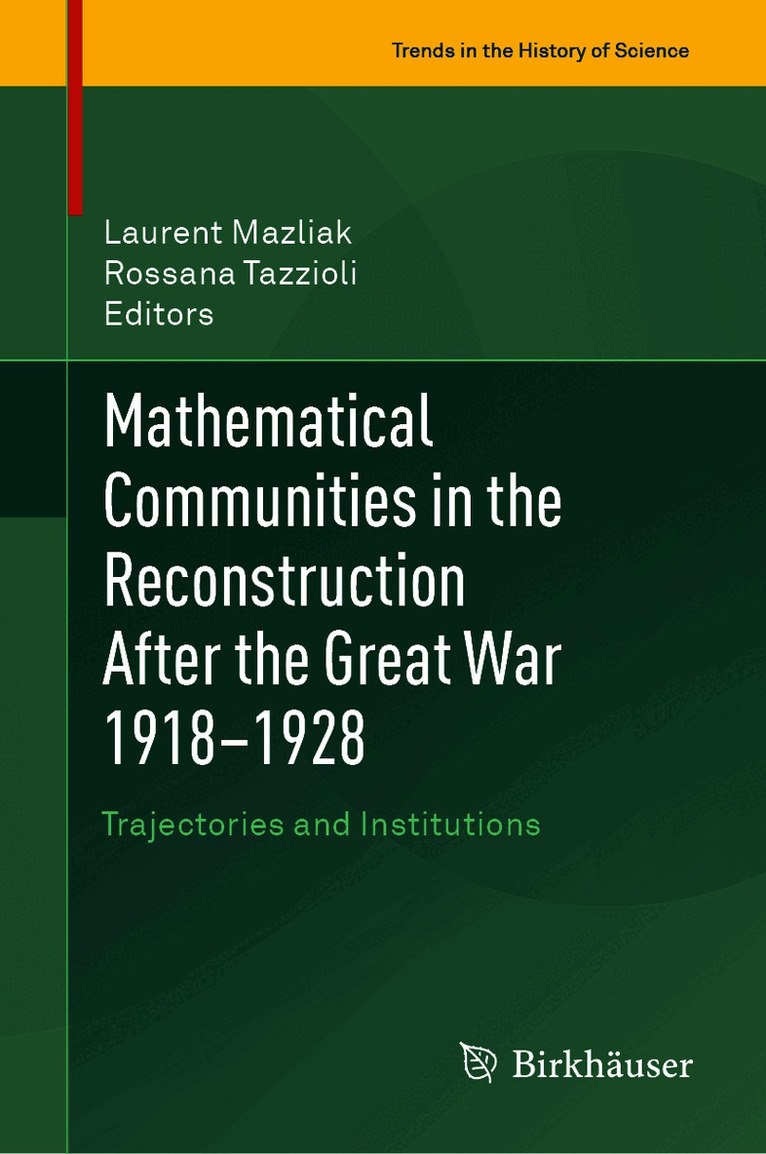
Mathematical Communities in the Reconstruction After the Great War 1918–1928
Trajectories and Institutions
Av Laurent Mazliak, Rossana Tazzioli
Inbunden, 2021
1423 kr
Lägg i varukorg
This book is a consequence of the international meeting organized in Marseilles in November 2018 devoted to the aftermath of the Great War for mathematical communities. It features selected original research presented at the meeting offering a new perspective on a period, the 1920s, not extensively …
Mathematical Communities in the Reconstruction After the Great War 1918-1928
Trajectories and Institutions
Av Rossana Tazzioli, Laurent Mazliak
E-bok, 2021
1785 kr
Lägg i varukorg
This book is a consequence of the international meeting organized in Marseilles in November 2018 devoted to the aftermath of the Great War for mathematical communities. It features selected original research presented at the meeting offering a new perspective on a period, the 1920s, not extensively …
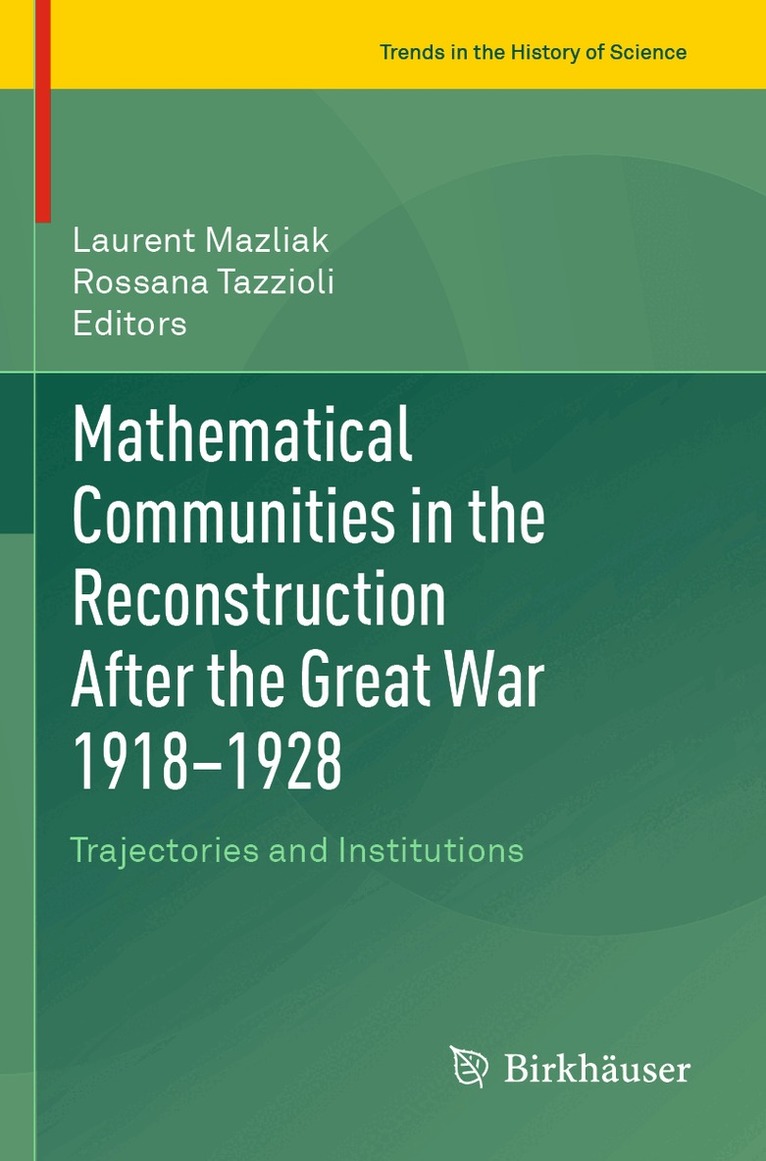
Mathematical Communities in the Reconstruction After the Great War 1918–1928
Trajectories and Institutions
Av Laurent Mazliak, Rossana Tazzioli
Häftad, 2022
1423 kr
Lägg i varukorg
This book is a consequence of the international meeting organized in Marseilles in November 2018 devoted to the aftermath of the Great War for mathematical communities. It features selected original research presented at the meeting offering a new perspective on a period, the 1920s, not extensively …
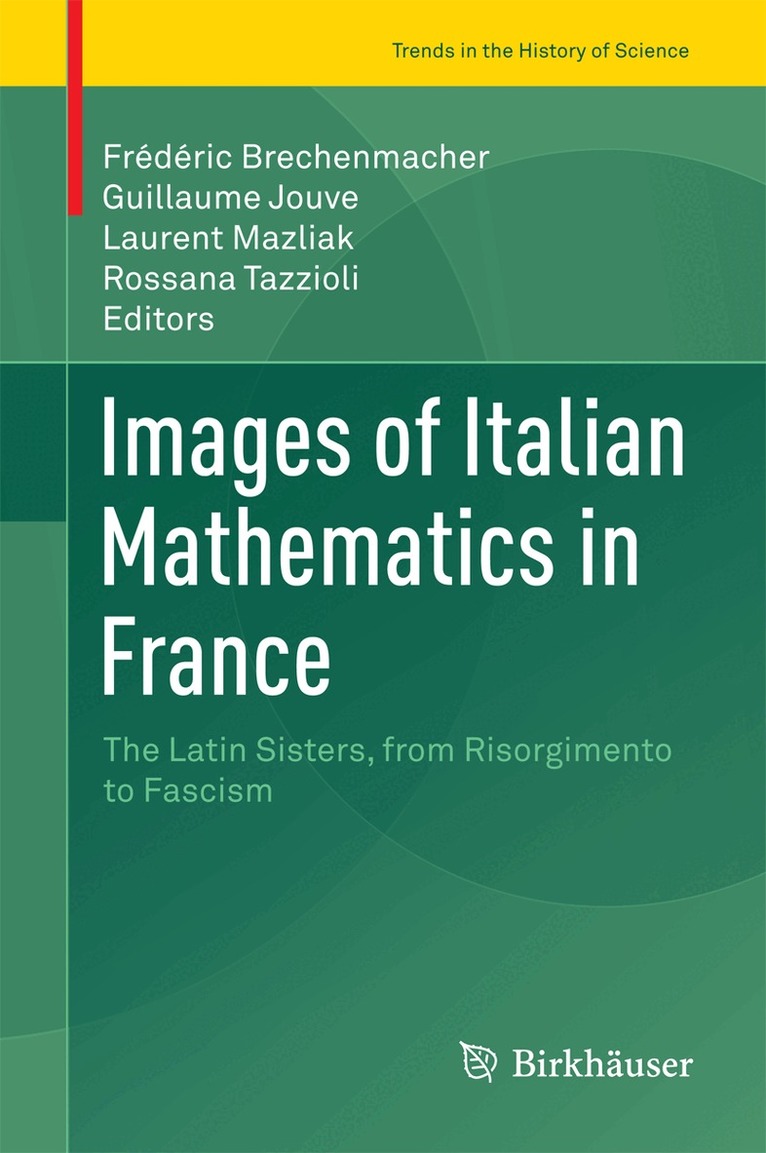
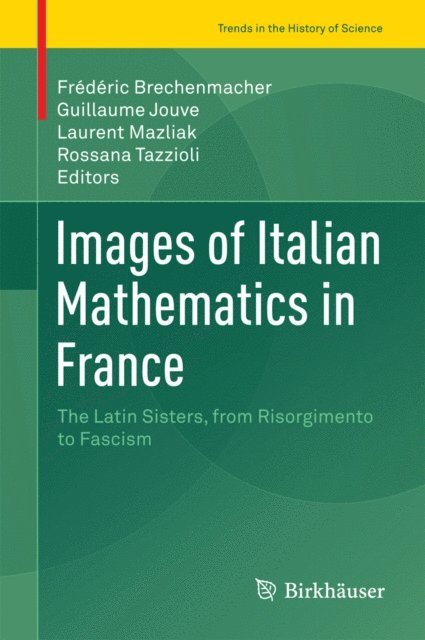
Images of Italian Mathematics in France
The Latin Sisters, from Risorgimento to Fascism
Av Frédéric Brechenmacher, Guillaume Jouve m. fl.
Inbunden, 2016
1641 kr
Lägg i varukorg
The contributions in this proceedings volume offer a new perspective on the mathematical ties between France and Italy, and reveal how mathematical developments in these two countries affected one another. The focus is above all on the Peninsula’s influence on French mathematicians, …
Images of Italian Mathematics in France
The Latin Sisters, from Risorgimento to Fascism
Av Rossana Tazzioli, Laurent Mazliak m. fl.
E-bok, 2016
2065 kr
Lägg i varukorg
The contributions in this proceedings volume offer a new perspective on the mathematical ties between France and Italy, and reveal how mathematical developments in these two countries affected one another. The focus is above all on the Peninsula’s influence on French mathematicians, …
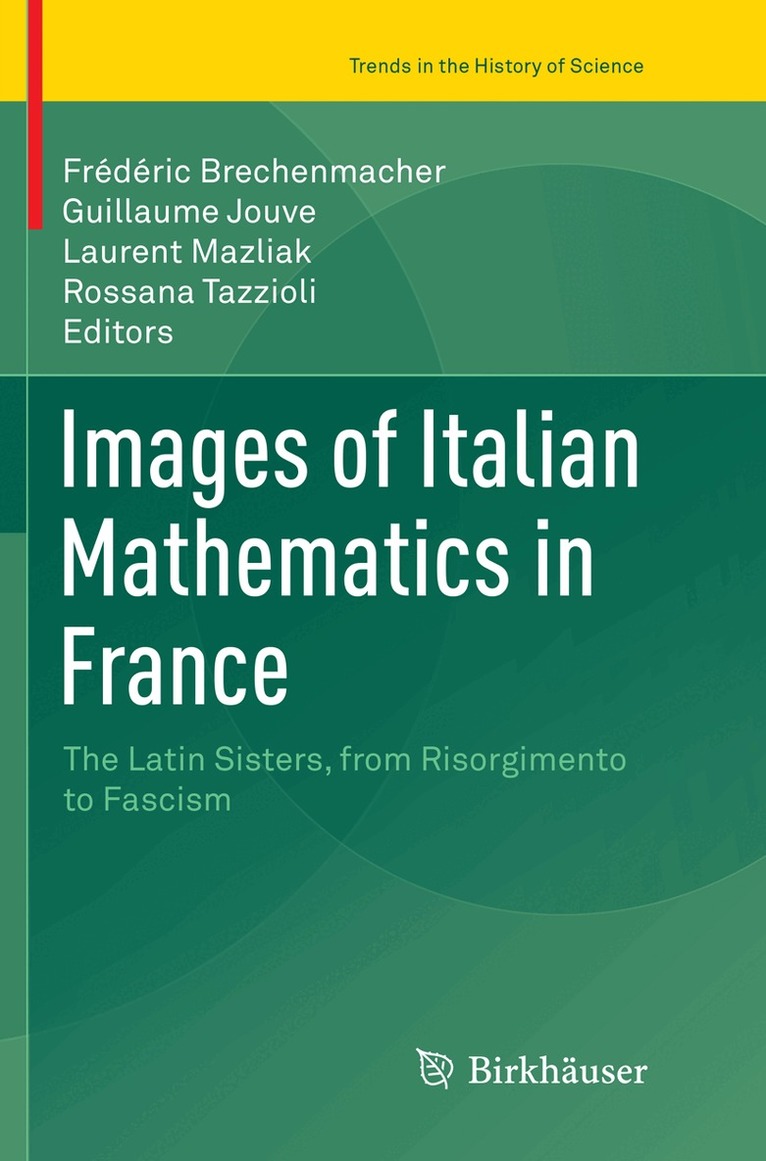
Images of Italian Mathematics in France
The Latin Sisters, from Risorgimento to Fascism
Av Frédéric Brechenmacher, Guillaume Jouve m. fl.
Häftad, 2018
1641 kr
Lägg i varukorg
The contributions in this proceedings volume offer a new perspective on the mathematical ties between France and Italy, and reveal how mathematical developments in these two countries affected one another. The focus is above all on the Peninsula’s influence on French mathematicians, …
Mathematicians at war
Volterra and his French colleagues in World War I
Av Laurent Mazliak, Rossana Tazzioli
Inbunden, 2009
1465 kr
Lägg i varukorg
Numerous scientists have taken part in the war effort during World War I, but few gave it the passionate energy of the prominent Italian mathematician Volterra. As a convinced supporter of the cause of Britain and France, he struggled vigorously to carry Italy into the war in May 1915 and then …
Mathematicians at war
Volterra and his French colleagues in World War I
Av Rossana Tazzioli, Laurent Mazliak
E-bok, 2009
1838 kr
Lägg i varukorg
Numerous scientists have taken part in the war effort during World War I, but few gave it the passionate energy of the prominent Italian mathematician Volterra. As a convinced supporter of the cause of Britain and France, he struggled vigorously to carry Italy into the war in May 1915 and then …
Mathematicians at war
Volterra and his French colleagues in World War I
Av Laurent Mazliak, Rossana Tazzioli
Häftad, 2012
1465 kr
Lägg i varukorg
Numerous scientists have taken part in the war effort during World War I, but few gave it the passionate energy of the prominent Italian mathematician Volterra. As a convinced supporter of the cause of Britain and France, he struggled vigorously to carry Italy into the war in May 1915 and then …