Laurent Mazliak – författare
Visar alla böcker från författaren Laurent Mazliak. Handla med fri frakt och snabb leverans.
19 produkter
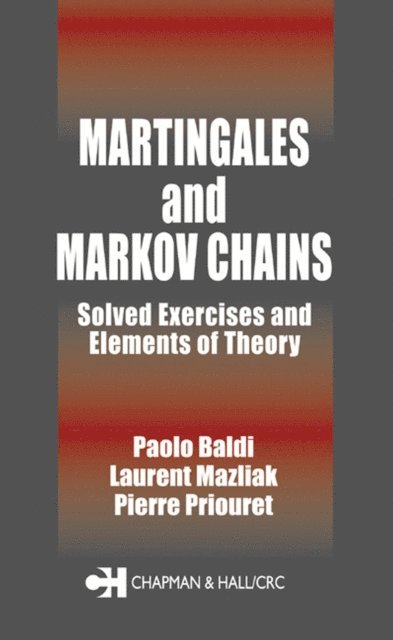
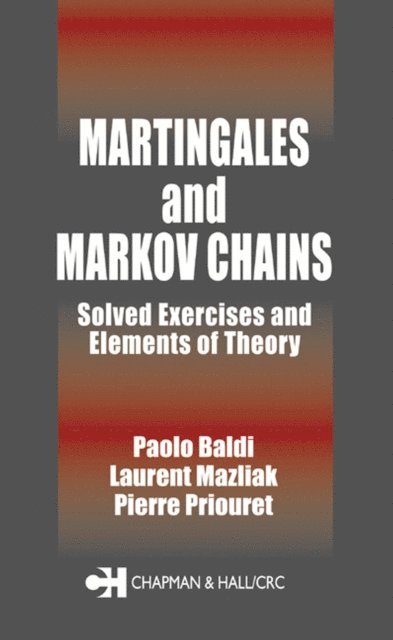
Martingales and Markov Chains
Solved Exercises and Elements of Theory
Av Pierre Priouret, Laurent Mazliak m. fl.
E-bok, 2002
2528 kr
Lägg i varukorg
A thorough grounding in Markov chains and martingales is essential in dealing with many problems in applied probability, and is a gateway to the more complex situations encountered in the study of stochastic processes. Exercises are a fundamental and valuable training tool that deepen students'' …
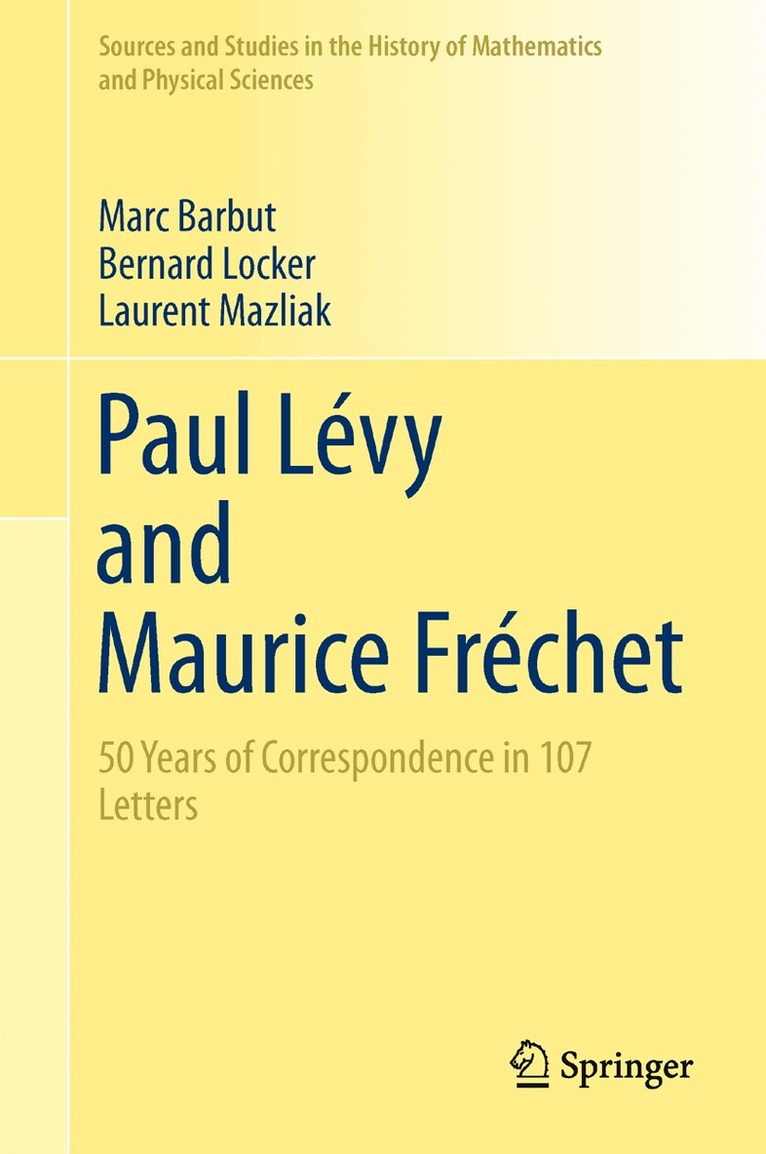
Paul Lévy and Maurice Fréchet
50 Years of Correspondence in 107 Letters
Av Marc Barbut, Bernard Locker m. fl.
Inbunden, 2013
552 kr
Lägg i varukorg
The fascinating correspondence between Paul Lévy and Maurice Fréchet spans an extremely active period in French mathematics during the twentieth century. The letters of these two Frenchmen show their vicissitudes of research and passionate enthusiasm for the emerging field of modern probability …
Paul Levy and Maurice Frechet
50 Years of Correspondence in 107 Letters
Av Laurent Mazliak, Bernard Locker m. fl.
E-bok, 2013
710 kr
Lägg i varukorg
The fascinating correspondence between Paul Lévy and Maurice Fréchet spans an extremely active period in French mathematics during the twentieth century. The letters of these two Frenchmen show their vicissitudes of research and passionate enthusiasm for the emerging field of modern probability …
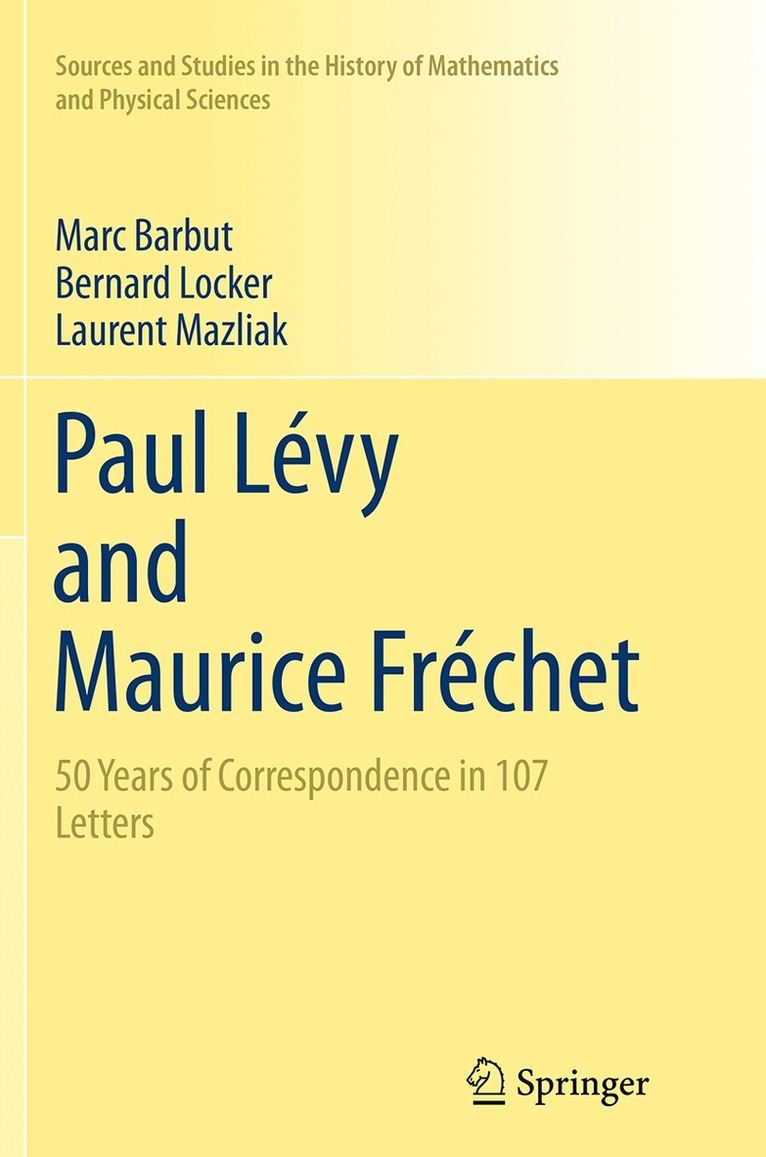
Paul Lévy and Maurice Fréchet
50 Years of Correspondence in 107 Letters
Av Marc Barbut, Bernard Locker m. fl.
Häftad, 2016
552 kr
Lägg i varukorg
The fascinating correspondence between Paul Lévy and Maurice Fréchet spans an extremely active period in French mathematics during the twentieth century. The letters of these two Frenchmen show their vicissitudes of research and passionate enthusiasm for the emerging field of modern probability …
Martingales and Markov Chains
Solved Exercises and Elements of Theory
Av Pierre Priouret, Laurent Mazliak m. fl.
E-bok, 2002
2528 kr
Lägg i varukorg
A thorough grounding in Markov chains and martingales is essential in dealing with many problems in applied probability, and is a gateway to the more complex situations encountered in the study of stochastic processes. Exercises are a fundamental and valuable training tool that deepen students'' …
Probabilites
Variables aleatoires, Convergences, Conditionnement. Processus a temps discret
Av Laurent Mazliak, Yves Lacroix
E-bok, 2025
520 kr
Lägg i varukorg
Le present livre de probabilites se situe au niveau du Master de Mathematiques (M1 principalement, mais avec des ouvertures qui ont leur place en M2). Il est aussi adapte aux etudiants suivant la preparation a l'Agregation de Mathematiques.Il presente un panorama assez large des outils et resultats …
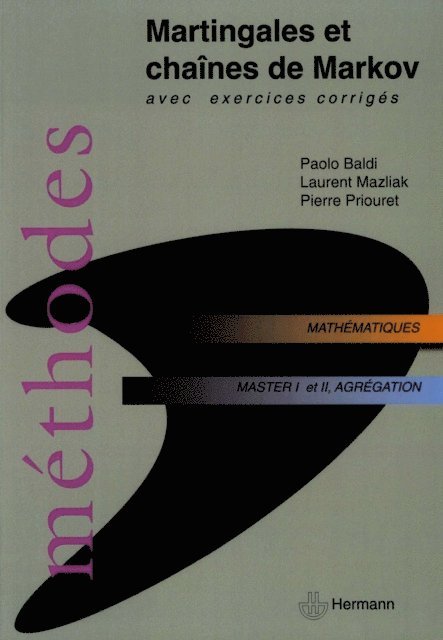
Martingales et chaînes de Markov
avec exercices corrigés
Av Pierre Priouret, Paolo Baldi m. fl.
E-bok, 2001
485 kr
Lägg i varukorg
Nouvelle édition entièrement revue et augmentée. Cet ouvrage a pour origine le cours de processus aléatoires de la maîtrise de mathématiques de l''Université Pierre-et-Marie-Curie (Paris VI) que les auteurs ont dispensé pendant plusieurs années. L''objectif est d''initier le lecteur à la théorie …
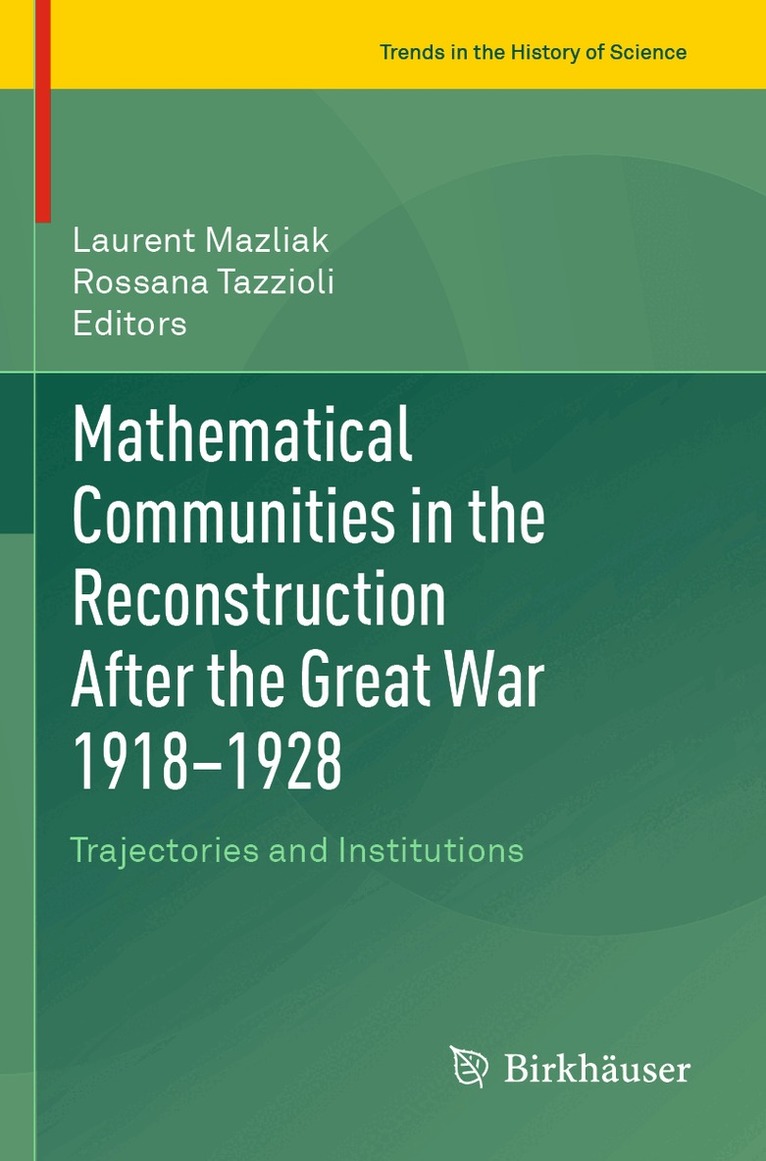
Mathematical Communities in the Reconstruction After the Great War 1918–1928
Trajectories and Institutions
Av Laurent Mazliak, Rossana Tazzioli
Inbunden, 2021
1423 kr
Lägg i varukorg
This book is a consequence of the international meeting organized in Marseilles in November 2018 devoted to the aftermath of the Great War for mathematical communities. It features selected original research presented at the meeting offering a new perspective on a period, the 1920s, not extensively …
Mathematical Communities in the Reconstruction After the Great War 1918-1928
Trajectories and Institutions
Av Rossana Tazzioli, Laurent Mazliak
E-bok, 2021
1785 kr
Lägg i varukorg
This book is a consequence of the international meeting organized in Marseilles in November 2018 devoted to the aftermath of the Great War for mathematical communities. It features selected original research presented at the meeting offering a new perspective on a period, the 1920s, not extensively …
Mathematical Communities in the Reconstruction After the Great War 1918–1928
Trajectories and Institutions
Av Laurent Mazliak, Rossana Tazzioli
Häftad, 2022
1423 kr
Lägg i varukorg
This book is a consequence of the international meeting organized in Marseilles in November 2018 devoted to the aftermath of the Great War for mathematical communities. It features selected original research presented at the meeting offering a new perspective on a period, the 1920s, not extensively …
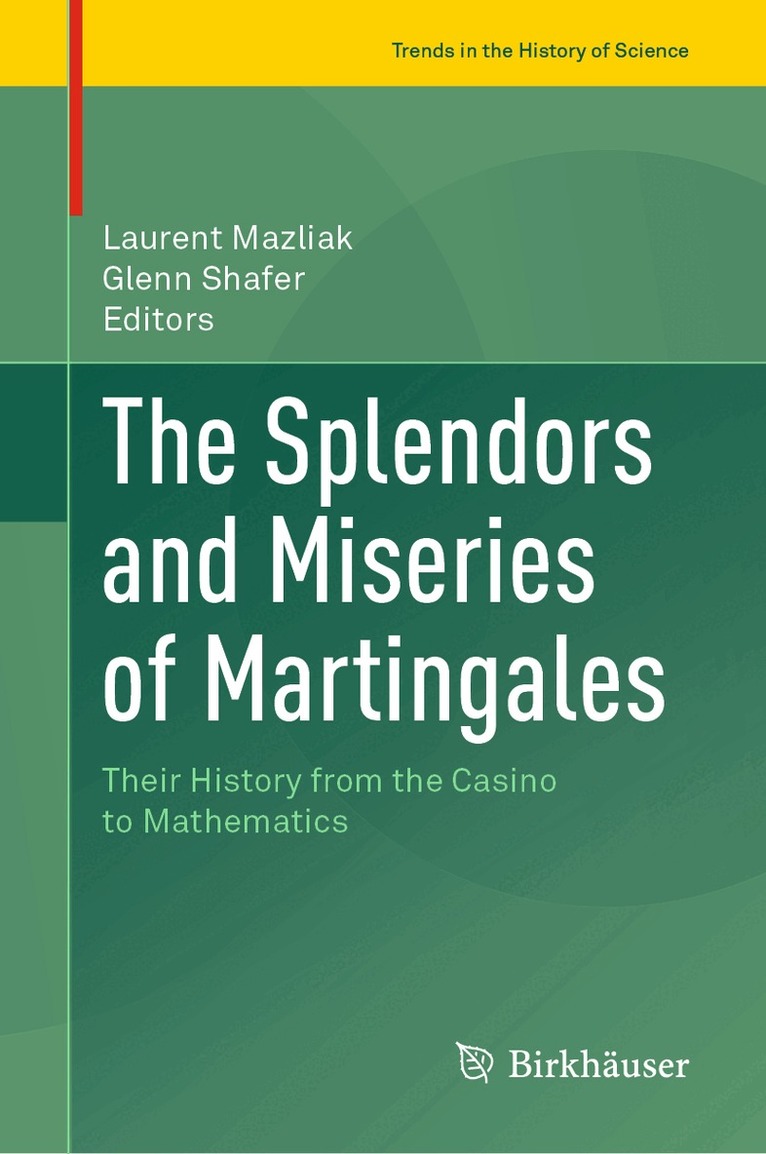
Splendors and Miseries of Martingales
Their History from the Casino to Mathematics
Av Laurent Mazliak, Glenn Shafer
Inbunden, 2022
1205 kr
Lägg i varukorg
Over the past eighty years, martingales have become central in the mathematics of randomness. They appear in the general theory of stochastic processes, in the algorithmic theory of randomness, and in some branches of mathematical statistics. Yet little has been written about the history of this …
Splendors and Miseries of Martingales
Their History from the Casino to Mathematics
Av Glenn Shafer, Laurent Mazliak
E-bok, 2022
1622 kr
Lägg i varukorg
Over the past eighty years, martingales have become central in the mathematics of randomness. They appear in the general theory of stochastic processes, in the algorithmic theory of randomness, and in some branches of mathematical statistics. Yet little has been written about the history of this …
Splendors and Miseries of Martingales
Their History from the Casino to Mathematics
Av Laurent Mazliak, Glenn Shafer
Häftad, 2023
1205 kr
Lägg i varukorg
Over the past eighty years, martingales have become central in the mathematics of randomness. They appear in the general theory of stochastic processes, in the algorithmic theory of randomness, and in some branches of mathematical statistics. Yet little has been written about the history of this …
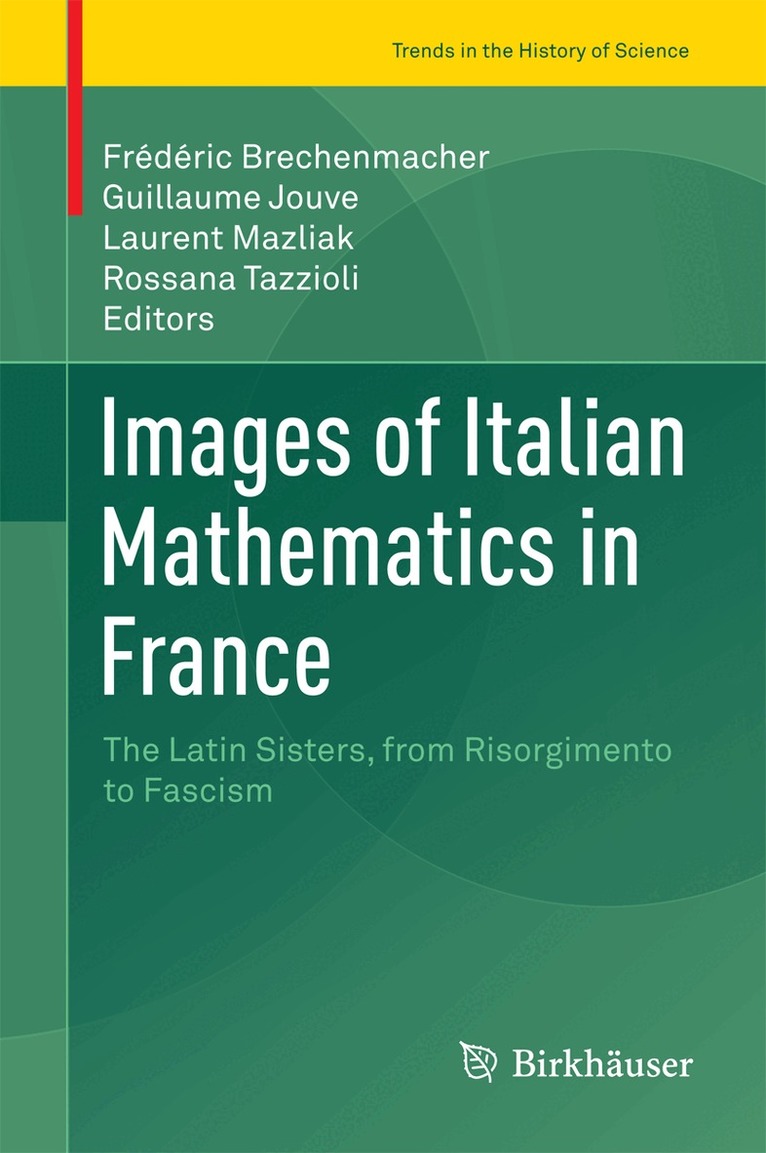
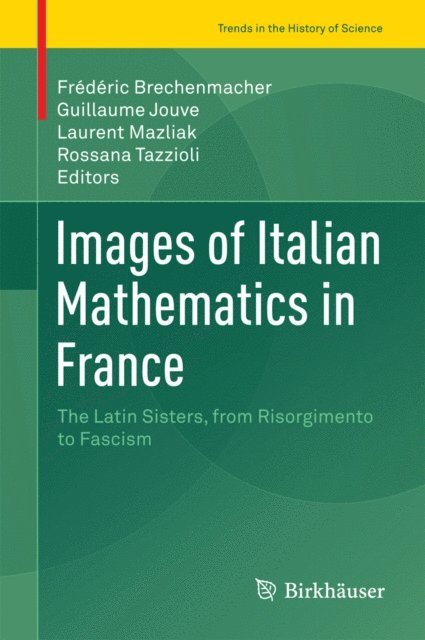
Images of Italian Mathematics in France
The Latin Sisters, from Risorgimento to Fascism
Av Frédéric Brechenmacher, Guillaume Jouve m. fl.
Inbunden, 2016
1638 kr
Lägg i varukorg
The contributions in this proceedings volume offer a new perspective on the mathematical ties between France and Italy, and reveal how mathematical developments in these two countries affected one another. The focus is above all on the Peninsula’s influence on French mathematicians, …
Images of Italian Mathematics in France
The Latin Sisters, from Risorgimento to Fascism
Av Rossana Tazzioli, Laurent Mazliak m. fl.
E-bok, 2016
2065 kr
Lägg i varukorg
The contributions in this proceedings volume offer a new perspective on the mathematical ties between France and Italy, and reveal how mathematical developments in these two countries affected one another. The focus is above all on the Peninsula’s influence on French mathematicians, …
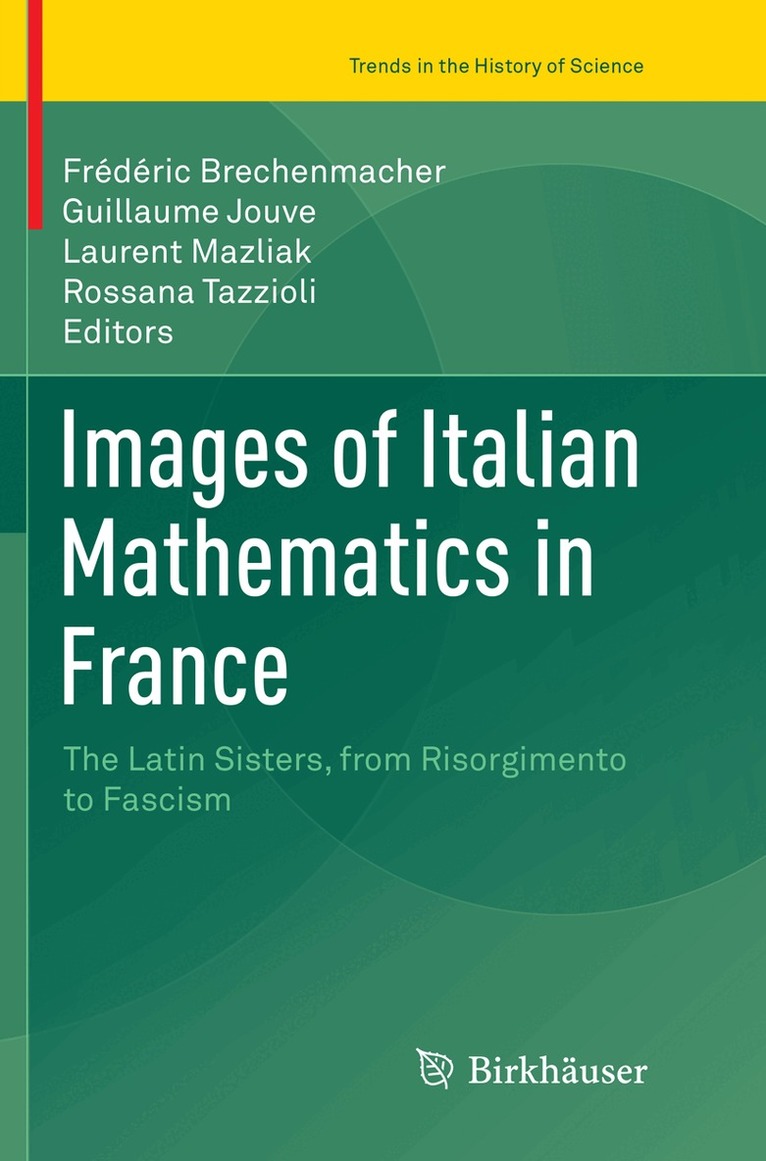
Images of Italian Mathematics in France
The Latin Sisters, from Risorgimento to Fascism
Av Frédéric Brechenmacher, Guillaume Jouve m. fl.
Häftad, 2018
1638 kr
Lägg i varukorg
The contributions in this proceedings volume offer a new perspective on the mathematical ties between France and Italy, and reveal how mathematical developments in these two countries affected one another. The focus is above all on the Peninsula’s influence on French mathematicians, …
Mathematicians at war
Volterra and his French colleagues in World War I
Av Laurent Mazliak, Rossana Tazzioli
Inbunden, 2009
1463 kr
Lägg i varukorg
Numerous scientists have taken part in the war effort during World War I, but few gave it the passionate energy of the prominent Italian mathematician Volterra. As a convinced supporter of the cause of Britain and France, he struggled vigorously to carry Italy into the war in May 1915 and then …
Mathematicians at war
Volterra and his French colleagues in World War I
Av Rossana Tazzioli, Laurent Mazliak
E-bok, 2009
1838 kr
Lägg i varukorg
Numerous scientists have taken part in the war effort during World War I, but few gave it the passionate energy of the prominent Italian mathematician Volterra. As a convinced supporter of the cause of Britain and France, he struggled vigorously to carry Italy into the war in May 1915 and then …
Mathematicians at war
Volterra and his French colleagues in World War I
Av Laurent Mazliak, Rossana Tazzioli
Häftad, 2012
1463 kr
Lägg i varukorg
Numerous scientists have taken part in the war effort during World War I, but few gave it the passionate energy of the prominent Italian mathematician Volterra. As a convinced supporter of the cause of Britain and France, he struggled vigorously to carry Italy into the war in May 1915 and then …