Rufus Black - Böcker
Visar alla böcker från författaren Rufus Black. Handla med fri frakt och snabb leverans.
5 produkter
5 produkter
3 275 kr
Skickas inom 3-6 vardagar
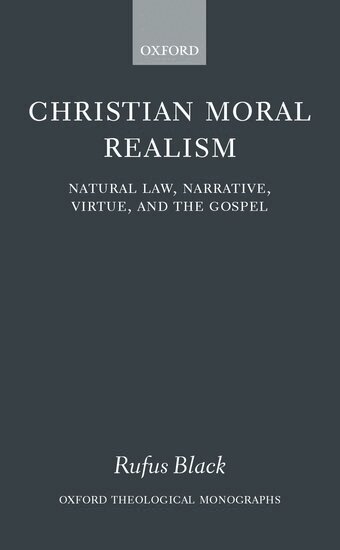
Christian Moral Realism describes the shape of a Christian ethic that arises from a conversation between contemporary accounts of natural law theory, narrative and virtue ethics; and an insistence that any Christian ethic begin with a distinctively Christian description of reality. The key partners in this conversation are the leading Christian ethicists, Germain Grisez, Stanley Hauerwas and Oliver O'Donovan. The ethic that emerges from this conversation seeks to resolve the tensions in Christian ethics between creation and eschatology, narrative and natural law, objectivity and relativity, the cultivation of virtue and a focus on the resolution of moral dilemmas. In defence of its philosophical foundations, this book argues that a thoroughly realist ethic can respect the logical claim that no 'ought' can be derived from 'is'. Dr Black moves from this analytic foundation to conclude that worship lies at the heart of a theologically grounded ethic whose central concern is the flourishing of the whole human person in community with both one another and God.
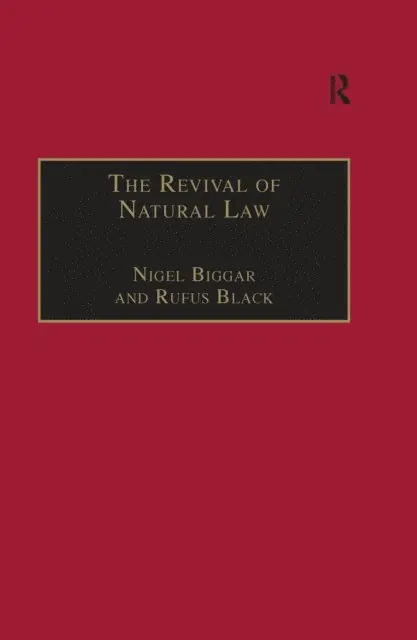
Revival of Natural Law
Philosophical, Theological and Ethical Responses to the Finnis-Grisez School
Inbunden, Engelska, 2000
2 103 kr
Skickas inom 10-15 vardagar
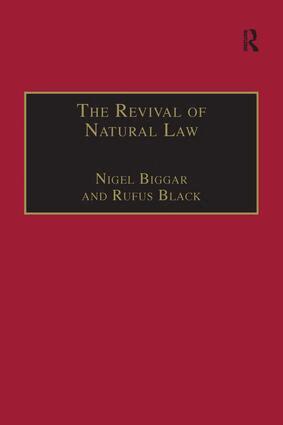
Natural law theory has been enjoying a significant revival in recent times. Led by Germain Grisez in the USA and John Finnis in the UK, one school of thinkers has been articulating a highly developed system of natural law built upon a sophisticated account of practical reasoning and a rich and flexible understanding of the human good. However, long-standing prejudices against old-style natural law among moral philosophers and Protestant ethicists, together with the new theory's appropriation by conservatives in the impassioned debate between the Vatican and dissenting theologians in the United States, have prevented the Finnis-Grisez version from being adequately appreciated. Providing a clear and substantive introduction to the theory for those who are new to it, this book then broadens, assesses, and advances the debate about it, examining crucial philosophical, theological and ethical issues and opening up discussion beyond the confines of the Roman Catholic Church. Part 1, on philosophical issues, starts with two broad chapters that locate the Grisez school in relation to modern moral philosophy and the Roman Catholic philosophical tradition of Thomism, and then follows these with further chapters on two crucial issues: the possibility of consensus on the human good, and the nature of moral absolutes. Part 2, on theological dimensions, begins with a Lutheran critique of Grisez, locates him in relation to the ethics of two very prominent 20th century Protestants, Karl Barth and Stanley Hauerwas, and then explores the major area of theological controversy within the Roman Catholic community - how to conceive of the "Church's" authority with regard to moral matters. Part 3 subjects the school's thought to critical examination in a broad range of ethical fields: bioethics, gender, sex and the environment. A concluding chapter then develops eight topics that recur in the course of the book: the status of ethical realism in the contemporary intellectual climate; whether realism is best conceived in rationalist or naturalist terms; whether marriage should be counted as a basic good; whether physical pleasure should not be counted a basic good; whether it is always wrong to act deliberately against a basic good; the problems of moral certainty and authority; the rapproachement between Protestant and Roman Catholic ethics; and, finally, whether ethical understanding is really independent of one's anthropological point of view. Drawing together North American, European and Australian contributors from across moral philosophy and Protestant ethics as well as from Roman Catholic moral theology, this book opens up the debate about the Finnis-Grisez theory, highlighting its strengths and weaknesses in order to advance current discussion about natural law in moral theology and in moral and legal philosophy.
580 kr
Skickas inom 10-15 vardagar
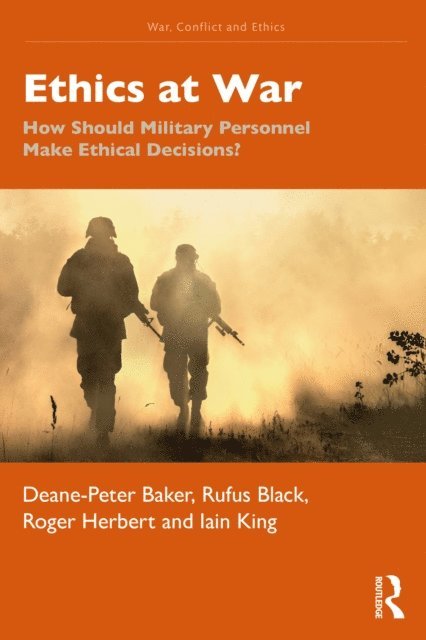
This book debates competing approaches to ethical decision-making for members of the armed forces of liberal democratic states.In this volume, four prominent thinkers propose and debate competing approaches to ethical decision-making for military personnel. Deane-Peter Baker presents and expounds the ‘Ethical Triangulation’ model, an ethical decision-making method he has employed through much of his career as an applied military ethicist. Rufus Black advocates for a natural law-based approach, one which has heavily influenced the framework formally adopted by the Australian Defence Force. Roger Herbert outlines the ‘Moral Deliberation Roadmap’, the moral reasoning framework recently adopted by the US Naval Academy. Iain King then sets out a model of quasi-utilitarian decision-making developed in several post-conflict settings and refined at the UK’s Royal College of Defence Studies. After the opening chapters in which each author outlines their favoured decision-making approach, the four contributors then evaluate each other’s proposals, often critically. Philosopher David Whetham offers some concluding thoughts in which he summarizes areas of agreement between the authors, identifies key areas of difference, and suggests directions for future research.This book will be of great interest to students of military ethics, the ethics of war, moral philosophy, and International Relations, as well as military professionals.
2 103 kr
Skickas inom 10-15 vardagar
This book debates competing approaches to ethical decision-making for members of the armed forces of liberal democratic states.In this volume, four prominent thinkers propose and debate competing approaches to ethical decision-making for military personnel. Deane-Peter Baker presents and expounds the ‘Ethical Triangulation’ model, an ethical decision-making method he has employed through much of his career as an applied military ethicist. Rufus Black advocates for a natural law-based approach, one which has heavily influenced the framework formally adopted by the Australian Defence Force. Roger Herbert outlines the ‘Moral Deliberation Roadmap’, the moral reasoning framework recently adopted by the US Naval Academy. Iain King then sets out a model of quasi-utilitarian decision-making developed in several post-conflict settings and refined at the UK’s Royal College of Defence Studies. After the opening chapters in which each author outlines their favoured decision-making approach, the four contributors then evaluate each other’s proposals, often critically. Philosopher David Whetham offers some concluding thoughts in which he summarizes areas of agreement between the authors, identifies key areas of difference, and suggests directions for future research.This book will be of great interest to students of military ethics, the ethics of war, moral philosophy, and International Relations, as well as military professionals.
Revival of Natural Law
Philosophical, Theological and Ethical Responses to the Finnis-Grisez School
Häftad, Engelska, 2016
826 kr
Skickas inom 10-15 vardagar
Natural law theory has been enjoying a significant revival in recent times. Led by Germain Grisez in the USA and John Finnis in the UK, one school of thinkers has been articulating a highly developed system of natural law built upon a sophisticated account of practical reasoning and a rich and flexible understanding of the human good. However, long-standing prejudices against old-style natural law among moral philosophers and Protestant ethicists, together with the new theory's appropriation by conservatives in the impassioned debate between the Vatican and dissenting theologians in the United States, have prevented the Finnis-Grisez version from being adequately appreciated. Providing a clear and substantive introduction to the theory for those who are new to it, this book then broadens, assesses, and advances the debate about it, examining crucial philosophical, theological and ethical issues and opening up discussion beyond the confines of the Roman Catholic Church. Part 1, on philosophical issues, starts with two broad chapters that locate the Grisez school in relation to modern moral philosophy and the Roman Catholic philosophical tradition of Thomism, and then follows these with further chapters on two crucial issues: the possibility of consensus on the human good, and the nature of moral absolutes. Part 2, on theological dimensions, begins with a Lutheran critique of Grisez, locates him in relation to the ethics of two very prominent 20th century Protestants, Karl Barth and Stanley Hauerwas, and then explores the major area of theological controversy within the Roman Catholic community - how to conceive of the "Church's" authority with regard to moral matters. Part 3 subjects the school's thought to critical examination in a broad range of ethical fields: bioethics, gender, sex and the environment. A concluding chapter then develops eight topics that recur in the course of the book: the status of ethical realism in the contemporary intellectual climate; whether realism is best conceived in rationalist or naturalist terms; whether marriage should be counted as a basic good; whether physical pleasure should not be counted a basic good; whether it is always wrong to act deliberately against a basic good; the problems of moral certainty and authority; the rapproachement between Protestant and Roman Catholic ethics; and, finally, whether ethical understanding is really independent of one's anthropological point of view. Drawing together North American, European and Australian contributors from across moral philosophy and Protestant ethics as well as from Roman Catholic moral theology, this book opens up the debate about the Finnis-Grisez theory, highlighting its strengths and weaknesses in order to advance current discussion about natural law in moral theology and in moral and legal philosophy.