Rupert Gethin - Böcker
Visar alla böcker från författaren Rupert Gethin. Handla med fri frakt och snabb leverans.
3 produkter
3 produkter
147 kr
Skickas
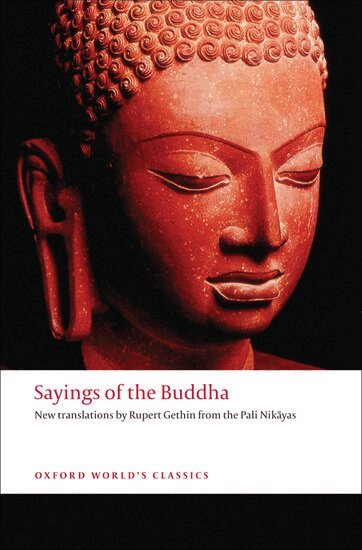
'As if someone were to hold up a lamp in the dark so that those with eyes could see - in exactly the same way Gotama has made the truth clear in various ways.'Gotama the Buddha, who lived the life of a wandering ascetic in northern India during the fifth century BCE, is looked to as the founder of one of the world's major religions. One of the main sources for knowledge of his teachings is the four Pali Nikayas or 'collections' of his sayings. Written in Pali, an ancient Indian language closely related to Sanskrit, the Nikayas are among the oldest Buddhist texs and consist of more than one and a half million words. This new translation offers a selection of the Buddha's most important sayings reflecting the full variety of material contained in the Nikayas: the central themes of the Buddha's teaching (his biography, philosophical discourse, instruction on morality, meditation, and the spiritual life) and the range of literary style (myth, dialogue, narrative, short sayings, verse). ABOUT THE SERIES: For over 100 years Oxford World's Classics has made available the widest range of literature from around the globe. Each affordable volume reflects Oxford's commitment to scholarship, providing the most accurate text plus a wealth of other valuable features, including expert introductions by leading authorities, helpful notes to clarify the text, up-to-date bibliographies for further study, and much more.
249 kr
Skickas inom 5-8 vardagar
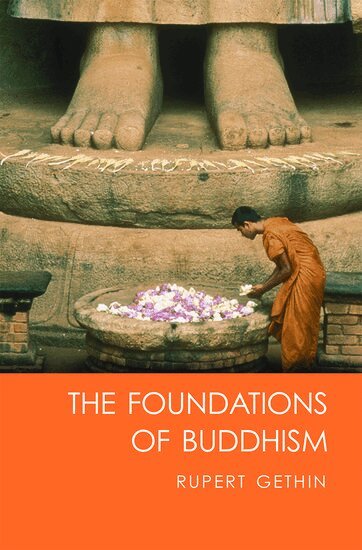
Buddhism is a vast and complex religious and philosophical tradition with a history that stretches over 2,500 years, and which is now followed by around 115 million people. In this introduction to the foundations of Buddhism, Rupert Gethin concentrates on the ideas and practices which constitute the common heritage of the different traditions of Buddhism (Thervada, Tibetan, and Eastern) which exist in the world today. From the narrative of the story of the Buddha, through discussions of aspects such as textual traditions, the framework of the Four Noble Truths, the interaction between the monastic and lay ways of life, the cosmology of karma and rebirth, and the path of the bodhisattva, this books provides a stimulating introduction to Buddhism as a religion and way of life, which will also be of interest to those who are more familiar with the subject.
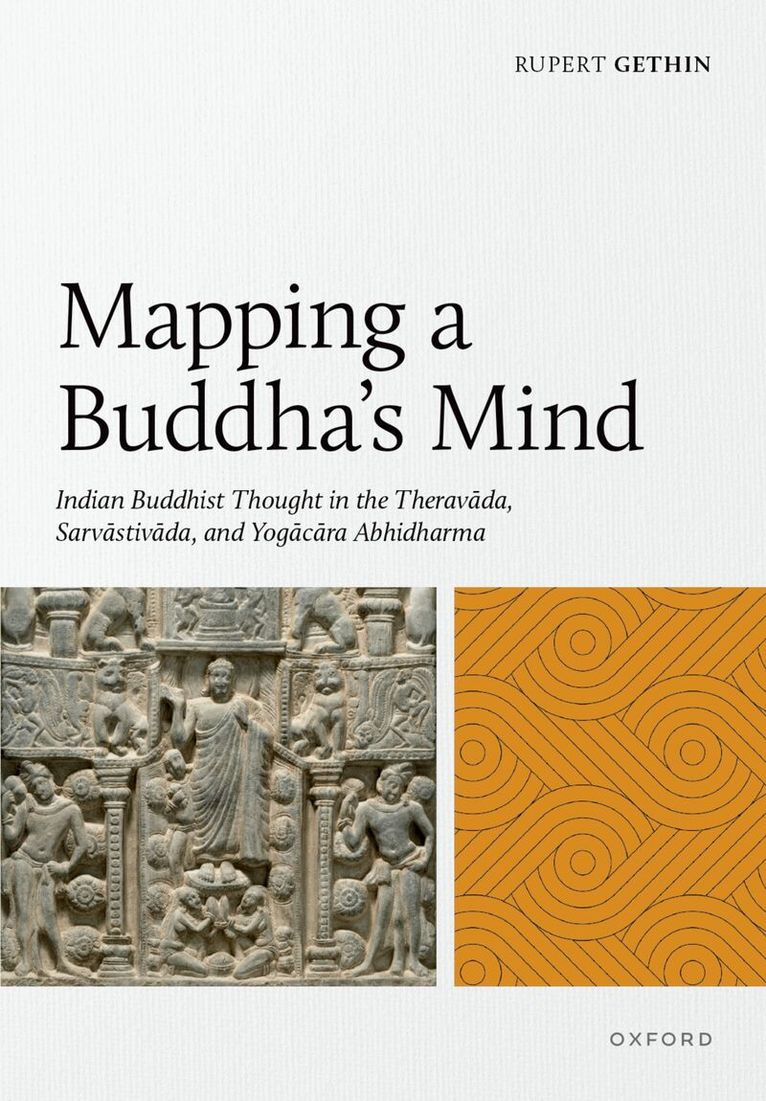
Mapping a Buddha's Mind
Indian Buddhist Thought in the Theravāda, Sarvāstivāda, and Yogācāra Abhidharma
Inbunden, Engelska, 2026
2 040 kr
Kommande
Mapping a Buddha's Mind is a study of the ways the early generations of the Buddha's monastic followers explored and developed his teachings in order to present them in a form of systematic thought they termed abhidharma—'the ultimate teaching'. This process of systematizing the Buddha's teaching resulted in several rival Indian schools of Abhidharma, three of which came to exercise particular influence on the subsequent history of Buddhist thought and practice beyond India: the Sarvāstivāda and Yogācāra schools in the north of India and the Theravāda school in the south and Sri Lanka. Although offering alternative perspectives on the Buddha's teaching, the Abhidharma thinkers shared a common concern in wishing to explore and map fully what they understood as the Buddha's unique insights into the processes of mind and body. Building on the Buddha's teaching as presented in the early discourses, they first map in detail the nature of embodiment. Next they map the way our conscious lives are characterized by a flow of different episodes of consciousness that alternately try to hold on to pleasant experiences and push away unpleasant experiences. They then delineate types of consciousness that skilfully hold these conflicting tendencies of the mind in balance in a state of goodwill, generosity, and understanding—a state they take as reflecting the Buddha's teaching and the mind of a buddha. For the Abhidharma scholars this is a state that offers the possibility of spiritual transformation, leading ultimately to nirvana-freedom from the endless cycle of actions and their results, of death and rebirth. Relatively neglected in Buddhist studies, the Abhidharma systems constitute one of the great achievements of human intellectual history. The different Abhidharma perspectives, explored together for the first time in this book, reveal the richness and subtlety of Abhidharma thought.