Ruth Bartlett - Böcker
Visar alla böcker från författaren Ruth Bartlett. Handla med fri frakt och snabb leverans.
8 produkter
8 produkter
334 kr
Skickas inom 3-6 vardagar
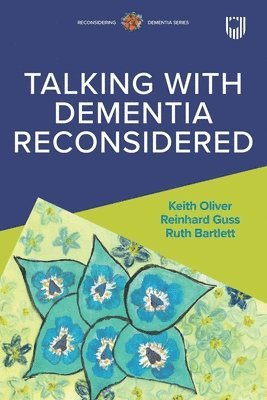
“The voice of lived experience is ever growing and without doubt we should never miss an opportunity like this to listen, capture and learn from it.”Paola Barbarino, CEO, Alzheimer’s Disease International“This latest book will help so many people - those with dementia and their loved ones.”Victoria Derbyshire, British Journalist, Newsreader and Broadcaster“Talking with Dementia Reconsidered is a landmark, which will inspire professionals, researchers and the upcoming cohort of people whose lives are affected by dementia.”Tom Dening, Professor of Dementia Research, School of Medicine, University of Nottingham, UK“I would strongly advise all health and social care professionals to read this and rethink what they “know” about dementia.”Dr Hilda Hayo Chief Admiral Nurse and CEO, Dementia UKThis book places people living with a diagnosis of dementia at its core, providing each person with the opportunity to express themselves whilst viewing their lives in relation to the Kitwood flower model.Authored by a person living with dementia, an experienced consultant clinical psychologist and a respected academic, the three combine to amplify and showcase the words of the Fifteen people living with dementia, in an original, authentic and unique way. This book:Gives readers transparent insight into the lives, hopes and fears of a diverse range of people living with various forms of dementiaShows how each petal of the Kitwood flower with love at its centre is a helpful framework for each person to describe their lifeLinks the interviews with issues, frameworks, policy and practiceExamines what stakeholders can take from this book to advance dementia care.Talking with Dementia Reconsidered truthfully adds to the growing knowledge base of what life with dementia is really like in an engaging and informative way. It is essential reading for anyone and everyone directly or indirectly affected by dementia through lived experience, studying dementia or working professionally to support those affected.The Reconsidering Dementia Series is an interdisciplinary series published by Open University Press that covers contemporary issues to challenge and engage readers in thinking deeply about the topic. The dementia field has developed rapidly in its scope and practice over the past ten years and books in this series will unpack not only what this means for the student, academic and practitioner, but also for all those affected by dementia.Series Editors: Dr Keith Oliver and Professor Dawn Brooker MBE.Dr Keith Oliver is an Alzheimer's Society Ambassador and Dementia Service User Envoy for Kent and Medway Partnership NHS Trust in the UK. He retired from being a head teacher when diagnosed with Alzheimer’s at age 55. Keith is Series editor for the Reconsidering Dementia Series. Reinhard Guss is Associate Fellow of the British Psychological Society and former Dementia Work Stream Lead for the Faculty of the Psychology of Older People (FPOP). Reinhard is a Consultant Clinical Psychologist and Neuropsychologist working within the National Health Service.Dr Ruth Bartlett is Associate Professor at the University of Southampton, UK, co-director of the University’s Doctoral Training Centre in Dementia Care and Principal Investigator of an interdisciplinary, cross-faculty research project funded by the Alzheimer’s Society.
2 151 kr
Skickas inom 10-15 vardagar
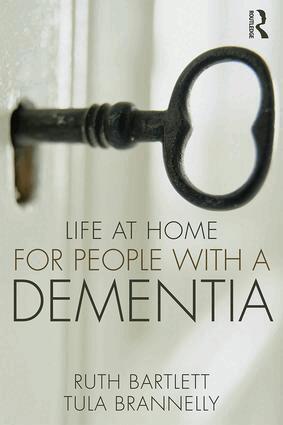
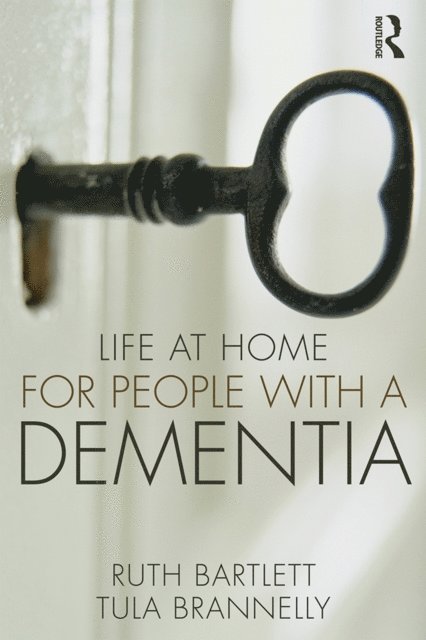
Life at Home for People with a Dementia provides an evidence-based and readable account of improving life at home for people with a dementia and their families. There are estimated to be 47 million people with a dementia worldwide, the majority of whom will live, or want to live, in their own home. Yet there is a major shortcoming in available knowledge on what life is like for people with a dementia living at home. Most research focuses on care in hospitals or care homes, and takes a medical perspective. This book bridges this gap in knowledge by providing a comprehensive and critical overview of the best available evidence on enabling people with a dementia to live well at home from the viewpoint of those living with the condition, and in the context of global policy drivers on ageing and health, as well as technological advances. The book includes chapters on citizenships – that is, the diversity of people living with a dementia – enabling life at home, rethinking self-management, the ethics and care of people with a dementia at home, technological care and citizenship, and sharing responsibilities. It concludes with a care manifesto in which we set out a vision for improving life at home for people with a dementia that covers the areas of professional practice, education and care research. By covering a wide range of interrelated topics to advance understanding and practice as to how people with a dementia from diverse backgrounds can be supported to live well at home, this book provides a synthesised, critical and readable understanding of the complexities and risks involved.
580 kr
Skickas inom 10-15 vardagar
Life at Home for People with a Dementia provides an evidence-based and readable account of improving life at home for people with a dementia and their families. There are estimated to be 47 million people with a dementia worldwide, the majority of whom will live, or want to live, in their own home. Yet there is a major shortcoming in available knowledge on what life is like for people with a dementia living at home. Most research focuses on care in hospitals or care homes, and takes a medical perspective. This book bridges this gap in knowledge by providing a comprehensive and critical overview of the best available evidence on enabling people with a dementia to live well at home from the viewpoint of those living with the condition, and in the context of global policy drivers on ageing and health, as well as technological advances. The book includes chapters on citizenships – that is, the diversity of people living with a dementia – enabling life at home, rethinking self-management, the ethics and care of people with a dementia at home, technological care and citizenship, and sharing responsibilities. It concludes with a care manifesto in which we set out a vision for improving life at home for people with a dementia that covers the areas of professional practice, education and care research. By covering a wide range of interrelated topics to advance understanding and practice as to how people with a dementia from diverse backgrounds can be supported to live well at home, this book provides a synthesised, critical and readable understanding of the complexities and risks involved.
274 kr
Skickas inom 10-15 vardagar
First published Open Access under a Creative Commons license as What is Diary Method?, this title is now also available as part of the Bloomsbury Research Methods series.This book provides an up-to-date, concise, and engaging introduction to solicited diary method, aimed at researchers and students who want to employ this methodology in their projects. Its primary focus is on the use of solicited diary method in the context of social and health-related research, but it also offers useful guidance on the everyday practice of diary-keeping.The authors draw on published research that makes use of this method, including their own independent studies involving older adults and family carers. The book opens with an overview of the development of diary techniques and a discussion of the value of the method, and provides an overview of the different ways of collecting and using diary data and techniques for analysing it. Key ethical issues are sensitively discussed. The book engages with new and novel developments in solicited diary method by engaging with the use of technology including discussion of how digital devices, email exchanges, social media such as Facebook, weblogs and micro-blogging such as Twitter, have the potential to change the meaning and nature of diary-keeping.The book includes a variety of visuals to enhance understanding, including a tabulated summary of the main strengths and limitations of using diary method, and strategies for mitigating limitations.
875 kr
Skickas inom 10-15 vardagar
First published Open Access under a Creative Commons license as What is Diary Method?, this title is now also available as part of the Bloomsbury Research Methods series.This book provides an up-to-date, concise, and engaging introduction to solicited diary method, aimed at researchers and students who want to employ this methodology in their projects. Its primary focus is on the use of solicited diary method in the context of social and health-related research, but it also offers useful guidance on the everyday practice of diary-keeping.The authors draw on published research that makes use of this method, including their own independent studies involving older adults and family carers. The book opens with an overview of the development of diary techniques and a discussion of the value of the method, and provides an overview of the different ways of collecting and using diary data and techniques for analysing it. Key ethical issues are sensitively discussed. The book engages with new and novel developments in solicited diary method by engaging with the use of technology including discussion of how digital devices, email exchanges, social media such as Facebook, weblogs and micro-blogging such as Twitter, have the potential to change the meaning and nature of diary-keeping.The book includes a variety of visuals to enhance understanding, including a tabulated summary of the main strengths and limitations of using diary method, and strategies for mitigating limitations.
574 kr
Skickas inom 7-10 vardagar
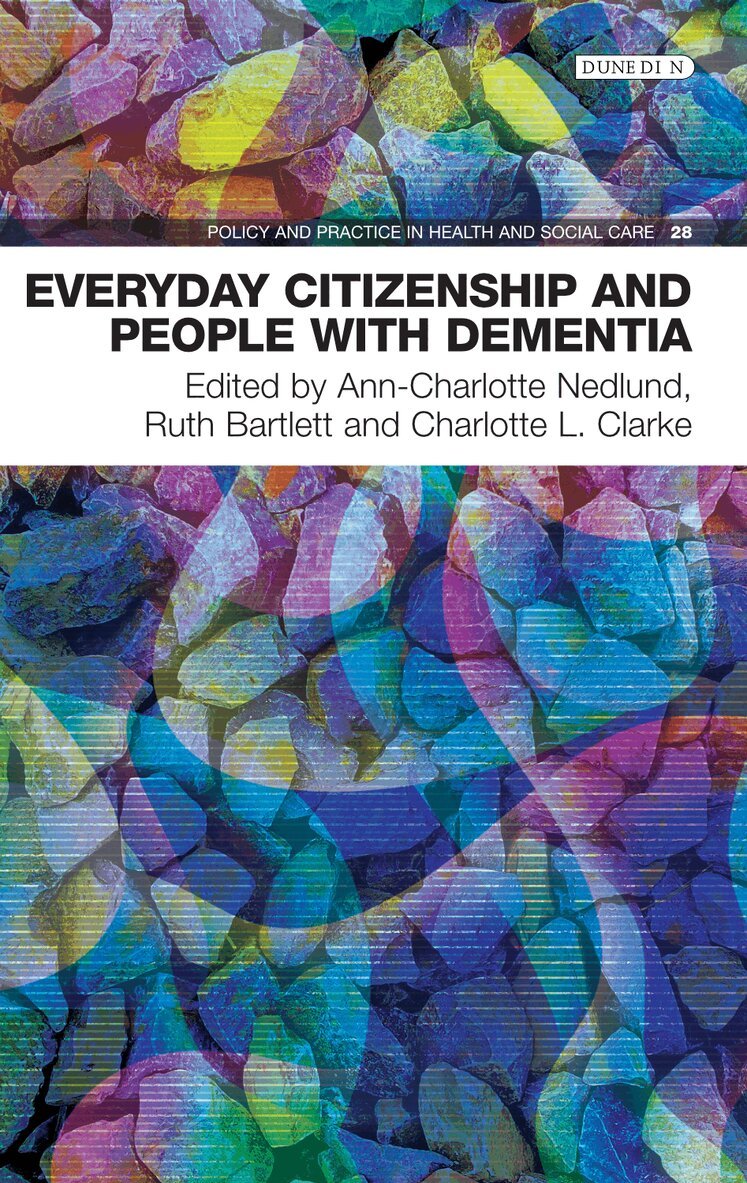
Everyday Citizenship and People with Dementia prioritises the ordinary lives of people with dementia, and thereby broadens the agenda towards everyday citizenship. The contributors bring to the fore the idea that a person living with dementia has multiple opinions, identities and a stake in society. The notion of everyday citizenship is used to shift the focus away from care settings and diagnostic and post-diagnostic support - all of which are important, of course - to the ‘normal’ everyday routines and settings of a person’s life. The notion of citizenship is mobilised within a range of contexts from dealing with the welfare system to living and being a part of a neighbourhood. Each chapter focuses on everyday citizenship from the perspective of people living with dementia and shows how citizenship is a necessity for a vibrant, inclusive society. The discussion is informed by empirically based work and authored by experts from different parts of the world, including Canadian and Scots citizens who are living with dementia. The stress, throughout the book, is that the everyday and mundane is not only important in a practical sense but also in a political one. The book is thus for all interested in current debates about equality and the rights of people with dementia.
441 kr
Skickas inom 7-10 vardagar
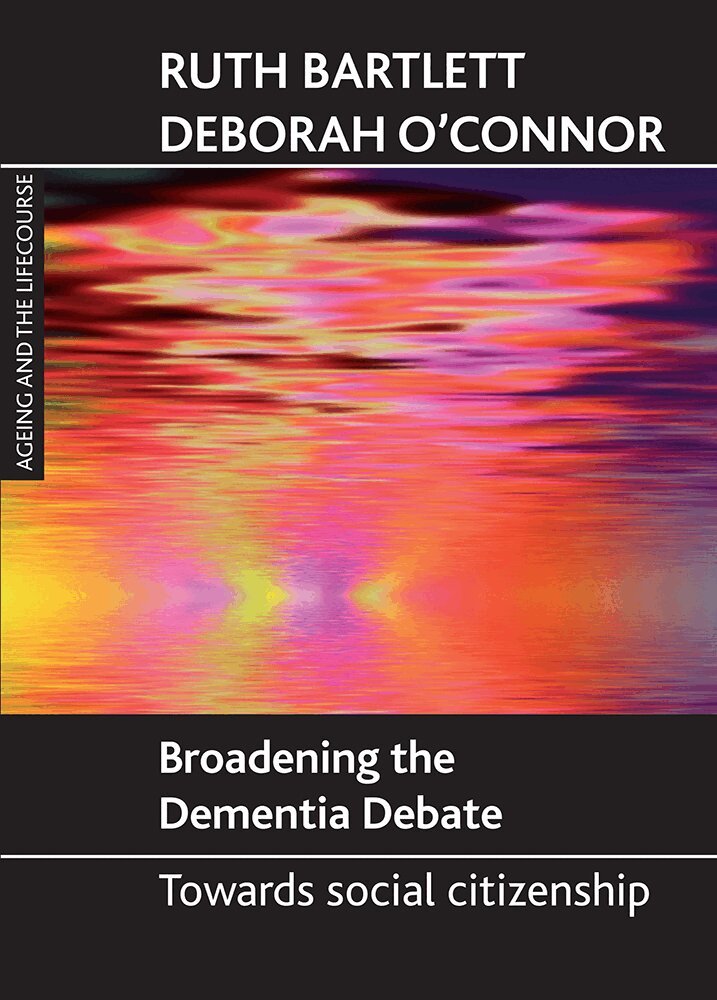
Dementia has been widely debated from the perspectives of biomedicine and social psychology. This book broadens the debate to consider the experiences of men and women with dementia from a sociopolitical perspective. It brings to the fore the concept of social citizenship, exploring what it means within the context of dementia and using it to re-examine the issue of rights, status(es), and participation. Most importantly, the book offers fresh and practical insights into how a citizenship framework can be applied in practice. It will be of interest to health and social care professionals, policy makers, academics and researchers and people with dementia and family carers may find it revitalising.
1 191 kr
Skickas inom 7-10 vardagar
Dementia has been widely debated from the perspectives of biomedicine and social psychology. This book broadens the debate to consider the experiences of men and women with dementia from a sociopolitical perspective. It brings to the fore the concept of social citizenship, exploring what it means within the context of dementia and using it to re-examine the issue of rights, status(es), and participation. Most importantly, the book offers fresh and practical insights into how a citizenship framework can be applied in practice. It will be of interest to health and social care professionals, policy makers, academics and researchers and people with dementia and family carers may find it revitalising.