Ruth Colker - Böcker
Visar alla böcker från författaren Ruth Colker. Handla med fri frakt och snabb leverans.
12 produkter
12 produkter
180 kr
Skickas inom 10-15 vardagar
"The issues she takes on are crucial—not solely the subject areas of reproductive rights and law, or public policy lenses and judicial impact in women's and children's lives, but also the more difficult and fundamental questions of how these 'hot topics' can be approached so as to make the most of the good will of all and the force of free discussion for social learning. . . . she brings a strong, evolving and distinctive perspective to the discussion." —Emily Fowler HartiganIn Abortion and Dialogue, Ruth Colker argues that the state falsely views the woman and the fetus as having conflicting needs when it intervenes in decisions regarding preganancies. Colker's feminist-theological perspective on reproductive health issues encourages both pro-choice and pro-life advocates to consider how the value of life is implicated in discussions of reproduction.Colker argues that theology can contribute to our understanding if we apply the concepts of love, compassion, and wisdom to problems identified by feminist theory and to actual concrete situations: the impact of abortion regulations on poor female adolescents; the judicial treatment of abortion regulations; state intervention into women's decision-making during pregnancies carried to term. Colker concludes by examining effective and respectful family-planning strategies that truly help women in making reproductive choices.
223 kr
Skickas inom 7-10 vardagar
When they go low, we learn: an examination of mudslinging in contemporary American politics—and how the left can find its footing to achieve structural reform in this mess.The rules of the public discourse game have changed, and The Public Insult Playbook argues that the political left needs to account for the power of vitriol in crafting their theories for social and political change. With this book, noted constitutional law expert and disability rights advocate Ruth Colker offers insights into how public insults have come to infect contemporary public discourse—a technique not invented by but certainly refined by Donald Trump—and, importantly, highlights lessons learned and tools for fighting back. Public insults act as a headwind and dead weight to structural reform. By showcasing the power of insults across a number of civil rights battlegrounds, The Public Insult Playbook uncovers the structural nature of personal attacks, and offers a blueprint for a legal and political strategy that anticipates the profound but poorly understood damage they can inflict to whole movements. Illustrating how completely the tactic has been adopted and embraced by the American right wing, the book catalogues how public insults have been used against people with disabilities, immigrants, people seeking abortions, individuals who are sexually harassed, members of the LGBTQ community, and, of course, Black Americans. These examples demonstrate both the pervasiveness of the deployment of insults by the political right and the ways in which the left has been caught flat-footed by this tactic. She then uses the Black Lives Matter movement as a case study to consider how to effectively counter these insults and maintain an emphasis on structural reform.
354 kr
Skickas inom 7-10 vardagar
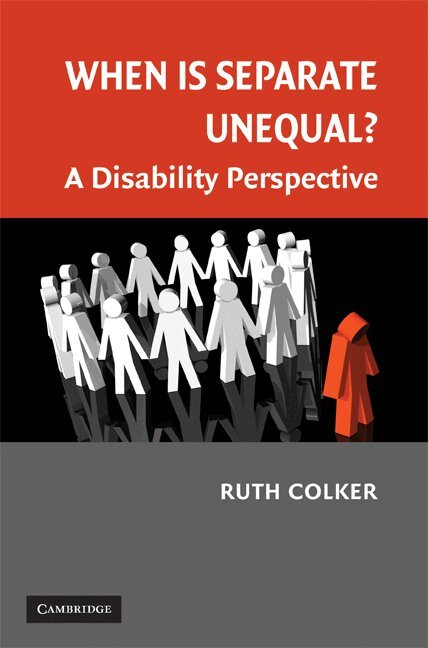
This book does not start from the premise that separate is inherently unequal. Writing from an 'anti-subordination perspective', Professor Colker provides a framework for the courts and society to consider what programs or policies are most likely to lead to substantive equality for individuals with disabilities. In some contexts, she argues for more tolerance of disability-specific programs and, in other contexts, she argues for more disability-integrated programs. Her highly practical investigation includes the topics of K-12 education, higher education, employment, voting, and provision of health care. At the end of the book, she applies this perspective to the racial arena, arguing that school districts should be given latitude to implement more use of racial criteria to attain integrated schools because such environments are most likely to help attain substantive equality from an anti-subordination perspective. The book measures the attainment of equality not on the basis of worn-out mantras but instead on the basis of substantive gains.
709 kr
Skickas inom 7-10 vardagar
This book does not start from the premise that separate is inherently unequal. Writing from an 'anti-subordination perspective', Professor Colker provides a framework for the courts and society to consider what programs or policies are most likely to lead to substantive equality for individuals with disabilities. In some contexts, she argues for more tolerance of disability-specific programs and, in other contexts, she argues for more disability-integrated programs. Her highly practical investigation includes the topics of K-12 education, higher education, employment, voting, and provision of health care. At the end of the book, she applies this perspective to the racial arena, arguing that school districts should be given latitude to implement more use of racial criteria to attain integrated schools because such environments are most likely to help attain substantive equality from an anti-subordination perspective. The book measures the attainment of equality not on the basis of worn-out mantras but instead on the basis of substantive gains.
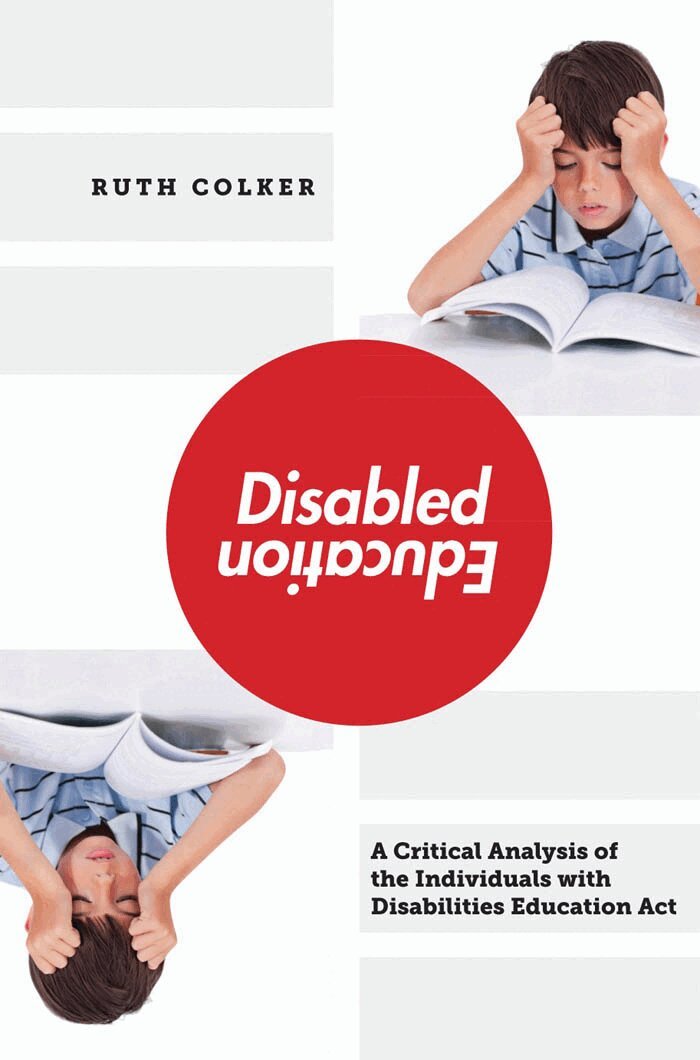
Disabled Education
A Critical Analysis of the Individuals with Disabilities Education Act
Inbunden, Engelska, 2013
596 kr
Skickas inom 10-15 vardagar
Enacted in1975, the Education for All Handicapped Children Act – now called theIndividuals with Disabilities Education Act (IDEA) provides all children withthe right to a free and appropriate public education. On the face of it, theIDEA is a shining example of law's democratizing impulse. But is that reallythe case? In Disabled Education, Ruth Colker digs deep beneath theIDEA's surface and reveals that the IDEA contains flaws that were evident atthe time of its enactment that limit its effectiveness for poor and minoritychildren.Both anexpert in disability law and the mother of a child with a hearing impairment,Colker learned first-hand of the Act's limitations when she embarked on a legalbattle to persuade her son's school to accommodate his impairment. Colker wasable to devote the considerable resources of a middle-class lawyer to herstruggle and ultimately won, but she knew that the IDEA would not havebenefitted her son without her time-consuming and costly legal intervention.Her experience led her to investigate other cases, which confirmed hersuspicions that the IDEA best serves those with the resources to advocatestrongly for their children. The IDEAalso works only as well as the rest of the system does: struggling schools thatserve primarily poor students of color rarely have the funds to provideappropriate special education and related services to their students withdisabilities. Through a close examination of the historical evolution of theIDEA, the actual experiences of children who fought for their education incourt, and social science literature on the meaning of "learning disability,"Colker reveals the IDEA's shortcomings, but also suggests ways in whichresources might be allocated more evenly along class lines.
369 kr
Skickas inom 7-10 vardagar
The United States, and the West in general, has always organized society along bipolar lines. We are either gay or straight, male or female, white or not, disabled or not.In recent years, however, America seems increasingly aware of those who defy such easy categorization. Yet, rather than being welcomed for the challenges that they offer, people living the gap are often ostracized by all the communities to which they might belong. Bisexuals, for instance, are often blamed for spreading AIDS to the heterosexual community and are regarded with suspicion by gays and lesbians. Interracial couples are rendered invisible through monoracial recordkeeping that confronts them at school, at work, and on official documents. In Hybrid, Ruth Colker argues that our bipolar classification system obscures a genuine understanding of the very nature of subordination. Acknowledging that categorization is crucial and unavoidable in a world of practical problems and day-to-day conflicts, Ruth Colker shows how categories can and must be improved for the good of all.
American Law in the Age of Hypercapitalism
The Worker, the Family, and the State
Inbunden, Engelska, 1998
841 kr
Skickas inom 10-15 vardagar
Since the fall of communism, laissez-faire capitalism has experienced renewed popularity. Flush with victory, the United States has embraced a particularly narrow and single-minded definition of capitalism and aggressively exported it worldwide. The defining trait of this brand of capitalism is an unwavering reverence for the icons of the market. Although promoted as a laissez-faire form of capitalism, it actually reflects the very evils of selfishness and greed by entrepreneurs that concerned Adam Smith.Capitalism, however, can thrive without an extreme emphasis on efficiency and personal autonomy. Americans often forget that theirs is a rather peculiar form of capitalism, that other Western nations successfully maintain capitalistic systems that are fundamentally more balanced and nuanced in their effect on society. The unnecessarily inhumane aspects of American capitalism become apparent when compared to Canadian and Western European societies, with their more generous policies regarding affirmative action, accommodation for disabled persons, and family and medical leave for pregnant woman and their partners.In American Law in the Age of Hypercapitalism, Ruth Colker examines how American law purports to reflect--and actively promotes--a laissez-faire capitalism that disproportionately benefits the entrepreneurial class. Colker proposes that the quality of American life depends also on fairness and equality rather than simply the single-minded and formulaic pursuit of efficiency and utility.
American Law in the Age of Hypercapitalism
The Worker, the Family, and the State
Häftad, Engelska, 1998
375 kr
Skickas inom 10-15 vardagar
Since the fall of communism, laissez-faire capitalism has experienced renewed popularity. Flush with victory, the United States has embraced a particularly narrow and single-minded definition of capitalism and aggressively exported it worldwide. The defining trait of this brand of capitalism is an unwavering reverence for the icons of the market. Although promoted as a laissez-faire form of capitalism, it actually reflects the very evils of selfishness and greed by entrepreneurs that concerned Adam Smith.Capitalism, however, can thrive without an extreme emphasis on efficiency and personal autonomy. Americans often forget that theirs is a rather peculiar form of capitalism, that other Western nations successfully maintain capitalistic systems that are fundamentally more balanced and nuanced in their effect on society. The unnecessarily inhumane aspects of American capitalism become apparent when compared to Canadian and Western European societies, with their more generous policies regarding affirmative action, accommodation for disabled persons, and family and medical leave for pregnant woman and their partners.In American Law in the Age of Hypercapitalism, Ruth Colker examines how American law purports to reflect--and actively promotes--a laissez-faire capitalism that disproportionately benefits the entrepreneurial class. Colker proposes that the quality of American life depends also on fairness and equality rather than simply the single-minded and formulaic pursuit of efficiency and utility.
841 kr
Skickas inom 10-15 vardagar
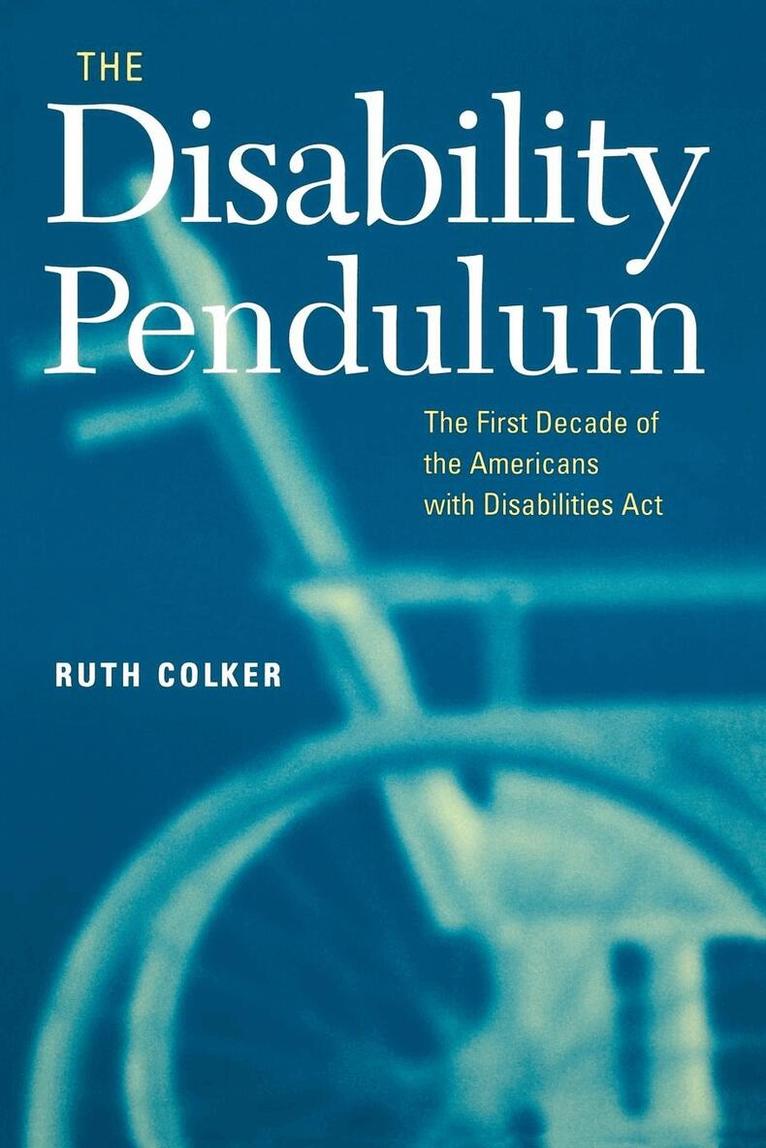
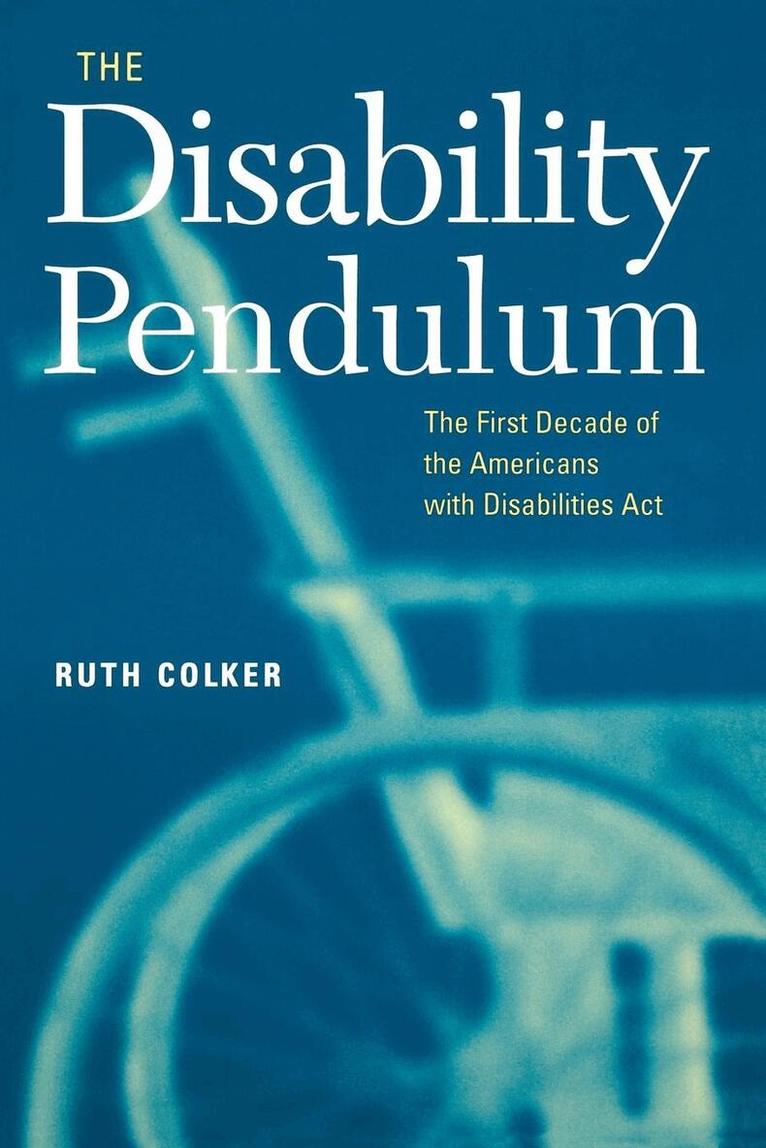
Signed into law in July 1990, the Americans with Disabilities Act (ADA) became effective two years later, and court decisions about the law began to multiply in the middle of the decade. In The Disability Pendulum, Ruth Colker presents the first legislative history of the enactment of the ADA in Congress and analyzes the first decade of judicial decisions under the act. She assesses the success and failure of the first ten years of litigation under the ADA, focusing on its three major titles: employment, public entities, and public accommodations.The Disability Pendulum argues that despite an initial atmosphere of bipartisan support with the expectation that the ADA would make a significant difference in the lives of individuals with disabilities, judicial decisions have not been consistent with Congress' intentions. The courts have operated like a pendulum, at times swinging to a pro-disabled plaintiff and then back again to a pro-defendant stance. Colker, whose work on the ADA has been cited by the Supreme Court, offers insightful and practical suggestions on where to amend the act to make it more effective in defending disability rights, and also explains judicial hostility toward enforcing the act.
333 kr
Skickas inom 7-10 vardagar
Signed into law in July 1990, the Americans with Disabilities Act (ADA) became effective two years later, and court decisions about the law began to multiply in the middle of the decade. In The Disability Pendulum, Ruth Colker presents the first legislative history of the enactment of the ADA in Congress and analyzes the first decade of judicial decisions under the act. She assesses the success and failure of the first ten years of litigation under the ADA, focusing on its three major titles: employment, public entities, and public accommodations.The Disability Pendulum argues that despite an initial atmosphere of bipartisan support with the expectation that the ADA would make a significant difference in the lives of individuals with disabilities, judicial decisions have not been consistent with Congress' intentions. The courts have operated like a pendulum, at times swinging to a pro-disabled plaintiff and then back again to a pro-defendant stance. Colker, whose work on the ADA has been cited by the Supreme Court, offers insightful and practical suggestions on where to amend the act to make it more effective in defending disability rights, and also explains judicial hostility toward enforcing the act.
2 290 kr
Skickas inom 10-15 vardagar
If you are an individual with a disability and believe you have been discriminated against, it is often hard to find a lawyer to help remedy your situation. Accordingly, 'self-help' may often be your most, or your only, viable strategy. But how to proceed? This book serves as a badly needed practical guide to disability discrimination law. Covering a wide range of issues faced by individuals with different kinds of disabilities, it not only describes those individuals' legal rights but also suggests solutions to disability discrimination issues that are more practical and less expensive than filing a lawsuit. Written by two disability law experts, Ruth Colker, whose son is developmentally disabled, and Adam Milani, who is paralyzed from the chest down, this book is informed by their scholarly expertise but is also based on their collective practical experience from years of navigating issues of disability discrimination.Everyday Law for Individuals with Disabilities is the first in a series of practical guides to the law, organized by series editors Richard Delgado and Jean Stephancic, packed with useful overviews and advice for the people who need it most and can least afford it.For more information visit http: //ruthcolker.com.
617 kr
Skickas inom 10-15 vardagar
If you are an individual with a disability and believe you have been discriminated against, it is often hard to find a lawyer to help remedy your situation. Accordingly, 'self-help' may often be your most, or your only, viable strategy. But how to proceed? This book serves as a badly needed practical guide to disability discrimination law. Covering a wide range of issues faced by individuals with different kinds of disabilities, it not only describes those individuals' legal rights but also suggests solutions to disability discrimination issues that are more practical and less expensive than filing a lawsuit. Written by two disability law experts, Ruth Colker, whose son is developmentally disabled, and Adam Milani, who is paralyzed from the chest down, this book is informed by their scholarly expertise but is also based on their collective practical experience from years of navigating issues of disability discrimination. Everyday Law for Individuals with Disabilities is the first in a series of practical guides to the law, organized by series editors Richard Delgado and Jean Stephancic, packed with useful overviews and advice for the people who need it most and can least afford it.