Ruth Mackenzie - Böcker
Visar alla böcker från författaren Ruth Mackenzie. Handla med fri frakt och snabb leverans.
3 produkter
3 produkter
1 846 kr
Skickas inom 7-10 vardagar
The dramatic rise in the number of international courts and tribunals and the expansion of their legal powers has been one of the most significant developments in international law of the late 20th century. The emergence of an international judiciary provided international law with a stronger than ever law enforcement apparatus, and facilitated the transformation of many aspects of international relations from being power-based to being law-based.The first edition of the Manual on International Courts and Tribunals, published in 1999, was the first book to survey systematically this new institutional landscape, by describing in an accessible and uniformly structured manner the legal powers and operating procedures of all major international judicial and quasi-judicial bodies. In doing so, it laid the groundwork for comparative study and research of the law and practice of international courts and tribunals - an emerging field of international legal research, which has already spurred a series of publications, conferences and academic courses. This second edition updates the first edition by describing the many legal changes that have taken place in the last decade, including important reforms in the laws and procedures of many international courts and tribunals, relevant developments in their increasingly rich jurisprudence and the creation of new judicial fora. Moreover, it assesses the overall record of these judicial bodies. The data and legal analysis offered in the book provide both practitioners and academics with an important basis of knowledge that will help them better understand the details of international adjudication and its context.
1 553 kr
Skickas inom 5-8 vardagar
This book examines the way international court judges are chosen. Focusing principally on the judicial selection procedures of the International Court of Justice and International Criminal Court, it provides the first detailed examination of how the selection process works in practice at national and international levels: what factors determine whether a state will nominate a candidate? How is a candidate identified? What factors influence success or failure? What are the respective roles of merit, politics, and other considerations in the nomination and election process? The research was based on interviews, case studies and survey data in a range of different states. It concludes that although the nature and quality of nomination and election processes vary widely, a common theme indicates the powerful influence of domestic and international political considerations, and the significant role of a small group of diplomats, civil servants, lawyers, and academics, often without transparency or accountability. The processes allow overt political considerations to be introduced throughout the decision-making process in ways that may detract from the selection of the most highly qualified candidates and, ultimately, undermine independence. This is particularly evident in the election campaigning that has become a defining feature of the selection process, accompanied by widespread vote trading and reciprocal agreements between states. The effect of these practices is often to undermine the role of statutory selection criteria and to favour candidates from more politically powerful states. The book reviews new judicial selection models adopted or proposed in other international and regional courts, and considers a number of proposals for change to promote more independent, transparent, and merit-based nomination and election procedures.
1 157 kr
Skickas inom 7-10 vardagar
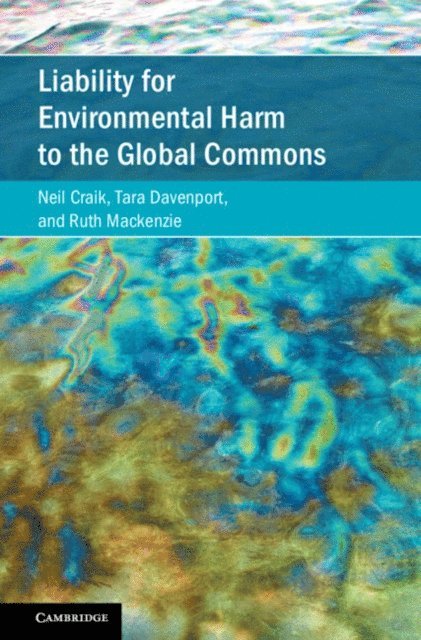
This book examines liability for environmental harm in Antarctic, deep seabed, and high seas commons areas, highlighting a unique set of legal questions: Who has standing to claim environmental harms in global commons ecosystems? How should questions of causation and liability be addressed where harm arises from a variety of activities by state and non-state actors? What kinds of harm should be compensable in global commons ecosystems, which are remote and characterized by high levels of scientific uncertainty? How can practical concerns such as ensuring adequate funds for compensation be resolved? This book provides the first in-depth examination and evaluation of current rules and possible avenues for future legal developments in this area of increasing importance for states, international organizations, commercial actors, and legal and governance scholars. This title is part of the Flip it Open Programme and may also be available Open Access. Check our website Cambridge Core for details.