Ruth Tatlow - Böcker
Visar alla böcker från författaren Ruth Tatlow. Handla med fri frakt och snabb leverans.
6 produkter
6 produkter
807 kr
Skickas inom 7-10 vardagar
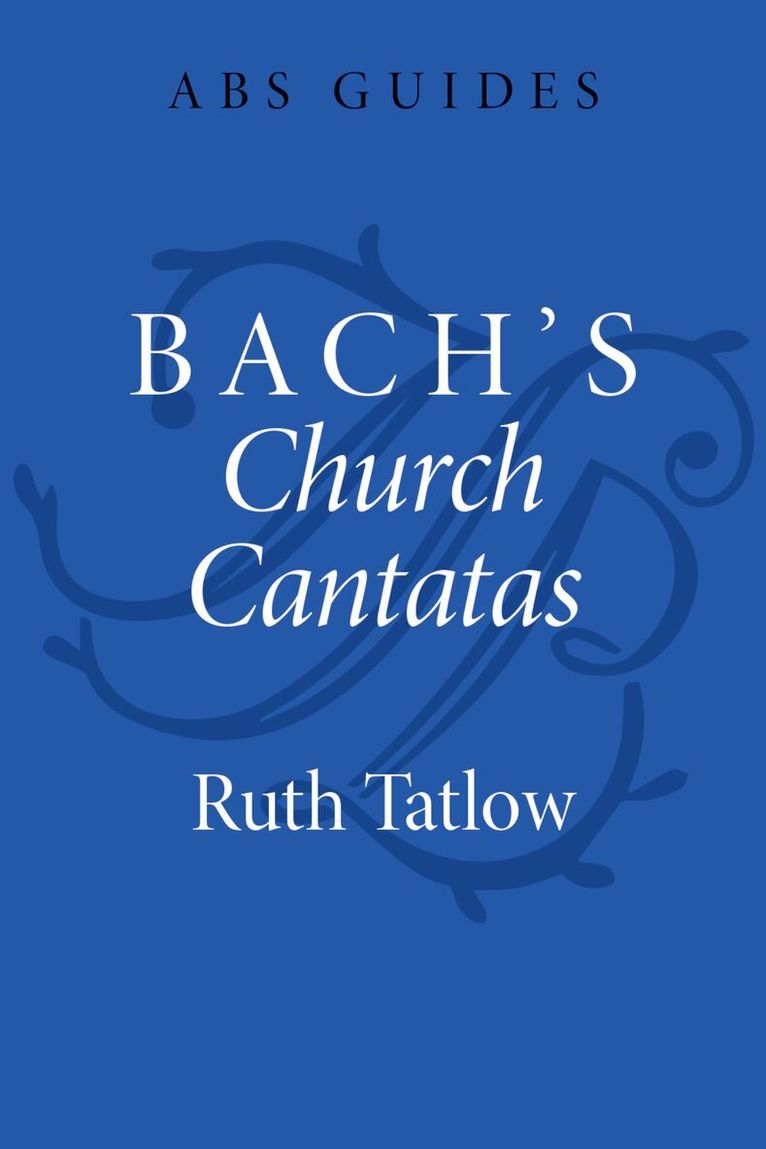
What is a cantata? How and why did Bach compose his cantatas? What did cantatas mean to Bach and what do they mean today? In Bach's Church Cantatas Ruth Tatlow addresses these questions through discussion of five of Bach's most beloved works enriched by newly researched insights that will intrigue both first-time and experienced listeners. With the overarching theme of Glory from the Gallery, this guide starts by introducing Bach's aims for his church cantatas. It examines the devotional content, the theology, and the poetic form of the cantata texts to help the reader appreciate Bach's musical responses. By analysing his choice of voices and instruments, compositional construction, structural symmetries, and other features in the music, Tatlow asks what significance these held for Bach, and how understanding this can help the listener of his music today. The text is illustrated by numerous rarely seen images from seventeenth- and early eighteenth-century sources. The book ends by reimagining the cantatas and their glories from galleries for all creeds and cultures.Written in an accessible style for both non-specialists and those already familiar with Bach, Bach's Church Cantatas uses new research and ways of listening to help us better understand and appreciate the variety of cantata styles and their relevance in the modern world beyond their original liturgical setting.
221 kr
Skickas
What is a cantata? How and why did Bach compose his cantatas? What did cantatas mean to Bach and what do they mean today? In Bach's Church Cantatas Ruth Tatlow addresses these questions through discussion of five of Bach's most beloved works enriched by newly researched insights that will intrigue both first-time and experienced listeners. With the overarching theme of Glory from the Gallery, this guide starts by introducing Bach's aims for his church cantatas. It examines the devotional content, the theology, and the poetic form of the cantata texts to help the reader appreciate Bach's musical responses. By analysing his choice of voices and instruments, compositional construction, structural symmetries, and other features in the music, Tatlow asks what significance these held for Bach, and how understanding this can help the listener of his music today. The text is illustrated by numerous rarely seen images from seventeenth- and early eighteenth-century sources. The book ends by reimagining the cantatas and their glories from galleries for all creeds and cultures.Written in an accessible style for both non-specialists and those already familiar with Bach, Bach's Church Cantatas uses new research and ways of listening to help us better understand and appreciate the variety of cantata styles and their relevance in the modern world beyond their original liturgical setting.
577 kr
Skickas inom 7-10 vardagar
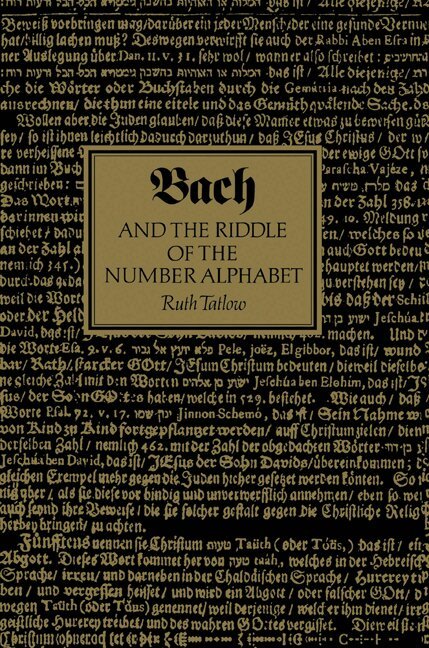
In 1947 the theologian and musicologist Friedrich Smend published a study which claimed that J. S. Bach regularly employed the natural-order number alphabet (A=1 to Z=24) in his works. Smend provided historical evidence and music examples to support his theory which demonstrated that by this means Bach incorporated significant words into his music, and provided himself with a symbolic compositional scheme. Since then many people have taken up Smend's theory, interpreting numbers of bars and notes in Bach scores according to the natural-order alphabet. By presenting a thorough survey of different number alphabets and their uses in seventeenth- and eighteenth-century Germany, Dr Tatlow investigates the plausibility of Smend's claims. Her new evidence fundamentally challenges Smend's conclusions and the book sounds a note of caution to all who continue to use his number-alphabet theory. Dr Tatlow's painstaking research will fascinate all those with an interest in the music of J. S. Bach and German Baroque culture, and will be of particular importance for music historians and analysts.
1 282 kr
Skickas inom 7-10 vardagar
In 1947 the theologian and musicologist Friedrich Smend published a study which claimed that J. S. Bach regularly employed the natural-order number alphabet (A=1 to Z=24) in his works. Smend provided historical evidence and music examples to support his theory which demonstrated that by this means Bach incorporated significant words into his music, and provided himself with a symbolic compositional scheme. Since then many people have taken up Smend's theory, interpreting numbers of bars and notes in Bach scores according to the natural-order alphabet. By presenting a thorough survey of different number alphabets and their uses in seventeenth- and eighteenth-century Germany, Dr Tatlow investigates the plausibility of Smend's claims. Her new evidence fundamentally challenges Smend's conclusions and the book sounds a note of caution to all who continue to use his number-alphabet theory. Dr Tatlow's painstaking research will fascinate all those with an interest in the music of J. S. Bach and German Baroque culture, and will be of particular importance for music historians and analysts.
1 621 kr
Skickas inom 7-10 vardagar
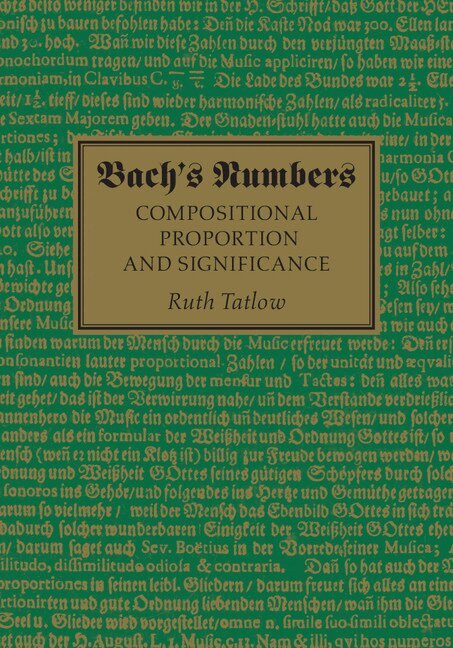
In eighteenth-century Germany the universal harmony of God's creation and the perfection of its proportions still held philosophical, moral and devotional significance. Reproducing proportions close to the unity (1:1) across compositions could render them beautiful, perfect and even eternal. Using the principles of her groundbreaking theory of proportional parallelism and the latest source study research, Ruth Tatlow reveals how Bach used the number of bars to create numerical perfection across his published collections, and explains why he did so. The first part of the book illustrates the wide-ranging application of belief in the unity, showing how planning a well-proportioned structure was a normal compositional procedure in Bach's time. In the second part Tatlow presents practical demonstrations of this in Bach's works, illustrating the layers of proportion that appear within a movement, a work, between two works in a collection, across a collection and between collections.
441 kr
Skickas inom 7-10 vardagar
In eighteenth-century Germany the universal harmony of God's creation and the perfection of its proportions still held philosophical, moral and devotional significance. Reproducing proportions close to the unity (1:1) across compositions could render them beautiful, perfect and even eternal. Using the principles of her groundbreaking theory of proportional parallelism and the latest source study research, Ruth Tatlow reveals how Bach used the number of bars to create numerical perfection across his published collections, and explains why he did so. The first part of the book illustrates the wide-ranging application of belief in the unity, showing how planning a well-proportioned structure was a normal compositional procedure in Bach's time. In the second part Tatlow presents practical demonstrations of this in Bach's works, illustrating the layers of proportion that appear within a movement, a work, between two works in a collection, across a collection and between collections.