Ryan Goodman - Böcker
Visar alla böcker från författaren Ryan Goodman. Handla med fri frakt och snabb leverans.
7 produkter
7 produkter
1 932 kr
Skickas inom 5-8 vardagar
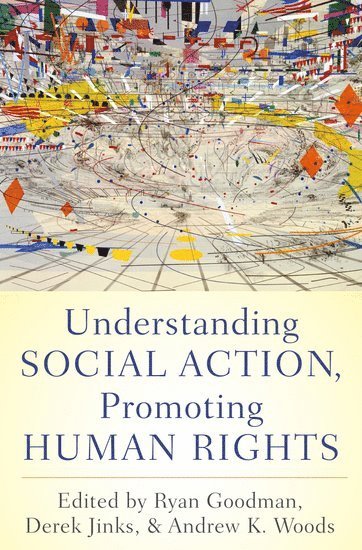
In Understanding Social Action, Promoting Human Rights, editors Ryan Goodman, Derek Jinks, and Andrew K. Woods bring together a stellar group of contributors from across the social sciences to apply a broad yet conceptually unified array of advanced social science research concepts to the study of human rights and human rights law. The book focus on three key methodological and substantive areas: actors, or social and political perspectives, including behavioral economics; communication, covering linguistics, media studies, and social entrepreneurship; and groups, via organizational theory, political economy, social movements, and complexity theory. Their goal is to provide a more comprehensive and more practical theory of social action, which necessarily requires a better understanding of individuals, organizations of individuals, and the ways in which both relate to other individuals and organizations.
549 kr
Skickas inom 5-8 vardagar
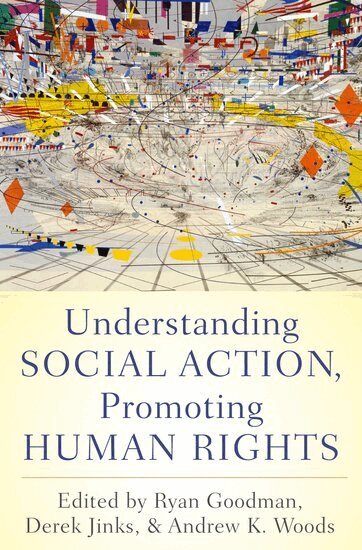
In Understanding Social Action, Promoting Human Rights, editors Ryan Goodman, Derek Jinks, and Andrew K. Woods bring together a stellar group of contributors from across the social sciences to apply a broad yet conceptually unified array of advanced social science research concepts to the study of human rights and human rights law. The book focus on three key methodological and substantive areas: actors, or social and political perspectives, including behavioral economics; communication, covering linguistics, media studies, and social entrepreneurship; and groups, via organizational theory, political economy, social movements, and complexity theory. Their goal is to provide a more comprehensive and more practical theory of social action, which necessarily requires a better understanding of individuals, organizations of individuals, and the ways in which both relate to other individuals and organizations.
1 657 kr
Skickas inom 5-8 vardagar
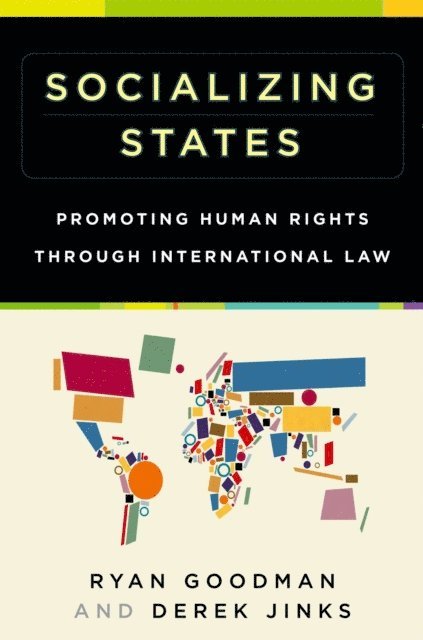
The role of international law in global politics is as poorly understood as it is important. But how can the international legal regime encourage states to respect human rights? Given that international law lacks a centralized enforcement mechanism, it is not obvious how this law matters at all, and how it might change the behavior or preferences of state actors. In Socializing States, Ryan Goodman and Derek Jinks contend that what is needed is a greater emphasis on the mechanisms of law's social influence--and the micro-processes that drive each mechanism. Such an emphasis would make clearer the micro-foundations of international law. This book argues for a greater specification and a more comprehensive inventory of how international law influences relevant actors to improve human rights conditions. Substantial empirical evidence suggests three conceptually distinct mechanisms whereby states and institutions might influence the behavior of other states: material inducement, persuasion, and what Goodman and Jinks call acculturation. The latter includes social and cognitive forces such as mimicry, status maximization, prestige, and identification. The book argues that (1) acculturation is a conceptually distinct, empirically documented social process through which state behavior is influenced; and (2) acculturation-based approaches might occasion a rethinking of fundamental regime design problems in human rights law. This exercise not only allows for reexamination of policy debates in human rights law; it also provides a conceptual framework for assessing the costs and benefits of various design principles. While acculturation is not necessarily the most important or most desirable approach to promoting human rights, a better understanding of all three mechanisms is a necessary first step in the development of an integrated theory of international law's influence. Socializing States provides the critical framework to improve our understanding of how norms operate in international society, and thereby improve the capacity of global and domestic institutions to build cultures of human rights,
391 kr
Skickas inom 5-8 vardagar
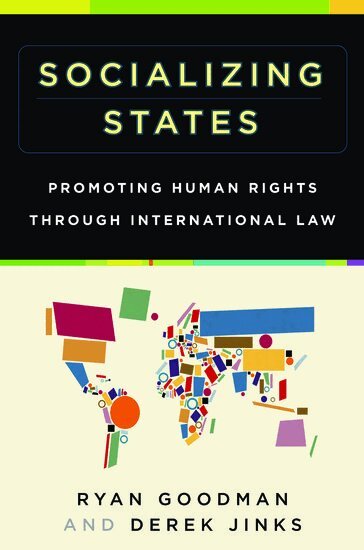
The role of international law in global politics is as poorly understood as it is important. But how can the international legal regime encourage states to respect human rights? Given that international law lacks a centralized enforcement mechanism, it is not obvious how this law matters at all, and how it might change the behavior or preferences of state actors. In Socializing States, Ryan Goodman and Derek Jinks contend that what is needed is a greater emphasis on the mechanisms of law's social influence--and the micro-processes that drive each mechanism. Such an emphasis would make clearer the micro-foundations of international law. This book argues for a greater specification and a more comprehensive inventory of how international law influences relevant actors to improve human rights conditions. Substantial empirical evidence suggests three conceptually distinct mechanisms whereby states and institutions might influence the behavior of other states: material inducement, persuasion, and what Goodman and Jinks call acculturation. The latter includes social and cognitive forces such as mimicry, status maximization, prestige, and identification. The book argues that (1) acculturation is a conceptually distinct, empirically documented social process through which state behavior is influenced; and (2) acculturation-based approaches might occasion a rethinking of fundamental regime design problems in human rights law. This exercise not only allows for reexamination of policy debates in human rights law; it also provides a conceptual framework for assessing the costs and benefits of various design principles. While acculturation is not necessarily the most important or most desirable approach to promoting human rights, a better understanding of all three mechanisms is a necessary first step in the development of an integrated theory of international law's influence. Socializing States provides the critical framework to improve our understanding of how norms operate in international society, and thereby improve the capacity of global and domestic institutions to build cultures of human rights,
788 kr
Skickas inom 5-8 vardagar
International Human Rights is the definitive work on the subject area providing its reader with a comprehensive analysis of this wide and diverse subject area. A successor to the widely acclaimed International Human Rights in Context, this book is written by Philip Alston and Ryan Goodman who are both world-leading human rights scholars. They have chosen a wide selection of materials from primary and secondary materials to demonstrate and illuminate key themes and carefully guide the reader through each extract with thoughtful and lucid commentary.
Human Rights, State Compliance, and Social Change
Assessing National Human Rights Institutions
Häftad, Engelska, 2011
360 kr
Skickas inom 7-10 vardagar
National Human Rights Institutions (NHRIs) - human rights commissions and ombudsmen - have gained recognition as a possible missing link in the transmission and implementation of international human rights norms at the domestic level. They are also increasingly accepted as important participants in global and regional forums where international norms are produced. By collecting innovative work from experts spanning international law, political science, sociology and human rights practice, this book critically examines the significance of this relatively new class of organizations. It focuses, in particular, on the prospects of these institutions to effectuate state compliance and social change. Consideration is given to the role of NHRIs in delegitimizing - though sometimes legitimizing - governments' poor human rights records and in mobilizing - though sometimes demobilizing - civil society actors. The volume underscores the broader implications of such cross-cutting research for scholarship and practice in the fields of human rights and global affairs in general.
Human Rights, State Compliance, and Social Change
Assessing National Human Rights Institutions
Inbunden, Engelska, 2011
797 kr
Skickas inom 7-10 vardagar
National Human Rights Institutions (NHRIs) - human rights commissions and ombudsmen - have gained recognition as a possible missing link in the transmission and implementation of international human rights norms at the domestic level. They are also increasingly accepted as important participants in global and regional forums where international norms are produced. By collecting innovative work from experts spanning international law, political science, sociology and human rights practice, this book critically examines the significance of this relatively new class of organizations. It focuses, in particular, on the prospects of these institutions to effectuate state compliance and social change. Consideration is given to the role of NHRIs in delegitimizing - though sometimes legitimizing - governments' poor human rights records and in mobilizing - though sometimes demobilizing - civil society actors. The volume underscores the broader implications of such cross-cutting research for scholarship and practice in the fields of human rights and global affairs in general.