Sabine Broeck – författare
Visar alla böcker från författaren Sabine Broeck. Handla med fri frakt och snabb leverans.
5 produkter
5 produkter
Inbunden, Engelska, 2018
1 206 kr
Skickas inom 5-8 vardagar
An anti-racist critique of gender studies as a field.In Gender and the Abjection of Blackness, Sabine Broeck argues that gender studies as a mostly white field has taken insufficient account of Black contributions, and that more than being an ethnocentric limitation or blind spot, this has represented a structural anti-Blackness in the field. Engaging with the work of Black feminist authors Sylvia Wynter, Hortense Spillers, and Saidiya Hartman, Broeck critiques a selection of canonical white gender studies texts to make this case. The book discusses this problem at the core of gender theory as a practice which Broeck terms enslavism-the ongoing abjection of Black life which Hartman has called the afterlife of slavery. This has become manifest in the repetitive employment of the "woman as slave" metaphor so central to gender theory, as well as in recent theoretical mutations of these anti-Black politics of analogy. It is the structural separation of Blackness from gender that has functioned over and again as the scaffold enabling white women's struggles for successful recognition of equality and subjectivity in the human world as we know it. This book challenges white readers to rethink their own untroubled identification with gender theory, and it provides all readers with a white feminist theorist's sophisticated theoretical and self-critical scholarly account of her own reckoning with and learning in dialogue from Black feminism's critique.
Häftad, Engelska, 2019
435 kr
Skickas inom 5-8 vardagar
An anti-racist critique of gender studies as a field.In Gender and the Abjection of Blackness, Sabine Broeck argues that gender studies as a mostly white field has taken insufficient account of Black contributions, and that more than being an ethnocentric limitation or blind spot, this has represented a structural anti-Blackness in the field. Engaging with the work of Black feminist authors Sylvia Wynter, Hortense Spillers, and Saidiya Hartman, Broeck critiques a selection of canonical white gender studies texts to make this case. The book discusses this problem at the core of gender theory as a practice which Broeck terms enslavism-the ongoing abjection of Black life which Hartman has called the afterlife of slavery. This has become manifest in the repetitive employment of the "woman as slave" metaphor so central to gender theory, as well as in recent theoretical mutations of these anti-Black politics of analogy. It is the structural separation of Blackness from gender that has functioned over and again as the scaffold enabling white women's struggles for successful recognition of equality and subjectivity in the human world as we know it. This book challenges white readers to rethink their own untroubled identification with gender theory, and it provides all readers with a white feminist theorist's sophisticated theoretical and self-critical scholarly account of her own reckoning with and learning in dialogue from Black feminism's critique.
Häftad, Engelska, 2015
370 kr
Skickas inom 5-8 vardagar
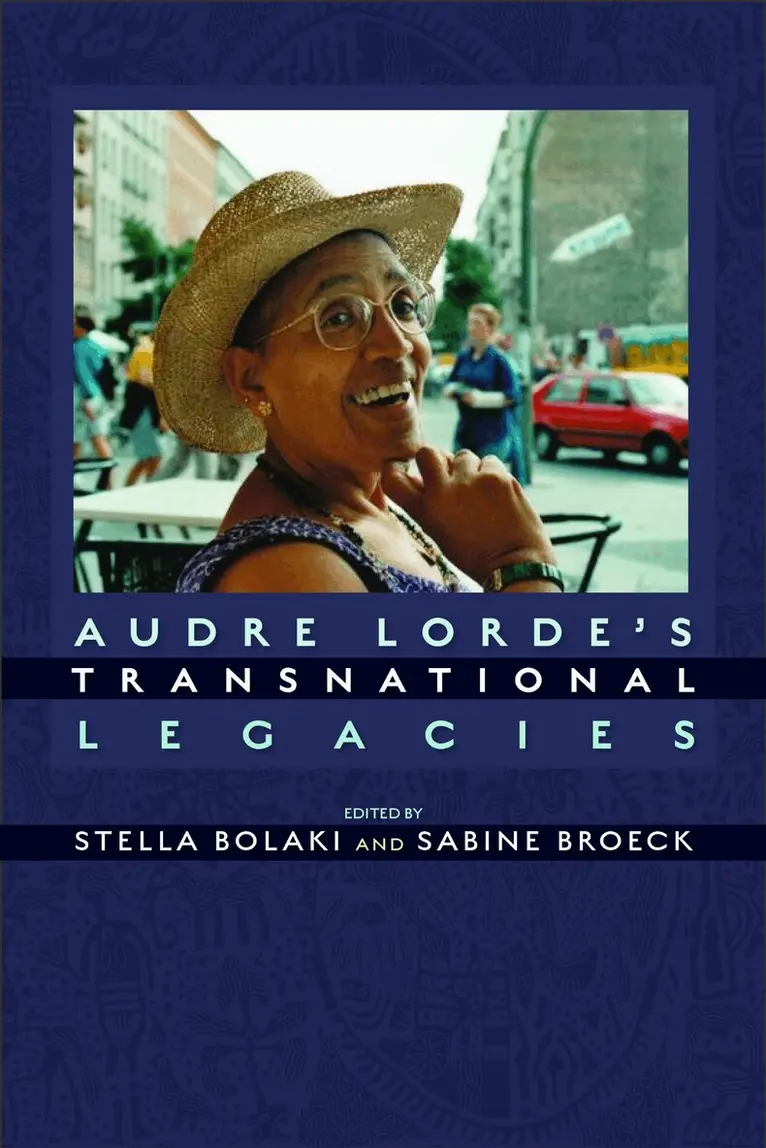
Among the most influential and insightful thinkers of her generation, Audre Lorde (1934--1992) inspired readers and activists through her poetry, autobiography, essays, and her political action. Most scholars have situated her work within the context of the women's, gay and lesbian, and black civil rights movements within the United States. However, Lorde forged coalitions with women in Europe, the Caribbean, Canada, Australia, New Zealand, and Africa, and twenty years after her passing, these alliances remain largely undocumented and unexplored. Audre Lorde's Transnational Legacies is the first book to systematically document and thoroughly investigate Lorde's influence beyond the United States. Arranged in three thematically interrelated sections -- Archives, Connections, and Work -- the volume brings together scholarly essays, interviews, Lorde's unpublished speech about Europe, and personal reflections and testimonials from key figures throughout the world. Using a range of interdisciplinary approaches, contributors assess the reception, translation, and circulation of Lorde's writing and activism within different communities, audiences, and circles. They also shed new light on the work Lorde inspired across disciplinary borders. In addition the volume editors, contributors include Sarah Cefai, Cassandra Ellerbe-Dueck, Paul M. Farber, Tiffany N. Florvil, Katharina Gerund, Alexis Pauline Gumbs, Gloria Joseph, Jackie Kay, Marion Kraft, Christiana Lambrinidis, Zeedah Meierhofer-Mangeli, Rina Nissim, Chantal Oakes, Lester C. Olson, Pratibha Parmar, Peggy Piesche, Dagmar Schultz, Tamara Lea Spira, and Gloria Wekker.
Del 2 - FORECAAST (Forum for European Contributions to African American Studies)
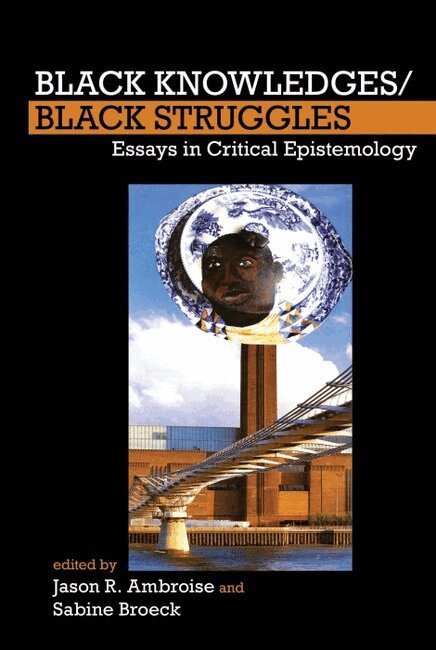
Black Knowledges/Black Struggles
Essays in Critical Epistemology
Inbunden, Engelska, 2015
2 180 kr
Skickas inom 5-8 vardagar
Black Knowledges/Black Struggles: Essays in Critical Epistemology explores the central but often critically neglected role of knowledge and epistemic formations within social movements for Black “freedom” and emancipation. The collection examines the structural subjugation and condemnation of Black African and Afro-mixed descent peoples globally within the past 500 years of trans-Atlantic societies of Western modernity, doing so in connection to the population’s dehumanization and/or invisibilization within various epistemic formations of the West. In turn, the collection foregrounds the extent to which the ending of this imposed subjugation/condemnation has necessarily entailed critiques of, challenges to, and counter-formulations against and beyond knowledge and epistemic formations that have worked to “naturalize” this condition within the West’s various socio-human formations. The chapters in the collection engage primarily with knowledge formations and practices generated from within the discourse of “race,” but also doing so in relation to other intersectional socio-human discourses of Western modernity. They engage as well the critiques, challenges, and counter-formulations put forth by specific individuals, schools, movements, and/or institutions – historic and contemporary – of the Black world. Through these examinations, the contributors either implicitly point towards, or explicitly take part in, the formation of a new kind of critical – but also emancipatory – epistemology. What emerges is a novel and more comprehensive view of what it means to be human, a formulation that can aid in the unlocking and fashioning of species-oriented ways of “knowing” and “being” much-needed within the context of ending the continued overall global subjugation/condemnation of Black peoples, as a central part of ending the “global problematique” that confronts humankind as a whole.
Del 2 - FORECAAST (Forum for European Contributions to African American Studies)
Black Knowledges/Black Struggles
Essays in Critical Epistemology
Häftad, Engelska, 2021
556 kr
Skickas inom 5-8 vardagar
Black Knowledges/Black Struggles: Essays in Critical Epistemology explores the central but often critically neglected role of knowledge and epistemic formations within social movements for Black “freedom” and emancipation. The collection examines the structural subjugation and condemnation of Black African and Afro-mixed descent peoples globally within the past 500 years of trans-Atlantic societies of Western modernity, doing so in connection to the population’s dehumanization and/or invisibilization within various epistemic formations of the West. In turn, the collection foregrounds the extent to which the ending of this imposed subjugation/condemnation has necessarily entailed critiques of, challenges to, and counter-formulations against and beyond knowledge and epistemic formations that have worked to “naturalize” this condition within the West’s various socio-human formations. The chapters in the collection engage primarily with knowledge formations and practices generated from within the discourse of “race,” but also doing so in relation to other intersectional socio-human discourses of Western modernity. They engage as well the critiques, challenges, and counter-formulations put forth by specific individuals, schools, movements, and/or institutions – historic and contemporary – of the Black world. Through these examinations, the contributors either implicitly point towards, or explicitly take part in, the formation of a new kind of critical – but also emancipatory – epistemology. What emerges is a novel and more comprehensive view of what it means to be human, a formulation that can aid in the unlocking and fashioning of species-oriented ways of “knowing” and “being” much-needed within the context of ending the continued overall global subjugation/condemnation of Black peoples, as a central part of ending the “global problematique” that confronts humankind as a whole.