Sahoko Kaji - Böcker
Visar alla böcker från författaren Sahoko Kaji. Handla med fri frakt och snabb leverans.
6 produkter
6 produkter
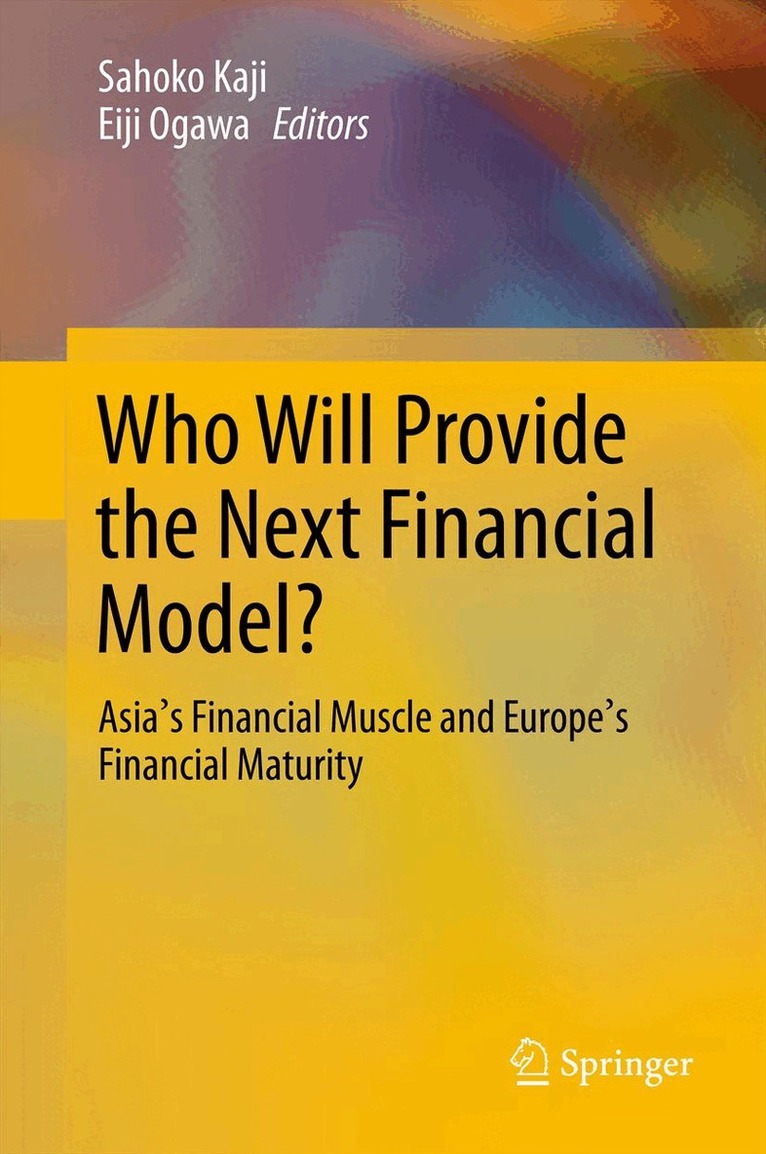
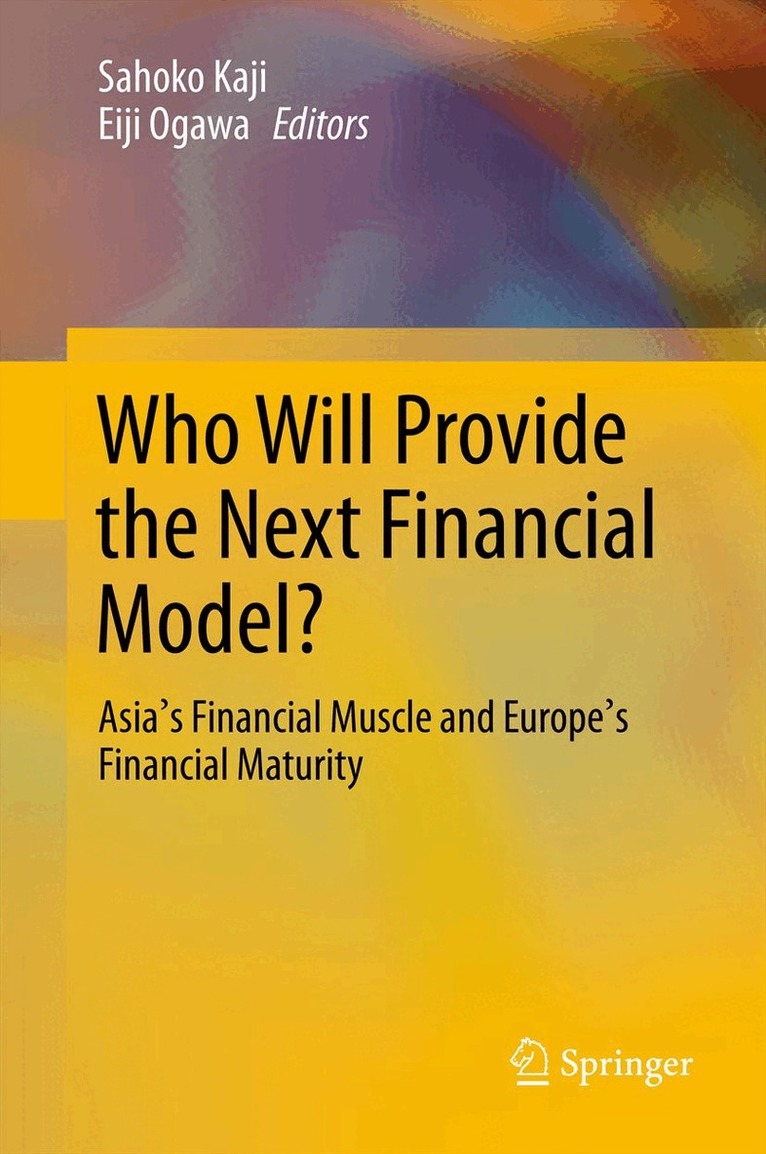
Who Will Provide the Next Financial Model?
Asia's Financial Muscle and Europe's Financial Maturity
Inbunden, Engelska, 2013
1 099 kr
Skickas inom 10-15 vardagar
During the past 4 years, faith in the present financial model has been shaken in terms of policy, regulation, the financial sector itself, and exchange-rate regimes. Past and present policies of the world’s most respected central banks have come under fire. Regulations that defined the system have undergone major reviews. Complicated financial instruments that provided new ways of financial intermediation have been exposed as culprits behind the financial meltdown. After 10 years of success, Europe’s single currency is under threat. In short, the established financial model not only has been unable to prevent the crisis but, arguably, has been a cause of it.There is no longer one obvious model that meets all needs. The burst of Japan’s bubble was followed by two “lost decades”. Before a contrite Japan completely adopted Western ways of finance, the “Lehman shock” hit, followed by the euro crisis. Monetary policy, financial regulation and the state of the financial sector all must be reconsidered. Currencies and exchange rates make up another important aspect of finance. If the Western model of finance is discredited, does that mean the dominance of Western currencies is also eroded? What does the crisis in the euro area tell us about exchange rate regimes in general?Clearly, a new model is needed, one that is conducive to both stability and prosperity. But who will provide it? This volume records the cumulative results of three EU Studies Institute (EUSI) conferences that have addressed these issues, and examines how Asia and Europe compare in the quest for the next financial model. While many books on Europe and Asia focus on integration and what Asia can learn from Europe, this book emphasizes mutual lessons in the common search for a new model.EU Studies InstituteThe EU Studies Institute in Tokyo (EUSI) was launched on 1 April 2009 as a consortium comprising Hitotsubashi University, Tsuda College, andKeio University. The Institute is sponsored by the European Commission for a four-and-a-half-year period. As a centre for academic education, research and outreach, it aims to strengthen EU–Japan relations. Details are at http://eusi.jp/content_en/
1 099 kr
Skickas inom 10-15 vardagar
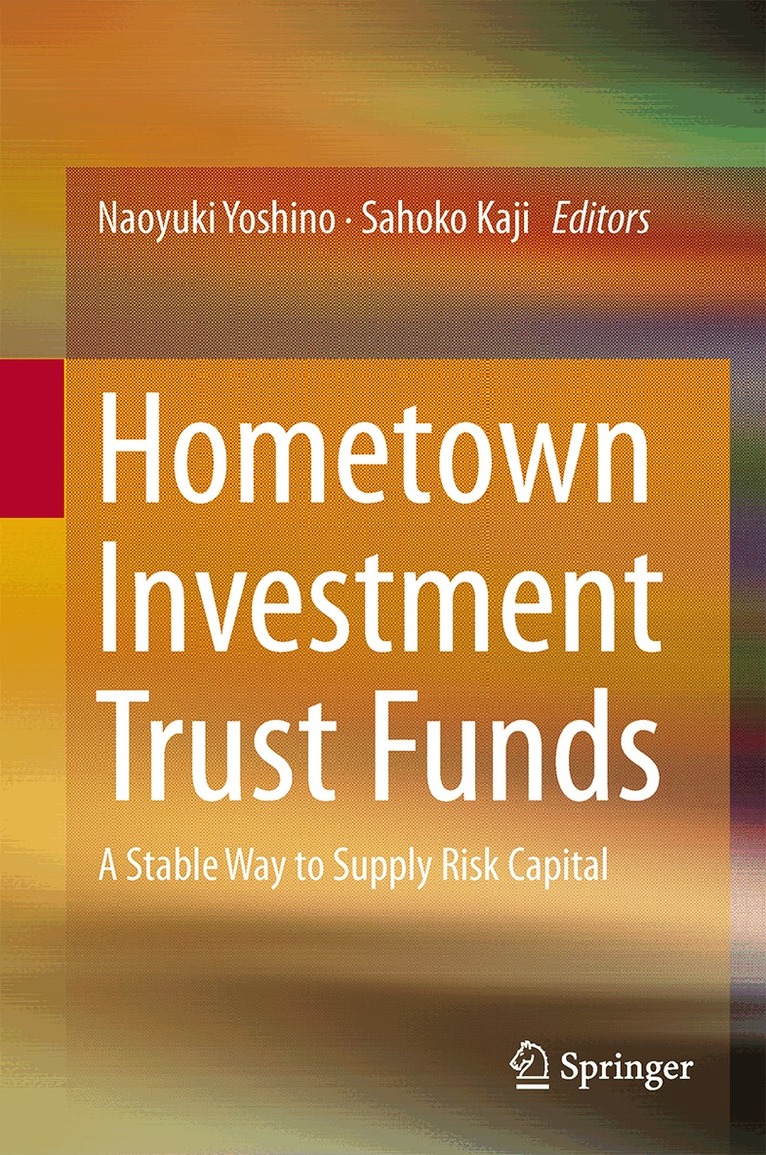
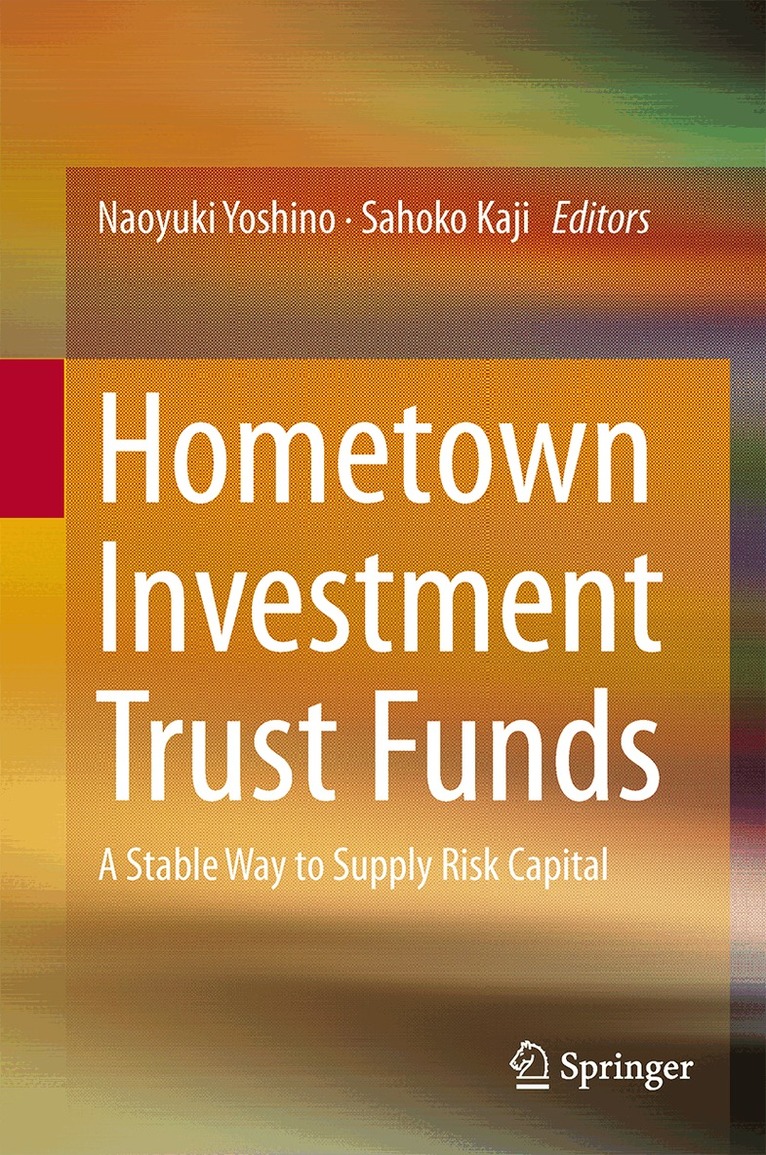
This book records the first success stories of a new form of financial intermediation, the hometown investment fund, that has become a national strategy in Japan, partly to meet the need to finance small and medium-sized enterprises (SMEs) after the devastating earthquake and tsunami in March 2011.The hometown investment fund has three main advantages. First, it contributes to financial market stability by lowering information asymmetry. Individual households and firms have direct access to information about the borrowing firms, mainly SMEs, that they lend to. Second, it is a stable source of risk capital. The fund is project driven. Firms and households decide to invest by getting to know the borrowers and their projects. In this way the fund distributes risk but not so that it renders risk intractable, which was the problem with the “originate and distribute” model. Third, it contributes to economic recovery by connecting firms and households with SMEs that are worthy of their support. It also creates employment opportunities, at the SMEs as well as for the pool of retirees from financial institutions who can help assess the projects.Introduction of the hometown investment fund has huge global implications. The world is seeking a method of financial intermediation that minimizes information asymmetry, distributes risk without making it opaque, and contributes to economic recovery. Funds similar to Japan’s hometown investment fund can succeed in all three ways. After all, the majority of the world’s businesses are SMEs. The first chapter explains the theory behind this method, and the following chapters relate success stories from Japan and other parts of Asia. This book should encourage policymakers, economists, lenders, and borrowers, especially in developing countries, to adopt this new form of financial intermediation, thus contributing to global economic stability.
Who Will Provide the Next Financial Model?
Asia's Financial Muscle and Europe's Financial Maturity
Häftad, Engelska, 2015
1 099 kr
Skickas inom 10-15 vardagar
During the past 4 years, faith in the present financial model has been shaken in terms of policy, regulation, the financial sector itself, and exchange-rate regimes. Past and present policies of the world’s most respected central banks have come under fire. Regulations that defined the system have undergone major reviews. Complicated financial instruments that provided new ways of financial intermediation have been exposed as culprits behind the financial meltdown. After 10 years of success, Europe’s single currency is under threat. In short, the established financial model not only has been unable to prevent the crisis but, arguably, has been a cause of it.There is no longer one obvious model that meets all needs. The burst of Japan’s bubble was followed by two “lost decades”. Before a contrite Japan completely adopted Western ways of finance, the “Lehman shock” hit, followed by the euro crisis. Monetary policy, financial regulation and the state of the financial sector all must be reconsidered. Currencies and exchange rates make up another important aspect of finance. If the Western model of finance is discredited, does that mean the dominance of Western currencies is also eroded? What does the crisis in the euro area tell us about exchange rate regimes in general?Clearly, a new model is needed, one that is conducive to both stability and prosperity. But who will provide it? This volume records the cumulative results of three EU Studies Institute (EUSI) conferences that have addressed these issues, and examines how Asia and Europe compare in the quest for the next financial model. While many books on Europe and Asia focus on integration and what Asia can learn from Europe, this book emphasizes mutual lessons in the common search for a new model.EU Studies InstituteThe EU Studies Institute in Tokyo (EUSI) was launched on 1 April 2009 as a consortium comprising Hitotsubashi University, Tsuda College, andKeio University. The Institute is sponsored by the European Commission for a four-and-a-half-year period. As a centre for academic education, research and outreach, it aims to strengthen EU–Japan relations. Details are at http://eusi.jp/content_en/
1 099 kr
Skickas inom 10-15 vardagar
This book records the first success stories of a new form of financial intermediation, the hometown investment fund, that has become a national strategy in Japan, partly to meet the need to finance small and medium-sized enterprises (SMEs) after the devastating earthquake and tsunami in March 2011.The hometown investment fund has three main advantages. First, it contributes to financial market stability by lowering information asymmetry. Individual households and firms have direct access to information about the borrowing firms, mainly SMEs, that they lend to. Second, it is a stable source of risk capital. The fund is project driven. Firms and households decide to invest by getting to know the borrowers and their projects. In this way the fund distributes risk but not so that it renders risk intractable, which was the problem with the “originate and distribute” model. Third, it contributes to economic recovery by connecting firms and households with SMEs that are worthy of their support. It also creates employment opportunities, at the SMEs as well as for the pool of retirees from financial institutions who can help assess the projects.Introduction of the hometown investment fund has huge global implications. The world is seeking a method of financial intermediation that minimizes information asymmetry, distributes risk without making it opaque, and contributes to economic recovery. Funds similar to Japan’s hometown investment fund can succeed in all three ways. After all, the majority of the world’s businesses are SMEs. The first chapter explains the theory behind this method, and the following chapters relate success stories from Japan and other parts of Asia. This book should encourage policymakers, economists, lenders, and borrowers, especially in developing countries, to adopt this new form of financial intermediation, thus contributing to global economic stability.
1 318 kr
Skickas inom 10-15 vardagar
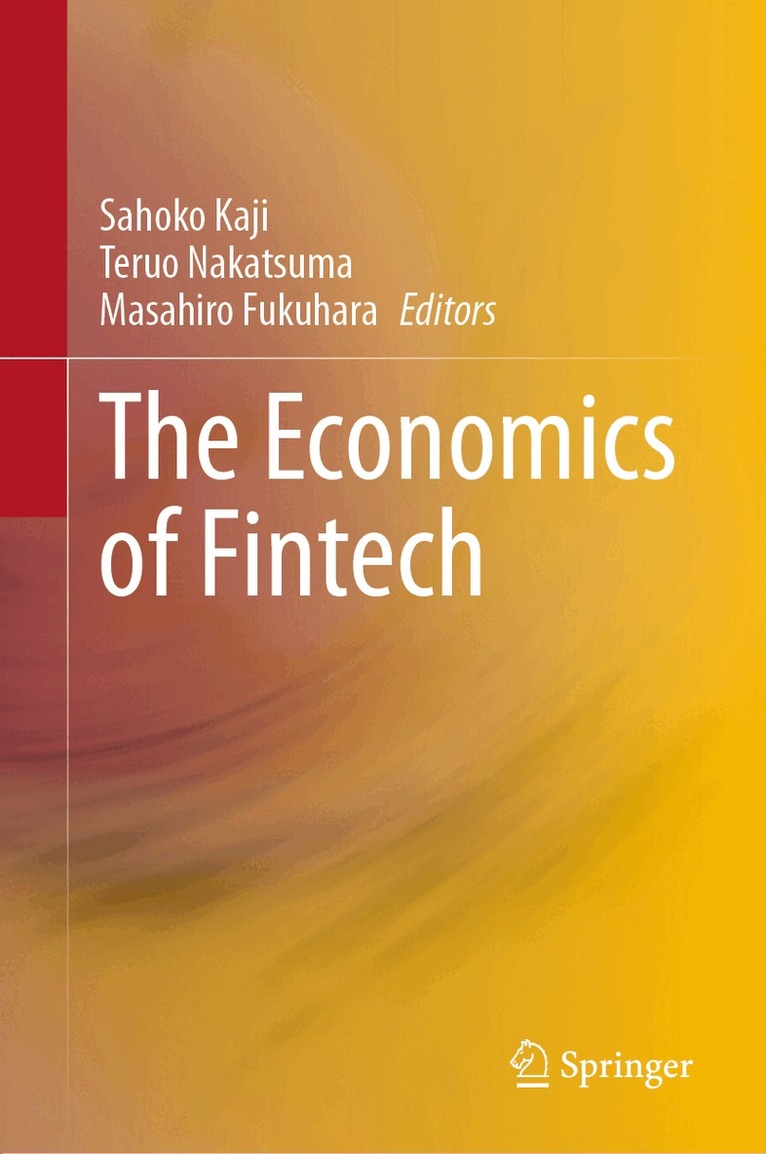
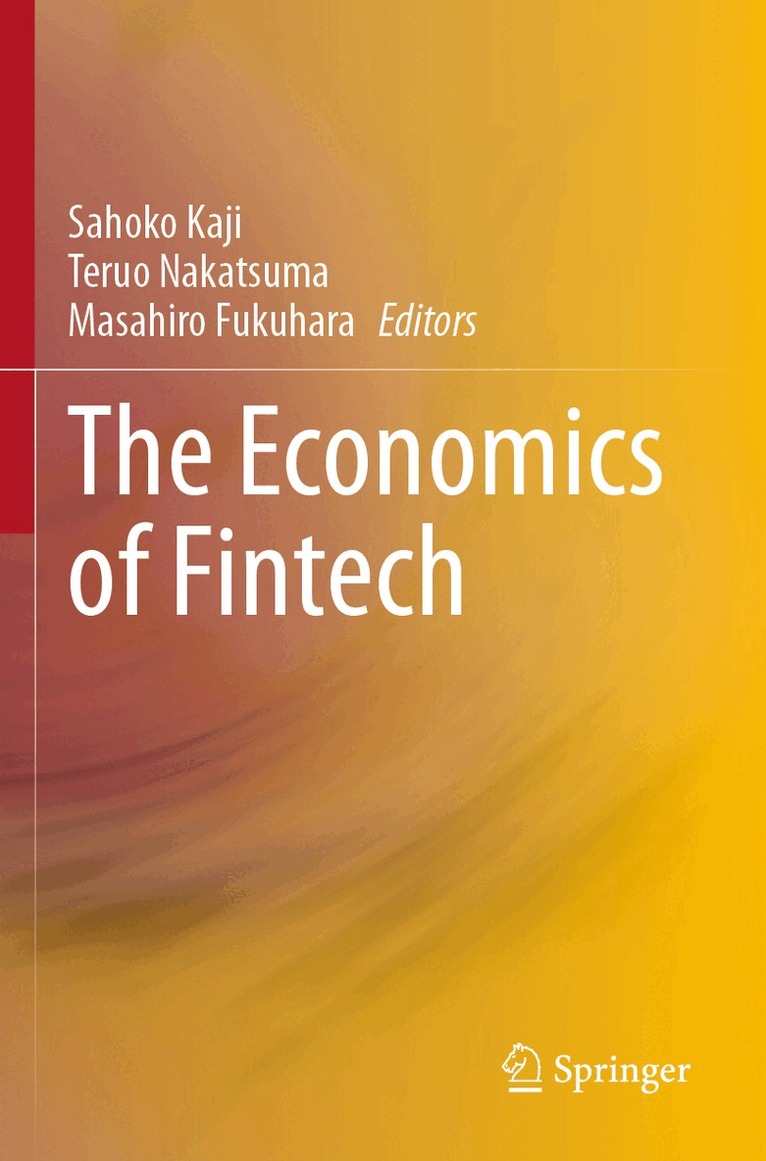
This book is a collection of academic lectures given on fintech, a topic that has been written about extensively but only from a business or technological point of view.
1 318 kr
Skickas inom 10-15 vardagar
This book is a collection of academic lectures given on fintech, a topic that has been written about extensively but only from a business or technological point of view.