Saira Mohamed – författare
Visar alla böcker från författaren Saira Mohamed. Handla med fri frakt och snabb leverans.
4 produkter
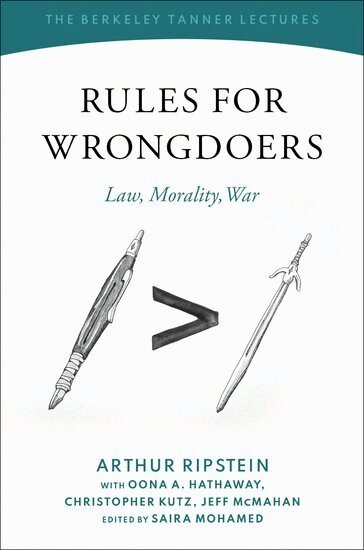
Rules for Wrongdoers
Law, Morality, War
Av Arthur Ripstein, Saira Mohamed
Inbunden, 2021
543 kr
Lägg i varukorg
Arthur Ripstein's lectures focus on the two bodies of rules governing war: the jus ad bellum, which regulates resort to armed force, and the jus in bello, which sets forth rules governing the conduct of armed force and applies equally to all parties. Ripstein argues that recognizing both sets of …
Rules for Wrongdoers
Law, Morality, War
Av Arthur Ripstein, Saira Mohamed
E-bok, 2021
391 kr
Lägg i varukorg
Arthur Ripstein''s lectures focus on the two bodies of rules governing war: the jus ad bellum , which regulates resort to armed force, and the jus in bello , which sets forth rules governing the conduct of armed force and applies equally to all parties. Ripstein argues that recognizing both sets of …
Rules for Wrongdoers
Law, Morality, War
Av Arthur Ripstein, Saira Mohamed
E-bok, 2021
391 kr
Lägg i varukorg
Arthur Ripstein''s lectures focus on the two bodies of rules governing war: the jus ad bellum , which regulates resort to armed force, and the jus in bello , which sets forth rules governing the conduct of armed force and applies equally to all parties. Ripstein argues that recognizing both sets of …
What a Country Owes Its Soldiers
Inbunden, 2026
233 kr
Kommande
A clarion call to recognize soldiers’ rights, arguing that volunteering to fight and die for one’s country does not mean consenting to exploitation in the process.American leaders endlessly profess their admiration for military service members. But these effusive declarations hardly comport with …