Sally E. Findley - Böcker
Visar alla böcker från författaren Sally E. Findley. Handla med fri frakt och snabb leverans.
3 produkter
3 produkter
796 kr
Skickas inom 5-8 vardagar
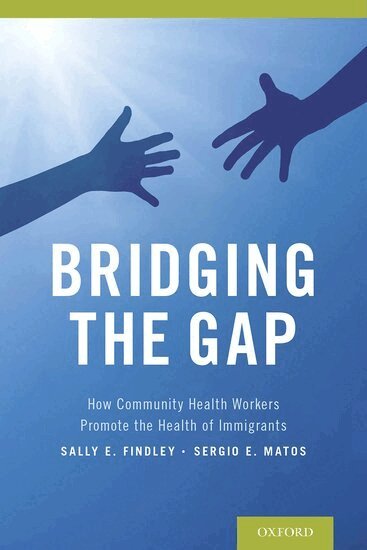
Immigrants living in US cities face myriad obstacles to accessing quality health care. This inequitable access to care is compounded by the risk of chronic disease accompanying the stress, strain, and lifestyle changes that can come with life in a new country. Bridging the Gap details the role, lessons, and effectiveness of community health workers (CHWs) in bringing health care to underserved immigrant communities. Combining education, advocacy, and local cultural acumen, CHWs have proven successful in the United States and abroad, improving community health and establishing an evidence base for how CHW programs can work for immigrants. Based on a decade of in-depth evaluations from several immigrant health programs in New York City with complementary interviews with dozens of immigrants and CHWs, Bridging the Gap offers insights into how CHWs help immigrants overcome the obstacles to health care. The authors carefully distill first-hand lessons into recommendations for best practices in developing and utilizing effective CHW programs--insights that will be immediately useful to any community group, municipal agency, or health care organization. Bridging the Gap provides a workable antidote to the seemingly intractable problems faced by cities everywhere in the pursuit of maintaining and maximizing immigrant health. It is a hugely valuable entry in burgeoning field that will be central to the next century of urban public health.
2 088 kr
Skickas inom 10-15 vardagar
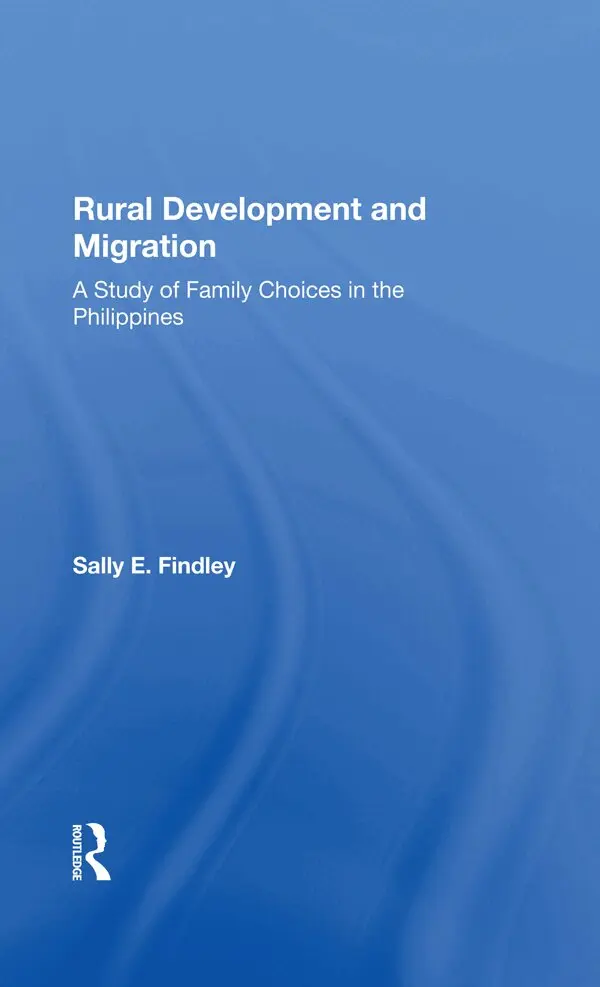
Perhaps because I grew up on a farm in Ohio, I have long been interested in rural development. Although I fll'St became a migrant at the age of 17 when I left the farm to continue my studies in a city college, I was not aware of the relation between rural development and migration until many years later when I began studying patterns of urban and rural poverty. This research has grown out of my continuing investigation of the ways that migration .has been seen as both a response to chronic conditions of rural poverty and a factor potentially exacerbating urban poverty conditions. If governments wanted to deal with urban poverty, they would want to restrict urban in-migration, yet if they reduced urban in-migration, this would remove one of the important means available to persons seeking to raise themselves out of rural impoverishment. This would clearly be a no-win situation for the rural poor; the only way to deal fairly with both urban and rural poverty would be to foster socio-economic development of rural areas. Thus, I became interested in studying the patterns of rural development which actually have had an effect on the migration decisions of rural families.
617 kr
Skickas inom 10-15 vardagar
Perhaps because I grew up on a farm in Ohio, I have long been interested in rural development. Although I fll'St became a migrant at the age of 17 when I left the farm to continue my studies in a city college, I was not aware of the relation between rural development and migration until many years later when I began studying patterns of urban and rural poverty. This research has grown out of my continuing investigation of the ways that migration .has been seen as both a response to chronic conditions of rural poverty and a factor potentially exacerbating urban poverty conditions. If governments wanted to deal with urban poverty, they would want to restrict urban in-migration, yet if they reduced urban in-migration, this would remove one of the important means available to persons seeking to raise themselves out of rural impoverishment. This would clearly be a no-win situation for the rural poor; the only way to deal fairly with both urban and rural poverty would be to foster socio-economic development of rural areas. Thus, I became interested in studying the patterns of rural development which actually have had an effect on the migration decisions of rural families.