Sam Andrew – författare
15 kr
Läs direkt efter köp
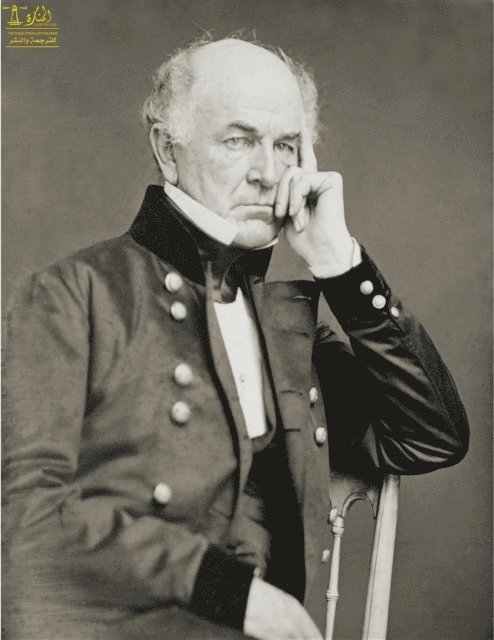
Colonel Ethan Allen, the author of Oracles of Reason, was the son of Joseph Allen, a native of Coventry, Connecticut, a farmer in moderate circumstances. He afterwards resided in Litchfield, where Ethan was born in the year 1739. The family consisted of eight children, of whom our author was the eldest. But few incidents connected with his early life are known. We are apprised, however, that notwithstanding his education was very limited, his ambition to prove himself worthy of that attention which superior intellect ever commands, induced him diligently to explore every subject that came under his notice. A stranger to fear, his opinions were ever given without disguise or hesitation; and an enemy to oppression, he sought every opportunity to redress the wrongs of the oppressed.
15 kr
Läs direkt efter köp
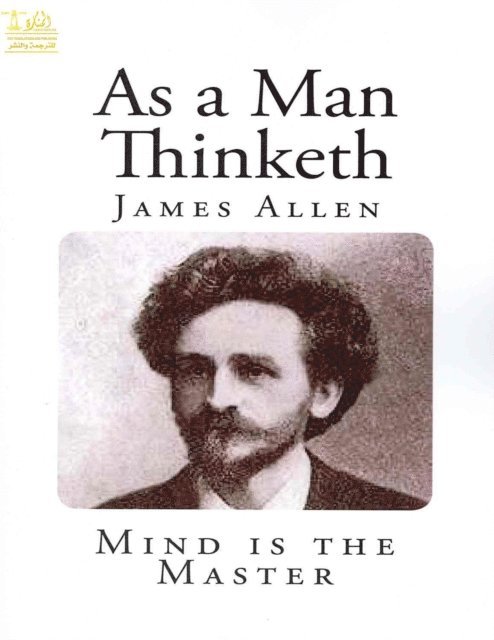
James Allen was a philosophical writer and poet. He is best known for his book, As a Man Thinketh. Allen wrote about complex subjects such as faith, destiny, love, patience, and religion but had the unique ability of explaining these subjects in a way that is simple and easy to comprehend. He often wrote about cause and effect, sowing and reaping, as well as overcoming sadness, sorrow, and grief.
Birth and Early Years
James Allen was born on November 28th, 1864 at 21 Brunswick Street, in Leicester, England to William (a Stocking Framework Knitter) and Martha (whose surname was Whalton or Whotton). His mother was 37 years old when she gave birth to him. Among his siblings, he had two younger brothers, George and Thomas. Thomas was also an author and contributed many articles to Allen's monthly journal, The Light of Reason.
When Allen was 15 and after hardships at his trade in England, his father took what money he had and left for the United States with the intent to start a new life for his family there. Two days after arriving in New York, his father died. It is unclear exactly how his father passed but most accounts point to murder.
The death of his father caused Allen to leave school and begin work. James worked as framework knitter as his father did. At this time they lived at 75 Charnwood Street in Leicester.
Although working many hours, Allen continued to read and study. It was around this time that he began reading Shakespeare and at about age 24 he read The Light of Asia. This book acted as spiritual awakener for Allen and started him on his path toward "perfect peace". Allen's parents are thought to be Methodists. It is clear that Allen strayed from his parent's religion, drawing inspiration from many religions and committing to no denomination.
Wife
Lily Louisa Oram was born on December 30th, 1867 at Burrishoole, Eire to John and Jane Oram (whose surname was Talbot). She spent much of her childhood in England and Ireland. In her early teens, her family settled in Somerset. She was a Lieutenant in the Salvation Army for a short time and was also a member of the Bible Christian Church where she served as a local preacher. She spent some time working at the Jubilee Church in the East End of London where she was known as "Sister Lily." James met Lily in 1893 in South Wales (Cardiff) while she was on a church mission when he was 29. They married on May 22nd, 1895 at the Holy Cross Church in Bampfylde, Somerset, England. The ceremony was performed by Philip C. Caffin, and witnessed by Lily's parents. They were both devout vegetarians.
Her daughter wrote of her:"She was a beautiful woman with large brown eyes, dark brown hair, which became white rather early in life, very good features and, to the last, an upright carriage. She had a striking personality and was in many ways an individualist."

17 kr
Läs direkt efter köp
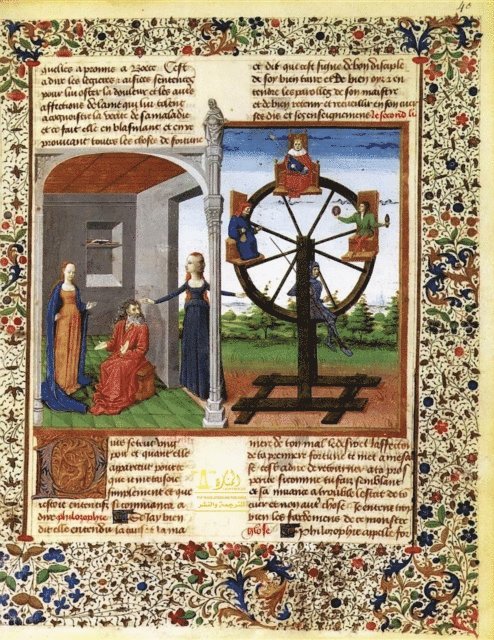
The book called ‘The Consolation of Philosophy’ was throughout the Middle Ages, and down to the beginnings of the modern epoch in the sixteenth century, the scholar’s familiar companion. Few books have exercised a wider influence in their time. It has been translated into every European tongue, and into English nearly a dozen times, from King Alfred’s paraphrase to the translations of Lord Preston, Causton, Ridpath, and Duncan, in the eighteenth century. The belief that what once pleased so widely must still have some charm is my excuse for attempting the present translation. The great work of Boethius, with its alternate prose and verse, skilfully fitted together like dialogue and chorus in a Greek play, is unique in literature, and has a pathetic interest from the time and circumstances of its composition. It ought not to be forgotten. Those who can go to the original will find their reward. There may be room also for a new translation in English after an interval of close on a hundred years.
32 kr
Läs direkt efter köp
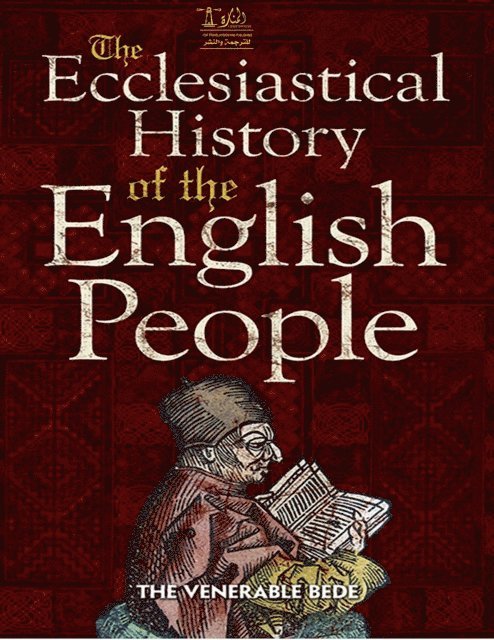
The English version of the “Ecclesiastical History” in the following pages is a revision of the translation of Dr. Giles, which is itself a revision of the earlier rendering of Stevens. In the present edition very considerable alterations have been made, but the work of Dr. Giles remains the basis of the translation. The Latin text used throughout is Mr. Plummer's. Since the edition of Dr. Giles appeared in 1842, so much fresh work on the subject has been done, and recent research has brought so many new facts to light, that it has been found necessary to rewrite the notes almost entirely, and to add a new introduction. After the appearance of Mr. Plummer's edition of the Historical Works of Bede, it might seem superfluous, for the present at least, to write any notes at all on the “Ecclesiastical History.” The present volume, however, is intended to fulfil a different and much humbler function. There has been no attempt at any original work, and no new theories are advanced. The object of the book is merely to present in a short and convenient form the substance of the views held by trustworthy authorities, and it is hoped that it may be found useful by those students who have either no time or no inclination to deal with more important works.
Among the books of which most use has been made, are Mr. Plummer's edition of the “Ecclesiastical History,” Messrs. Mayor and Lumby's edition of Books III and IV, Dr. Bright's “Early English Church History,” and Dr. Hunt's “History of the English Church from its foundation to the Norman Conquest.” Many of the articles in the “Dictionary of Christian Biography” and the “Dictionary of Christian Antiquities,” Dr. Mason's “Mission of St. Augustine,” Dr. Rhŷs's “Celtic Britain,” and a number of other books, mentioned in the notes, have been consulted.