Bede – författare
Visar alla böcker från författaren Bede. Handla med fri frakt och snabb leverans.
48 produkter
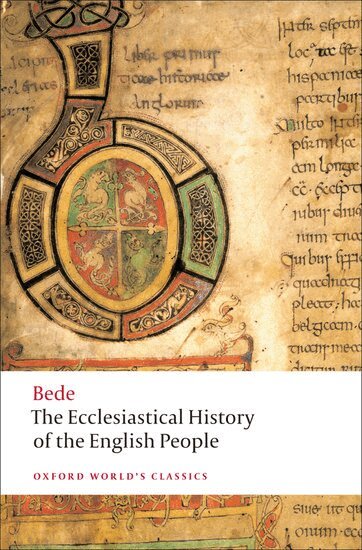
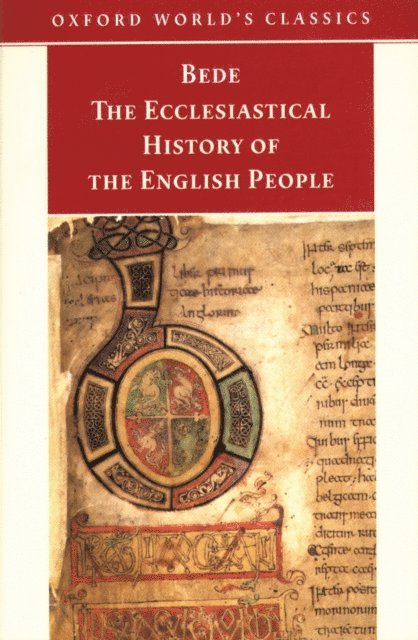
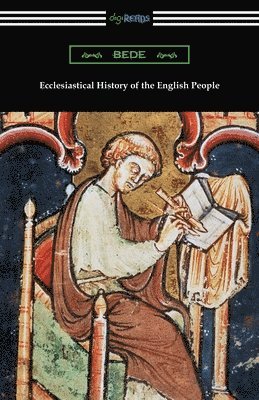
The Ecclesiastical History of the English People
Av Bede, Judith McClure m. fl.
Häftad, 2008
4,5 utav 5 stjärnor. Totalt antal röster: (2)
151 kr
Lägg i varukorg
The Ecclesiastical History of the English People (731 AD) is Bede's most famous work.As well as providing the authoritative Colgrave translation of the Ecclesiastical History, this edition includes a new translation of the Greater Chronicle, in which Bede examines the Roman Empire and contemporary …
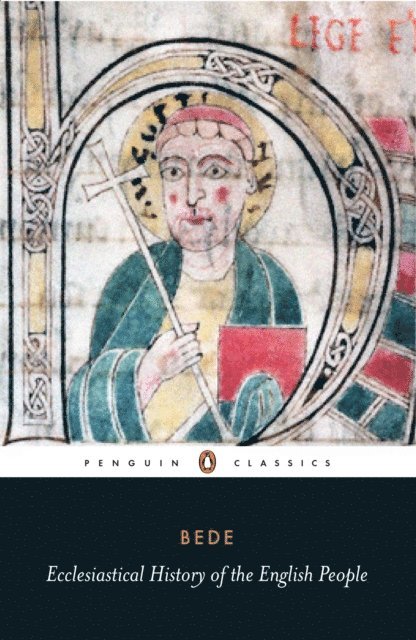
Ecclesiastical History of the English People
With Bede's Letter to Egbert and Cuthbert's Letter on the Death of Bede
Av Bede, Ronald Latham
Häftad, 1990
147 kr
Lägg i varukorg
Written in AD 731, Bede's work opens with a background sketch of Roman Britain's geography and history. It goes on to tell of the kings and bishops, monks and nuns who helped to develop Anglo-Saxon government and religion during the crucial formative years of the English people. Leo Sherley-Price's …
Ecclesiastical History of the English People
With Bede's Letter to Egbert and Cuthbert's Letter on the Death of Bede
Av Bede
E-bok, 2003
108 kr
Lägg i varukorg
Written in AD 731, Bede's work opens with a background sketch of Roman Britain's geography and history. It goes on to tell of the kings and bishops, monks and nuns who helped to develop Anglo-Saxon government and religion during the crucial formative years of the English people. Leo Sherley-Price's …
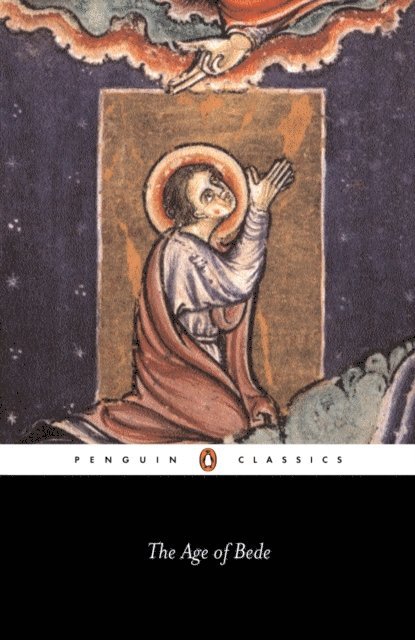
Age of Bede
Av Bede, D. H. Farmer
Häftad, 1998
155 kr
Lägg i varukorg
This selection of writings from the sixth and seventh century AD provides a powerful insight into the early history of the Christian Church in England and Ireland. From Bede's Life of Cuthbert and Lives of the Abbots of Wearmouth and Jarrow to the anonymous Voyage of St Brendan - a whimsical …
Ecclesiastical History of the English People
Av Bede
E-bok, 1999
117 kr
Lägg i varukorg
The Ecclesiastical History of the English People (731 AD) is Bede''s most famous work. As well as providing the authoritative Colgrave translation of the Ecclesiastical History , this edition includes a new translation of the Greater Chronicle , in which Bede examines the Roman Empire and …
Age of Bede
Av Bede, D. H. Farmer
E-bok, 2004
96 kr
Lägg i varukorg
This selection of writings from the sixth and seventh century AD provides a powerful insight into the early history of the Christian Church in England and Ireland. From Bede's Life of Cuthbert and Lives of the Abbots of Wearmouth and Jarrow to the anonymous Voyage of St Brendan - a whimsical …
Bede's Ecclesiastical History of the English People
Av Bede, Bertram Colgrave m. fl.
Inbunden, 1992
5301 kr
Lägg i varukorg
Bede's Ecclesiastical History of the English People was completed in 731 and still ranks among the most popular of history books. By the end of the eighth century, copies of it were to be found in many parts of England and on the Continent, some of which are still extant. If it were not for Bede's …
Ecclesiastical History, Volume I
Books 1–3
Av Bede
Inbunden, 1930
375 kr
Lägg i varukorg
Abbatial annals of medieval England.Bede “the Venerable,” English theologian and historian, was born in AD 672 or 673 in the territory of the single monastery at Wearmouth and Jarrow. He was ordained deacon (691–2) and priest (702–3) of the monastery, where his whole life was spent in devotion, …
Ecclesiastical History, Volume II
Books 4–5. Lives of the Abbots. Letter to Egbert
Av Bede
Inbunden, 1930
375 kr
Lägg i varukorg
Abbatial annals of medieval England.Bede “the Venerable,” English theologian and historian, was born in AD 672 or 673 in the territory of the single monastery at Wearmouth and Jarrow. He was ordained deacon (691–2) and priest (702–3) of the monastery, where his whole life was spent in devotion, …
Bede: On the Temple
Av Bede
Häftad, 1995
623 kr
Lägg i varukorg
Bede’s aim in De Templo is stated in Chapter I: ‘That the building of the tabernacle and the temple signifies one and the same Church of Christ’. For anyone with an interest in mysticism or merely desiring spiritual nourishment, the reading of De Templo should prove a sublime experience and its own …
Bede: On the Tabernacle
Av Bede
Häftad, 1994
623 kr
Lägg i varukorg
This volume contains the first English translation of Bede’s allegorical commentary on the tabernacle of Moses, which he interpreted as a symbolic figure of the Christian Church. Written in the early 720s at the monastery of Wearmouth-Jarrow in Northumbria, On the Tabernacle (De tabernaculo) was …
Bede: A Biblical Miscellany
Av Bede
Häftad, 1999
542 kr
Lägg i varukorg
This volume contains six of Bede’s shorter biblical writings, most of which appear here in translation for the first time – On Tobias, On the Resting Places, Thirty Questions on the Book of Kings, On Eight Questions, On the Holy Places and the letter On What Isaiah Says. Taken together, they reveal …
Historical Works of the Venerable Bede, Tr. With a Preface and Notes by J. Stevenson
Av Bede
Inbunden, 2025
433 kr
Lägg i varukorg
Historical Works of the Venerable Bede, Tr. With a Preface and Notes by J. Stevenson
Av Bede
Häftad, 2025
314 kr
Lägg i varukorg
Ecclesiastical History of the English People (Royal Collector's Edition) (Case Laminate Hardcover with Jacket)
Av Bede
Inbunden, 2021
421 kr
Lägg i varukorg