Bertram Colgrave - Böcker
Visar alla böcker från författaren Bertram Colgrave. Handla med fri frakt och snabb leverans.
4 produkter
4 produkter
3 335 kr
Skickas inom 5-8 vardagar
Bede's Ecclesiastical History of the English People was completed in 731 and still ranks among the most popular of history books. By the end of the eighth century, copies of it were to be found in many parts of England and on the Continent, some of which are still extant. If it were not for Bede's History we should know little about the Anglo-Saxon invasion and the beginnings of Christianity in England, and such familiar names as Edwin and Oswald, Cuthbert and Chad, Hilda and Caedmon would be almost forgotten. First published in 1969, Colgrave and Mynors's edition made use for the first time of the mid-eighth-century manuscript now in Leningrad, provided a survey of the extant manuscripts, and a new translation; it also brought up to date Plummer's invaluable edition. This revised edition takes into account J.M. Wallace-Hadrill's Bede's Ecclesiastical History of the English People: A Historical Commentary (Oxford Medieval Texts, 1988), enabling the reader to use the two in conjunction.
560 kr
Skickas inom 7-10 vardagar
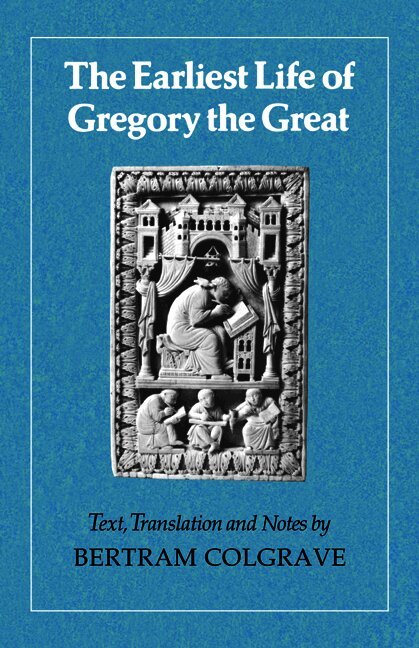
In his role of apostle of the English and promoter of Augustine's mission, Gregory the Great became the subject of what is one of the earliest pieces of literature surviving from the Anglo-Saxon period: a Life written by an unknown author at Whitby around 680-704. Although crude in its latinity and idiosyncratic in its presentation, this work is a fascinating source of early traditions about the conversion of the English - including the famous story of Gregory's encounter with the Anglian slave boys - and an important witness to the veneration felt for the saint himself. It casts valuable light on English history in the seventh century, particularly on the career of Edwin of Northumbria, and is the source of two of the most famous legends of the Middle Ages, the Mass of St Gregory and the story of Trajan's rescue from hell. The Life of Gregory seems to be the earliest of the Saints' lives of this period and it is in many ways the most remarkable.
613 kr
Skickas inom 7-10 vardagar
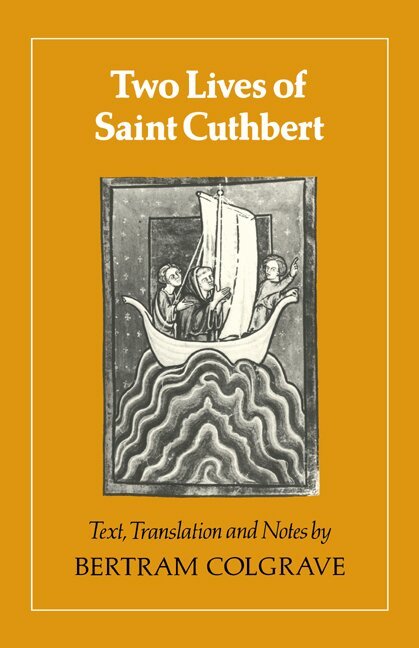
These two complementary lives of Cuthbert illuminate both the secular history of the golden age of Northumbria and the historic shift from Celtic to Roman ecclesiastical practice which took place after the Synod of Whitby. Cuthbert was very much in the Irish monastic tradition. He adopted Roman usages, becoming prior and eventually bishop of Lindisfarne, but the essential nature of his commitment changed little and he lived for much of his later life as a hermit on the island of Farne, with the birds as his only companions. The two lives make an interesting contrast: the earlier, anonymous Life of 698-705 is clear, concise and rich in Lindisfarne tradition, viewing Cuthbert as no more than the great saint of his own house. Bede's prose Life of 721, however, is polished, literary, more than twice as long and altogether more didactic; treating Cuthbert as a model from which to draw lessons about how to be a perfect bishop and monk. Taken together, the lives vividly evoke the character of a remarkable churchman and provide a compelling picture of early monastic life.
547 kr
Skickas inom 7-10 vardagar
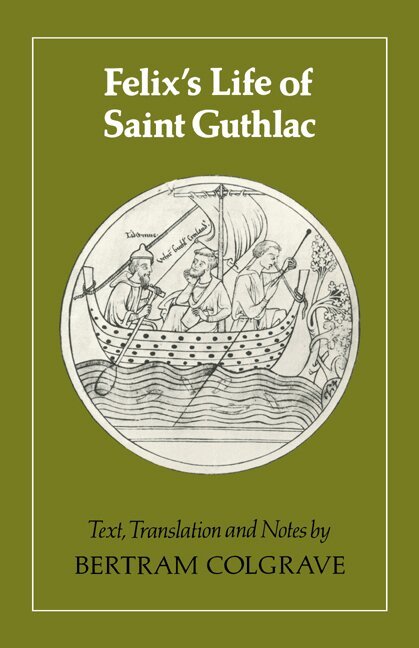
Written around 730-740 the Life of Guthlac by the monk Felix is an important and colourful source for the obscure early history of East Anglia and the Fens. It describes how the youthful Guthlac (674-714) won fame at the head of a Mercian warrior band fighting the British on the borders of Wales before entering the monastery at Repton at the age of twenty-four. Distinguished from the first by his piety and asceticism, Guthlac moved on around 700 to a solitary life on Crowland, an uninhabited island accessible only by boat deep in the wild and desolate marshland separating Mercia and East Anglia. Here he built a shelter cut into the side of a burial-mound in which he lived austerely, skin-clad in the manner of the Desert Fathers, for the rest of his life. Tormented by demons but consoled by visions of angels, Guthlac gained a reputation for sanctity and miraculous healing which spread far afield and continued to grow after his death. This Life vividly reflects the cult of St Guthlac as it existed in East Anglia only a generation later.