Samuel D Gartland – författare
Visar alla böcker från författaren Samuel D Gartland. Handla med fri frakt och snabb leverans.
5 produkter
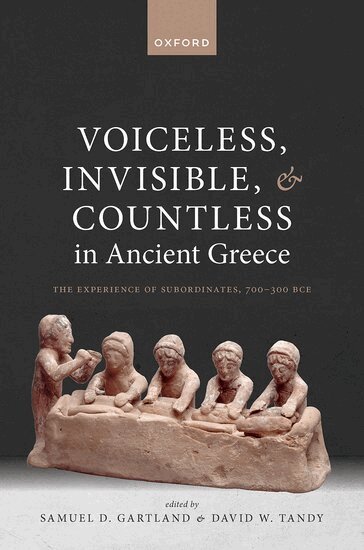
Voiceless, Invisible, and Countless in Ancient Greece
The Experience of Subordinates, 700—300 BCE
Av Samuel D Gartland, Samuel D. Gartland m. fl.
Inbunden, 2024
1958 kr
Lägg i varukorg
Voiceless, Invisible, and Countless in Ancient Greece explores the experiences of subordinates and the nature of their subordination in the Greek world 700—300 BCE. Throughout the course of the ten contributions it aims to bring forth the voices of the various groups and individuals affected by …
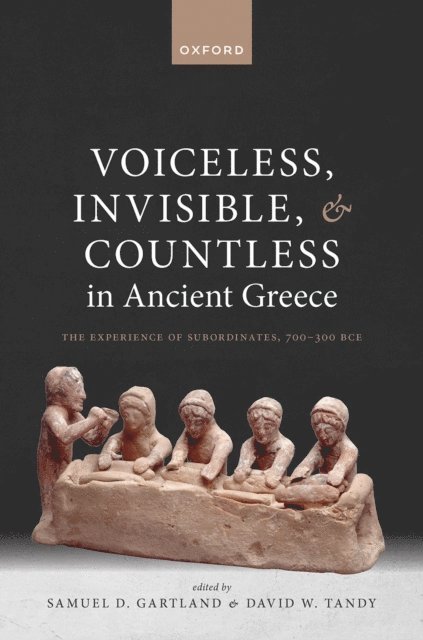
Voiceless, Invisible, and Countless in Ancient Greece
The Experience of Subordinates, 700-300 BCE
Av David W. Tandy, Samuel D. Gartland
E-bok, 2023
1322 kr
Lägg i varukorg
Voiceless, Invisible, and Countless in Ancient Greece explores the experiences of subordinates and the nature of their subordination in the Greek world 700—300 BCE. Throughout the course of the ten contributions it aims to bring forth the voices of the various groups and individuals affected by …
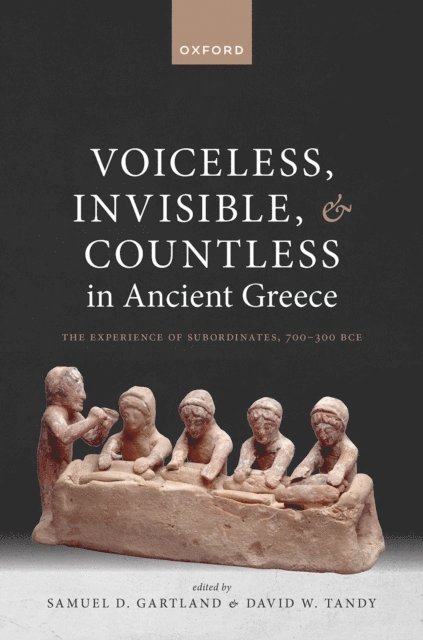
Voiceless, Invisible, and Countless in Ancient Greece
The Experience of Subordinates, 700-300 BCE
Av David W. Tandy, Samuel D. Gartland
E-bok, 2023
1322 kr
Lägg i varukorg
Voiceless, Invisible, and Countless in Ancient Greece explores the experiences of subordinates and the nature of their subordination in the Greek world 700—300 BCE. Throughout the course of the ten contributions it aims to bring forth the voices of the various groups and individuals affected by …
Boiotia in the Fourth Century B.C.
Inbunden, 2017
877 kr
Lägg i varukorg
The region of Boiotia was one of the most powerful regions in Greece between the Peloponnesian War and the rise of Macedonian power under Philip II and Alexander the Great. Its influence stretched across most of the Greek mainland and, at times, across the Aegean; its fourth-century leaders were of …
Boiotia in the Fourth Century B.C.
E-bok, 2017
1035 kr
Lägg i varukorg
The region of Boiotia was one of the most powerful regions in Greece between the Peloponnesian War and the rise of Macedonian power under Philip II and Alexander the Great. Its influence stretched across most of the Greek mainland and, at times, across the Aegean; its fourth-century leaders were of …