Samuel G. Armistead - Böcker
Visar alla böcker från författaren Samuel G. Armistead. Handla med fri frakt och snabb leverans.
5 produkter
5 produkter
665 kr
Skickas inom 3-6 vardagar
In New York City during the winter of 1922 and the spring of 1923, Mair Jose Benardete recorded the texts of the thirty-nine traditional ballads published in this volume. His collection, the beginning of Judeo-Spanish ballad research in America, was assembled when the oral tradition was still rich and vigorous among immigrants to New York from the Sephardic settlements of the Eastern Mediterranean and North Africa. Among the ballads are a number of rare text types, some never again recorded in the Sephardic communities of the United States, In addition, many of the texts provide new insights into the origins of the thematic traditions they represent. Samuel G. Armistead and Joseph H. Silverman have edited the ballads collected by Benardete, offering an English abstract and exhaustive bibliography for each ballad. In addition to placing each ballad within the context of its Sephardic variants, the bibliographies refer to the most important collections in the modern Castilian, Portuguese, Catalan, and Hispano-American traditions, to earlier (fifteenth- to seventeenth-century) evidence, and to any known analogs in other European traditions. The volume also includes a general bibliography, a thematic classification of the ballads, several indexes, and a glossary of exotic lexical elements. In an introduction, professors Armistead and Silverman present a documented survey of Judeo-Spanish ballad scholarship with particular attention to fieldwork in teh United States and elsewhere. Benardete himself attributed the decline of ballad singing among the Sephardim to a growing preference for phonographic recordings over traditional family singers. The need for further field-work increases as "Sephardic folkspeech and folklore retreat before the irresistible onslaught of the English language and modern American mass-media culture" (from the Introduction). This title is part of UC Press's Voices Revived program, which commemorates University of California Press's mission to seek out and cultivate the brightest minds and give them voice, reach, and impact. Drawing on a backlist dating to 1893, Voices Revived makes high-quality, peer-reviewed scholarship accessible once again using print-on-demand technology. This title was originally published in 1981.
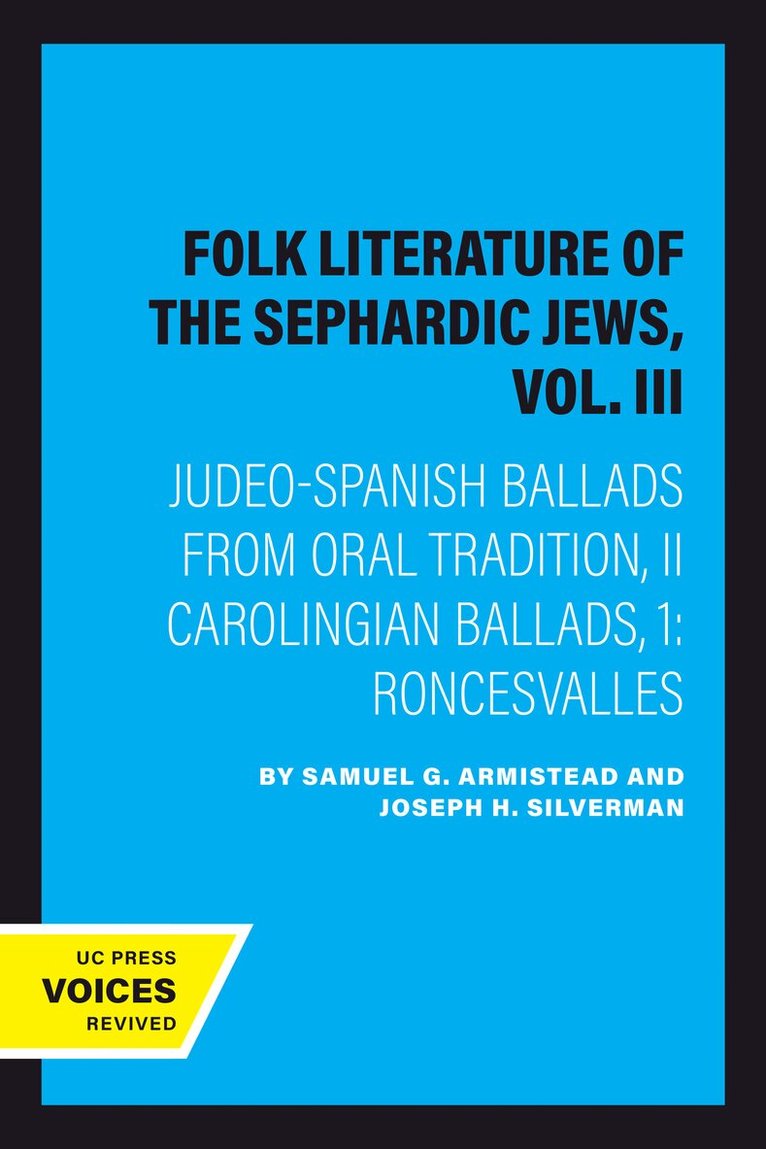
Folk Literature of the Sephardic Jews, Vol. III
Judeo-Spanish Ballads from Oral Tradition, II Carolingian Ballads, 1: Roncesvalles
Häftad, Engelska, 2022
932 kr
Skickas inom 3-6 vardagar
Folk Literature of the Sephardic Jews: Judeo-Spanish Ballads from Oral Tradition offers a comprehensive exploration of the rich oral traditions within the Sephardic Jewish community, focusing on ballads that trace their roots to medieval epic narratives. Drawing from a collection of ballads recorded between 1957 and 1980 across Eastern and North African Sephardic communities, the book examines five key narrative types, particularly those connected to the French medieval epic Chanson de Roland and the historical event of Roncesvalles. The volume provides a deep dive into the relationship between these modern Sephardic ballads and their epic antecedents, comparing them with sixteenth-century romancero versions, and placing them within the wider context of Pan-European balladry. Through synthetic texts and an analysis of variants, it uncovers the creative evolution of these ballads within the oral tradition, offering a fresh perspective on their narrative structures and thematic elements.The book addresses ongoing debates in scholarship, particularly the contested connection between epic poetry and ballads. While some critics have downplayed or denied this link, the study presents ample evidence to confirm the genetic and oral-traditional relationship between the romancero and its epic origins. It highlights the preservation of medieval poetic forms and narrative motifs across centuries, particularly the survival of specific poetic features in the Sephardic ballads. The volume also emphasizes the importance of these ballads in understanding the continuity of Hispanic epic poetry within the Sephardic diaspora. Through detailed analysis and scholarly commentary, the book sheds light on the dynamic, living tradition of balladry, demonstrating the creative and evolving nature of these oral narratives across generations.This title is part of UC Press's Voices Revived program, which commemorates University of California Press’s mission to seek out and cultivate the brightest minds and give them voice, reach, and impact. Drawing on a backlist dating to 1893, Voices Revived makes high-quality, peer-reviewed scholarship accessible once again using print-on-demand technology. This title was originally published in 1994.
753 kr
Skickas inom 7-10 vardagar
In New York City during the winter of 1922 and the spring of 1923, Mair Jose Benardete recorded the texts of the thirty-nine traditional ballads published in this volume. His collection, the beginning of Judeo-Spanish ballad research in America, was assembled when the oral tradition was still rich and vigorous among immigrants to New York from the Sephardic settlements of the Eastern Mediterranean and North Africa. Among the ballads are a number of rare text types, some never again recorded in the Sephardic communities of the United States, In addition, many of the texts provide new insights into the origins of the thematic traditions they represent. Samuel G. Armistead and Joseph H. Silverman have edited the ballads collected by Benardete, offering an English abstract and exhaustive bibliography for each ballad. In addition to placing each ballad within the context of its Sephardic variants, the bibliographies refer to the most important collections in the modern Castilian, Portuguese, Catalan, and Hispano-American traditions, to earlier (fifteenth- to seventeenth-century) evidence, and to any known analogs in other European traditions. The volume also includes a general bibliography, a thematic classification of the ballads, several indexes, and a glossary of exotic lexical elements. In an introduction, professors Armistead and Silverman present a documented survey of Judeo-Spanish ballad scholarship with particular attention to fieldwork in teh United States and elsewhere. Benardete himself attributed the decline of ballad singing among the Sephardim to a growing preference for phonographic recordings over traditional family singers. The need for further field-work increases as "Sephardic folkspeech and folklore retreat before the irresistible onslaught of the English language and modern American mass-media culture" (from the Introduction). This title is part of UC Press's Voices Revived program, which commemorates University of California Press's mission to seek out and cultivate the brightest minds and give them voice, reach, and impact. Drawing on a backlist dating to 1893, Voices Revived makes high-quality, peer-reviewed scholarship accessible once again using print-on-demand technology. This title was originally published in 1981.
Folk Literature of the Sephardic Jews, Vol. III
Judeo-Spanish Ballads from Oral Tradition, II Carolingian Ballads, 1: Roncesvalles
Inbunden, Engelska, 2022
866 kr
Skickas inom 7-10 vardagar
Folk Literature of the Sephardic Jews: Judeo-Spanish Ballads from Oral Tradition offers a comprehensive exploration of the rich oral traditions within the Sephardic Jewish community, focusing on ballads that trace their roots to medieval epic narratives. Drawing from a collection of ballads recorded between 1957 and 1980 across Eastern and North African Sephardic communities, the book examines five key narrative types, particularly those connected to the French medieval epic Chanson de Roland and the historical event of Roncesvalles. The volume provides a deep dive into the relationship between these modern Sephardic ballads and their epic antecedents, comparing them with sixteenth-century romancero versions, and placing them within the wider context of Pan-European balladry. Through synthetic texts and an analysis of variants, it uncovers the creative evolution of these ballads within the oral tradition, offering a fresh perspective on their narrative structures and thematic elements.The book addresses ongoing debates in scholarship, particularly the contested connection between epic poetry and ballads. While some critics have downplayed or denied this link, the study presents ample evidence to confirm the genetic and oral-traditional relationship between the romancero and its epic origins. It highlights the preservation of medieval poetic forms and narrative motifs across centuries, particularly the survival of specific poetic features in the Sephardic ballads. The volume also emphasizes the importance of these ballads in understanding the continuity of Hispanic epic poetry within the Sephardic diaspora. Through detailed analysis and scholarly commentary, the book sheds light on the dynamic, living tradition of balladry, demonstrating the creative and evolving nature of these oral narratives across generations.This title is part of UC Press's Voices Revived program, which commemorates University of California Press’s mission to seek out and cultivate the brightest minds and give them voice, reach, and impact. Drawing on a backlist dating to 1893, Voices Revived makes high-quality, peer-reviewed scholarship accessible once again using print-on-demand technology. This title was originally published in 1994.
990 kr
Skickas inom 10-15 vardagar
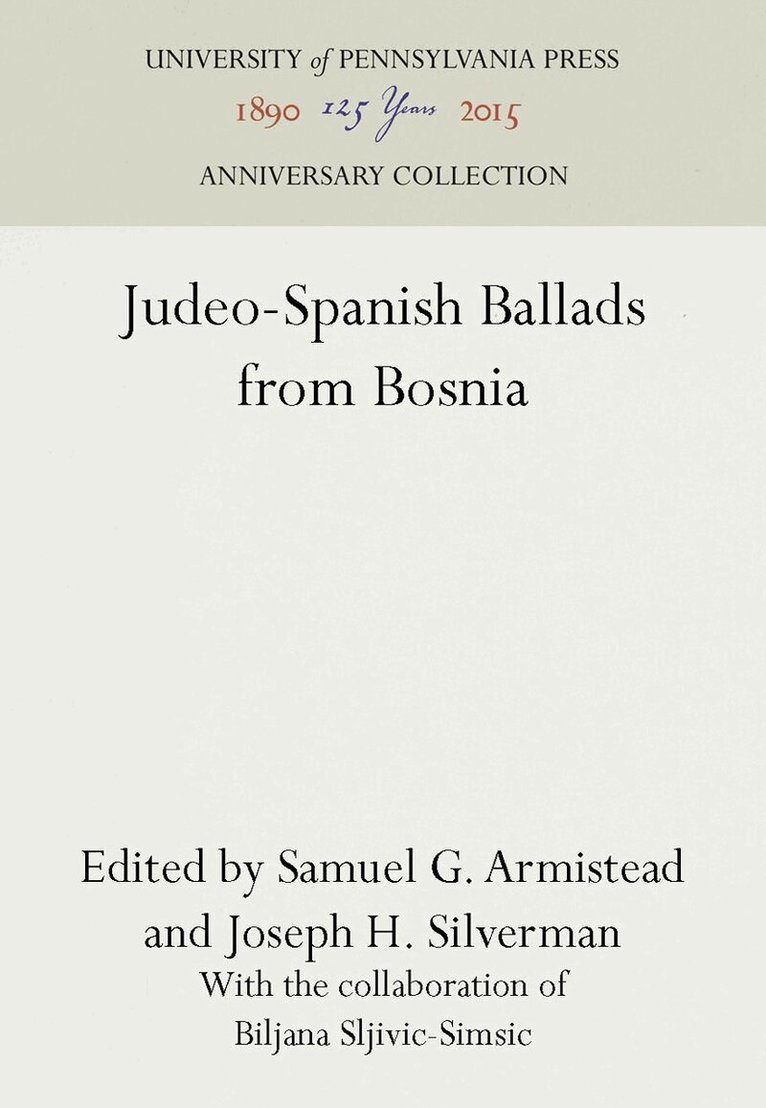
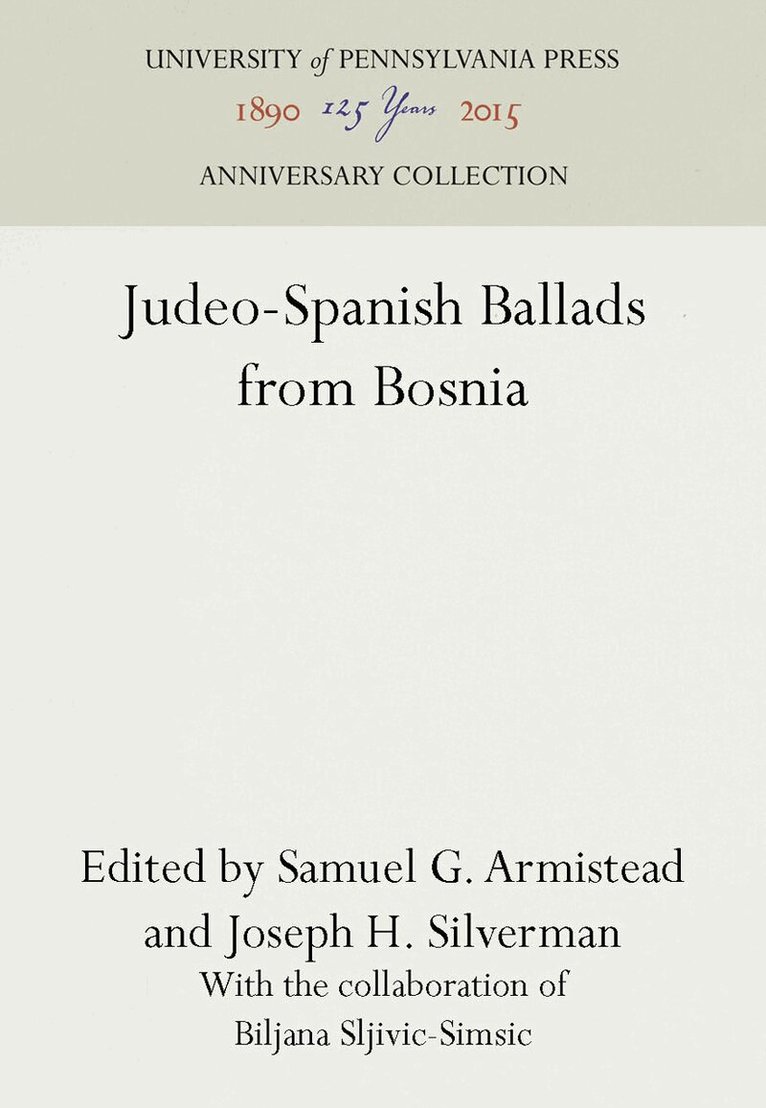
The Judeo-Spanish folk literature of the Sephardic Jews of Bosnia, and with it their uncommonly rich balladry, has remained largely unknown to Western scholars. Since their move to Sarajevo in the sixteenth century, Serob-Croatian has displaced their original Spanish, and the entire culture is rapidly approaching extinction.This book preserved for posterity three fundamentally important groups of these rare ballads: Kalmi Baruch's Spanski romanse; ballads collected from the readers of the Sarajevo newspaper Jevrejski Glas; and five previously unedited eighteenth-century Bosnian ballads from a manuscript in the Jewish National and University Library in Jerusalem.Notes, abstracts in English, reproductions of the music itself, and other scholarly aids serve to make this colorful and strangely modern literature fully accessible to Hispanists, folklorists, and all students of comparative literature and Judaic culture.