Samuel Kalman - Böcker
Visar alla böcker från författaren Samuel Kalman. Handla med fri frakt och snabb leverans.
5 produkter
5 produkter
2 219 kr
Skickas inom 10-15 vardagar
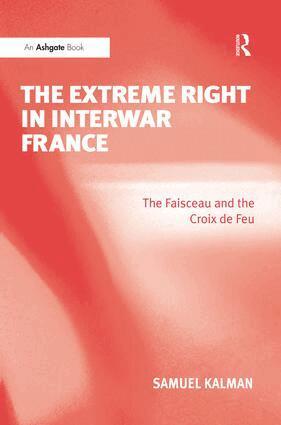
Historians of the French extreme right frequently denote the existence of a strong xenophobic and nationalist tradition dating from the 1880s, a perpetual anti-republicanism which pervaded twentieth-century political discourse. Much attention is habitually paid to the interwar era, deemed the zenith of this success, when the leagues attracted hundreds of thousands of members and enjoyed significant political acclaim. Most works on the subject speak of 'the French right' or 'French fascism', presenting compendia of figures and organizations, from the Dreyfus Affair in the 1890s through the notorious Vichy regime, the authoritarian construct which emerged following the defeat to Nazi Germany in June 1940. However, historians rarely discuss the programmatic elements of extreme right-wing doctrine, which demanded the eradication of parliamentary democracy and the transformation of the nation and state according to group principles. Instead, most detail the organization and membership of various organizations, and often recount their quotidian activities as political actors within (and in opposition to) the Third Republic. This book offers a new interpretation of the extreme right in interwar French politics, focusing upon the largest and most influential such groups in 1920s and 1930s, the Faisceau and the Croix de Feu. It explores their designs for extensive political, economic, and social renewal, a project that commanded significant attention from the leadership and rank-and-file of both organizations, providing the overarching goal behind their aspiration to power. The book examines five components of these efforts: A renewal of politics and government, the establishment of a new economic order, a revaluation of gender and familial relations, the role of youth in the new socio-political construct, and the politics of exclusion inherent in every facet of Faisceau and CDF doctrine. In so doing it contributes to a historical understanding of the programmatic elements of the interwar extreme-right, while simultaneously situating its most prominent exponents within their broader historical context.
733 kr
Skickas inom 10-15 vardagar
Historians of the French extreme right frequently denote the existence of a strong xenophobic and nationalist tradition dating from the 1880s, a perpetual anti-republicanism which pervaded twentieth-century political discourse. Much attention is habitually paid to the interwar era, deemed the zenith of this success, when the leagues attracted hundreds of thousands of members and enjoyed significant political acclaim. Most works on the subject speak of 'the French right' or 'French fascism', presenting compendia of figures and organizations, from the Dreyfus Affair in the 1890s through the notorious Vichy regime, the authoritarian construct which emerged following the defeat to Nazi Germany in June 1940. However, historians rarely discuss the programmatic elements of extreme right-wing doctrine, which demanded the eradication of parliamentary democracy and the transformation of the nation and state according to group principles. Instead, most detail the organization and membership of various organizations, and often recount their quotidian activities as political actors within (and in opposition to) the Third Republic. This book offers a new interpretation of the extreme right in interwar French politics, focusing upon the largest and most influential such groups in 1920s and 1930s, the Faisceau and the Croix de Feu. It explores their designs for extensive political, economic, and social renewal, a project that commanded significant attention from the leadership and rank-and-file of both organizations, providing the overarching goal behind their aspiration to power. The book examines five components of these efforts: A renewal of politics and government, the establishment of a new economic order, a revaluation of gender and familial relations, the role of youth in the new socio-political construct, and the politics of exclusion inherent in every facet of Faisceau and CDF doctrine. In so doing it contributes to a historical understanding of the programmatic elements of the interwar extreme-right, while simultaneously situating its most prominent exponents within their broader historical context.
639 kr
Skickas inom 10-15 vardagar
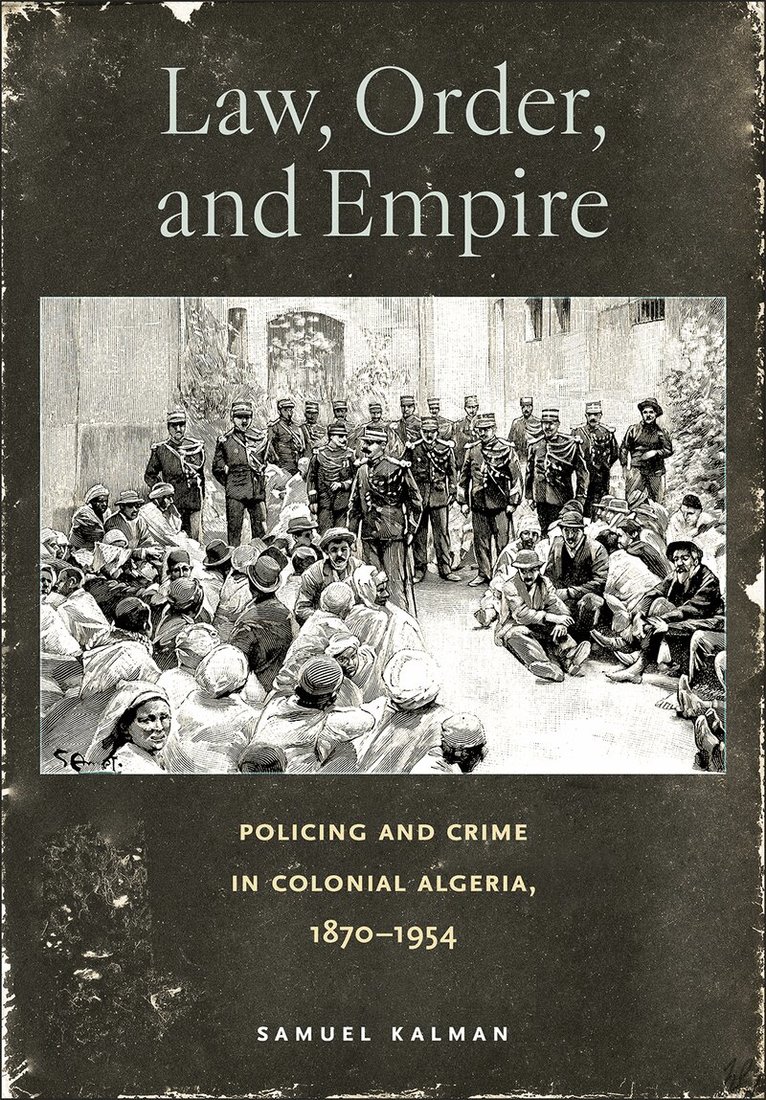
While much attention has focused on society, culture, and the military during the Algerian War of Independence, Law, Order, and Empire addresses a vital component of the empire that has been overlooked: policing. Samuel Kalman examines a critical component of the construction and maintenance of a racial state by settlers in Algeria from 1870 onward, in which Arabs and Berbers were subjected to an ongoing campaign of symbolic, structural, and physical violence. The French administration encouraged this construct by expropriating resources and territory, exploiting cheap labor, and monopolizing government, all through the use of force. Kalman provides a comprehensive overview of policing and crime in French Algeria, including the organizational challenges encountered by officers. Unlike the metropolitan variant, imperial policing was never a simple matter of law enforcement but instead engaged in the defense of racial hegemony and empire. Officers and gendarmes waged a constant struggle against escalating banditry, the assault and murder of settlers, and nationalist politics—anticolonial violence that rejected French rule. Thus, policing became synonymous with repression, and its brutal tactics foreshadowed the torture and murder used during the War of Independence. To understand the mechanics of empire, Kalman argues that it was the first line of defense for imperial hegemony. Law, Order, and Empire outlines not only how failings in policing were responsible for decolonization in Algeria but also how torture, massacres, and quotidian colonial violence—introduced from the very beginning of French policing in Algeria—created state-directed aggression from 1870 onward.
French Right Between the Wars
Political and Intellectual Movements from Conservatism to Fascism
Inbunden, Engelska, 2014
2 014 kr
Skickas inom 3-6 vardagar
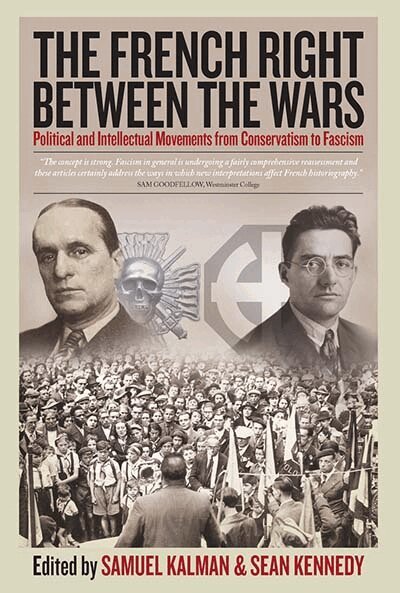
During the interwar years France experienced severe political polarization. At the time many observers, particularly on the left, feared that the French right had embraced fascism, generating a fierce debate that has engaged scholars for decades, but has also obscured critical changes in French society and culture during the 1920s and 1930s. This collection of essays shifts the focus away from long-standing controversies in order to examine various elements of the French right, from writers to politicians, social workers to street fighters, in their broader social, cultural, and political contexts. It offers a wide-ranging reassessment of the structures, mentalities, and significance of various conservative and extremist organizations, deepening our understanding of French and European history in a troubled yet fascinating era.
French Right Between the Wars
Political and Intellectual Movements from Conservatism to Fascism
Häftad, Engelska, 2015
583 kr
Skickas inom 3-6 vardagar
During the interwar years France experienced severe political polarization. At the time many observers, particularly on the left, feared that the French right had embraced fascism, generating a fierce debate that has engaged scholars for decades, but has also obscured critical changes in French society and culture during the 1920s and 1930s. This collection of essays shifts the focus away from long-standing controversies in order to examine various elements of the French right, from writers to politicians, social workers to street fighters, in their broader social, cultural, and political contexts. It offers a wide-ranging reassessment of the structures, mentalities, and significance of various conservative and extremist organizations, deepening our understanding of French and European history in a troubled yet fascinating era.