Samuel Newlands – författare
Visar alla böcker från författaren Samuel Newlands. Handla med fri frakt och snabb leverans.
11 produkter
Modality
A History
Av Yitzhak Y. Melamed, Samuel Newlands
Inbunden, 2024
1034 kr
Lägg i varukorg
Modality: A History provides readers a sweeping study of the history of philosophical work on modal concepts. Everyday discourse is saturated with appeals to what might be the case or to what must be true or to what cannot happen. Possibility, necessity, and impossibility are modal terms, and …
Modality
A History
Av Yitzhak Y. Melamed, Samuel Newlands
Häftad, 2024
321 kr
Lägg i varukorg
Modality: A History provides readers a sweeping study of the history of philosophical work on modal concepts. Everyday discourse is saturated with appeals to what might be the case or to what must be true or to what cannot happen. Possibility, necessity, and impossibility are modal terms, and …
Modality
A History
Av Samuel Newlands, Yitzhak Y. Melamed
E-bok, 2024
275 kr
Lägg i varukorg
Modality: A History provides readers a sweeping study of the history of philosophical work on modal concepts. Everyday discourse is saturated with appeals to what might be the case or to what must be true or to what cannot happen. Possibility, necessity, and impossibility are modal terms, and …
Modality
A History
Av Samuel Newlands, Yitzhak Y. Melamed
E-bok, 2024
275 kr
Lägg i varukorg
Modality: A History provides readers a sweeping study of the history of philosophical work on modal concepts. Everyday discourse is saturated with appeals to what might be the case or to what must be true or to what cannot happen. Possibility, necessity, and impossibility are modal terms, and …
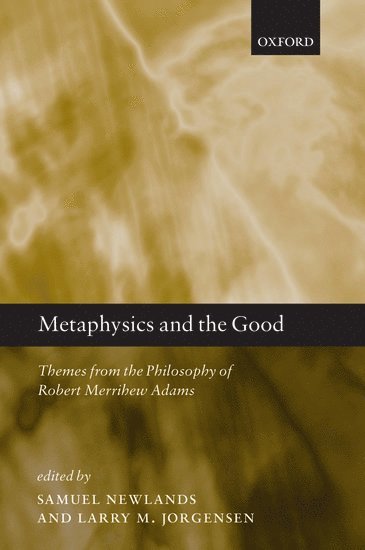
Metaphysics and the Good
Themes from the Philosophy of Robert Merrihew Adams
Av Larry M. Jorgensen, Samuel Newlands
E-bok, 2009
935 kr
Lägg i varukorg
Throughout his philosophical career at Michigan, UCLA, Yale, and Oxford, Robert Merrihew Adams''s wide-ranging contributions have deeply shaped the structure of debates in metaphysics, philosophy of religion, history of philosophy, and ethics. Metaphysics and the Good: Themes from the Philosophy of …
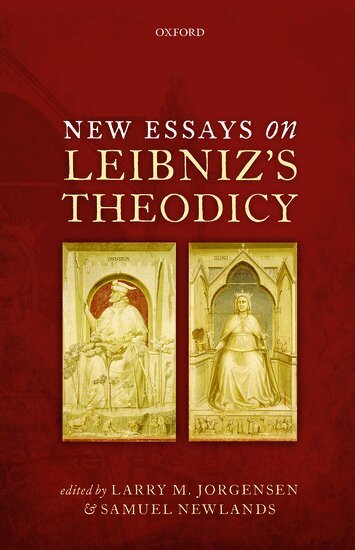
New Essays on Leibniz's Theodicy
Av Samuel Newlands, Larry M. Jorgensen
E-bok, 2014
1155 kr
Lägg i varukorg
In 1710 G. W. Leibniz published Theodicy: Essays on the Goodness of God, the Freedom of Man, and the Origin of Evil . This book, the only one he published in his lifetime, established his reputation more than anything else he wrote. The Theodicy brings together many different strands of Leibniz''s …
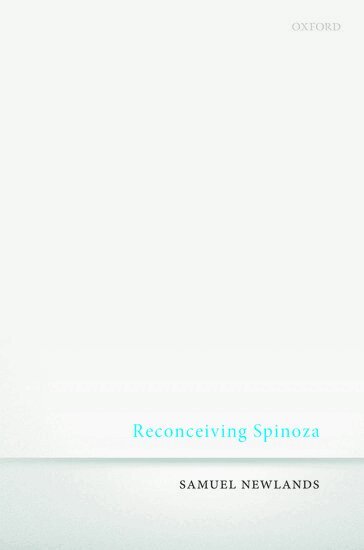
Reconceiving Spinoza
E-bok, 2018
1064 kr
Lägg i varukorg
Samuel Newlands provides a sweeping new account of Spinoza''s metaphysical system and the way it shapes and is shaped by his moral project. Newlands also shows how Spinoza can be read fruitfully alongside recent developments in contemporary analytic philosophy. According to Newlands, conceptual …
Reconceiving Spinoza
E-bok, 2018
1064 kr
Lägg i varukorg
Samuel Newlands provides a sweeping new account of Spinoza''s metaphysical system and the way it shapes and is shaped by his moral project. Newlands also shows how Spinoza can be read fruitfully alongside recent developments in contemporary analytic philosophy. According to Newlands, conceptual …
Reconceiving Spinoza
Inbunden, 2018
1536 kr
Lägg i varukorg
Samuel Newlands provides a sweeping new account of Spinoza's metaphysical system and the way it shapes and is shaped by his moral project. Newlands also shows how Spinoza can be read fruitfully alongside recent developments in contemporary analytic philosophy. According to Newlands, conceptual …
Metaphysics and the Good
Themes from the Philosophy of Robert Merrihew Adams
Av Samuel Newlands, Larry M. Jorgensen
Inbunden, 2009
1469 kr
Lägg i varukorg
Throughout his philosophical career at Michigan, UCLA, Yale, and Oxford, Robert Merrihew Adams's wide-ranging contributions have deeply shaped the structure of debates in metaphysics, philosophy of religion, history of philosophy, and ethics. Metaphysics and the Good: Themes from the Philosophy of …
New Essays on Leibniz's Theodicy
Av NEWLANDS JORGENSEN, Larry M. Jorgensen m. fl.
Inbunden, 2014
1811 kr
Lägg i varukorg
In 1710 G. W. Leibniz published Theodicy: Essays on the Goodness of God, the Freedom of Man, and the Origin of Evil. This book, the only one he published in his lifetime, established his reputation more than anything else he wrote. The Theodicy brings together many different strands of Leibniz's …