Sandeep Parmar - Böcker
Visar alla böcker från författaren Sandeep Parmar. Handla med fri frakt och snabb leverans.
6 produkter
6 produkter
2 108 kr
Skickas inom 10-15 vardagar
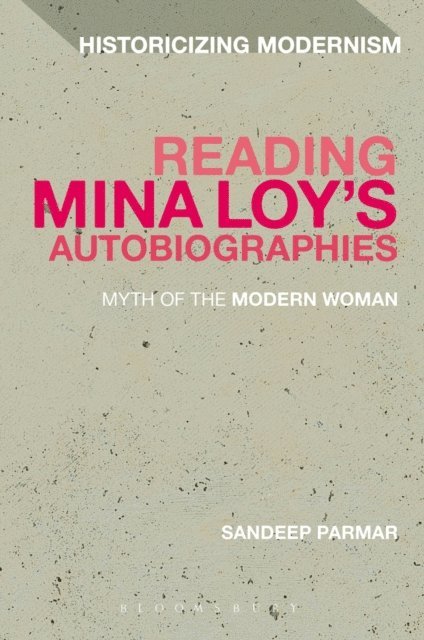
Mina Loy is recognised today as one of the most innovative modernist poets, numbering Gertrude Stein, Marcel Duchamp, Djuna Barnes and T.S. Eliot amongst her admirers. Drawing on substantial new archival research, this book challenges the existing critical myth of Loy as a ‘modern woman' through an analysis of her unpublished autobiographical prose. Mina Loy's Autobiographies explores this major twentieth century writer's ideas about the ‘modern' and how they apply to the ‘modernist' writer—based on her engagement with twentieth-century avant-garde aesthetics—and charts how Loy herself uniquely defined modernity in her essays on literature and art. Sandeep Parmar here shows how, ultimately, Loy's autobiographies extend the modernist project by rejecting earlier impressions of avant-garde futurity and newness in favour of a ‘late modernist' aesthetic, one that is more pessimistic, inward and interested in the fragmentary interplay between the past and present.
607 kr
Skickas inom 10-15 vardagar
Mina Loy is recognised today as one of the most innovative modernist poets, numbering Gertrude Stein, Marcel Duchamp, Djuna Barnes and T.S. Eliot amongst her admirers. Drawing on substantial new archival research, this book challenges the existing critical myth of Loy as a ‘modern woman' through an analysis of her unpublished autobiographical prose. Reading Mina Loy's Autobiographies explores this major twentieth century writer's ideas about the ‘modern' and how they apply to the ‘modernist' writer—based on her engagement with twentieth-century avant-garde aesthetics—and charts how Loy herself uniquely defined modernity in her essays on literature and art. Sandeep Parmar here shows how, ultimately, Loy's autobiographies extend the modernist project by rejecting earlier impressions of avant-garde futurity and newness in favour of a ‘late modernist' aesthetic, one that is more pessimistic, inward and interested in the fragmentary interplay between the past and present.
181 kr
Skickas
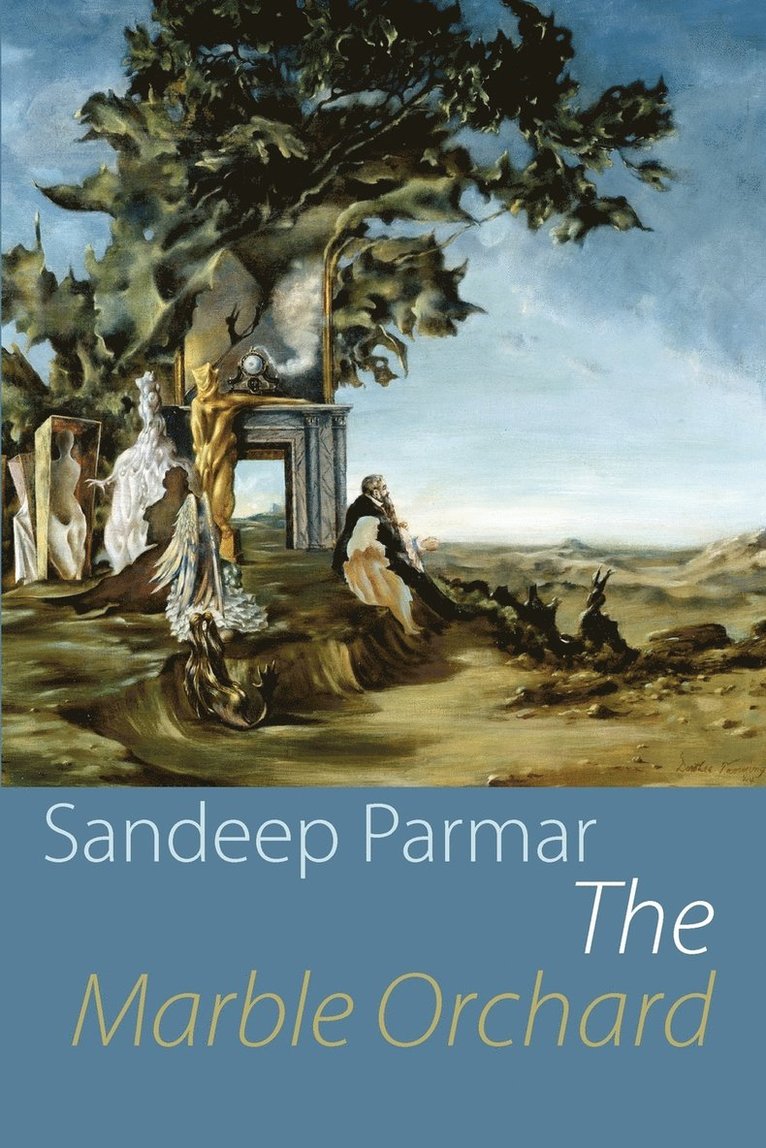
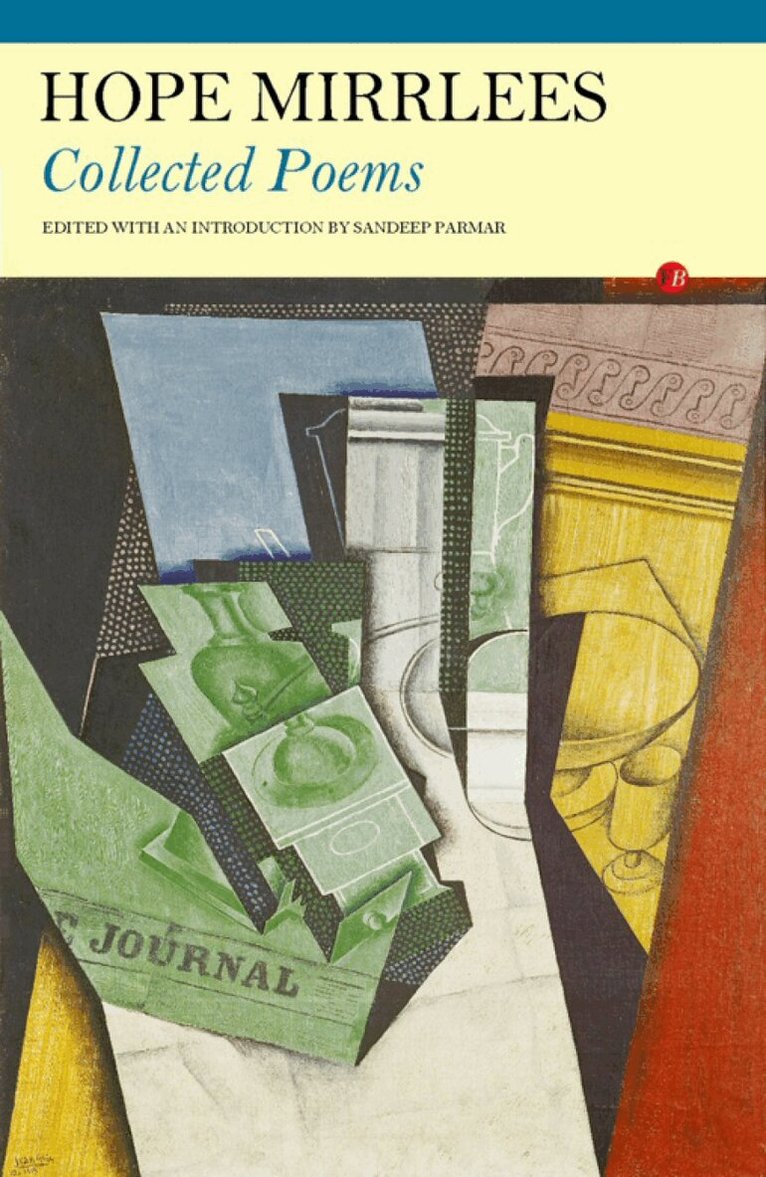
Hope Mirrlees (1887-1978) has long been regarded as the lost modernist. Her extraordinary long poem Paris (1920), a journey through a day in post First World War Paris, was considered by Virginia Woolf ‘obscure, indecent, and brilliant’. Read today, the poem retains its exhilarating daring. Mirrlees’s experimentalism looks forward to The Waste Land; her writing is integral to the twentieth-century canon.And yet, after Paris, Mirrlees published no more poetry for almost half a century, and her later poems appear to have little in common with the avant garde spirit of Paris. In this first edition to gather the full span of Mirrlees’s poetry, Sandeep Parmar explores the paradoxes of Mirrlees’s development as a poet and the complexities of her life.Sandeep Parmar was the first scholar to gain access to the Mirrlees Archive at Newnham College, Cambridge, and her edition includes many previously unpublished poems discovered there in draft form. The text is supported by detailed notes, including a commentary on Paris by Julia Briggs, and a selection of Mirrlees’s essays. The generous introduction provides the most accurate biographical account of Mirrlees’s life available. Mirrlees’s Collected Poems is an indispensible addition to a reading of modernism.Julia Briggs OBE was Professor of Literature and Women’s Studies at De Montfort University. Among her many influential publications were a biography of E. Nesbit and her acclaimed Virginia Woolf: An Inner Life. She died in 2007.Cover Painting Juan Gris (1887-1927), Breakfast, 1915. Oil on canvas. Musée Nationale d’Art Moderne, Centre Pompidou, Paris / Peter Willi / The Bridgeman Art Library
188 kr
Skickas inom 5-8 vardagar
Sandeep Parmar was born in Nottingham in 1979 and was raised in Southern California. She received her PhD in English Literature from University College London in 2008 on the unpublished autobiographies of the modernist poet Mina Loy. She holds an MA in Creative Writing from the University of East Anglia. She is the Reviews Editor of The Wolf magazine and edited The Collected Poems of Hope Mirrlees for Carcanet Press (2011). She has taught Literature and Creative Writing at the University of Hertfordshire, the Open University, University of Cambridge, Wagner College and was a Visiting Scholar at the Center for the Study of Gender and Sexuality at New York University. In 2011 - 2012, she is a Visiting Fellow at Clare Hall, University of Cambridge.
188 kr
Skickas inom 5-8 vardagar
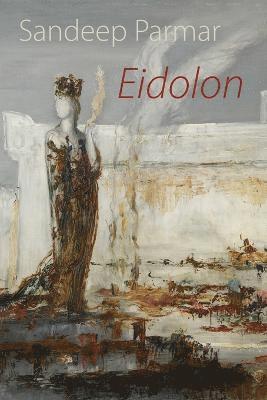
Partly a modern revision of the Helen myth, Eidolon meditates on the visible and invisible forces of Western civilisation from classical antiquity to present-day America. An Eidolon is an image, a ghost, a spectre, a scapegoat. It is a device, like deus ex machina, to deal with the problem of narrative, specifically Helen's supposed deceit and infidelity. The Eidolon, as a device, is something beauteous and beguiling - as a thing, or as a preoccupation, it is the siren song to the poet who listens for silence. Who gives Helen her voice and what need unites it into a single, constant loathsome creature? Helen is as much the city of Troy as its famed plains and high walls. It might as well be Helen smouldering on the great pyre of defeat, even though she escapes unscathed in Homer's Odyssey and is restored to her husband's side by the eidolon's unique guarantee of her chastity.
188 kr
Skickas inom 5-8 vardagar
Goethe's version of the scholar's fateful wager with Mephistopheles inspires the central sequence of Faust, mapped onto the figure of the migrant who flees a post-colonial legacy of fire, displacement and climate destruction for a life of eternal striving. As Parmar asks in 'The Winnowing Shovel': 'How is striving itself, as an idea built into literary models and real-life stereotypes of the good immigrant or the model minority, how might striving-in the Faustian sense-provide a way of thinking about heroism, tragedy (modern and ancient) and migratory grief? Who chooses to leave and why, who attempts to return, who stays on, who, to borrow from Bhanu Kapil's image of reverse migration, is made psychotic in a national space, who is this hero who journeys, who strives and for what? To be visible or invisible? As others have looked to the Faust legend for ways to explore the insatiability of man's appetites, the questions I put to Goethe's version specifically bring together three strands: striving as a fear of and countermeasure against mortality; a critique of globalisation and technology; and the female element underlying male aggression, destruction and desire.'